Østskoven, Esbjerg Travel Guide
Free Guide: A calm, compact forest on Esbjerg’s eastern edge, where lakes, trails, shelters and subtle history panels create an easygoing slice of Danish woodland life.


A brief summary of Østskoven
A calm, compact forest on Esbjerg’s eastern edge, where lakes, trails, shelters and subtle history panels create an easygoing slice of Danish woodland life.
Østskoven is a tranquil forest on the eastern edge of Esbjerg, offering a green escape of winding paths, small lakes and peaceful clearings. Locals come here to walk, run and cycle along waymarked trails, follow a heart route for exercise, or simply enjoy a quiet woodland stroll. Shelters, a simple nature campsite and a bonfire hut make it a low-key base for outdoor overnights, while information boards and an antiquity-themed poster exhibition hint at the area’s cultural and historic layers.
On-site amenities
 Restrooms
 Seating areas
 Picnic areas
 Trash bins
 Information boards
Opening hours
- Every dayOpen 24 hours
Opening hours as listed on the venue’s Google Business Profile. Hours can change for services and special events, so check with the venue before you go.
- Address
- 6705 Esbjerg Ø
Getting there
Local bus from central Esbjerg
Cycling from Esbjerg city centre
Car or taxi within Esbjerg area
Discover more about Østskoven
Woodland refuge on Esbjerg’s eastern fringe
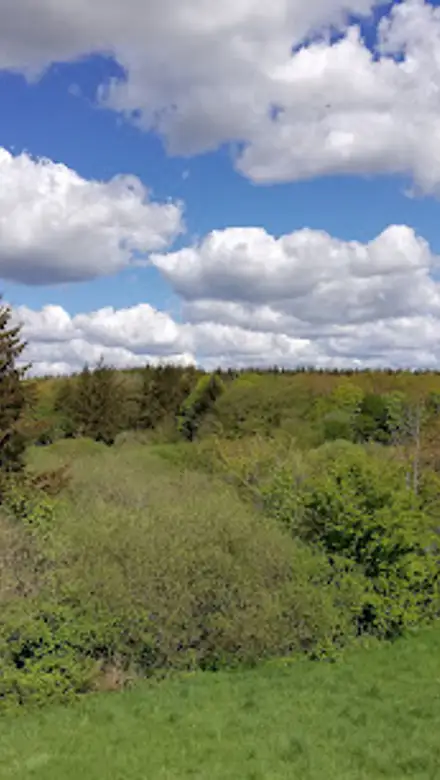
Østskoven is a gently undulating forest area on the outskirts of Esbjerg Ø, where dense stands of conifers mix with lighter patches of deciduous trees and open glades. The moment you leave the nearby residential streets behind, the sounds shift to wind in the treetops, birdsong and the crunch of gravel underfoot. Wide, level tracks frame the forest, while narrower paths slip between trunks and around small ponds, giving the area a pleasantly varied feel without ever feeling wild or intimidating.Despite its proximity to the city, Østskoven feels distinctly rural. Clearings with long grass, bracken and patches of heather catch the sun between darker belts of spruce, and small lakes mirror the sky on still days. The forest is compact enough that you are never far from the edge, yet large enough to provide that sense of being properly away from everyday life.
Trails, heart route and everyday outdoor life
The forest is criss-crossed by a small network of signposted tracks used daily by walkers, runners, dog owners and families. A marked heart trail offers a defined circuit for exercise, combining easy gradients with soft forest footing that is kind to knees and ankles. Several paths are wide and firm enough for prams and most bikes, making it a straightforward choice for a low-stress family outing.Benches and informal resting spots appear at intervals along the main routes, so it is easy to pause and watch the reflections on the water or scan the tree line for songbirds. In autumn, the undergrowth hides fungi and fallen leaves in rust-red carpets, while spring brings fresh, bright foliage and a livelier chorus of birds calling from the canopy.
Lakes, wildlife and quiet corners
Østskoven’s small lakes are among its most atmospheric features. Reeds fringe the shorelines, dragonflies skim low over the surface in summer, and ducks and other waterfowl often patrol the edges. These pockets of water break up the woodland and create intimate viewing points where you can stand and watch ripples spread across the surface.Wildlife here is modest but rewarding if you move slowly. You may glimpse deer slipping between the trees in the early morning, hear woodpeckers tapping in the distance, or spot squirrels vaulting between branches above the paths. The forest’s gentle terrain and relative quiet make it a comfortable place for children to look for tracks, feathers and cones without feeling overwhelmed.
Nature camp, shelters and bonfire hut
On one side of the forest you will find a simple nature campsite and shelters designed for people arriving on foot, by bike or on horseback. These basic facilities give Østskoven a low-key, back-to-nature character, inviting slow travel rather than car-based camping. Overnight stays are about simplicity: wooden shelter walls, starry skies where the trees open, and the crackle of a controlled campfire.The bonfire hut provides a covered, convivial spot to gather, cook simple meals and linger even when the weather turns damp. For many visitors, this is where a brief walk turns into an evening outdoors, with the glow of the fire reflecting off the timber and smoke drifting up into the rafters. It is a space that works equally well for small groups of friends, families or school outings.
Traces of antiquity and a sense of place
Beyond its recreational role, Østskoven carries a quieter story in the form of an antiquity-themed poster exhibition and information boards. These explain how the surrounding landscape has been used and shaped over time, from early settlement to modern forestry and recreation. The panels turn a simple stroll into an informal history lesson, connecting the forest tracks to older routes across western Jutland.Taken together, the lakes, trails, camping facilities and subtle storytelling make Østskoven more than just a patch of trees. It is a compact, accessible piece of nature that bridges city and countryside, offering both everyday escape for Esbjerg residents and a gentle introduction to Danish woodland life for visitors exploring the Wadden Sea region.
Evendo Review Centre
 Google
Guest reviews
Best time to go
Quietest: Jan, Feb & Mar · before 6am or from 10pm
Busy times are Evendo estimates for a typical year, to help you plan. Actual crowds vary with events, school holidays and the weather.
Explore Østskoven on the map
A handpicked selection of must-see spots near Østskoven, mapped for you.
Get your free copy of our complete guide to Østskoven, delivered straight to you.
Everything on this page, from opening hours and how to get there to Eve’s tips and the best time to go, in one PDF you can read offline, print or share.
Already have an account? Sign in
Your Østskoven guide is ready.
We'll send it to · Not you? Sign out

Getting your guide ready…
We are putting together a fresh copy of the Østskoven guide. This can take up to a minute.
This can take a few moments. If your browser asks, choose Allow so the download can start. You'll find the guide in your Downloads folder.
Nothing happened? Download it again
Sorry, the guide is taking longer than usual. Please try again in a minute, or get it by email instead.
Other nearby places you may find interesting
The closest places of the same kind, if this one is not quite what you had in mind.
-
Fiskeri- og Søfartsmuseet Denmark’s museum of the sea, where Esbjerg’s fishing past, offshore present and North Sea wildlife come together in one immersive waterfront complex.
-
Esbjerg Museum Compact city museum in central Esbjerg, tracing the port town’s rapid rise, amber treasures, and wartime stories through evocative rooms and focused exhibits.
-
Museumsfyrskibet Horns Rev Historic lightship turned museum at Esbjerg’s harbourfront, preserving the story of Horns Rev and life aboard a floating lighthouse on Denmark’s west coast.
-
Tarp Bunkermuseum Step into a restored World War II bunker on Esbjerg’s former air base and experience Denmark’s occupation history at close quarters in Tarp Bunkermuseum.
-
Brunnen Park A small fountain-side green space on Kirkegade, offering a quiet pause of trees, lawns and benches in the very heart of Esbjerg’s urban grid.
Swipe for more places
More to explore near Østskoven

 Best experiences near Østskoven
 Best hotels near Østskoven
 Best landmarks near Østskoven
 Best attractions near Østskoven
 Best shops near Østskoven
 Best restaurants near Østskoven
 Best bars near Østskoven
Do you manage this location?
Take control to get all the benefits, like improved information, better appearance, and stronger visibility across AI-powered discovery.
Explore more

Explore more of Esbjerg
Discover Esbjerg: A coastal city in Denmark known for its maritime heritage, stunning sculptures, and vibrant downtown, offering something for every traveler.
Explore Esbjerg
Explore more of Denmark
Discover Denmark: A perfect blend of history, modern design, and the cozy concept of hygge. Explore vibrant cities, serene landscapes, and world-class cuisine.
Explore Denmark