

Stouby Mølle Travel Guide
Free Guide: A windswept 18th-century post mill on southern Falster, Stouby Mølle pairs traditional Danish rural craft with wide-sky views over quiet fields.


A brief summary of Stouby Mølle
A windswept 18th-century post mill on southern Falster, Stouby Mølle pairs traditional Danish rural craft with wide-sky views over quiet fields.
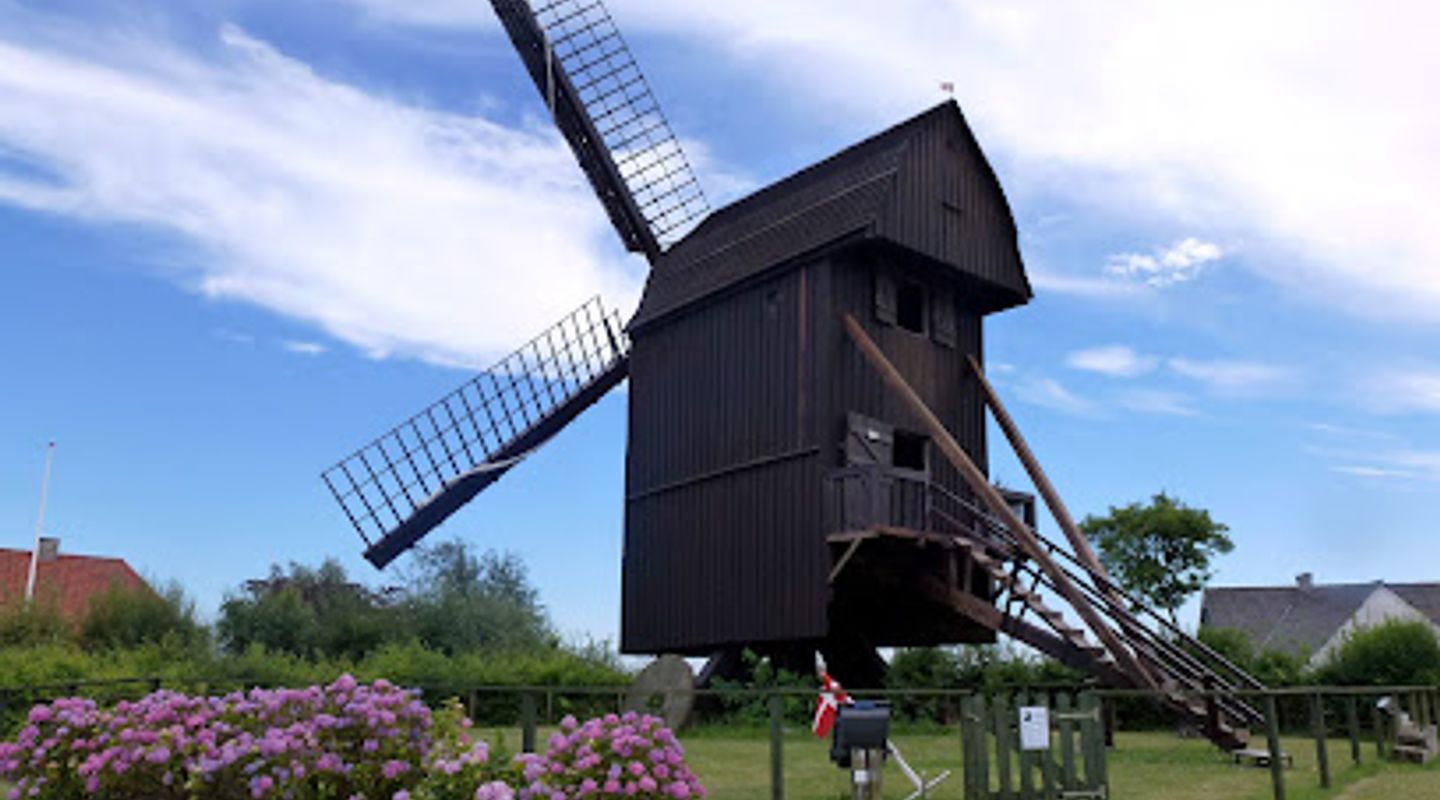
Stouby Mølle, also known as Stovby Mill, is a beautifully restored historic windmill set amid open fields on southern Falster near Væggerløse. Dating back to the late 18th century, this distinctive post mill once ground grain for local farms and today functions as a small museum and atmospheric landmark. Visitors come for its traditional Danish rural architecture, the close-up look at milling machinery, and the wide, peaceful views across the surrounding countryside.
On-site amenities
 Information boards
Opening hours
- Every day10 am–4 pm
Opening hours as listed on the venue’s Google Business Profile. Hours can change for services and special events, so check with the venue before you go.
- Address
- Stovbyvej 19A, 4873 Væggerløse
- Phone
- Website
Getting there
Car from Nykøbing Falster
Local bus and short walk
Cycling from Marielyst area
Discover more about Stouby Mølle
A historic windmill on southern Falster
Stouby Mølle stands slightly elevated above the surrounding fields near Væggerløse on the island of Falster, its white body and dark cap visible from far across the flat landscape. Built as a post mill in the late 1700s, it represents one of Denmark’s older windmill types, where the entire upper structure can pivot around a central post to face the wind. The building’s compact silhouette and long timber sails give it a storybook quality, yet every detail is rooted in the practical needs of rural life.Step closer and you notice the sturdy wooden framework resting on a masonry base and low outbuildings. The setting is quiet and rural, with only a handful of houses and farm buildings nearby, so the mill still feels closely tied to the agricultural rhythms that once defined this part of Falster. On breezy days you can easily imagine the sails creaking into motion above the fields of grain they once helped to process.
From working heart of a farm district to museum piece
For generations Stouby Mølle was an essential part of local farming, grinding harvested grain into flour and feed for the surrounding community. Farmers brought their sacks here by cart, paying the miller in kind for converting their crop into a usable resource. Inside, a system of gears, shafts and millstones translated the wind’s power into steady circular motion.As industrial milling and motorised grinding replaced smaller rural mills in the 20th century, Stouby Mølle gradually lost its original purpose. Rather than being dismantled, it was preserved and restored, eventually opening as a small museum. Today the emphasis is on showing how a traditional windmill works, from the cap and sails at the top to the grain hoists and millstones within. Where possible, the original timbers and fittings have been retained, lending the interior a patina of age.
Inside the mill’s timber-framed interior
When the mill is open, you step through a modest doorway into a vertical world of beams, ladders and platforms. Sunlight filters in through small windows and gaps in the timber, catching dust motes in the air. The floors are worn smooth by decades of use, and large wooden cogwheels sit exactly where they once turned, linking the slowly rotating sails to the heavy millstones below.Interpretive displays typically explain the milling process: how grain was hoisted, cleaned, ground and bagged again. You can trace the path of power through the mechanism, placing a hand on timber supports and iron fittings that once vibrated with the force of the wind. The interior is compact, so only a few people move through at a time, which tends to keep the atmosphere calm and almost contemplative.
Open fields, big skies and neighbouring heritage
Outside, the views are part of the experience. Stouby Mølle stands in open farmland, ringed by gently rolling fields and big skies that change character with the weather. In clear conditions, the light can be striking, especially in the long evenings of late spring and summer. It is easy to linger, watching shadows move across the fields or clouds racing past the sails.The surrounding area adds further context. Nearby Væggerløse Church preserves medieval frescoes inside a Romanesque structure, while the Bøtø Nor Pumping Station museum a short drive away tells the story of land reclamation and water management on southern Falster. Taken together, these sites sketch a broader picture of how people have shaped and worked this landscape over centuries.
Planning a relaxed visit to the mill
Stouby Mølle is a modest-sized site, and many visitors combine it with other stops in the region rather than devoting an entire day. Allow enough time to walk around the exterior, explore the interior levels when open, and appreciate the views. Simple information signs may be available in or around the mill, though details can vary by season and by who is on duty.The mill’s rural location lends itself to a slower pace. It is the kind of place where you might bring a snack to enjoy on a nearby bench or low wall, listen to the wind in the sails and the distant sounds of farm machinery, and reflect on how foundational wind power once was to everyday life here. Even when the mill building itself is closed, the silhouette against the sky can make a worthwhile short stop on a wider tour of Falster.
Evendo Review Centre
 Google
Guest reviews
Best time to go
Quietest: Jan, Feb & Mar · before 9am
Busy times are Evendo estimates for a typical year, to help you plan. Actual crowds vary with events, school holidays and the weather.
Explore Stouby Mølle on the map
A handpicked selection of must-see spots near Stouby Mølle, mapped for you.
Get your free copy of our complete guide to Stouby Mølle, delivered straight to you.
Everything on this page, from opening hours and how to get there to Eve’s tips and the best time to go, in one PDF you can read offline, print or share.
Already have an account? Sign in
Your Stouby Mølle guide is ready.
We'll send it to · Not you? Sign out

Getting your guide ready…
We are putting together a fresh copy of the Stouby Mølle guide. This can take up to a minute.
This can take a few moments. If your browser asks, choose Allow so the download can start. You'll find the guide in your Downloads folder.
Nothing happened? Download it again
Sorry, the guide is taking longer than usual. Please try again in a minute, or get it by email instead.
Other nearby places you may find interesting
The closest places of the same kind, if this one is not quite what you had in mind.
-
The Medieval Center Experience 15th-century Denmark through living history, trebuchets, tournaments, and authentic medieval crafts.
-
Guldborgsund Zoo & Botanisk Have Intimate town-edge zoo and botanical garden where animal encounters, leafy paths and playgrounds have long shaped family days out in Nykøbing Falster.
-
Horreby Lyng Falster’s only raised bog, where quiet boardwalks, restored peatland and traces of ancient life create a subtle, atmospheric escape into Danish nature.
-
Zipline Systofte Seasonal lakeside adventure park near Nykøbing Falster with a 400 m twin zipline, floating aquapark and high-jump airbag for families and thrill-seekers.
-
Crocodile Zoo, Falster Tropisk, fugtig varme, kæmpekrokodiller og bevaringsprojekter samles i et kompakt, intenst reptilunivers midt på Falster.
Swipe for more places
More to explore near Stouby Mølle

 Best experiences near Stouby Mølle
 Best hotels near Stouby Mølle
 Best landmarks near Stouby Mølle
 Best attractions near Stouby Mølle
 Best shops near Stouby Mølle
 Best restaurants near Stouby Mølle
 Best bars near Stouby Mølle
Do you manage this location?
Take control to get all the benefits, like improved information, better appearance, and stronger visibility across AI-powered discovery.
Explore more

Explore more of Falster
Discover Falster: A blend of serene beaches, rich history, and lush landscapes in Denmark's southern island treasure.
Explore Falster
Explore more of Denmark
Discover Denmark: A perfect blend of history, modern design, and the cozy concept of hygge. Explore vibrant cities, serene landscapes, and world-class cuisine.
Explore Denmark
