Hvide Mær Travel Guide
Free Guide: A pale glacial boulder in the shallow waters of Guldborgsund, Den Hvide Mær quietly links ice-age geology, seamark history and tranquil coastal scenery.


A brief summary of Hvide Mær
A pale glacial boulder in the shallow waters of Guldborgsund, Den Hvide Mær quietly links ice-age geology, seamark history and tranquil coastal scenery.
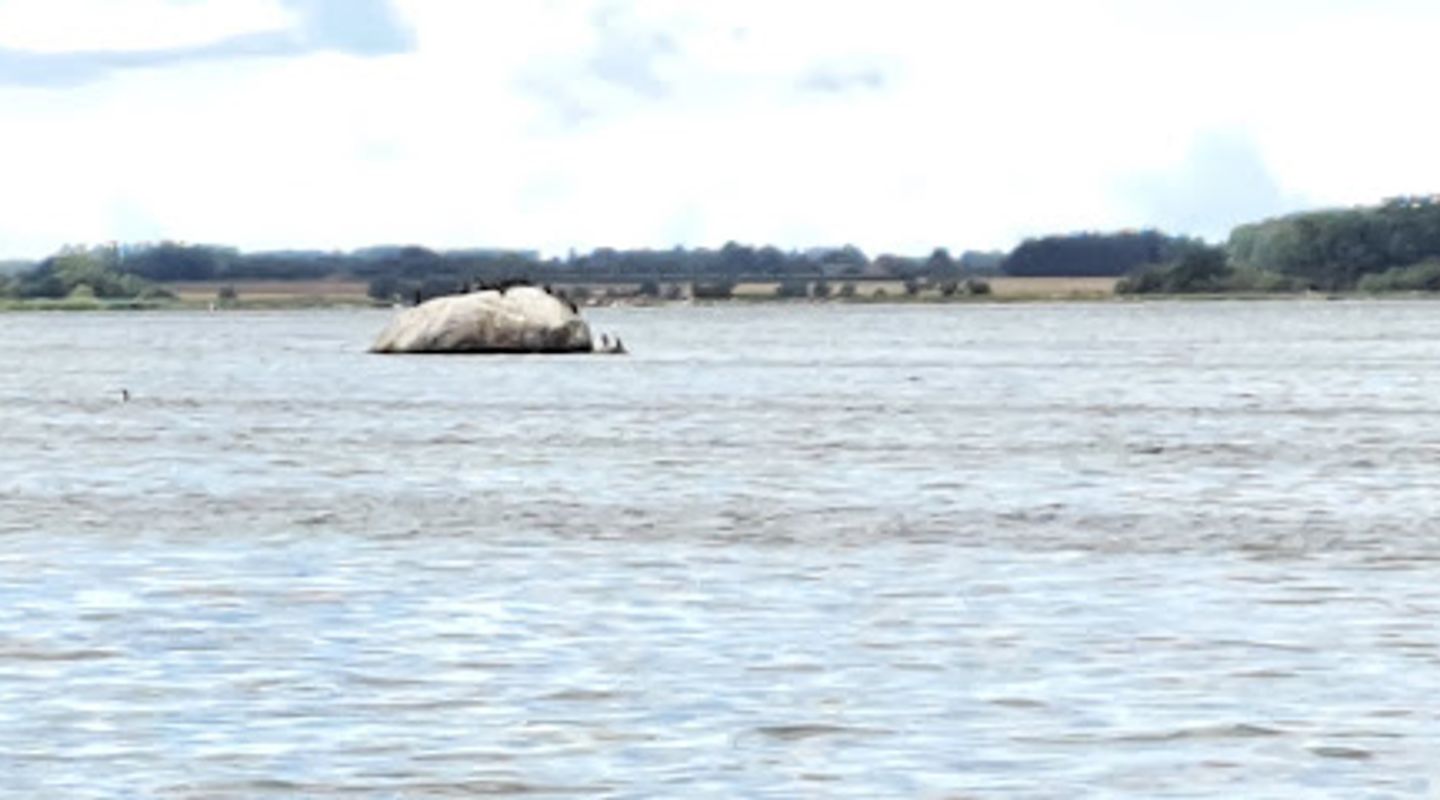
Den Hvide Mær is a striking glacial boulder resting in shallow water on the Lolland side of Guldborgsund, south of Nykøbing Falster. About 2 m high and over 4 m long, this pale rock once served as a natural seamark for sailors and today draws paddlers, nature lovers and geology enthusiasts. Reached via a rural walk and shoreline access, it offers quiet views across the sound, framed by low fields, big skies and birdlife skimming the water’s surface.
- Address
- Priorskov 11, 4800 Nykøbing Falster
- Website
Getting there
Train and walking
Bicycle from Nykøbing Falster
Car and short walk
Kayak or canoe on Guldborgsund
Discover more about Hvide Mær
A pale giant in the shallow waters of Guldborgsund
Den Hvide Mær is an ice-age boulder lying in the shallow waters between Lolland and Falster, just off the gently sloping shoreline south of Nykøbing Falster. Pushed here by glaciers thousands of years ago, the stone ended its journey in Guldborgsund and now sits partly submerged, about 83 metres from the coast. Its pale, almost chalky appearance stands out clearly against the dark water, especially in low, slanting light.The boulder measures roughly 2 metres in height and around 4.5 metres in length, making it one of the more prominent stones in this stretch of the sound. On calm days its rounded back mirrors in the water, while at higher water levels it appears lower and more secretive, as if hiding in the waves. From the nearby fields and shoreline you enjoy wide, open views across the sund and can sense how exposed this stone has been to wind, ice and saltwater for millennia.
From navigation mark to named landmark
Long before charts, buoys and electronic navigation, Den Hvide Mær served a very practical purpose. Its bright colour and fixed position made it a useful point of reference for seafarers moving through the narrow waters of Guldborgsund. Coastal sailors learned to recognise its pale shape and used it as a natural seamark when passing between the two islands.The name “Den Hvide Mær” literally means “the white mark”, a reminder of this maritime role. Standing on the shore and looking out, it is easy to imagine low, traditional boats slipping past in the half-light, their skippers gauging distance and depth from this solitary stone. Today, modern markers have taken over, yet the boulder still feels like part of an older navigation system, quietly tying together land, sea and local memory.
Geological story written in stone
Geologically, Den Hvide Mær is a classic glacial erratic: a large block transported by moving ice from its original bedrock and deposited far from home as the ice sheet melted. Its size and rounded forms tell of grinding travel within the glacier, while its pale tone hints at a different origin than the surrounding sediments and clays.Along this coast, the low landscape, fertile fields and shallow banks all bear traces of the last ice age. Visiting the boulder makes these slow processes tangible. The stone invites close observation of its crystals, surface cracks and lichen patches, each a clue to its long exposure. For those interested in geology, it offers a compact, easily understood example of how ice has shaped Lolland-Falster’s coasts.
Quiet waterside atmosphere and wildlife
The setting is remarkably peaceful. You approach through open farmland where the wind moves over crops and reeds, and the sound of traffic quickly fades. Closer to the shore, the landscape shifts to grassy edges, low banks and shallow water dotted with stones and seaweed. The boulder itself is often accompanied by gulls, waders and occasional ducks resting nearby.Across Guldborgsund you can trace the opposite shoreline and, on clear days, follow the curve of the coast far into the distance. The mood changes with the weather: in sunshine, the stone gleams softly and the water sparkles; under grey skies, both sea and rock take on cooler tones and a more introspective feel. It is an easy place to linger, simply watching light move over water and listening to wind and bird calls.
Simple pleasures for walkers and paddlers
For visitors on foot, the main experience is the view from land. The boulder lies far enough offshore that you stay on the shoreline, observing its profile without needing to wade. The rural walk in and out is part of the charm, adding a sense of discovery as fields give way to the low coastal edge.Paddlers in kayaks or canoes on this part of Guldborgsund often use Den Hvide Mær as a visual waypoint on their route. From the water, the stone appears larger and more sculptural, and you can appreciate how neatly it sits on the shallow seabed. Whether viewed from land or sea, it offers a small but distinctive highlight on any slow exploration of Lolland-Falster’s quiet inner waters.
A modest but memorable coastal stop
Den Hvide Mær is not a developed attraction with facilities and signage; its appeal lies in its simplicity. A single pale stone, an open horizon, and a shoreline shaped by ice and time together create a modest but memorable stop. It works well as a short detour on a day of exploring Nykøbing Falster and the surrounding countryside, or as a contemplative pause during a longer coastal walk.For anyone interested in geology, coastal landscapes or the old relationship between seamarks and seafaring, this unobtrusive boulder offers a surprisingly rich story. The experience is unhurried and low-key, and that is precisely what makes it special.
Evendo Review Centre
 Google
Guest reviews
Best time to go
Quietest: Jan, Feb & Dec · before 8am or at 7pm
Busy times are Evendo estimates for a typical year, to help you plan. Actual crowds vary with events, school holidays and the weather.
Explore Hvide Mær on the map
A handpicked selection of must-see spots near Hvide Mær, mapped for you.
Get your free copy of our complete guide to Hvide Mær, delivered straight to you.
Everything on this page, from opening hours and how to get there to Eve’s tips and the best time to go, in one PDF you can read offline, print or share.
Already have an account? Sign in
Your Hvide Mær guide is ready.
We'll send it to · Not you? Sign out

Getting your guide ready…
We are putting together a fresh copy of the Hvide Mær guide. This can take up to a minute.
This can take a few moments. If your browser asks, choose Allow so the download can start. You'll find the guide in your Downloads folder.
Nothing happened? Download it again
Sorry, the guide is taking longer than usual. Please try again in a minute, or get it by email instead.
Other nearby places you may find interesting
The closest places of the same kind, if this one is not quite what you had in mind.
-
Gedser Lighthouse A quietly evocative 19th-century beacon on Falster’s southern tip, where wind, sea and sky meet at the edge of Denmark and ships slide past on the Baltic horizon.
-
Gedser Fuglestation Denmark's premier bird banding station where migration science comes alive.
-
The South Stone At the wind-battered tip of Gedser Odde, the South Stone quietly marks Denmark’s southernmost point amid low cliffs, open Baltic horizons and migrating seabirds.
-
Gedesby Møllelaug Living windmill, local flea market and green village commons at Denmark’s southern edge, where coastal light, milling heritage and everyday life meet.
-
Svinehave Voldsted Modest earthworks in the fields near Gedser tell the quiet story of a medieval royal manor, long vanished yet still etched into the Falster landscape.
Swipe for more places
More to explore near Hvide Mær

 Best experiences near Hvide Mær
 Best hotels near Hvide Mær
 Best landmarks near Hvide Mær
 Best attractions near Hvide Mær
 Best shops near Hvide Mær
 Best restaurants near Hvide Mær
 Best bars near Hvide Mær
Do you manage this location?
Take control to get all the benefits, like improved information, better appearance, and stronger visibility across AI-powered discovery.
Explore more

Explore more of Gedser Odde
Discover Gedser Odde, Denmark's southernmost point, offering stunning Baltic Sea views, rich birdlife, and a peaceful retreat in untouched nature.
Explore Gedser Odde
Explore more of Denmark
Discover Denmark: A perfect blend of history, modern design, and the cozy concept of hygge. Explore vibrant cities, serene landscapes, and world-class cuisine.
Explore Denmark