
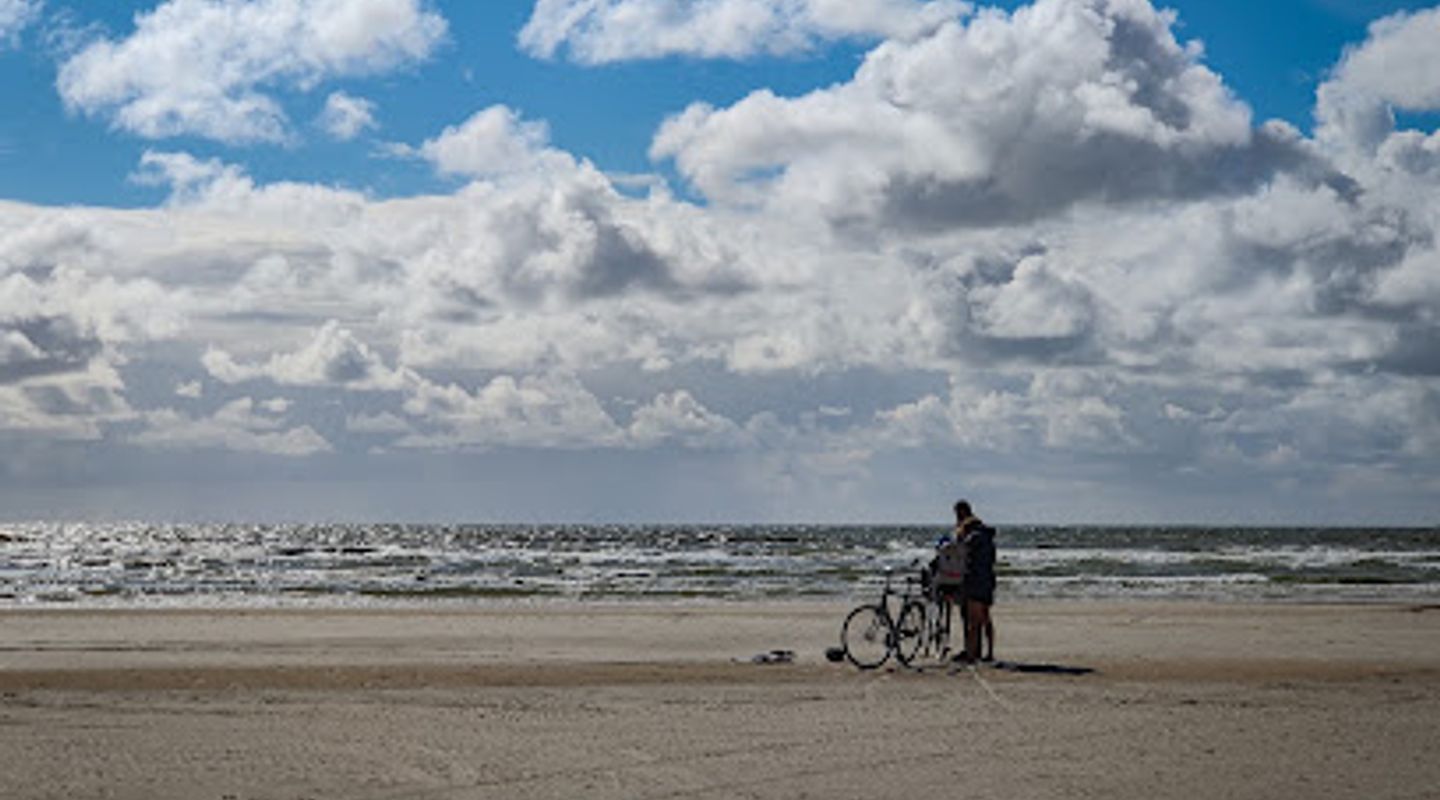
The Beach on Fanø, Fano Travel Guide
A vast, wind‑shaped ribbon of sand where you can drive on the shore, chase kites across tidal flats, and feel the full, wide‑open spirit of Denmark’s North Sea coast.
Stretching for more than 12 km along the North Sea, the beach on Fanø is a vast ribbon of pale sand backed by rolling dunes and open sky. Here you can drive on the compact sand, walk seemingly endless tidal flats, swim in wave‑washed shallows and watch kites dance in the steady westerly winds. Part of the Wadden Sea landscape, it feels at once wild and welcoming, with pockets set up for families, surfers, blokart sailors and quiet strolls among dune grasses and wartime bunkers.
A brief summary to The Beach on Fanø
- Fanø, DK
- Duration: 1 to 6 hours
- Free
-
 Outdoor
- Mobile reception: 4 out of 5

Know before you go
Hi, I'm Eve. Here are a few practical things to know before exploring The Beach on Fanø.
- Check local tide times before venturing far out on the flats or parking a car on the sand, as the water rises quickly and can cut off routes back to shore.
- For the most sheltered swimming and family‑friendly shallows, aim for the wide stretch between Fanø Bad and Rindby Strand in calm summer weather.
- Even on sunny days, pack windproof layers; the prevailing westerly breeze can feel cool, especially when you step out of the dunes onto the open beach.
- If you plan to drive on the beach, stay on firm sand closer to the dunes, respect the speed limit and avoid soft, wet areas further toward the sea.
- Look for old bunkers partly buried in the dunes, but treat them with care and watch your footing on rough concrete and shifting sand.
Do you manage this location?
Take control to get all the benefits, like improved information, better appearance, and stronger visibility across AI-powered discovery. Learn more about listing your business on Evendo
Activate your presenceOther nearby places you may find interesting
The closest places of the same kind, if this one is not quite what you had in mind.

Explore The Beach on Fanø on the Map
A handpicked selection of must-see spots near The Beach on Fanø, mapped for you.
Getting There
-
Car and ferry from Esbjerg
From Esbjerg, drive to the ferry terminal and take the vehicle ferry to Nordby on Fanø, a crossing of around 12 minutes that usually runs several times per hour during the day. A return ticket for a car with passengers typically falls in the range of 250–400 DKK depending on season and vehicle size. Once on Fanø, it takes about 10–20 minutes to drive across the island to the main beach access at Fanø Bad or Rindby Strand, where you can continue onto the sand where driving is permitted, subject to local speed limits and any weather‑related restrictions.
-
Public transport via Esbjerg and ferry
Reach Esbjerg by regional train or long‑distance bus services from major Danish cities, with journeys from Copenhagen usually taking around 3–3.5 hours and from Aarhus about 2.5–3 hours. From Esbjerg station, local buses link to the ferry terminal in roughly 10–15 minutes; single tickets generally cost around 20–30 DKK. Foot passengers pay a lower fare on the Esbjerg–Fanø ferry, commonly around 50–80 DKK return. After arriving in Nordby, use the island buses toward Fanø Bad or Rindby Strand, a ride of about 15–25 minutes, or walk or cycle if you are staying nearby.
-
Cycling on Fanø
Bicycles are allowed on the Esbjerg–Fanø ferry, often for a modest additional fee of around 20–40 DKK on top of the passenger fare. From Nordby ferry harbour, well‑signed cycle routes lead across the island, and it typically takes 20–35 minutes to reach Fanø Bad or Rindby Strand by bike on mostly flat terrain. Compact sand behind the dune line often provides rideable surfaces close to the beach, but soft patches near the high‑tide mark require care. Wind can significantly affect travel time, so allow extra time when strong westerlies are forecast.
For the on-the-go comforts that matter to you
-
 Restrooms
-
 Drink Options
-
 Drinking Water
-
 Food Options
-
 Seating Areas
-
 Sheltered Areas
-
 Trash Bins
-
 Information Boards
-
 Visitor Center
Discover more about The Beach on Fanø
Endless Sand Between Sea and Sky
The beach on Fanø runs for roughly 12 km between Fanø Bad and Rindby Strand, a huge swathe of fine, pale sand meeting the North Sea in a broad, shallow fringe. At low tide the water retreats so far that the shoreline seems to vanish, leaving rippled flats and pools that mirror the sky. The beach is unusually wide and still slowly growing as currents deposit sand along the shore, creating new dune ridges over time.Underfoot the sand is mostly firm and stone‑free, which makes walking comfortable and swimming appealing once you ease past the first waves. In summer, sections near Fanø Bad and Rindby have a gentle slope and family‑friendly shallows, while further south the strand narrows but widens again dramatically at low tide. Wherever you stand, the horizon feels oversized, with long views along the coast and the muted roar of surf as a constant backdrop.Winds, Waves and a Giant Natural Playground
The steady westerly winds that shape Fanø’s dunes also power a remarkable range of beach activities. On a typical day you might see kites of every shape in the sky, land yachts and blokarts skimming across the sand, and surfers and kite‑surfers searching for the best break. South of Rindby a designated buggy and blokart area takes advantage of hard sand and wide open space, turning the beach into a natural race track.Closer to Fanø Bad, volleyball nets and informal football pitches appear in summer, and there is plenty of room simply to jog, build sandcastles or fly a modest kite. The sheer width of the beach means different uses can coexist: active zones near access points, quieter stretches just a short walk away, and, at the waterline, a changing mosaic of channels and sandbars for paddling and exploring.Driving on the Shore and Life in the Dunes
One of Fanø’s most distinctive features is that cars are allowed on much of the beach between Fanø Bad and Sønderho, with a low speed limit and clear dune access corridors. The compact sand at mid‑tide makes it feel almost like driving on a pale, open road, and for many visitors this is part of the experience. It also means you can set up your day’s base close to your vehicle, useful for families and anyone bringing bulky gear.Just inland, the dune belt forms a softer, more sheltered world of marram grass, sandy paths and pockets of heath. Here and there, concrete remnants of Second World War bunkers are half‑buried in the sand, reminders of the island’s strategic position during the Atlantic Wall era. Between dunes and beach lie tracks popular with cyclists and walkers who prefer firmer ground and a little protection from the wind.Sea, Safety and Shifting Tides
The North Sea off Fanø is inviting but powerful. In summer, a lifeguard station typically operates near Rindby Strand, providing an extra layer of reassurance on the busiest bathing stretch. The seabed is generally sandy and free of rocks, yet currents and waves can change quickly, especially around channels carved by the tide. Shallow pools that are perfect for children at low tide can fill and connect as the water returns, reshaping the edge of the beach within an hour.The area is part of the Wadden Sea, a tidal landscape where water levels rise and fall significantly twice a day. This makes timing important, whether you are swimming, walking far out on the flats, or parking a car on the sand. It also creates a dynamic environment that feels slightly different with each visit: sometimes glassy and calm, sometimes windswept with whitecaps marching toward the shore.Nature, Wildlife and Island Atmosphere
Beyond its recreational appeal, Fanø’s beach is a piece of a larger coastal ecosystem. Migratory birds use the Wadden Sea as a refuelling stop, and at quieter times of year you may spot waders probing the flats or flocks lifting as one above the tideline. The dunes shelter hardy plants adapted to salt spray and shifting sand, and after storms beachcombers scour the wrack line for driftwood or the occasional piece of amber.Off the sand, small clusters of cafés, ice‑cream spots and holiday houses around Fanø Bad and Rindby give the area a relaxed seaside‑village feel without overwhelming the landscape. The island’s main settlements lie on the more sheltered eastern side, so when you are on the beach you remain acutely aware of the open North Sea. Even on cooler or windy days, that combination of big sky, moving water and wind‑shaped dunes is what defines the character of the Beach on Fanø.












Your all‑in‑one travel companion app
Explore expert travel guides, compare and book tours, experiences, hotels, and more—all from the palm of your hand. Download now for seamless trip planning wherever your wanderlust takes you.


Explore More of Fano
Looking beyond The Beach on Fanø? Discover Fano for broader travel guides, local hot-spots, and regional highlights.
Explore Fano