

Gedser Vandtårn Travel Guide
Free Guide: Historic yellow water tower turned viewpoint, offering sweeping Baltic horizons and a quiet taste of life at Denmark’s southernmost town.


A brief summary of Gedser Vandtårn
Historic yellow water tower turned viewpoint, offering sweeping Baltic horizons and a quiet taste of life at Denmark’s southernmost town.
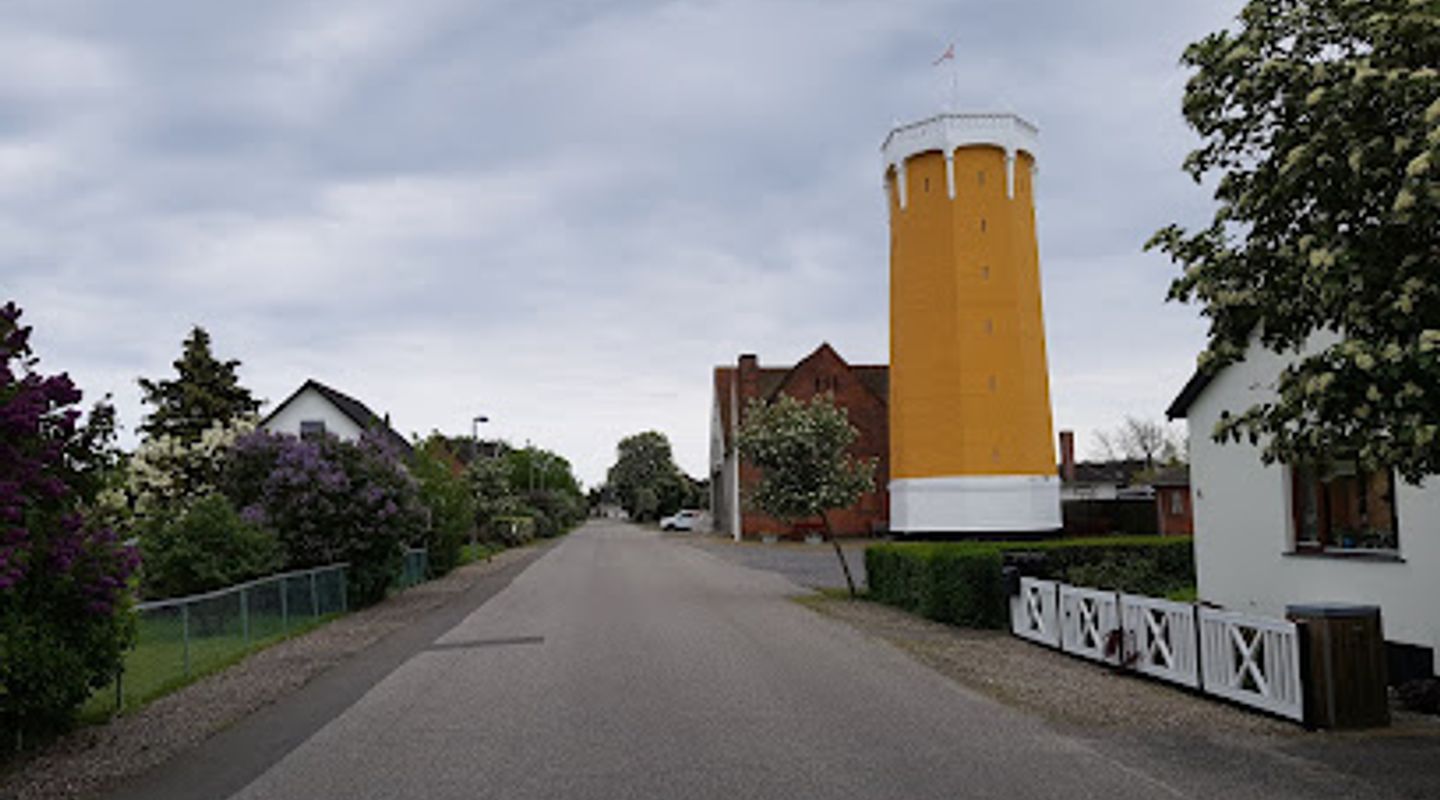
Rising above the modest rooftops of Denmark’s southernmost town, Gedser Vandtårn is a distinctive yellow water tower from 1912 that now serves as a compact viewpoint and local landmark. Climb the internal stairs to a panoramic platform and take in sweeping views over Gedser, the ferry harbour, the marina, green fields and the shimmering Baltic Sea. Open mainly in summer and occasionally by arrangement, it’s a simple, low-key stop that rewards you with big skies, sea breezes and excellent photo opportunities at the very edge of Denmark.
On-site amenities
 Restrooms
 Trash bins
 Information boards
 Seating areas
- Address
- Danmarksgade 6, 4874 Gedser
- Phone
Getting there
Regional bus from Nykøbing Falster
Train and bus combination via Nykøbing Falster
Car from Nykøbing Falster and the wider region
Discover more about Gedser Vandtårn
An iron sentinel at Denmark’s southern edge
Gedser Vandtårn stands like a quiet sentinel on the flat landscape of southern Falster, its yellow façade and rounded tank marking the skyline of Denmark’s southernmost town. Completed in 1912, the tower once formed part of the vital water supply system for Gedser, backing up the growing ferry harbour and its small community. Today the pumps are silent, but the structure remains an unmistakable reference point and a symbol of Gedser’s maritime character.From street level, the tower feels both modest and imposing. It is not especially tall by global standards, yet because the surrounding terrain is low and open, the cylinder and cap of the tank appear prominently from many angles around town. Brickwork, steel and functional details reflect early 20th‑century utility architecture, where form closely followed purpose, yet the warm colour palette gives it a surprisingly friendly presence.
From water supply to viewpoint in the sky
Inside, the old technical installation has given way to a simple visitor route. A narrow staircase spirals upward through the shaft, occasionally passing small openings that hint at the tower’s former working life. As you climb, you move from the everyday bustle of Gedser’s streets into a hushed vertical space, with footsteps echoing against the walls.At the top, the viewing platform opens as a welcome reward. Here, instead of pipes and valves, there is sky, light and a continuous horizon. The transformation from infrastructure to lookout has preserved the tower’s industrial soul while giving it a new cultural role: a place to contemplate both the town below and the sea that has shaped it.
Views over ferries, fields and the Baltic Sea
Stepping out onto the upper level, you are greeted by a 360‑degree panorama. To one side lies Gedser town, a neat patchwork of streets, rooftops and gardens. Beyond stretch open fields, dykes and the low coastline of Falster, revealing just how exposed this corner of Denmark is to wind and weather.Turn toward the water and the industrial outlines of the ferry harbour come into view, with ships docking and departing for Germany. Closer by sits the marina, its masts clustered together, while further out the Baltic Sea spreads in shifting bands of blue and grey. On clear days, the light can be dazzling; at sunset, the horizon softens into orange and pink tones that make the tower a favourite place for evening visits.
A quiet encounter with local history
Beyond the scenery, the tower tells a concise story about how small coastal communities developed in the early 1900s. The construction of a dedicated water tower signalled growth, modernisation and the need for reliable services to support harbour activities and daily life. Over time, as newer systems took over, the structure risked becoming obsolete.Instead, it has been preserved and maintained as a piece of local heritage. Simple information inside or at the base typically explains when and why it was built, offering context without overwhelming detail. The experience is low‑tech and grounded: there are no large exhibitions or multimedia shows, just a solid building and a sense of continuity between past and present.
Small‑scale visit with big‑sky atmosphere
A visit to Gedser Vandtårn does not demand much time, yet it lingers in memory because of its setting and atmosphere. The climb is short but steep, so you feel you have earned your vantage point. Up top, the wind can be brisk, carrying the sound of gulls and the faint hum of ferry engines from the harbour.The tower is usually open to the public in the summer months and occasionally at other times by arrangement, sometimes focusing on evening openings that take advantage of the long northern light. There is a modest entrance fee that supports upkeep, and the experience remains pleasantly unhurried and uncommercial. Combined with a stroll through Gedser or a walk along the shoreline, the tower becomes a natural highlight of any visit to this far‑flung corner of Denmark.
Framing the edge of a journey
Because Gedser is literally at the end of the road in southern Denmark, the water tower often marks either the beginning or the conclusion of a wider journey. From the platform you can trace ferry routes, imagine historic sailings across the Baltic, and sense how closely the town’s identity is tied to the sea.For photographers, the tower offers clean sightlines and appealing contrasts between industrial harbour elements, neat town geometry and open seascape. For others, it is simply a place to pause, feel the salt‑tinged air and appreciate the scale of the landscape. Compact, unfussy and authentic, Gedser Vandtårn encapsulates the understated charm of Denmark’s far south in a single, well‑placed structure.
Evendo Review Centre
 Google
Guest reviews
Best time to go
Quietest: Jan, Feb & Nov · before 8am or at 9pm
Busy times are Evendo estimates for a typical year, to help you plan. Actual crowds vary with events, school holidays and the weather.
Explore Gedser Vandtårn on the map
A handpicked selection of must-see spots near Gedser Vandtårn, mapped for you.
Get your free copy of our complete guide to Gedser Vandtårn, delivered straight to you.
Everything on this page, from opening hours and how to get there to Eve’s tips and the best time to go, in one PDF you can read offline, print or share.
Already have an account? Sign in
Your Gedser Vandtårn guide is ready.
We'll send it to · Not you? Sign out

Getting your guide ready…
We are putting together a fresh copy of the Gedser Vandtårn guide. This can take up to a minute.
This can take a few moments. If your browser asks, choose Allow so the download can start. You'll find the guide in your Downloads folder.
Nothing happened? Download it again
Sorry, the guide is taking longer than usual. Please try again in a minute, or get it by email instead.
Other nearby places you may find interesting
The closest places of the same kind, if this one is not quite what you had in mind.
-
-
-
-
-


Swipe for more places
More to explore near Gedser Vandtårn

 Best experiences near Gedser Vandtårn
 Best hotels near Gedser Vandtårn
 Best landmarks near Gedser Vandtårn
 Best attractions near Gedser Vandtårn
 Best shops near Gedser Vandtårn
 Best restaurants near Gedser Vandtårn
 Best bars near Gedser Vandtårn
Do you manage this location?
Take control to get all the benefits, like improved information, better appearance, and stronger visibility across AI-powered discovery.
Explore more

Explore more of Gedser Odde
Discover Gedser Odde, Denmark's southernmost point, offering stunning Baltic Sea views, rich birdlife, and a peaceful retreat in untouched nature.
Explore Gedser Odde
Explore more of Denmark
Discover Denmark: A perfect blend of history, modern design, and the cozy concept of hygge. Explore vibrant cities, serene landscapes, and world-class cuisine.
Explore Denmark
