Dancer's fountain, Helsingor Travel Guide
Free Guide: A delicate bronze trio of Royal Danish Ballet dancers, Danserindebrønden is a quiet green-corner fountain where Helsingør’s everyday life meets timeless grace.


A brief summary of Dancer's fountain
A delicate bronze trio of Royal Danish Ballet dancers, Danserindebrønden is a quiet green-corner fountain where Helsingør’s everyday life meets timeless grace.
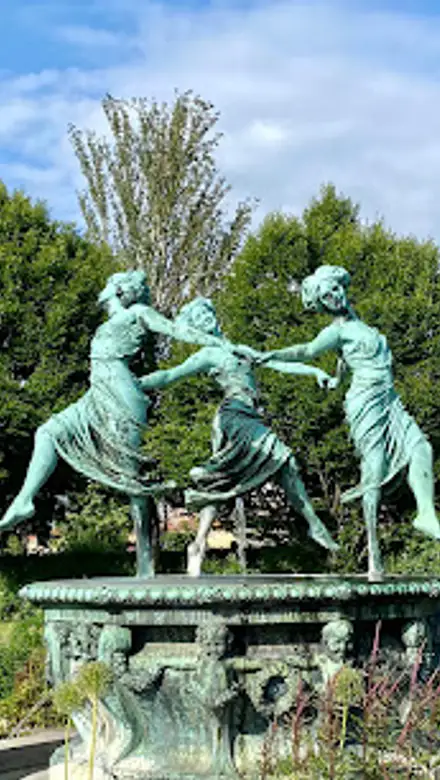
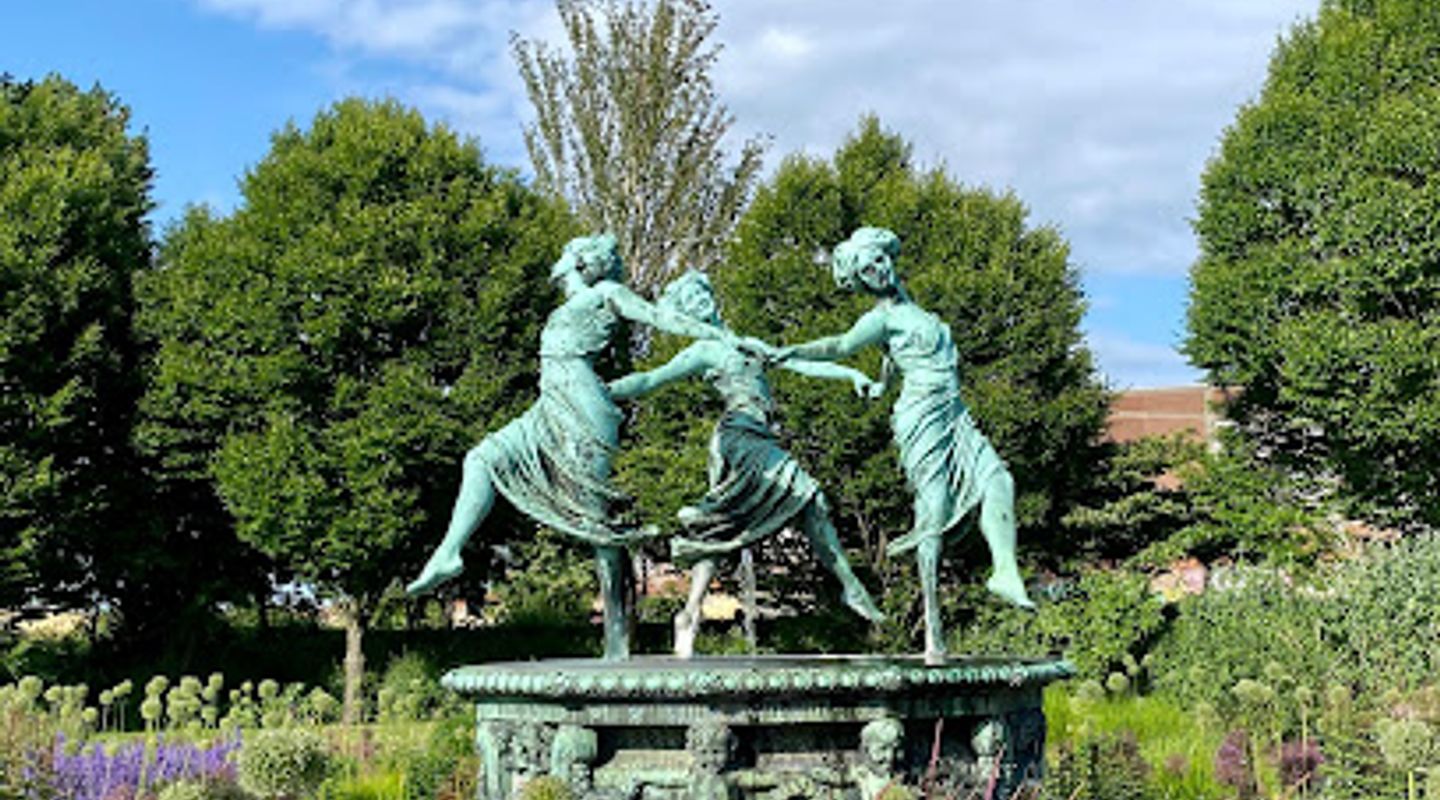
Set in a small garden at the corner of Allegade and Kronborgvej in Helsingør, the Dancer’s Fountain (Danserindebrønden) is a graceful bronze tribute to the golden age of Danish ballet. Created by sculptor Rudolph Tegner in 1913 and originally displayed in Copenhagen’s King’s Garden, it was moved here in 1933. Three poised ballerinas – Elna, Emilie and Grethe – rise from a circular basin, their outstretched arms and flowing lines capturing a fleeting moment on stage. Surrounded by trees and benches, it’s a calm, contemplative pause between Kronborg Castle and the historic old town.
On-site amenities
 Seating areas
 Trash bins
 Information boards
 Restrooms
 Drink options
 Food options
Opening hours
- Every dayOpen 24 hours
Opening hours as listed on the venue’s Google Business Profile. Hours can change for services and special events, so check with the venue before you go.
- Address
- Allegade, 3000 Helsingør
- Website
Getting there
Train and walk from Copenhagen
Local bus within Helsingør
Car or taxi from North Zealand
Discover more about Dancer's fountain
Ballet in Bronze on a Quiet Helsingør Corner
The Dancer’s Fountain, or Danserindebrønden, sits modestly in a pocket-sized garden where Allegade meets Kronborgvej, a short stroll from Helsingør’s harbour and castle. At first glance it is a simple circular basin, but your eye is quickly drawn upward to three slender bronze figures frozen mid-dance. Their toes are arched, arms extended, bodies slightly tilted as if still moving to unheard music. Against the backdrop of trees, cobbles and distant rooftops, the scene feels both theatrical and surprisingly intimate.The fountain’s placement in a small green wedge of parkland gives it a human scale. Benches and low planting invite you to step closer, circle the basin and study each dancer from different angles. On a bright day, reflections ripple across the water and the bronze catches the light, highlighting muscles, folds of fabric and the delicate curve of fingers. Even without water running, the sculptural group has a strong presence, a moment of grace amid the everyday rhythm of the street.
Rudolph Tegner’s Vision of Movement and Grace
The work is by Rudolph Tegner, a Danish sculptor known for his dramatic, often expressive figures. Completed in 1913, the fountain reflects his fascination with capturing movement in solid material. Rather than a single central statue, Tegner chose three individual ballerinas, each with her own pose and personality. Taken together, they suggest different stages of a performance: a sweeping turn, a poised balance, an airy leap about to happen.Up close, you can see how carefully Tegner has shaped the bodies. Muscles are subtly indicated, not exaggerated, and the dancers’ costumes cling and swirl just enough to suggest motion. The interplay between their raised arms and the circular line of the basin creates a kind of choreographed geometry. From one side, the composition reads as a tight, harmonious group; from another, the figures seem to scatter outward, like notes in a musical phrase.
Tribute to Three Royal Danish Ballet Stars
Danserindebrønden is not an abstract homage to dance but a specific tribute to three early 20th-century ballerinas from the Royal Danish Ballet. The plinths in front of each figure carry their names: Elna, Emilie and Grethe. They represent Elna Lauesgaard, Emilie Smith and Grethe Detlevsen, performers who helped shape Denmark’s ballet tradition at a time when the art form enjoyed strong national support.Their inclusion reflects the close ties between Danish sculpture and the country’s performing arts during this period. Rather than depicting mythological figures or anonymous muses, Tegner and his patron chose real dancers who were admired on stage. To stand here today is to stand in front of a kind of three-dimensional playbill, a permanent encore bow that honours not just these women but the whole world of rehearsals, performances and creative risk behind them.
From Copenhagen’s King’s Garden to Helsingør
When the fountain was first unveiled, it stood in Copenhagen’s King’s Garden near Rosenborg Castle, placed there as part of a broader effort to enrich public spaces with art. The design was selected in competition, with the influential brewer and art patron Carl Jacobsen backing Tegner’s proposal. For two decades the dancers graced that inner-city park, bringing ballet into everyday urban life.In 1933 the fountain found a new home here in Helsingør. The relocation brought the work into dialogue with another strand of Danish culture: the maritime city that inspired Shakespeare’s Elsinore and the imposing silhouette of nearby Kronborg Castle. The dancers now occupy a quieter, more local setting, but one that sits at the crossroads of castle, harbour and old town. The move also underscores the idea that public art can travel and be recontextualised, gaining new meanings in a different urban story.
A Restful Pause Between Castle and Old Town
Today the Dancer’s Fountain functions as a gentle pause point in a day of sightseeing. The surrounding garden, though small, offers a welcome patch of green between cobbled streets and the vast open spaces around Kronborg. Locals cut through on their way to errands, schoolchildren pass by in groups, and visitors drift in from the nearby waterfront and museums.It is easy to linger here. The sound of splashing water, when the fountain is running, mixes with distant seagulls and harbour noises. In cooler months, the bronze darkens and the basin may be dry, but the figures remain expressive, etched against a grey sky or soft winter light. Early in the morning or late in the day, when the streets quieten, the three dancers can feel almost like guardians of this small urban stage, keeping watch over a city where history, theatre and the sea are never far apart.
Details to Notice Before You Move On
Before leaving, take a moment to walk the full circle around the basin. From some angles the dancers appear almost symmetrical; from others, subtle differences in gesture and gaze emerge. Look for the inscriptions with their names, traces of patina where hands have rested on the edge, and the way tree branches above seem to echo the sweep of outstretched arms.This is not a grand monument but a finely tuned piece of sculptural choreography. Its charm lies in how easily it fits into the everyday fabric of Helsingør, offering beauty at the junction of residential streets and world-famous heritage sites. Whether you stay for a quick glance or sit for a while on a nearby bench, Danserindebrønden rewards anyone willing to pause and let the dance, however still, unfold.
Evendo Review Centre
 Google
Guest reviews
Best time to go
Quietest: Jan, Feb & Mar · before 7am or from 9pm
Busy times are Evendo estimates for a typical year, to help you plan. Actual crowds vary with events, school holidays and the weather.
Explore Dancer's fountain on the map
A handpicked selection of must-see spots near Dancer's fountain, mapped for you.
Get your free copy of our complete guide to Dancer's fountain, delivered straight to you.
Everything on this page, from opening hours and how to get there to Eve’s tips and the best time to go, in one PDF you can read offline, print or share.
Already have an account? Sign in
Your Dancer's fountain guide is ready.
We'll send it to · Not you? Sign out

Getting your guide ready…
We are putting together a fresh copy of the Dancer's fountain guide. This can take up to a minute.
This can take a few moments. If your browser asks, choose Allow so the download can start. You'll find the guide in your Downloads folder.
Nothing happened? Download it again
Sorry, the guide is taking longer than usual. Please try again in a minute, or get it by email instead.
Other nearby places you may find interesting
The closest places of the same kind, if this one is not quite what you had in mind.
-
-
-
-
-


Swipe for more places
More to explore near Dancer's fountain

 Best experiences near Dancer's fountain
 Best hotels near Dancer's fountain
 Best landmarks near Dancer's fountain
 Best attractions near Dancer's fountain
 Best shops near Dancer's fountain
 Best restaurants near Dancer's fountain
 Best bars near Dancer's fountain
Do you manage this location?
Take control to get all the benefits, like improved information, better appearance, and stronger visibility across AI-powered discovery.
Explore more

Explore more of Helsingor
Discover Helsingør, Denmark's historic coastal city, home to Kronborg Castle and a vibrant cultural scene, offering a blend of history, scenic beauty, and local charm.
Explore Helsingor
Explore more of Denmark
Discover Denmark: A perfect blend of history, modern design, and the cozy concept of hygge. Explore vibrant cities, serene landscapes, and world-class cuisine.
Explore Denmark