Trapholt Museum for Modern Art and Design, Kolding Travel Guide
Free Guide: Architect‑designed hillside museum above Kolding Fjord, where modern art, experimental craft and iconic Danish design meet sculpture park strolls and a unique Arne Jacobsen house.


A brief summary of Trapholt Museum for Modern Art and Design
Architect‑designed hillside museum above Kolding Fjord, where modern art, experimental craft and iconic Danish design meet sculpture park strolls and a unique Arne Jacobsen house.
Trapholt is Denmark’s leading museum of modern art, craft, and design outside Copenhagen, set on a green slope above Kolding Fjord. Opened in 1988, the museum combines striking architecture with a sculpture park, landmark exhibitions, and one of the country’s largest collections of Danish furniture design, including more than 500 iconic chairs. Highlights include Arne Jacobsen’s unique Kubeflex modular summer house, a dedicated Richard Mortensen gallery, and a fjord-facing café that makes Trapholt as much a place to linger as to look.
On-site amenities
 Restrooms
 Drink options
 Drinking water
 Food options
 Seating areas
 Sheltered areas
 Picnic areas
 Trash bins
 Information boards
 Visitor centre
Opening hours
- MonClosed
- Tue10 am–5 pm
- Wed10 am–9 pm
- Thu10 am–5 pm
- Fri10 am–5 pm
- Sat10 am–5 pm
- Sun10 am–5 pm
Opening hours as listed on the venue’s Google Business Profile. Hours can change for services and special events, so check with the venue before you go.
- Address
- Æblehaven 23, 6000 Kolding
- Phone
- Website
Getting there
Regional train and local bus from Kolding Station
Taxi from central Kolding
Bicycle from Kolding city centre
Discover more about Trapholt Museum for Modern Art and Design
A hillside museum above Kolding Fjord
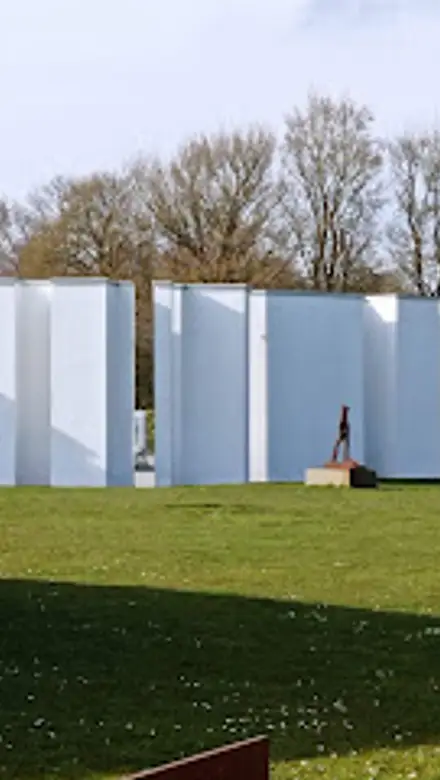
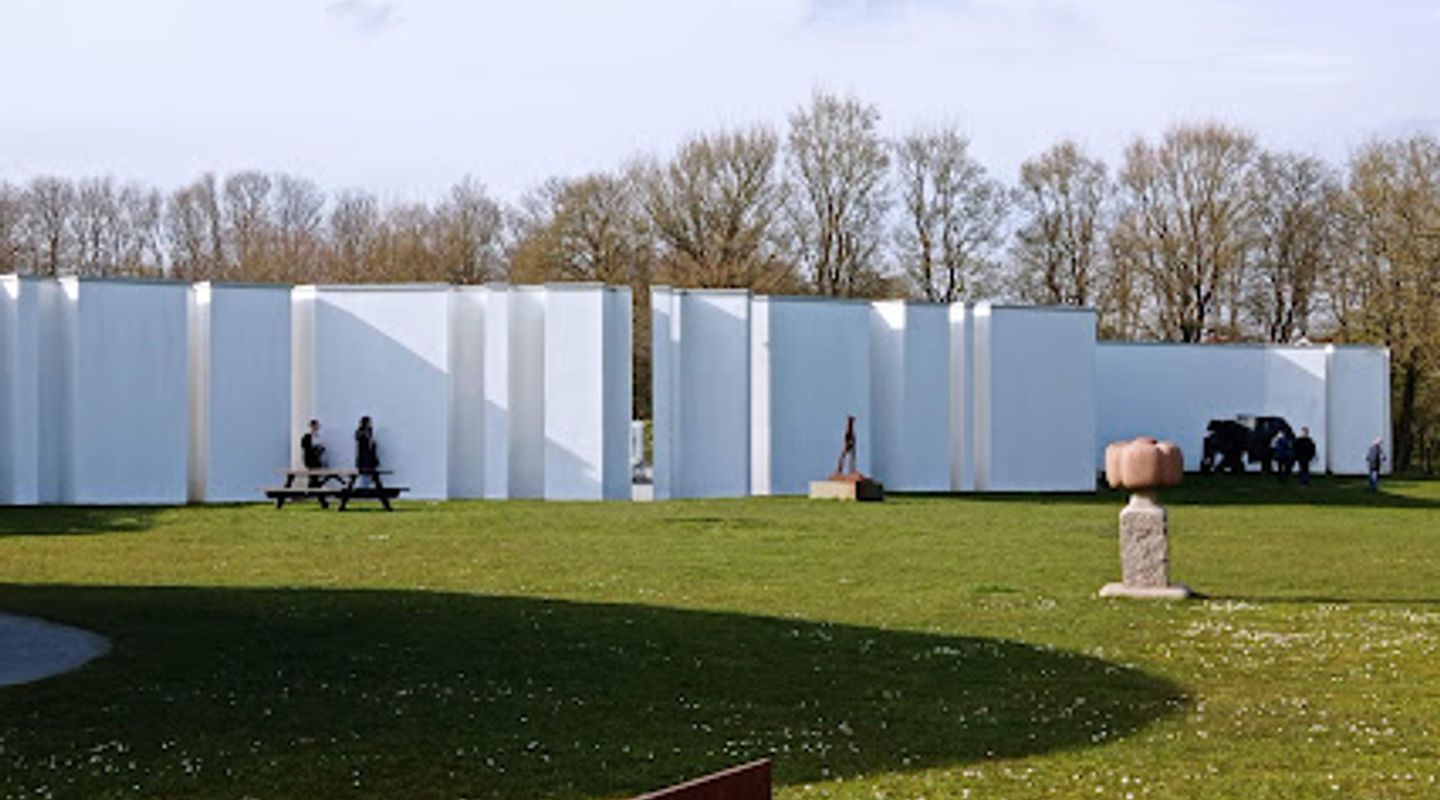
Trapholt unfolds along a hillside of lawns and trees with long views over Kolding Fjord, its low white volumes and sculptural walls deliberately stepping down the slope. Inside, a central "museum street" links a sequence of galleries that bend and open unexpectedly, encouraging you to wander rather than follow a fixed route. Daylight filters in carefully, framing glimpses of water, parkland, and sculpture outside, so the boundary between museum and landscape always feels porous.The building dates from 1988 and quickly became an architectural reference in Denmark for the way it integrates art, design, and nature. Later extensions added further exhibition space without disturbing the basic rhythm of courtyards, terraces, and long interior vistas. Even if you came only to experience the architecture and its placement in the fjord landscape, the visit would be rewarding.
Modern art, craft and an ocean of Danish design
Trapholt presents a rolling programme of exhibitions focused on modern and contemporary art, ceramics, textiles, and experimental craft. Works range from bold abstract canvases and installations to intimate ceramic pieces and conceptual projects that invite participation and debate. A permanent gallery is dedicated to painter Richard Mortensen, whose intense colours and geometric forms trace key developments in 20th‑century Danish art.Design is a core strength here. A striking spiral gallery, inspired by the Guggenheim, houses one of Denmark’s largest collections of 20th‑century chairs. More than 500 examples chart the evolution of Danish furniture design, from functionalist bentwood to sculptural lounge chairs and playful plastic experiments. Exhibitions often explore themes such as sustainability, everyday objects, or how technology shapes interiors, making the museum as much about ideas as about beautiful forms.
Arne Jacobsen’s Kubeflex house in the park
Out in the sculpture park stands one of Trapholt’s most unusual treasures: Arne Jacobsen’s Kubeflex modular summer house. Designed in 1969–70 as a system of prefabricated cubic modules, it never went into wider production, leaving this as the only realised example. The house was once used privately by the Jacobsen family and was later moved to Trapholt, where it has been carefully re‑erected and furnished.Stepping inside feels like entering a three‑dimensional manifesto of Danish modernism. Light floods through generous glazing, built‑in storage keeps surfaces calm, and every detail—from door handles to lighting and, of course, the furniture—bears Jacobsen’s signature. It offers a rare chance to experience his design language as a total environment rather than isolated objects on display.
Sculpture park, fjord views and café culture
Around the museum, a sculpture park spreads down towards the water, dotted with works by contemporary Danish artists. Some pieces are monumental, others understated interventions in the grass or along paths, and together they make the grounds as engaging as the indoor galleries. Benches and open lawns invite you to pause between exhibitions, with the shifting light over the fjord as a constant backdrop.The onsite café is oriented towards those same views, serving meals, cakes, and coffee framed by large windows and outdoor terraces in good weather. Nearby, a design shop showcases carefully selected Danish and international objects—textiles, ceramics, lighting, and smaller furniture—echoing themes from the exhibitions and offering a curated window into current design culture.
A museum built for participation and accessibility
Trapholt has long experimented with collaborative projects that blur the line between artist and audience, such as large‑scale works created with hundreds of participants using knitting or embroidery to explore themes like public monuments or digital data. These projects underline the museum’s interest in art as a way of thinking collectively about society, not only as objects on a wall.The building and grounds are designed with accessibility in mind: level routes, lifts, and wide circulation make it straightforward for wheelchair users and visitors with reduced mobility to navigate. The museum regularly offers guided tours, family‑friendly activities, and educational programmes that open up both art and design to different ages and backgrounds. Even during temporary building works or expansions, this spirit of inclusion and experimentation remains central to how Trapholt presents itself and its collections.
Evendo Review Centre
 Google
Guest reviews
Best time to go
Quietest: Jan, Feb & Mar · before 9am or at 8pm
Busy times are Evendo estimates for a typical year, to help you plan. Actual crowds vary with events, school holidays and the weather.
Explore Trapholt Museum for Modern Art and Design on the map
A handpicked selection of must-see spots near Trapholt Museum for Modern Art and Design, mapped for you.
Get your free copy of our complete guide to Trapholt Museum for Modern Art and Design, delivered straight to you.
Everything on this page, from opening hours and how to get there to Eve’s tips and the best time to go, in one PDF you can read offline, print or share.
Already have an account? Sign in
Your Trapholt Museum for Modern Art and Design guide is ready.
We'll send it to · Not you? Sign out

Getting your guide ready…
We are putting together a fresh copy of the Trapholt Museum for Modern Art and Design guide. This can take up to a minute.
This can take a few moments. If your browser asks, choose Allow so the download can start. You'll find the guide in your Downloads folder.
Nothing happened? Download it again
Sorry, the guide is taking longer than usual. Please try again in a minute, or get it by email instead.
Other nearby places you may find interesting
The closest places of the same kind, if this one is not quite what you had in mind.
-
-
-
-
-


Swipe for more places
More to explore near Trapholt Museum for Modern Art and Design
-
 Best experiences near Trapholt Museum for Modern Art and Design
-
 Best hotels near Trapholt Museum for Modern Art and Design
-
 Best landmarks near Trapholt Museum for Modern Art and Design
-
 Best attractions near Trapholt Museum for Modern Art and Design
-
 Best shops near Trapholt Museum for Modern Art and Design
-
 Best restaurants near Trapholt Museum for Modern Art and Design
-
 Best bars near Trapholt Museum for Modern Art and Design


Do you manage this location?
Take control to get all the benefits, like improved information, better appearance, and stronger visibility across AI-powered discovery.
Explore more

Explore more of Kolding
Discover Kolding, Denmark's blend of historical charm, natural beauty, and vibrant art scene, making it a must-visit destination for travelers seeking a unique experience.
Explore Kolding
Explore more of Denmark
Discover Denmark: A perfect blend of history, modern design, and the cozy concept of hygge. Explore vibrant cities, serene landscapes, and world-class cuisine.
Explore Denmark