

Det Sorte Geomuseum, Lolland Falster Travel Guide
A compact natural history museum in Gedser where Baltic amber, local fossils and glittering minerals reveal the deep geological story of Denmark’s southern tip.
Det Sorte Geomuseum in Gedser is a compact, hands-on natural history museum dedicated to fossils, minerals, amber and the dramatic coastal geology of Denmark’s southernmost tip. Inside, cabinets sparkle with crystals, ancient sea creatures and insect-filled amber, while child-friendly activities and clear explanations bring millions of years of Earth history to life. It’s an atmospheric, family‑oriented stop that pairs perfectly with a walk along Gedser’s fossil-rich beaches.
A brief summary to Det Sorte Geomuseum
- Skolegade 2B, Gedser, 4874, DK
- Click to display
- Click to display
- Duration: 1 to 2 hours
- Budget
-
 Indoor
- Mobile reception: 5 out of 5
- Tuesday 11 am-4 pm
- Wednesday 11 am-4 pm
- Thursday 11 am-4 pm
- Friday 11 am-4 pm
- Saturday 11 am-4 pm
- Sunday 11 am-4 pm

Know before you go
Hi, I'm Eve. Here are a few practical things to know before exploring Det Sorte Geomuseum.
- Combine your visit with a beach walk at Gedser Odde or along nearby shores to hunt for your own stones, fossils and pieces of amber after seeing the exhibits.
- Plan at least an hour inside; families with children who enjoy the interactive elements and fossil hunting talks may want closer to two hours.
- Bring a small bag or box if you intend to collect stones later, and consider photographing your finds so staff can help identify them.
- Check seasonal opening times in advance, as hours are typically concentrated in the main visitor months and around school holidays.
- If you are sensitive to crowds, aim for late morning outside the peak summer weeks, when the museum is usually quieter and more contemplative.
Do you manage this location?
Take control to get all the benefits, like improved information, better appearance, and stronger visibility across AI-powered discovery. Learn more about listing your business on Evendo
Activate your presenceOther nearby places you may find interesting
The closest places of the same kind, if this one is not quite what you had in mind.
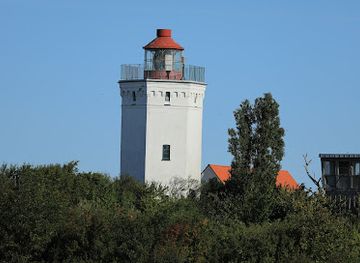
Explore Det Sorte Geomuseum on the Map
A handpicked selection of must-see spots near Det Sorte Geomuseum, mapped for you.
Getting There
-
Car from Nykøbing Falster
Driving from Nykøbing Falster to Gedser typically takes 30–40 minutes, following the main route across Falster to the island’s southern tip. The road is straightforward and paved throughout. Expect to find free but limited street parking near Skolegade in high summer; allow extra time on busy holiday weekends when spaces fill quickly.
-
Regional bus from Nykøbing Falster
Regional buses run between Nykøbing Falster and Gedser, with journey times usually around 35–50 minutes depending on the service and intermediate stops. Fares are generally in the range of DKK 40–70 one way for adults, with discounts for children. Buses stop in central Gedser, from where it is a short, level walk on local streets to the museum; note reduced frequency during evenings and outside the main season.
-
Ferry and foot from Rostock
If you arrive in Gedser by ferry from Rostock, the crossing itself takes about 1 hour 45 minutes. Foot passengers pay roughly EUR 15–25 each way, while cars cost more depending on length and season. From the Gedser ferry terminal it is an easy 10–20‑minute walk on flat terrain through the town to reach Skolegade; the route is suitable for wheeled luggage and strollers, but weather can be very windy.
For the on-the-go comforts that matter to you
-
 Restrooms
-
 Food Options
-
 Seating Areas
-
 Trash Bins
-
 Information Boards
Discover more about Det Sorte Geomuseum
Ancient worlds in a small seaside museum
Det Sorte Geomuseum sits quietly on a corner in Gedser, but inside it opens a window onto hundreds of millions of years of Earth history. This intimate natural history museum focuses on the geology of southern Falster and the Baltic coast, where waves constantly uncover new fossils and stones. Glass cases are packed with ammonites, sea urchins, trilobites, shark teeth and other remains of long‑vanished seas, many of them found on the nearby beaches.Alongside the fossils, the museum showcases an eye‑catching range of minerals and rocks from Denmark and beyond. You may encounter a two‑billion‑year‑old rock next to a petrified tree trunk from distant deserts, or glittering geodes that reveal unexpected colours when sliced open. Labels and diagrams keep explanations straightforward without losing scientific depth, making the space feel like a geological cabinet of curiosities.Amber, ice ages and Gedser’s restless coastline
One of the museum’s specialities is amber, the golden “Nordic gold” that washes ashore all along this part of the Baltic. Displays trace how sticky resin dripping from prehistoric forests hardened over tens of millions of years, trapping insects, spiders and plant fragments that can still be seen with the naked eye. Magnifying lenses invite you to peer closer, turning each piece of amber into a tiny time capsule.Further exhibits explain how ice ages shaped Denmark. Maps, stones and simple models show how glaciers carved the landscape, pushed up ridges and left behind the layered cliffs at Gedser Odde. It becomes easier to understand why fossils and unusual rocks are so common here, and how storms and erosion continue to reshape the coastline today. The result is a clear link between the objects in the cases and the sea you’ll see just a short walk from the museum.Hands-on discoveries for curious kids
Det Sorte Geomuseum is particularly welcoming for families and school‑age children. Rather than simply asking visitors to look, it encourages them to touch, sort and search. Indoors you may find sand trays or excavation boxes where children can dig for replica fossils and learn how palaeontologists work. Simple puzzles and interactive elements help younger visitors recognise different types of stones and shells.Staff are typically on hand to answer questions about finds brought in from the beach and to explain which treasures are truly special. The informal atmosphere makes it easy for children to follow their own interests, whether they are drawn to glimmering crystals, dinosaur‑era fossils or insects frozen in amber. Seating areas allow for short breaks between bursts of exploration, keeping the visit manageable even with smaller children.From museum cabinet to Baltic beach
One of the museum’s strengths is how it connects indoor exhibits with the wider landscape. Information panels and maps point out nearby stretches of coast where you can look for your own stones and fossils after your visit. The museum sometimes cooperates on guided walks at Gedser Odde, where experts explain the layers in the cliffs and help participants recognise common finds along the shore.Because admission is modestly priced and the collection is compact, Det Sorte Geomuseum works well as part of a half‑day itinerary that also includes the harbour area, the water tower or the windswept southern tip of Denmark. Before leaving, many visitors browse a small geo‑shop corner, where polished stones, fossil replicas and starter kits for young collectors extend the museum experience back home.Southernmost science with a local heart
The museum’s location in Denmark’s southernmost town shapes much of its identity. Many specimens on display were found within a short radius of Gedser and donated or documented by local enthusiasts, underlining how rich this seemingly quiet coastline is in geological heritage. Being small also means the museum feels approachable: exhibits are close together, explanations are concise, and it rarely takes more than an hour or two to explore at a relaxed pace.Accessibility has clearly been considered, with a level entrance and a layout that works for wheelchairs and strollers. Indoor seating provides a refuge on blustery days when the Baltic winds are howling outside. In summer, extended opening hours and the relaxed rhythm of Gedser make Det Sorte Geomuseum a natural gathering point for anyone who wants to understand what lies beneath the sand and stones of Denmark’s far south.












Your all‑in‑one travel companion app
Explore expert travel guides, compare and book tours, experiences, hotels, and more—all from the palm of your hand. Download now for seamless trip planning wherever your wanderlust takes you.


Explore More of Lolland Falster
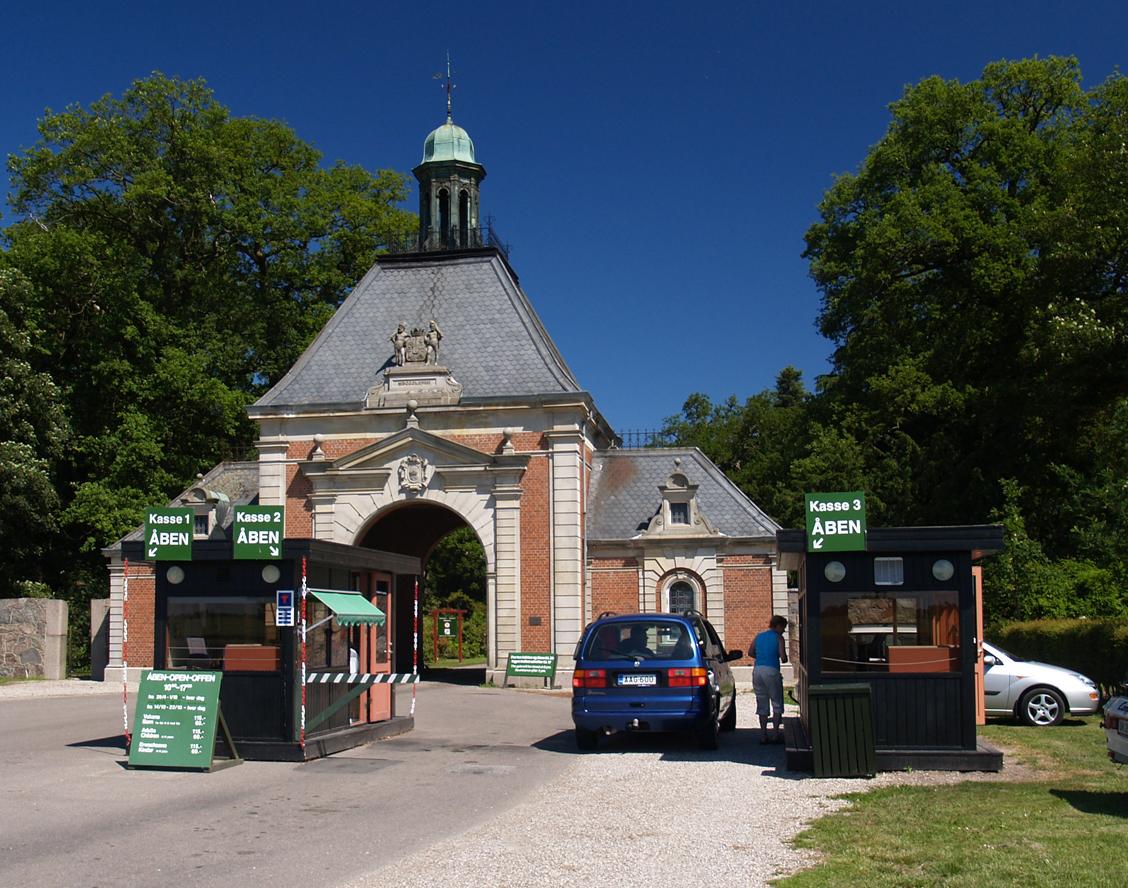
Looking beyond Det Sorte Geomuseum? Discover Lolland Falster for broader travel guides, local hot-spots, and regional highlights.
Explore Lolland Falster
Windy cliffs, vast Baltic horizons and sweeping bird migrations meet at Denmark’s quietly dramatic southernmost point on the island of Falster.
A compact coastal museum where Gedser’s windswept beaches, glittering minerals and ancient fossils come together to tell the deep-time story of Denmark’s southern tip.
