

Skejten, Lolland Travel Guide
A flat, wind-brushed meadow between Fuglsang Park and Guldborgsund, where Ice Age boulders, old oaks and quiet wildlife create a rare pocket of untamed Danish nature.
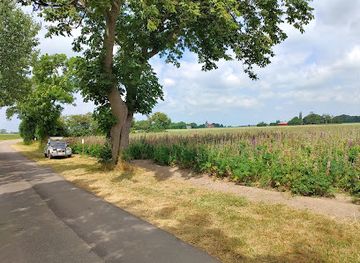
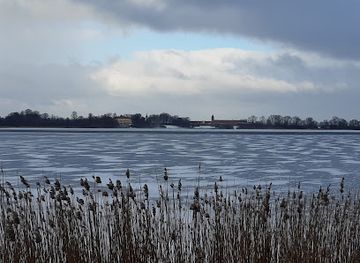
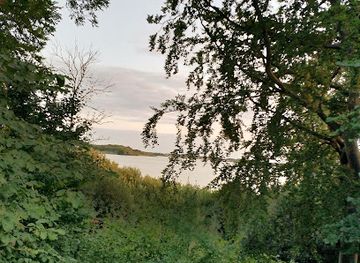
Skejten is a wild, flat meadow landscape stretching from Fuglsang Park to Guldborgsund on the island of Lolland. Shaped by the last Ice Age and never cultivated, it’s a rare pocket of truly untamed Danish nature, dotted with glacial boulders, gnarled old oaks and rich wetland flora. Well-marked paths invite tranquil walks, birdlife is abundant, and views extend across open fields to the shimmering waters of the sound.
A brief summary to Skejten
- Nystedvej 73, Guldborgsund Municipality, Toreby L, 4891, DK
- Duration: 1 to 3 hours
- Free
-
 Outdoor
- Mobile reception: 4 out of 5

Know before you go
Hi, I'm Eve. Here are a few practical things to know before exploring Skejten.
- Wear waterproof or sturdy footwear; sections of the meadow can be muddy and waterlogged after rain, even when nearby park paths feel dry.
- Bring binoculars or a zoom lens to make the most of birdlife and distant views across Guldborgsund and towards Falster.
- Mosquito repellent is very useful in late spring and summer, especially near wetter hollows and on still evenings.
- Combine a walk at Skejten with time in Fuglsang Park and the art museum to experience both the cultivated manor landscape and wild meadows.
- Plan for wind: the area is exposed, so an extra layer or windproof jacket helps even on bright, sunny days.
Do you manage this location?
Take control to get all the benefits, like improved information, better appearance, and stronger visibility across AI-powered discovery. Learn more about listing your business on Evendo
Activate your presenceOther nearby places you may find interesting
The closest places of the same kind, if this one is not quite what you had in mind.
Explore Skejten on the Map
A handpicked selection of must-see spots near Skejten, mapped for you.
Getting There
-
Car from Nykøbing Falster
From Nykøbing Falster, driving to Skejten via the local road network typically takes around 15–20 minutes. The route follows main regional roads across the bridge towards Lolland and through rural countryside. Parking is usually available near Fuglsang Manor and Fuglsang Art Museum, from where you walk into Skejten. There is no entrance fee for the natural area; fuel costs are the main expense.
-
Car or taxi from Toreby village
From Toreby village, the drive to Skejten and Fuglsang is short, around 5–10 minutes on local roads. Surfaces are paved and suitable for standard vehicles in all seasons. Parking by the manor and museum is free, with a signed path leading towards the meadows. A local taxi for this distance is typically inexpensive by Danish standards, though fares vary by operator.
-
Public transport plus walk from Nykøbing Falster
Regional buses connect Nykøbing Falster with stops near Fuglsang and the surrounding area, with journey times usually around 20–30 minutes depending on the service and timetable. From the nearest stop, expect an additional 15–25 minutes of walking on flat terrain through parkland and along farm tracks to reach the open meadows of Skejten. Standard Danish regional bus fares apply, generally in the lower price range for a short inter-town journey.
-
Cycling from nearby towns
The flat landscape of Lolland makes cycling a practical way to reach Skejten from nearby towns such as Nykøbing Falster or Toreby. Expect around 30–45 minutes from Nykøbing and about 15–20 minutes from Toreby, following minor roads and rural lanes. Surfaces are mostly paved, and the main constraint is wind from the sound. There is no charge to enter Skejten, and bikes can be left at the edge of the park or manor area before you continue on foot.
For the on-the-go comforts that matter to you
-
 Restrooms
-
 Drink Options
-
 Drinking Water
-
 Food Options
-
 Seating Areas
-
 Sheltered Areas
-
 Picnic Areas
-
 Trash Bins
-
 Information Boards
-
 Visitor Center
Discover more about Skejten
A wild edge between manor park and sea
Skejten forms a striking transition between the manicured gardens of Fuglsang Manor and the open waters of Guldborgsund. Step beyond the park’s clipped lawns and you are suddenly in a broad, flat expanse of meadow, low scrub and scattered trees, with the sea glinting in the distance. It feels like a threshold landscape: cultured on one side, elemental on the other.The area stretches as a long, open tongue of land, so horizons remain wide and sky-dominated. On clear days you can see across the sound to Falster, while closer at hand the silhouettes of wind-bent oaks and lone boulders punctuate the grasslands. Despite being close to a historic manor and art museum, Skejten quickly gives an impression of remoteness and quiet.Ice Age legacy in grass and stone
Skejten owes much of its character to the last Ice Age. As the ice sheet retreated more than 10,000 years ago, it left behind a low-lying, uneven terrain peppered with huge erratic boulders. These glacial rocks still lie scattered through the meadows, some half-sunk in the soil, others standing like natural sculptures.Unlike much of Lolland’s farmland, the meadow here has never been ploughed or cultivated. That long continuity of grazing and natural processes has allowed a rich mix of wetland and grassland species to persist. In late spring and summer, sections of the meadow burst into subtle colour with wildflowers, sedges and rushes, while damper hollows hold pools that glint between tussocks.Old oaks and quiet wildlife encounters
One of Skejten’s most distinctive features is its old oak trees. Many stand alone or in small clusters, their trunks thick and fissured, branches twisting in irregular shapes. They lend a slightly dramatic, almost pictorial quality to the otherwise flat landscape, particularly when clouds stack up behind them.The mix of meadow, scrub and shoreline attracts a variety of birds. Waders patrol the wetter ground, songbirds flick through the low bushes, and raptors occasionally quarter the open fields. With patience and a pair of binoculars, you can often spot subtle movements in the grass or hear calls carrying over the wind. Wildlife here is not staged; it emerges gradually as you slow your pace.Walking the meadows at your own rhythm
Skejten is best experienced on foot. A network of informal paths and trodden routes leads from the edge of Fuglsang Park out towards the shoreline. Underfoot, the ground can range from firm grass to soft, damp sections where recent rain lingers, so sturdy footwear is useful in all but the driest spells.The walking is generally easy and almost entirely flat, making it more about distance and weather than steepness. Some routes hug the slightly higher, drier ridges, while others dip into low hollows and pass close to boggy patches alive with reeds. There is no single prescribed circuit, which adds to the sense of exploring a semi-wild space rather than following a set trail.Art, views and changing light
Skejten’s proximity to Fuglsang Art Museum creates an unusually rich pairing of culture and landscape. From the museum’s large observation room, visitors can look out over the meadows through a broad window that frames sky, trees and fields like a living painting. The view changes constantly with the weather: sharp and bright on clear days, silvery and subdued when mist drifts in from the sound.Outside, the same interplay of light and openness shapes your walk. Morning brings long shadows and dew on the grass; in late afternoon the low sun can set the meadow edges glowing. Even on overcast days, the subdued tones of water, reed and weathered oak carry a quiet beauty, inviting unhurried contemplation.Seasons, solitude and subtle details
Each season alters Skejten’s mood. Spring is marked by returning birdlife and fresh greens creeping across the fields. Summer offers longer days and buzzing insect life, though breezes from the sound can keep temperatures pleasant. In autumn, grasses turn tawny and migratory birds pass overhead, while winter strips the scene back to bare branches, pale sky and the dark outlines of stone and tree.What defines Skejten most is its sense of low-key solitude. There are no grand viewpoints or dramatic cliffs, just a quiet, resilient landscape that has changed slowly over millennia. It rewards those who take time to notice small shifts in light, texture and sound—a place where the drama lies in understatement rather than spectacle.












Your all‑in‑one travel companion app
Explore expert travel guides, compare and book tours, experiences, hotels, and more—all from the palm of your hand. Download now for seamless trip planning wherever your wanderlust takes you.


Explore More of Lolland
Looking beyond Skejten? Discover Lolland for broader travel guides, local hot-spots, and regional highlights.
Explore Lolland