Tyskertårnet Travel Guide
Free Guide: A rugged World War II radar tower on Helgenæs, where concrete fortifications, sweeping sea views and the rolling hills of Mols Bjerge meet on a windswept headland.


A brief summary of Tyskertårnet
A rugged World War II radar tower on Helgenæs, where concrete fortifications, sweeping sea views and the rolling hills of Mols Bjerge meet on a windswept headland.
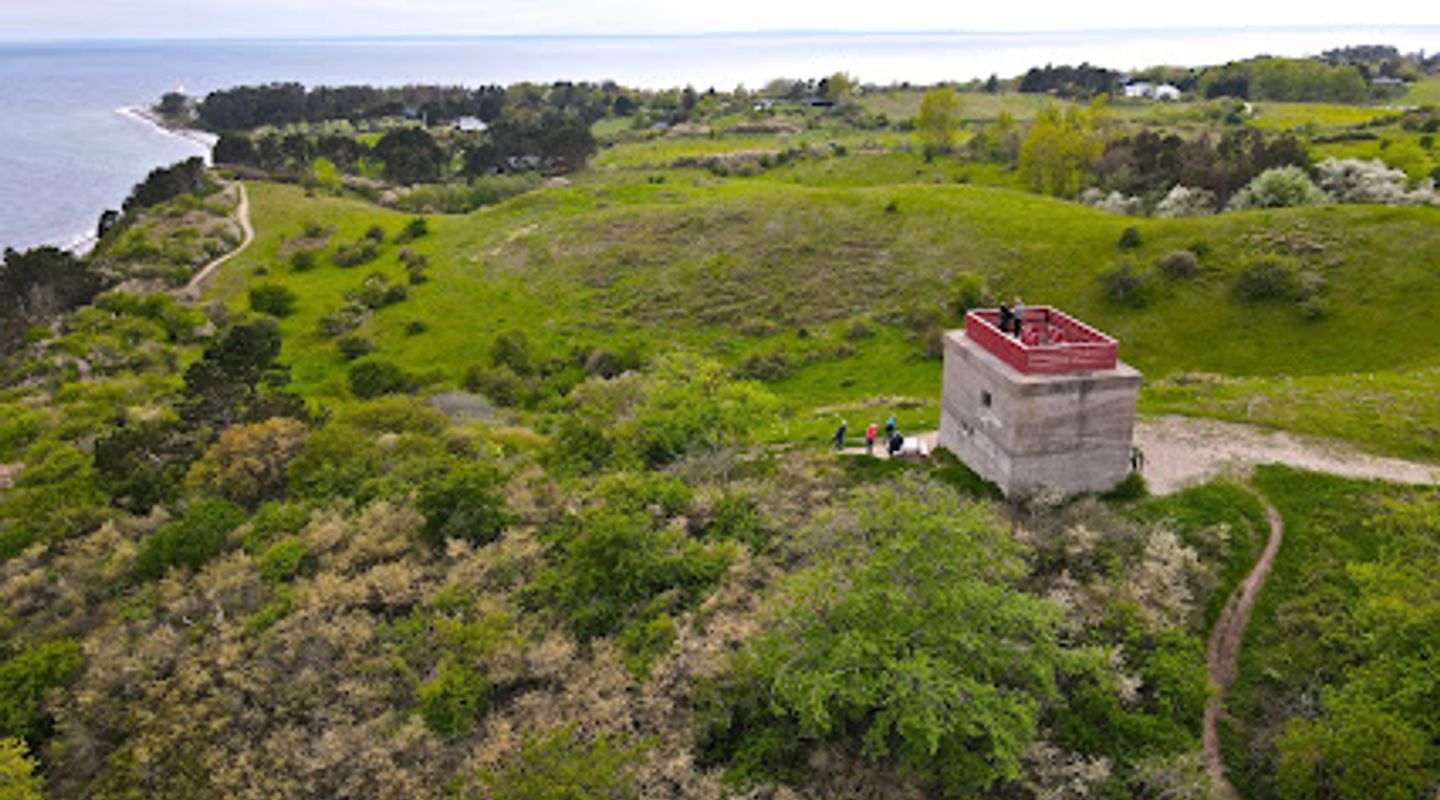
Tyskertårnet is a World War II German radar tower standing on the rugged Helgenæs peninsula near Sletterhage Lighthouse, in Mols Bjerge National Park. This concrete fortification crowns a low hill above the Kattegat, offering sweeping views towards Samsø, Tunø, Aarhus Bay and the Odder coast. Combined with the shoreline paths, bunkers and hilly grasslands, it is an evocative mix of military history, coastal scenery and short but sometimes steep walks.
On-site amenities
 Restrooms
 Seating areas
 Picnic areas
 Trash bins
 Information boards
Opening hours
- Every dayOpen 24 hours
Opening hours as listed on the venue’s Google Business Profile. Hours can change for services and special events, so check with the venue before you go.
- Address
- Tyskertårnet, Capellavej, 8420 Knebel
Getting there
Car from Ebeltoft
Bus plus walk from Aarhus region
Cycling from Mols Bjerge area
Discover more about Tyskertårnet
A wartime radar tower on a Danish headland
Tyskertårnet is a squat, bunker-like concrete tower on the Helgenæs peninsula, once part of a German radar installation during World War II. Built to control and monitor ship traffic through the busy waters of Aarhus Bay and the Kattegat, it formed a link in a chain of coastal defenses that stretched along Denmark’s shoreline. The thick walls, narrow openings and utilitarian form are functional rather than decorative, clearly shaped by military priorities.The structure stands slightly inland from the coast, raised on a hill that provides a natural vantage point. Around it you can still sense traces of the broader fortification system: embankments, scattered concrete remains and the outlines of former gun positions. Together they tell a compact but tangible story of occupied Denmark and the strategic importance of Helgenæs in controlling maritime routes.
Views across sea, islands and rolling hills
What once offered tactical overview today gives wide-open panoramas. From the tower and surrounding hilltop, your gaze sweeps across the Kattegat towards Samsø and Tunø on clear days, and back inland to the undulating landscape of Mols Bjerge. The combination of sea, sky and low, rounded hills creates a sense of space that feels much larger than the tower itself.On blustery days the wind can be brisk, bringing the smell of salt and seaweed up from the stony shoreline below. In softer weather, the sunlight shifts over the water and the mosaic of fields and heathland around Helgenæs. The open horizon and constant movement of ships and ferries give the site a dynamic backdrop, a peaceful contrast to its martial origin.
Paths, gradients and the character of the walk
Tyskertårnet is often combined with a walk from nearby Sletterhage Lighthouse, following a path along the beach before climbing into the hilly terrain. The route is relatively short but can feel surprisingly demanding in places, with some steep, sandy or stony stretches as you ascend from the shore up to the tower. Good footwear is useful, especially in wet or windy conditions.Once on the higher ground, the walking becomes easier, following grassy tracks and informal desire paths across open slopes. The landscape has a slightly wild, windswept feel, with low vegetation, patches of heath and scattered shrubs rather than dense woodland. It gives the experience more of a coastal hike than a casual promenade, while still remaining accessible to most reasonably fit visitors.
Traces of conflict in a peaceful national park
Although the military function has long since disappeared, the tower remains a stark reminder of the 1940s. Its presence within today’s protected landscape underlines how thoroughly the area has been reinterpreted: from a strategic outpost to a place for reflection, picnics and photography. The simple, robust forms of concrete and earthwork contrast with the soft curves of the hills and the constant play of light on the sea.Interpretive information about the wartime role of Helgenæs can be found through regional nature and heritage guides, which place Tyskertårnet within wider defensive lines, nearby bunkers and other remains from the same period. Many visitors choose to link their stop here with other viewpoints in Mols Bjerge, turning it into part of a broader exploration of both natural and cultural landscapes.
Planning your visit to the tower
The site is unfenced and outdoors, with no formal ticketing, and is typically visited during the day, when the views are at their best. The exposed position means weather matters: clear or partly sunny days showcase the long-distance vistas, while mist and low clouds can lend the place a more introspective, atmospheric mood. Windproof clothing is advisable most of the year, and in summer the open slopes can feel quite warm in full sun.Facilities directly at the tower are minimal, but basic amenities are available at Sletterhage Lighthouse and other points on Helgenæs, making it easy to combine the tower with rest stops, picnics or a longer coastal circuit. Whether you stay briefly for the view or linger to trace the outlines of wartime defenses, Tyskertårnet offers a compact, evocative encounter with both history and landscape.
Evendo Review Centre
 Google
Guest reviews
Best time to go
Quietest: Jan, Feb & Nov · before 8am or at 8pm
Busy times are Evendo estimates for a typical year, to help you plan. Actual crowds vary with events, school holidays and the weather.
Explore Tyskertårnet on the map
A handpicked selection of must-see spots near Tyskertårnet, mapped for you.
Get your free copy of our complete guide to Tyskertårnet, delivered straight to you.
Everything on this page, from opening hours and how to get there to Eve’s tips and the best time to go, in one PDF you can read offline, print or share.
Already have an account? Sign in
Your Tyskertårnet guide is ready.
We'll send it to · Not you? Sign out

Getting your guide ready…
We are putting together a fresh copy of the Tyskertårnet guide. This can take up to a minute.
This can take a few moments. If your browser asks, choose Allow so the download can start. You'll find the guide in your Downloads folder.
Nothing happened? Download it again
Sorry, the guide is taking longer than usual. Please try again in a minute, or get it by email instead.
Other nearby places you may find interesting
The closest places of the same kind, if this one is not quite what you had in mind.
-
-
-
-
-


Swipe for more places
More to explore near Tyskertårnet

 Best experiences near Tyskertårnet
 Best hotels near Tyskertårnet
 Best landmarks near Tyskertårnet
 Best attractions near Tyskertårnet
 Best shops near Tyskertårnet
 Best restaurants near Tyskertårnet
 Best bars near Tyskertårnet
Do you manage this location?
Take control to get all the benefits, like improved information, better appearance, and stronger visibility across AI-powered discovery.
Explore more

Explore more of Mols Bjerge National Park
Discover the natural beauty and historical charm of Mols Bjerge National Park, where rolling hills, ancient woodlands, and serene lakes create a perfect outdoor escape.
Explore Mols Bjerge National Park
Explore more of Denmark
Discover Denmark: A perfect blend of history, modern design, and the cozy concept of hygge. Explore vibrant cities, serene landscapes, and world-class cuisine.
Explore Denmark