Jernhatten - Djursland Travel Guide
Free Guide: A short, steep coastal hike leading to wide sea views, rare sun-loving flora, and the quiet drama of Djursland’s Iron Hat above Hjelm Dyb.


A brief summary of Jernhatten - Djursland
A short, steep coastal hike leading to wide sea views, rare sun-loving flora, and the quiet drama of Djursland’s Iron Hat above Hjelm Dyb.
Jernhatten is a 49 m coastal hill on Djursland’s rugged southern shoreline, part of Mols Bjerge National Park near Ebeltoft. A short but fairly steep woodland trail leads to an open cliff-top with sweeping views over Hjelm Dyb and the small island of Hjelm. The area’s unusually dry, sunny microclimate nurtures rare plants more typical of southeastern Europe, while the stony beach below invites quiet shoreline walks. It is a compact, rewarding half-day nature stop.
On-site amenities
 Seating areas
 Trash bins
 Information boards
Opening hours
- Every dayOpen 24 hours
Opening hours as listed on the venue’s Google Business Profile. Hours can change for services and special events, so check with the venue before you go.
- Address
- Havmøllevej, 8400 Ebeltoft
Getting there
Car
Bike
Public transport + Walk
Discover more about Jernhatten - Djursland
Coastal Hill with a Far-Reaching Sea Horizon
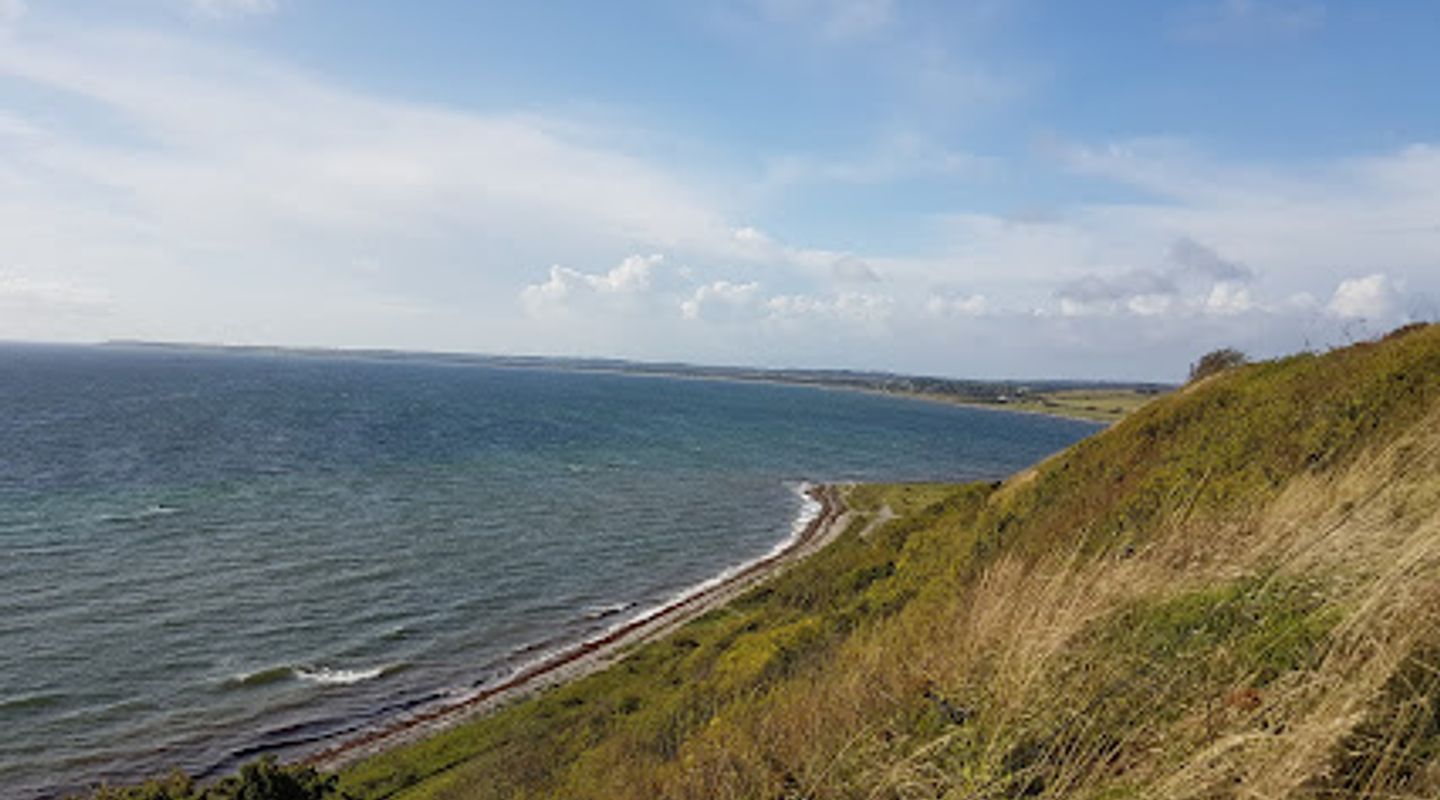
Jernhatten rises just 49 m above sea level, yet from the summit the Baltic-like waters of the Kattegat seem to stretch endlessly toward the horizon. The hill stands alone on Djursland’s southeastern coast, framed by forested slopes that tumble toward a stony beach. Despite its modest height, the vantage point is dramatic: ships glide in the distance, winds sweep in from the sea, and the light constantly shifts over the water.At the top, the view opens across Hjelm Dyb towards the small, privately owned island of Hjelm. On clear days the coastline of Djursland curves away in both directions, giving an almost amphitheatre-like panorama of land, sea, and sky. It is a place that feels at once intimate and expansive, an easy escape from nearby Ebeltoft that still offers a real sense of wilderness.
A Dry, Sunny Microclimate and Rare Plant Life
Jernhatten lies in one of Denmark’s driest, sunniest corners, and this unusual microclimate shapes both the landscape and its ecology. The slopes are warmer and less rainy than much of the country, creating conditions more typical of central or southeastern Europe than coastal Jutland. As a result, attentive walkers may notice plant species that are uncommon elsewhere in Denmark.The vegetation shifts as you climb: denser coastal woodland gives way to lighter scrub and open grass near the top, where sun-loving plants thrive in thin, stony soil. In spring and early summer, the area can feel like a natural rock garden, with insects buzzing and birds using the thermals along the cliff. Even in winter, the relatively dry air and open views make it a rewarding place for a brisk walk.
Trails Through Forest and Along the Shore
Most visits begin on a forest path that gradually steepens as it winds up the hillside. The ascent is short but can be quite steep in places, with roots and uneven ground underfoot. It is a satisfying little climb that rewards you quickly with glimpses of water between the trees and, finally, a clear, open viewpoint at the top.From the hill you can extend your outing by dropping down to the stony shoreline. Here the mood changes: waves slap at the pebbles, driftwood gathers at the high-tide line, and there is space to wander quietly along the water’s edge. The combination of woodland, viewpoint and beach makes Jernhatten feel like three landscapes in one compact area.
Stories of Hjelm and Echoes of Fantasy Worlds
Across the water lies Hjelm, an uninhabited private island historically linked with tales of outlaws and coastal trade. Today it forms the focal point of the view from Jernhatten, a lonely shape on the horizon that adds a hint of mystery to the seascape. The strait between Djursland and Hjelm, known as Hjelm Dyb, has inspired researchers to connect the area with literary fantasy landscapes.A Danish historian has argued that place names and sagas from Djursland, including Hjelm Dyb, may have influenced the creation of fictional strongholds in twentieth-century fantasy literature. Standing on Jernhatten with the wind in your face and the sea below, it is easy to imagine why such coastlines might stir the imagination.
Within the Landscape of Mols Bjerge National Park
Jernhatten is part of Mols Bjerge National Park, a wider protected landscape of hills, heath, and coastline on southern Djursland. Here, glacially formed terrain meets traditional farmland, patches of forest, and long stretches of shoreline, creating a rich mosaic of habitats. Jernhatten’s isolated position on the coast makes it a distinctive outpost of this larger protected area.A visit here fits easily into a broader exploration of Djursland’s nature. You can pair the hill and beach with other viewpoints, manor landscapes, or small coastal villages nearby. Yet even as part of a bigger itinerary, Jernhatten rarely feels rushed: its small scale encourages you to slow down, notice the light over the sea, and simply enjoy being out in the elements.
Atmosphere of Wind, Light, and Quiet
What lingers most from Jernhatten is the atmosphere: the steady noise of waves below, the tang of salt in the air, and the ever-present wind that sculpts the trees. On bright days the sea can turn a deep, glassy blue; on more unsettled days, low clouds race overhead and the coastline feels dramatic and raw.Because the area is compact, it lends itself to unhurried wandering. You might pause on a bench-like rock at the top, sit among low shrubs, or crouch on the pebbles listening to stones clatter in the surf. For many visitors, Jernhatten becomes less about ticking off a viewpoint and more about enjoying a short, elemental encounter with Denmark’s wild east coast.
Evendo Review Centre
 Google
Guest reviews
Best time to go
Quietest: Jan, Feb & Mar · before 7am or from 9pm
Busy times are Evendo estimates for a typical year, to help you plan. Actual crowds vary with events, school holidays and the weather.
Explore Jernhatten - Djursland on the map
A handpicked selection of must-see spots near Jernhatten - Djursland, mapped for you.
Get your free copy of our complete guide to Jernhatten - Djursland, delivered straight to you.
Everything on this page, from opening hours and how to get there to Eve’s tips and the best time to go, in one PDF you can read offline, print or share.
Already have an account? Sign in
Your Jernhatten - Djursland guide is ready.
We'll send it to · Not you? Sign out

Getting your guide ready…
We are putting together a fresh copy of the Jernhatten - Djursland guide. This can take up to a minute.
This can take a few moments. If your browser asks, choose Allow so the download can start. You'll find the guide in your Downloads folder.
Nothing happened? Download it again
Sorry, the guide is taking longer than usual. Please try again in a minute, or get it by email instead.
Other nearby places you may find interesting
The closest places of the same kind, if this one is not quite what you had in mind.
-
Trehøje Mols Three Bronze Age hilltop mounds with sweeping sea-to-sea panoramas, heathland colours and classic glacial scenery in the heart of Mols Bjerge National Park.
-
Det magiske klatretræ A storybook climbing tree on a quiet country road near Ebeltoft, where twisting branches, fresh air and simple play turn a short stop into a small adventure.
-
Mols Bjerge stien An Ice Age–sculpted long-distance trail of low Danish “mountains”, wide views, rare nature and historic sites winding through Nationalpark Mols Bjerge.
-
Poskær Stenhus Denmark’s largest round barrow, Poskær Stenhus blends towering Neolithic stones, quiet fields and soft Mols Bjerge light into a compact, atmospheric time capsule.
-
Kvalitetssti Mols Bjerge, Bjergetapen Denmark’s “mountain stage”: a demanding, day-long loop through the heather-clad hills, ravines and far-reaching views of Mols Bjerge near Ebeltoft.
Swipe for more places
More to explore near Jernhatten - Djursland

 Best experiences near Jernhatten - Djursland
 Best hotels near Jernhatten - Djursland
 Best landmarks near Jernhatten - Djursland
 Best attractions near Jernhatten - Djursland
 Best shops near Jernhatten - Djursland
 Best restaurants near Jernhatten - Djursland
 Best bars near Jernhatten - Djursland
Do you manage this location?
Take control to get all the benefits, like improved information, better appearance, and stronger visibility across AI-powered discovery.
Explore more

Explore more of Mols Bjerge
Discover the natural beauty and historical charm of Mols Bjerge, Denmark's captivating national park in the heart of Djursland, perfect for nature lovers and adventurers.
Explore Mols Bjerge
Explore more of Denmark
Discover Denmark: A perfect blend of history, modern design, and the cozy concept of hygge. Explore vibrant cities, serene landscapes, and world-class cuisine.
Explore Denmark