
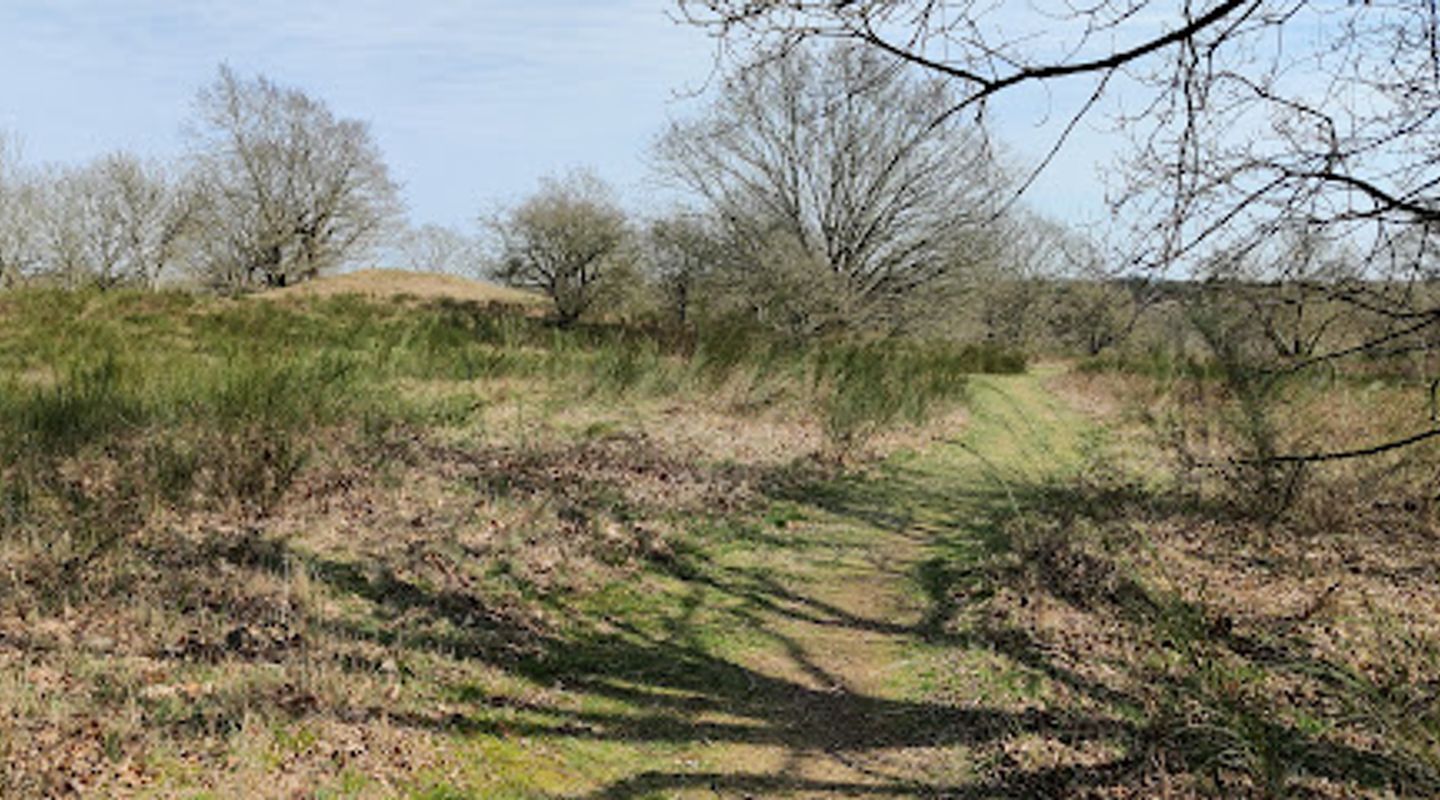
Skovgårde Voldsted, East Jutland Travel Guide
Medieval earthwork fortifications revealing Denmark's feudal past in rural Djursland.
Skovgårde Voldsted is a medieval archaeological site in Nørager Parish, Norddjurs Municipality, Denmark, featuring the earthen remains of an ancient fortified manor. Located approximately 3 kilometres west of Fjellerup in the Djursland region of eastern Jutland, this historic monument preserves evidence of medieval settlement and defensive architecture. The site offers insight into Denmark's medieval rural aristocratic life and remains an important archaeological landmark for understanding the region's historical development.
A brief summary to Skovgårde Voldsted
- Nørager, DK
- Duration: 0.75 to 2 hours
- Free
-
 Outdoor
- Mobile reception: 3 out of 5

Know before you go
Hi, I'm Eve. Here are a few practical things to know before exploring Skovgårde Voldsted.
- Visit during late spring through early autumn when vegetation is manageable and weather conditions are most favourable for exploring the outdoor archaeological site.
- Wear sturdy footwear suitable for uneven terrain, as the earthwork ramparts and surrounding ground may be muddy or waterlogged depending on recent rainfall.
- Combine your visit with nearby archaeological sites Tustrupgravpladsen and Kulthuset på Tustrup-gravpladsen, located 2.5 kilometres southwest, to gain a comprehensive understanding of medieval settlement in the region.
- Bring a camera or sketchbook to document the earthwork formations from different angles, as the topography creates interesting perspectives that illustrate medieval defensive design.
- Check local weather forecasts before visiting, as the open, exposed site offers no shelter; bring appropriate clothing and sun protection for extended stays.
Do you manage this location?
Take control to get all the benefits, like improved information, better appearance, and stronger visibility across AI-powered discovery. Learn more about listing your business on Evendo
Activate your presenceOther nearby places you may find interesting
The closest places of the same kind, if this one is not quite what you had in mind.
Explore Skovgårde Voldsted on the Map
A handpicked selection of must-see spots near Skovgårde Voldsted, mapped for you.
Getting There
-
Private vehicle
From Randers, travel east on Route 16 towards Fjellerup for approximately 35 kilometres, taking 40–50 minutes. Continue through Fjellerup and follow local roads westward for 3 kilometres to reach Skovgårde Voldsted. Parking is available at or near the site; however, facilities are minimal and the approach road may be narrow or unpaved depending on recent maintenance.
-
Public transport and walking
From Aarhus, take a regional train or bus service to Fjellerup station, approximately 50–70 kilometres away and requiring 1–1.5 hours. From Fjellerup, walk or cycle westward for 3 kilometres along local roads to reach the site. This option is weather-dependent and requires good physical fitness; confirm bus schedules in advance as services may be infrequent.
-
Cycling
From Fjellerup or nearby towns in Djursland, cycle westward on local roads towards Skovgårde, approximately 3–8 kilometres depending on starting point and taking 20–40 minutes. The route follows rural roads with moderate traffic; bring a map or GPS device as signage may be limited in this agricultural area.
For the on-the-go comforts that matter to you
-
 Information Boards
Discover more about Skovgårde Voldsted
Medieval Fortifications and Archaeological Significance
Skovgårde Voldsted stands as a testament to medieval Danish settlement patterns and defensive architecture. The site preserves the earthen remains of an ancient fortified manor, known locally as a voldsted—a characteristic form of medieval fortification consisting of raised earthwork ramparts and moats. These archaeological features date to the medieval period and represent the defensive strategies employed by Danish landowners to protect their estates and families during times of regional conflict and uncertainty.The voldsted form of fortification was particularly common in Jutland and reflects the decentralized nature of medieval Danish power, where individual manor lords maintained their own defensive structures. Skovgårde Voldsted exemplifies this tradition, with its distinctive earthwork configuration still visible in the landscape today, allowing visitors and researchers to understand the physical layout and defensive capabilities of such medieval residences.Landscape and Regional Context
Situated in the Djursland peninsula of eastern Jutland, Skovgårde Voldsted occupies a strategic location within the broader medieval settlement network of the region. The site lies approximately 3 kilometres west of Fjellerup and roughly 31 kilometres east of Randers, positioning it within a landscape rich in historical significance. The surrounding terrain of Djursland has long been an important agricultural and administrative centre, and Skovgårde Voldsted contributes to the archaeological narrative of medieval land management and social hierarchy in this area.The proximity to other significant archaeological sites, including Tustrupgravpladsen and Kulthuset på Tustrup-gravpladsen located approximately 2.5 kilometres to the southwest, indicates that this region supported a concentrated medieval population with multiple centres of habitation and ritual activity. This clustering of archaeological remains suggests a well-developed medieval community structure with interconnected settlements and shared cultural practices.Historical Development and Preservation
The Skovgård Manor, whose archaeological remains form the basis of this site, represents a lineage of medieval landholding and estate management that characterises Danish rural history. While the original structures have long since disappeared, the earthwork fortifications remain remarkably well-preserved, creating a tangible connection to the medieval past. The voldsted's survival through centuries of agricultural activity and landscape change demonstrates the durability of these earthen constructions and their importance as permanent features in the Danish countryside.The site's designation as an ancient monument reflects its archaeological and historical value to Danish cultural heritage. The preservation of Skovgårde Voldsted allows researchers and heritage professionals to study medieval fortification techniques, settlement patterns, and the social organisation of rural medieval Denmark. The earthworks provide physical evidence of construction methods, defensive planning, and the spatial relationship between residential, agricultural, and defensive functions within a medieval manor complex.Visitor Experience and Archaeological Interpretation
Visitors to Skovgårde Voldsted encounter a landscape shaped by medieval human activity, where the earthen ramparts and depressions marking former moats create a distinctive topography. Walking through the site allows one to appreciate the scale and complexity of medieval fortification, while the surrounding woodland provides a sense of the rural setting in which such estates functioned. The open-air nature of the site means that visitors can observe the archaeological features from multiple perspectives and understand how the fortifications related to the broader landscape.The site's accessibility and lack of formal barriers encourage direct engagement with the archaeological remains, fostering a tangible understanding of medieval life and defensive architecture. The quiet, rural setting preserves the historical atmosphere while allowing visitors to contemplate the centuries of history embedded in the earthworks. For those interested in medieval archaeology, Danish history, or the evolution of rural settlement patterns, Skovgårde Voldsted offers an authentic and unmediated encounter with the material remains of the medieval past.












Your all‑in‑one travel companion app
Explore expert travel guides, compare and book tours, experiences, hotels, and more—all from the palm of your hand. Download now for seamless trip planning wherever your wanderlust takes you.


Explore More of East Jutland
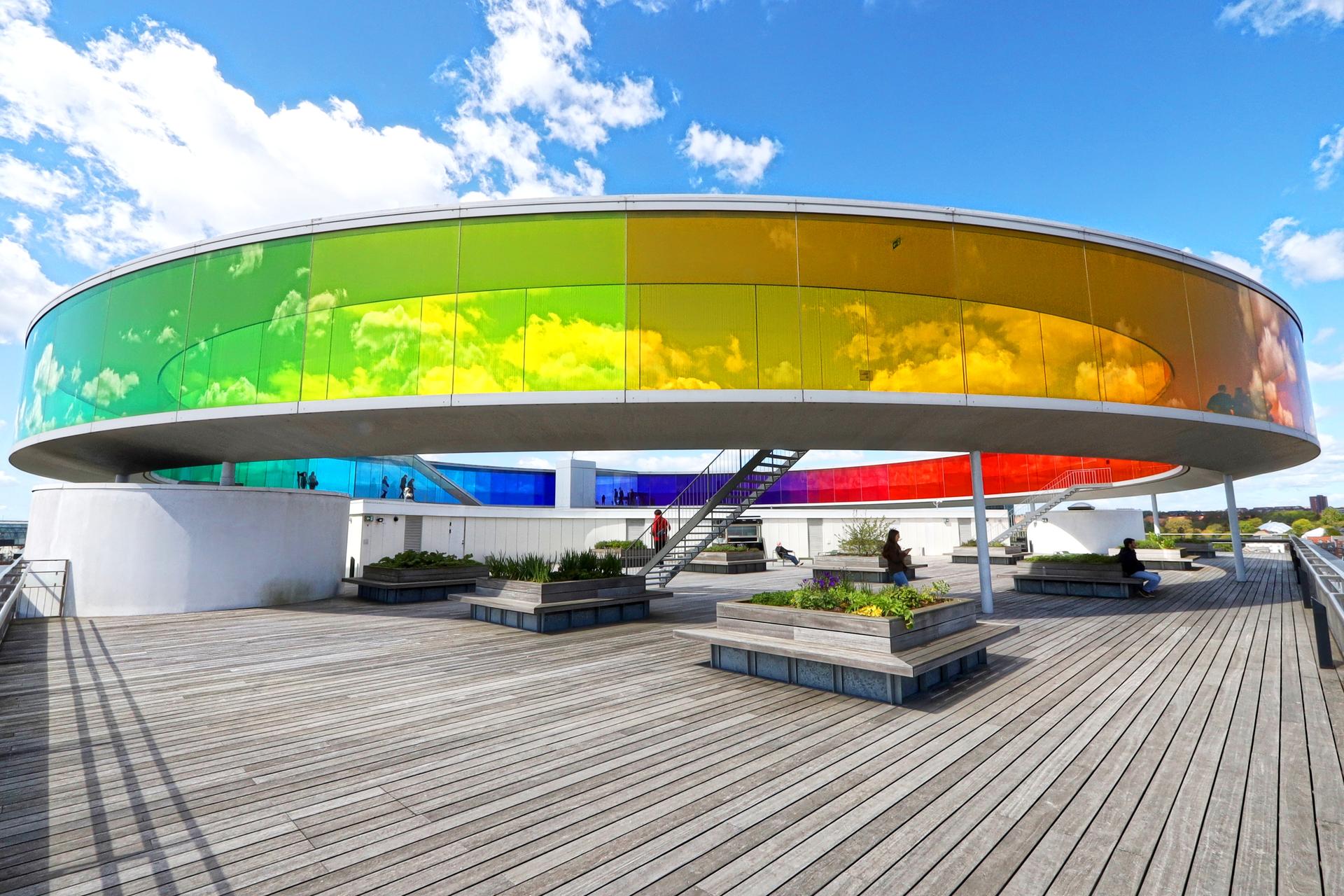
Looking beyond Skovgårde Voldsted? Discover East Jutland for broader travel guides, local hot-spots, and regional highlights.
Explore East Jutland