

Befrielsessten i Næstved, Naestved Travel Guide
Free Guide: A modest granite liberation stone in Næstved’s former cavalry barracks, framed by cannons and culture, quietly honouring Denmark’s freedom in 1945.


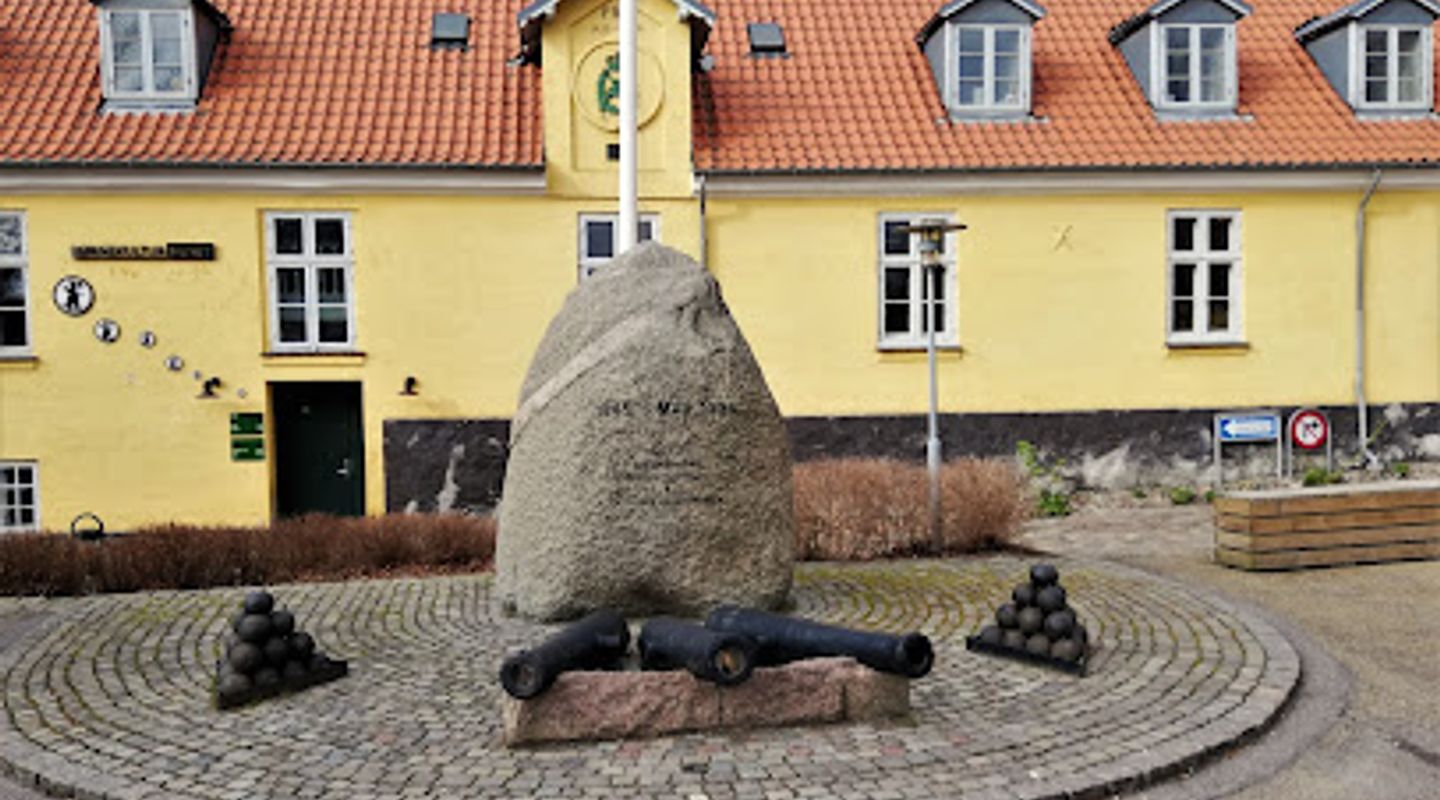
A brief summary of Befrielsessten i Næstved
A modest granite liberation stone in Næstved’s former cavalry barracks, framed by cannons and culture, quietly honouring Denmark’s freedom in 1945.
Set at the northwest end of the former riding ground at Grønnegades Kaserne, the Befrielsessten in Næstved is a modest yet powerful liberation stone commemorating Denmark’s freedom in May 1945. Flanked by cannons and neatly stacked shells, it anchors a quiet memorial corner within the historic cavalry barracks, today transformed into a vibrant cultural center. Visitors encounter a thoughtful blend of military heritage, local remembrance and calm green space just steps from Næstved’s town centre.
On-site amenities
 Restrooms
 Drink options
 Drinking water
 Food options
 Seating areas
 Sheltered areas
 Trash bins
 Information boards
 Visitor centre
Opening hours
- Every dayOpen 24 hours
Opening hours as listed on the venue’s Google Business Profile. Hours can change for services and special events, so check with the venue before you go.
- Address
- Grønnegade 10, C/o Grønnegade Kaserne bygn. 10 lok. 219, 4700 Næstved
Getting there
On foot from central Næstved
Train and walk from Næstved Station
Car or taxi within Næstved
Local bus connection
Discover more about Befrielsessten i Næstved
A quiet stone in a historic cavalry yard
The Befrielsessten in Næstved stands in the northwestern end of the old riding ground of Grønnegades Kaserne, once the heart of Denmark’s cavalry life. Here, amid the pale brick barracks and open gravelled space, a single block of stone carries an inscription marking Denmark’s liberation at the end of the Second World War. The setting is intimate rather than grand, surrounded by lawns and pathways that invite you to slow your pace and read the carved words at eye level.Unlike triumphal monuments, this liberation stone is human in scale. You stand close enough to trace the chiselled letters and imagine the people who gathered here in the first years after 1945. The stone’s simple form, without elaborate sculpture, reflects the Danish tradition of remembrance through unadorned granite, letting the date and place speak for themselves.
Grønnegades Kaserne and the life of soldiers
The wider backdrop is Grønnegades Kaserne, a former cavalry barracks built between the late 18th and 19th centuries for regiments of mounted troops. Riding houses, stables, a fencing hall and an imposing commandant’s residence once framed the everyday routines of recruits and officers. On this riding ground, horses were drilled, sabres flashed in training, and units assembled before heading out to exercises or, in darker times, to war.During the German occupation from 1940 to 1945, Næstved became one of Denmark’s major garrison towns. The kaserne’s history from this period includes requisitioning, tension between Danish soldiers and occupying forces, and the strain of waiting for political developments far beyond the barracks wall. The decision to place a liberation stone here binds the local military story to the national one, turning a former parade ground into a place of reflection.
Symbolism in granite, cannons and shells
The Befrielsessten does not stand alone. It is flanked by cannons and carefully stacked piles of shells, framing the stone like a guard of honour in iron and steel. These elements recall the presence of artillery units and the reality of armed conflict, but in this quiet post-war context they feel more symbolic than threatening. The barrels point harmlessly into the air, relics rather than weapons.Together, stone and metal create a small open-air gallery of memory. The granite embodies endurance and national resilience; the cannons hint at the cost of resistance and the fragility of peace. You can walk all around the ensemble, noticing how the textures change from rough-hewn rock to rusted or painted metal, and how the open sky above lightens the overall mood.
A cultural centre carrying layers of memory
Today, Grønnegades Kaserne functions as a cultural centre, with concert halls, exhibition spaces and creative workshops. On performance nights, visitors spill out across the same grounds that once echoed with marching boots. By day, the area feels like a calm urban park, with benches, trees and views towards Næstved’s older streets.This modern cultural life gives the liberation stone a living context. It is not an isolated relic on the edge of town, but part of a place where people meet for music, theatre and community events. Passing from a concert in one of the converted riding houses to the memorial outside, you can sense how the site’s military past and contemporary creativity sit side by side.
Visiting the memorial corner
The Befrielsessten is freely accessible at all hours, set in an open courtyard that doubles as a public space. There are no barriers or ticket booths, only the natural boundary of the surrounding buildings. You can visit in a few quiet minutes on your way through the cultural centre, or linger longer, exploring the architecture of the old barracks before returning to the stone.Early morning and late afternoon often feel particularly atmospheric, as low sunlight grazes the stone’s rough surface and the cannons cast long shadows across the gravel. Even in colder or overcast weather the memorial has a certain gravity, its simplicity standing out against the muted colours of the kaserne walls. It is a small site, but one that repays attention with a deeper sense of Næstved’s role in Denmark’s 20th‑century history.
Reflections on freedom and everyday life
Standing here, it is easy to imagine the celebrations in May 1945 and the relief that swept through the country after five years of occupation. The stone fixes that feeling in place, a reminder that liberation is not an abstract date but a lived experience of fear, hope and, finally, joy. Around it, the everyday life of a modern town carries on: children cycle past, locals cross the yard short-cutting between streets, and cultural staff head to rehearsals.This mix of memory and normality is part of the site’s quiet strength. The Befrielsessten does not demand solemn ceremony at every visit, yet it invites you, if only for a moment, to pause and think about the relationship between the freedoms you enjoy today and the events that secured them. In that brief pause, the small granite block in a former cavalry yard becomes something larger than its modest size suggests.
Evendo Review Centre
 Google
Guest reviews
Best time to go
Quietest: Jan, Feb & Mar · before 8am or at 9pm
Busy times are Evendo estimates for a typical year, to help you plan. Actual crowds vary with events, school holidays and the weather.
Explore Befrielsessten i Næstved on the map
A handpicked selection of must-see spots near Befrielsessten i Næstved, mapped for you.
Get your free copy of our complete guide to Befrielsessten i Næstved, delivered straight to you.
Everything on this page, from opening hours and how to get there to Eve’s tips and the best time to go, in one PDF you can read offline, print or share.
Already have an account? Sign in
Your Befrielsessten i Næstved guide is ready.
We'll send it to · Not you? Sign out

Getting your guide ready…
We are putting together a fresh copy of the Befrielsessten i Næstved guide. This can take up to a minute.
This can take a few moments. If your browser asks, choose Allow so the download can start. You'll find the guide in your Downloads folder.
Nothing happened? Download it again
Sorry, the guide is taking longer than usual. Please try again in a minute, or get it by email instead.
Other nearby places you may find interesting
The closest places of the same kind, if this one is not quite what you had in mind.
-
-
-
-
-


Swipe for more places
More to explore near Befrielsessten i Næstved
-
 Best experiences near Befrielsessten i Næstved
-
 Best hotels near Befrielsessten i Næstved
-
 Best landmarks near Befrielsessten i Næstved
-
 Best attractions near Befrielsessten i Næstved
-
 Best shops near Befrielsessten i Næstved
-
 Best restaurants near Befrielsessten i Næstved
-
 Best bars near Befrielsessten i Næstved


Do you manage this location?
Take control to get all the benefits, like improved information, better appearance, and stronger visibility across AI-powered discovery.
Explore more
Explore more of Naestved
Discover Næstved: A charming Danish city with rich history, vibrant arts, stunning nature, and delectable cuisine, perfect for a memorable and diverse vacation.
Explore Naestved
Explore more of Denmark
Discover Denmark: A perfect blend of history, modern design, and the cozy concept of hygge. Explore vibrant cities, serene landscapes, and world-class cuisine.
Explore Denmark
