

Slagkilden, Naestved Travel Guide
Free Guide: A modest memorial stone on Næstved’s edge, Slagkilden turns a former spring and a golden wedding in 1864 into a quiet pause of history in the greenery.


A brief summary of Slagkilden
A modest memorial stone on Næstved’s edge, Slagkilden turns a former spring and a golden wedding in 1864 into a quiet pause of history in the greenery.
Slagkilden is a small but atmospheric historic spring site on the edge of Næstved, marked today by a commemorative stone and simple landscaping. Once a freshwater source, it was restored in 1864 by local citizen Søren Knæckenborg in celebration of his golden wedding anniversary, and the inscription dates from that year. Tucked in greenery near Rønnebæksholm, the spot offers a brief, contemplative pause with a sense of local history, best combined with a wider walk in the surrounding countryside.
Opening hours
- Every dayOpen 24 hours
Opening hours as listed on the venue’s Google Business Profile. Hours can change for services and special events, so check with the venue before you go.
- Address
- Slagkildevej 12, 4700 Næstved
Getting there
Public transport from Næstved Station
Taxi within Næstved
Car from central Næstved
Walking from central Næstved
Discover more about Slagkilden
A quiet corner of Næstved’s past
Slagkilden is an unassuming yet evocative historic site on the outskirts of Næstved, where a now‑vanished freshwater spring once bubbled up from the ground. Today, the focus is a modest memorial stone and low, landscaped setting that mark where the water used to emerge. It feels more like a small wayside shrine than a grand monument, offering a short but atmospheric pause rather than a long visit.The name hints at its origins as a local water source, a place where everyday life and natural landscape once met. Standing here, with nearby trees filtering the light and the hum of modern Næstved at a distance, it is easy to imagine a time when such springs were essential to the surrounding farms and hamlets.
A golden wedding gift carved in stone
Slagkilden’s most distinctive story dates to 1864, when a man named Søren Knæckenborg paid to have the spring site restored in honor of his golden wedding anniversary. The inscription on the stone, created that same year, commemorates both the restoration and the couple’s milestone, turning a practical water source into a personal and family memorial.This small act of celebration has given the place its enduring character. Rather than commemorating a battle or a national event, Slagkilden preserves a private joy in public space. The simplicity of the stone and its inscription underline how intertwined local history and everyday lives are in this part of Denmark.
Landscape, light, and a brief pause in nature
The immediate surroundings of Slagkilden are green and low‑key, with grass, shrubs, and scattered trees creating a sheltered pocket of calm. It is not a large park; instead, it feels like a gentle clearing where you might stop for a few minutes on a walk between town and countryside. Birds provide most of the soundtrack, with traffic noise softened by distance.There are no elaborate facilities or attractions here, which keeps the focus on the stone, the story it tells, and the quietness of the setting. In spring and summer, foliage frames the memorial in soft greens, while autumn brings warm tones and fallen leaves underfoot. Even in cooler months, the sparse branches and clear air give the place a clean, contemplative feel.
Part of a wider historical landscape
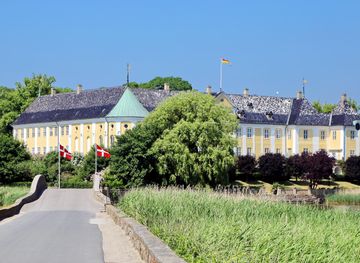
Although small in scale, Slagkilden sits within a rich cultural landscape on the southern side of Næstved. Nearby, the Rønnebæksholm manor estate blends art exhibitions with manor‑house history and parkland, while a cluster of memorial stones around town recalls national events and notable local figures. Visiting Slagkilden alongside these sites helps piece together how generations have marked memory in stone across the region.In this context, Slagkilden stands out for its intimate focus on one couple’s life. It reminds visitors that history is not only told through castles and grand sculptures, but also through modest gestures preserved in everyday corners of the landscape.
What to expect from a visit
A visit to Slagkilden is usually brief—often ten to twenty minutes—yet it can provide a satisfying pause in a longer stroll. Travelers come to read the inscription, take a photograph of the memorial stone, and enjoy a few quiet moments under the trees. It is a gentle, low‑intensity stop, suitable for all ages and most mobility levels, provided the ground is reasonably dry.Because the site is simple and unfenced, there are no fixed opening hours and no entrance fee. It makes most sense as part of a circuit taking in Rønnebæksholm or the nearby green areas, allowing you to weave this quiet historical footnote into a wider exploration of Næstved’s cultural and natural surroundings.
Evendo Review Centre
 Google
Guest reviews
Best time to go
Quietest: Jan, Feb & Nov · before 9am
Busy times are Evendo estimates for a typical year, to help you plan. Actual crowds vary with events, school holidays and the weather.
Explore Slagkilden on the map
A handpicked selection of must-see spots near Slagkilden, mapped for you.
Get your free copy of our complete guide to Slagkilden, delivered straight to you.
Everything on this page, from opening hours and how to get there to Eve’s tips and the best time to go, in one PDF you can read offline, print or share.
Already have an account? Sign in
Your Slagkilden guide is ready.
We'll send it to · Not you? Sign out

Getting your guide ready…
We are putting together a fresh copy of the Slagkilden guide. This can take up to a minute.
This can take a few moments. If your browser asks, choose Allow so the download can start. You'll find the guide in your Downloads folder.
Nothing happened? Download it again
Sorry, the guide is taking longer than usual. Please try again in a minute, or get it by email instead.
Other nearby places you may find interesting
The closest places of the same kind, if this one is not quite what you had in mind.
-
-
-
-
-


Swipe for more places
More to explore near Slagkilden

 Best experiences near Slagkilden
 Best hotels near Slagkilden
 Best landmarks near Slagkilden
 Best attractions near Slagkilden
 Best shops near Slagkilden
 Best restaurants near Slagkilden
 Best bars near Slagkilden
Do you manage this location?
Take control to get all the benefits, like improved information, better appearance, and stronger visibility across AI-powered discovery.
Explore more
Explore more of Naestved
Discover Næstved: A charming Danish city with rich history, vibrant arts, stunning nature, and delectable cuisine, perfect for a memorable and diverse vacation.
Explore Naestved
Explore more of Denmark
Discover Denmark: A perfect blend of history, modern design, and the cozy concept of hygge. Explore vibrant cities, serene landscapes, and world-class cuisine.
Explore Denmark
