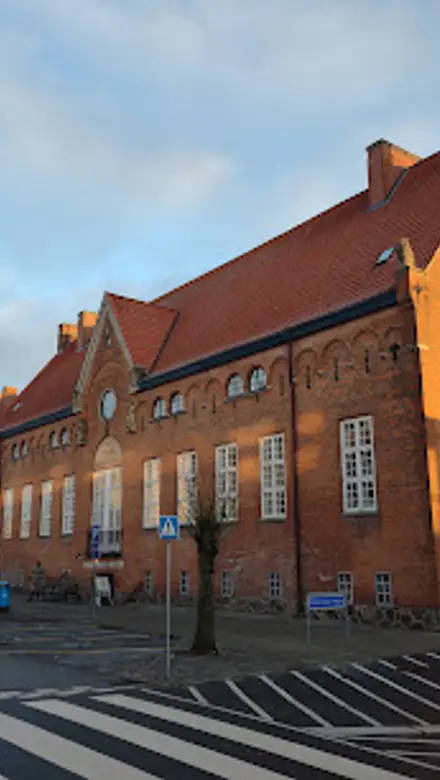
Silkeborg Archive, Silkeborg Travel Guide
Free Guide: Silkeborg’s collective memory, preserving documents, images and stories that trace the lakeside city’s journey from industrial outpost to modern municipality.


A brief summary of Silkeborg Archive
Silkeborg’s collective memory, preserving documents, images and stories that trace the lakeside city’s journey from industrial outpost to modern municipality.
Silkeborg Arkiv is the city’s cultural-historical archive and official municipal record office, housed in a modest building on Hostrupsgade in central Silkeborg. Since 1918 it has safeguarded photos, documents, newspapers and private collections that trace the town’s growth from paper-mill settlement to modern lakeside city. Visitors can explore the reading room, consult staff on family or house history, and browse exhibitions that bring local stories and characters to life.
On-site amenities
 Restrooms
 Seating areas
 Information boards
Opening hours
- Mon10 am–4 pm
- Tue10 am–4 pm
- Wed10 am–4 pm
- Thu12 pm–6 pm
- Fri10 am–2 pm
- SatClosed
- SunClosed
Opening hours as listed on the venue’s Google Business Profile. Hours can change for services and special events, so check with the venue before you go.
- Address
- Hostrupsgade 41A, 8600 Silkeborg
- Phone
- Website
Getting there
City bus from central Silkeborg
On foot from Silkeborg Torv
Bicycle within Silkeborg
Regional train and short transfer
Discover more about Silkeborg Archive
The memory bank of a lakeside town
Silkeborg Arkiv is often described as the city’s collective memory, a place where everyday lives and major events are preserved side by side. Founded in 1918, it began by documenting a young industrial town that had grown up around the paper mill and railway, then expanded to cover the entire municipality as the area developed.Today the archive functions both as a cultural-historical institution and as the official public archive for Silkeborg Municipality, holding records that illuminate political decisions, urban growth and social change across more than a century.
Collections that turn names into stories
Behind the compact public spaces lie rows of shelves and carefully controlled storerooms holding an impressive variety of material. There are municipal files and council minutes, business records, club and association archives, personal papers, maps, photographs, local newspapers and boxes of fragile clippings.For anyone tracing a family tree or researching the history of a house, the archive’s tools are a treasure: population registers, parish material, address and property records, as well as the dedicated “Søg Silkeborg” person-search databases created with the help of volunteers, which piece together clues from many different sources.
A welcoming reading room atmosphere
The public face of Silkeborg Arkiv is its light, functional reading room, where researchers, students and curious locals settle at tables with laptops and archival boxes. Staff members are on hand to guide first-time visitors through catalogues, digital searches and the etiquette of handling original documents.The pace here is calm and unhurried. You might hear the soft whirr of a scanner, the rustle of tissue paper being folded back from an old photograph, or quiet conversation as someone shares a newly discovered image of a street corner that looks both familiar and transformed.
Local history brought into the present
Beyond the shelves, the archive has an active role in making Silkeborg’s past feel relevant. It creates small exhibitions, themed displays and talks on topics ranging from industrial heritage to changing leisure habits along the lakes and forests. Staff collaborate with schools, cultural associations and the public library to weave archival material into teaching and events.Digital platforms extend this work, allowing people to encounter images, stories and source material online before or after a visit, and to contribute knowledge about places, buildings and people from their own family albums.
Exploring Silkeborg through documents and images
A visit here can easily turn into an informal city tour on paper. Old street plans show how districts grew; photographs reveal vanished shopfronts, ferries on the Gudenå and early holiday cabins in the surrounding countryside. Collections related to major local employers, cultural institutions and social movements reveal how work and leisure evolved for Silkeborg’s residents.Even a short stop can provide a deeper layer of context for a walk through town: facades and place names start to carry stories of industrial entrepreneurs, workers’ housing, cultural initiatives and civic debates that shaped the city visitors see today.
Volunteers, collaboration and continuity
A significant part of the archive’s strength lies in its network of volunteers and partners, who help with tasks such as transcribing sources, identifying people and places in photographs and contributing local knowledge. This collaborative spirit ensures that the collections remain alive, continually expanding as new donations arrive.Combined with professional archival standards, these efforts safeguard Silkeborg’s documentary heritage for future generations, making the archive an unassuming but essential institution in the city’s cultural landscape.
Evendo Review Centre
 Google
Guest reviews
Best time to go
Quietest: Jan, Feb & Mar · before 8am or from 7pm
Busy times are Evendo estimates for a typical year, to help you plan. Actual crowds vary with events, school holidays and the weather.
Explore Silkeborg Archive on the map
A handpicked selection of must-see spots near Silkeborg Archive, mapped for you.
Get your free copy of our complete guide to Silkeborg Archive, delivered straight to you.
Everything on this page, from opening hours and how to get there to Eve’s tips and the best time to go, in one PDF you can read offline, print or share.
Already have an account? Sign in
Your Silkeborg Archive guide is ready.
We'll send it to · Not you? Sign out

Getting your guide ready…
We are putting together a fresh copy of the Silkeborg Archive guide. This can take up to a minute.
This can take a few moments. If your browser asks, choose Allow so the download can start. You'll find the guide in your Downloads folder.
Nothing happened? Download it again
Sorry, the guide is taking longer than usual. Please try again in a minute, or get it by email instead.
Other nearby places you may find interesting
The closest places of the same kind, if this one is not quite what you had in mind.
-
-
-
-
-


Swipe for more places
More to explore near Silkeborg Archive

 Best experiences near Silkeborg Archive
 Best hotels near Silkeborg Archive
 Best landmarks near Silkeborg Archive
 Best attractions near Silkeborg Archive
 Best shops near Silkeborg Archive
 Best restaurants near Silkeborg Archive
 Best bars near Silkeborg Archive
Do you manage this location?
Take control to get all the benefits, like improved information, better appearance, and stronger visibility across AI-powered discovery.
Explore more

Explore more of Silkeborg
Discover the serene beauty and cultural richness of Silkeborg, Denmark's lakeside gem, perfect for nature lovers, history buffs, and art enthusiasts alike.
Explore Silkeborg
Explore more of Denmark
Discover Denmark: A perfect blend of history, modern design, and the cozy concept of hygge. Explore vibrant cities, serene landscapes, and world-class cuisine.
Explore Denmark