

Free Saint John Travel Guide & Mobile App
Explore Saint John with free travel guides. Discover regional history, expert tips, proposed trips, and audio guides on web or mobile app.


Explore Saint John, Dominica, for Portsmouth’s harbour, Cabrits National Park, Fort Shirley, Indian River trips and rainforest-fringed coastal scenery.
Read more about Saint John
When is the best time to visit Saint John?
Best: January–March · 29–30°C| Month | High (°C) | Rainfall (mm) |
|---|---|---|
| January (best) | 29 | 70 |
| February (best) | 29 | 60 |
| March (best) | 30 | 65 |
| April | 30 | 80 |
| May | 31 | 100 |
| June | 31 | 110 |
| July | 31 | 125 |
| August | 32 | 130 |
| September | 31 | 120 |
| October | 31 | 110 |
| November | 30 | 90 |
| December | 30 | 75 |
Getting to and around Saint John
How to get there
Transportation
Destinations in Saint John
Resorts, valleys and scenic spots worth a trip of their own.
-

-

-

-


Swipe for more destinations
Best attractions in Saint John
Saint John’s attractions bring together protected nature, colonial history and maritime activity. Cabrits National Park is the parish’s principal heritage and landscape destination, with forested paths, coastal views and the restored remains of Fort Shirley on the Cabrits peninsula. The Indian River offers a slower experience: guided boat journeys follow a shaded waterway through wetland vegetation near Portsmouth, with the emphasis on ecology, quiet observation and local interpretation. Prince Rupert Bay is the starting point for boat excursions along Dominica’s rugged north-west coast and for seasonal whale- and dolphin-watching trips, subject to weather and wildlife conditions. Portsmouth itself provides a useful base for exploring the area, with a market, waterfront activity and access to nearby communities such as Picard and Glanvillia. Inland roads lead towards small farms, steep valleys and rainforest scenery, although journeys can be slow and should not be planned too tightly. The parish suits visitors who prefer combining a historic site with a guided river trip, coastal outing or short nature walk rather than moving rapidly between a large number of formal attractions.
-
National park
Cabrits National Park
Discover the breathtaking landscapes and historical treasures of Cabrits National Park in Dominica, a must-visit destination for nature lovers and adventure seekers.
-
Tourist attraction
Fort Shirley
Explore the rich history and breathtaking views of Fort Shirley, a stunning historical attraction in Portsmouth, Dominica.
-
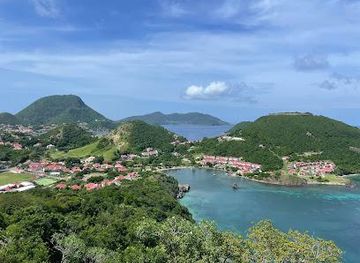
Îles des Saintes
Experience the unparalleled beauty of Îles des Saintes, Guadeloupe, where pristine beaches meet vibrant culture in a Caribbean paradise.
-
Tourist attraction
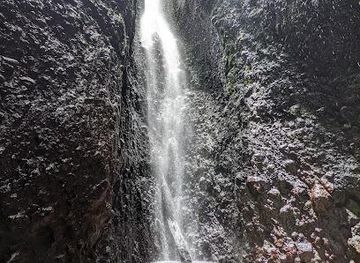
Bwa Nef Falls
Explore the breathtaking Bwa Nef Falls in Penville, Dominica, where nature's beauty meets serene tranquility in a stunning tropical paradise.

Best landmarks in Saint John
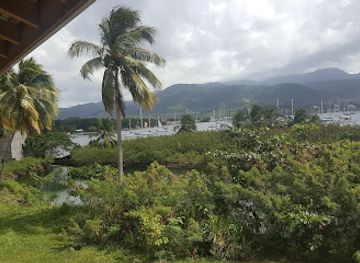
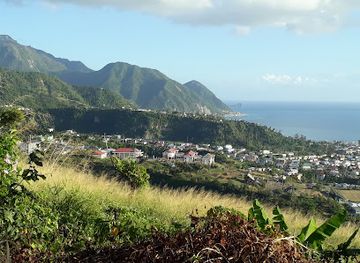
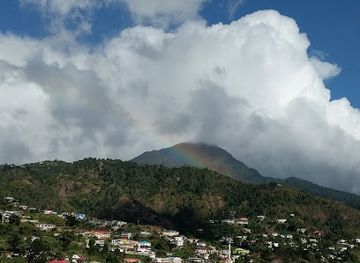
Fort Shirley is Saint John’s defining historic landmark, occupying the Cabrits peninsula above Prince Rupert Bay. Its restored stone walls, barracks and defensive positions reveal how Britain sought to control a valuable Caribbean anchorage, while the surrounding forest shows how quickly tropical vegetation can reclaim abandoned military works. Portsmouth’s harbour and Prince Rupert Bay form an equally important geographical landmark: the broad, sheltered water has shaped the town’s maritime role, ferry connections, fishing activity and modern excursion industry. The Indian River estuary is a distinctive natural landmark at the edge of Portsmouth, where freshwater and coastal wetland environments meet beneath dense vegetation. Inland, the parish’s steep volcanic slopes and rainforest-covered ridges provide a constantly changing backdrop rather than a single monumental viewpoint. Together these places explain Saint John’s identity more clearly than architecture alone: the parish is defined by the relationship between a protected harbour, a fortified headland, a river corridor and heavily forested volcanic terrain.
-
Botanical garden
Dominica Botanical Gardens
Discover Dominica's natural beauty at the Botanical Gardens in Roseau, a historic sanctuary showcasing the island’s rich biodiversity.
-
Tourist attraction
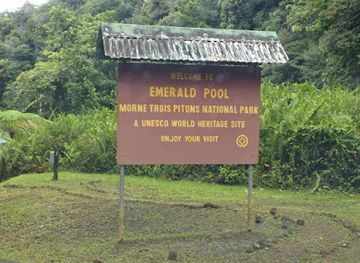
Emerald Pool
Discover Dominica's enchanting Emerald Pool: a hidden rainforest oasis with a cascading waterfall and mesmerizing emerald-green waters.
-
Tourist attraction
Trafalgar Falls
Discover Dominica's majestic Trafalgar Falls: twin waterfalls, lush rainforest, and geothermal hot springs in a UNESCO World Heritage Site.
-
Tourist attraction
Titou Gorge
Swim through a volcanic gorge to a hidden waterfall in Dominica's rainforest. An unforgettable Caribbean adventure awaits!

Explore Saint John on the map
Plan your trip on one map. See where the top cities, national parks and sights are, and book hotels and experiences in a few clicks.
Best hotels in Saint John
Best restaurants in Saint John
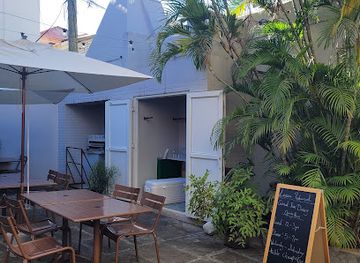
Saint John’s dining scene is centred on Portsmouth, Picard and the waterfront, with a mixture of modest Creole restaurants, cafés, rum shops, hotel dining rooms, takeaways and international options serving a university and visitor population. Dominica’s food traditions appear in dishes built around fresh fish, chicken, salted provisions, plantain, breadfruit, dasheen, rice and carefully seasoned sauces; callaloo and mountain chicken are associated with Dominican cuisine, although availability varies and the latter is not a routine everyday dish. Local produce is an important part of the experience, particularly in markets and small shops where bananas, citrus, avocado and root vegetables may be sold according to season. Coastal restaurants may feature grilled or stewed seafood, while inland and family-run establishments often offer filling Creole plates rather than elaborate menus. Breakfast cafés and daytime food stalls are useful for tasting local preparations, and visitors should expect some rural venues to operate limited hours. Reserve ahead for popular guided-excursion meals or small dining rooms, especially during busy periods.
-
Restaurant
Keepin'It Real
Experience authentic Caribbean flavors and thrilling water sports at Keepin'It Real on Toucari Beach.
-
Restaurant
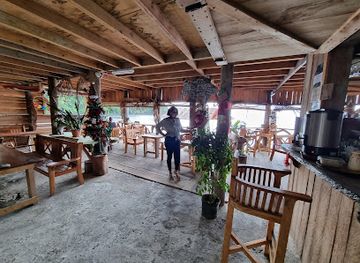
Purple Turtle Beach Club
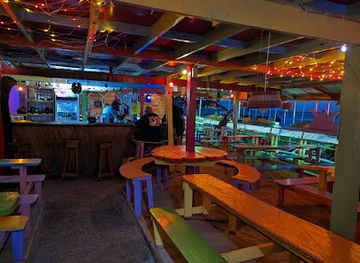
Discover culinary delights at Purple Turtle Beach Club - where delicious meals meet stunning coastal views in Portsmouth.
-
Restaurant
Lacou Melrose House
Experience authentic Dominican cuisine in Roseau at Lacou Melrose House, where flavors meet tradition in an inviting atmosphere.
-
Seafood
Chez Wen Cuisine
Experience fresh Caribbean seafood at Chez Wen Cuisine in Scott's Head, where each dish tells a story of local flavor and oceanic delight.

Best bars in Saint John
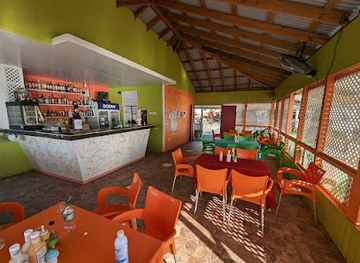
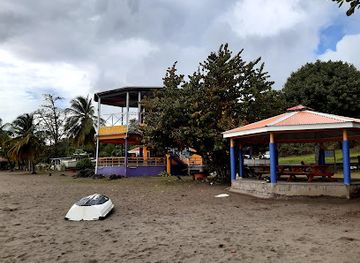
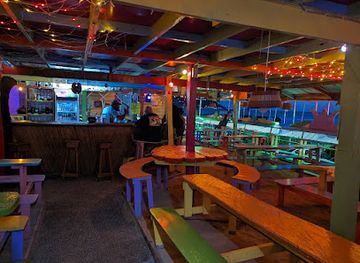
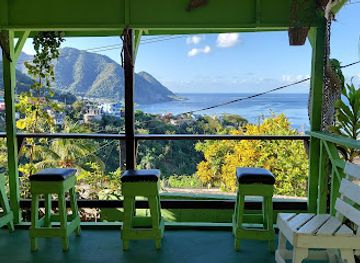
Evenings in Saint John are generally relaxed and concentrated in Portsmouth, Picard and the waterfront rather than spread across a large club district. Traditional rum shops and small bars provide informal places for conversation, while hotel bars, restaurants and occasional live-music venues offer a more visitor-oriented evening. Portsmouth’s student population can contribute to a livelier atmosphere at certain times, but nightlife remains modest compared with larger Caribbean cities and schedules can change. Local rum, beer and fruit-based drinks are widely available, while some establishments incorporate Dominican music and Creole food into the evening. In smaller communities, social life may centre on a family gathering, a local bar or a community event rather than late-night entertainment. Check transport arrangements before going out, as taxis and public buses become less frequent at night, and avoid treating alcohol as the main reason to explore the parish.
-
Restaurant
Purple Turtle Beach Club
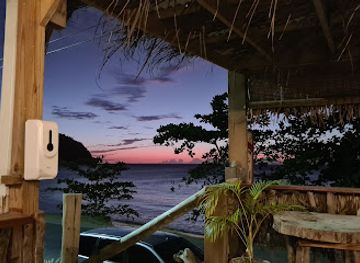
Discover the vibrant atmosphere and stunning views at Purple Turtle Beach Club in Portsmouth, Dominica, where relaxation meets culinary delight.
-
Bar
Hi Rise Beach Bar
Discover the vibrant charm of Hi Rise Beach Bar in Roseau, where great food, refreshing drinks, and beautiful bay views create unforgettable experiences.
-
Bar
Top bar
Discover the vibrant atmosphere at Top Bar, Roseau's premier destination for refreshing drinks and local camaraderie.
-
Restaurant
Roots Rock Bar & Restaurant
Discover the lively atmosphere and exquisite Caribbean cuisine at Roots Rock Bar & Restaurant in beautiful Dominica.
Best nightclubs in Saint John
Evenings in Saint John are generally relaxed and concentrated in Portsmouth, Picard and the waterfront rather than spread across a large club district. Traditional rum shops and small bars provide informal places for conversation, while hotel bars, restaurants and occasional live-music venues offer a more visitor-oriented evening. Portsmouth’s student population can contribute to a livelier atmosphere at certain times, but nightlife remains modest compared with larger Caribbean cities and schedules can change. Local rum, beer and fruit-based drinks are widely available, while some establishments incorporate Dominican music and Creole food into the evening. In smaller communities, social life may centre on a family gathering, a local bar or a community event rather than late-night entertainment. Check transport arrangements before going out, as taxis and public buses become less frequent at night, and avoid treating alcohol as the main reason to explore the parish.
-
Resort hotel
Jungle Bay Dominica
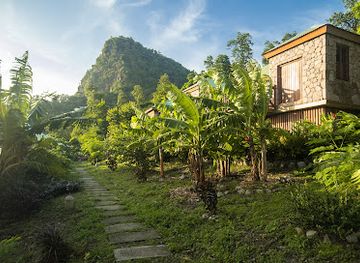
Experience the ultimate eco-luxury retreat at Jungle Bay Dominica, where adventure meets tranquility in the heart of nature's paradise.
-
Restaurant
Hi Rise Beach Bar
Experience the vibrant atmosphere of Hi Rise Beach Bar, where delicious food, refreshing drinks, and stunning ocean views create unforgettable memories.
-
Dance club
NSE Night Club
Dive into the vibrant nightlife at NSE Night Club in Anse De Mai, where music and dance create unforgettable experiences.
-
Night club
Club Access Bar & Grill
Discover the pulsating nightlife of San Sauveur at Club Access Bar & Grill, where delicious food and exhilarating music unite for an unforgettable experience.

Best shops in Saint John
Shopping in Saint John is practical and local in character, with Portsmouth providing the broadest choice of small supermarkets, pharmacies, clothing shops, market stalls, cafés and everyday services. Fresh produce is one of the most worthwhile purchases, particularly seasonal bananas, citrus, avocados, root vegetables and herbs sold through markets or independent vendors. Visitors may also find Dominican cocoa, coffee, rum, preserved foods, spices and handmade items suitable for taking home, although stock varies between shops. Picard has additional convenience shopping serving residents, students and visitors, while smaller communities have fewer retail options and limited opening patterns. Craft and souvenir buying is best approached selectively: look for locally made woodwork, woven goods, artwork or jewellery and ask about materials and provenance rather than assuming every Caribbean-themed item was produced on the island. For a fuller range of shopping, Roseau outside the parish is the country’s main commercial centre, but Saint John is better suited to food products, practical supplies and locally sourced keepsakes.
-
Shopping mall
James Store
Explore local culture and unique shopping at James Store in Portsmouth, a vibrant mall offering an array of souvenirs and artisan crafts.
-
Grocery store
Northern Foods & Supplies
Explore local produce, Caribbean snacks, and unique ingredients at Northern Foods & Supplies in Portsmouth, a culinary gem for every traveler.
-
Grocery store
Savers Enterprises
Explore the vibrant local flavors at Savers Enterprises, Portsmouth's go-to grocery store for fresh produce and unique Caribbean culinary delights.
-
 Print shop
Dblush Copy Center
Discover Dblush Copy Center in Portsmouth - the ideal print shop for tourists and locals, offering quality prints and exceptional service.
Get your free copy of our complete guide to Saint John, delivered straight to you.
Everything on this page, from attractions and restaurants to essentials and local phrases, in one PDF you can read offline, print or share.
Already have an account? Sign in
Your Saint John guide is ready.
We'll send it to · Not you? Sign out

Getting your guide ready…
We are putting together a fresh copy of the Saint John guide. This can take up to a minute.
This can take a few moments. If your browser asks, choose Allow so the download can start. You'll find the guide in your Downloads folder.
Nothing happened? Download it again
Sorry, the guide is taking longer than usual. Please try again in a minute, or get it by email instead.
Saint John essentials
Currency and Payment
Safety
Emergency Situations
Do's and Don'ts
Local Tips
From Eve
Local phrases worth knowing
You don't need to get them perfect. A few words go a long way, and locals appreciate the effort.
Basics
| English | Local | Say it |
|---|---|---|
| Hello | Hello | [Heh-lo] |
| Goodbye | Goodbye | [Good-bye] |
| Yes | Yes | [Yes] |
| No | No | [No] |
| Please/You're welcome | Please/You’re welcome | [Pleez/Yo're welcome] |
| Thank you | Thank you | [Thank you] |
| Excuse me/Sorry | Excuse me/Sorry | [Ex-kyoos me/Sor-ree] |
| How are you? | How are you? | [How are you?] |
| Fine. And you? | Fine. And you? | [Fine. And you?] |
| Do you speak English? | Do you speak English? | [Do you speek English?] |
| I don't understand | I don't understand | [I don't un-der-stand] |
Eating & Drinking
| English | Local | Say it |
|---|---|---|
| I'd like to see the menu, please | I'd like to see the menu, please | [I'd like to see the men-you, pleez] |
| I don't eat meat | I don't eat meat | [I don't eet meet] |
| Cheers! | Cheers! | [Cheers!] |
| I would like to pay, please | I would like to pay, please | [I wood like to pay, pleez] |
Emergencies
| English | Local | Say it |
|---|---|---|
| Help! | Help! | [Help!] |
| Go away! | Go away! | [Go a-way!] |
| Call the Police! | Call the Police! | [Call the Po-leese!] |
| Call a doctor! | Call a doctor! | [Call a doc-tor!] |
| I'm lost | I'm lost | [I'm lost] |
| I'm ill | I'm ill | [I'm ill] |
Shopping
| English | Local | Say it |
|---|---|---|
| I'd like to buy... | I'd like to buy... | [I'd like to buy...] |
| I'm just looking | I'm just looking | [I'm just looking] |
| How much is it? | How much is it? | [How much is it?] |
| That's too expensive | That's too expensive | [That's too ex-pen-sive] |
| Can you lower the price? | Can you lower the price? | [Can you low-er the price?] |
Time & Numbers
| English | Local | Say it |
|---|---|---|
| What time is it? | What time is it? | [What time is it?] |
| It's one o'clock | It's one o'clock | [It's one o'clock] |
| Half past (10) | Half past (10) | [Half past (ten)] |
| Morning | Morning | [Morn-ing] |
| Afternoon | Afternoon | [Af-ter-noon] |
| Evening | Evening | [Eve-ning] |
| Yesterday | Yesterday | [Yes-ter-day] |
| Today | Today | [To-day] |
| Tomorrow | Tomorrow | [To-mor-row] |
| 1 | 1 | [One] |
| 2 | 2 | [Two] |
| 3 | 3 | [Three] |
| 4 | 4 | [Four] |
| 5 | 5 | [Five] |
| 6 | 6 | [Six] |
| 7 | 7 | [Seven] |
| 8 | 8 | [Eight] |
| 9 | 9 | [Nine] |
| 10 | 10 | [Ten] |
Transport & Directions
| English | Local | Say it |
|---|---|---|
| Where's a/the...? | Where's a/the...? | [Where's a/the...?] |
| What's the address? | What's the address? | [What's the ad-dress?] |
| Can you show me (on the map)? | Can you show me (on the map)? | [Can you show me (on the map)?] |
| When's the next (bus)? | When's the next (bus)? | [When's the next (bus)?] |
| A ticket (to ....) | A ticket (to ....) | [A tick-it (to ....)] |
History of Saint John
Kalinago settlement and the northern coast
Long before European colonisation, Dominica was inhabited by Indigenous peoples, including the Kalinago, whose knowledge of the island’s forests, rivers and coast shaped movement and settlement. The north-western coast around present-day Portsmouth offered access to sheltered waters and fertile valleys, although Dominica’s mountainous terrain and strong Indigenous resistance limited permanent European control for many years. The region’s place names, environmental knowledge and continuing connections with Kalinago history belong to the wider story of Dominica rather than to a purely colonial narrative.
European rivalry and the founding of Portsmouth
Dominica became the subject of rivalry between France and Britain during the seventeenth and eighteenth centuries. Portsmouth developed around the excellent natural anchorage of Prince Rupert Bay and was formally established as a settlement in the eighteenth century. Its position on the north-west coast gave it importance for shipping, defence and administration, while the surrounding valleys supported small-scale agriculture. The town never displaced Roseau as Dominica’s principal urban centre, but its harbour ensured a lasting role in the island’s northern economy.
Fort Shirley and colonial military history
Fort Shirley was developed by the British on the Cabrits peninsula during the eighteenth century to defend Prince Rupert Bay and protect shipping. The complex formed part of a wider system of fortifications built during periods of conflict between European powers in the Caribbean. Its surviving walls, barracks and gun positions illustrate the military value attached to Dominica’s deep natural harbour. Later neglect allowed vegetation to reclaim much of the site, but restoration has made Fort Shirley one of the clearest places in Saint John to understand the island’s colonial and maritime history.
Plantation agriculture and a changing economy
During the colonial period, Dominica’s economy was shaped by plantation agriculture, including coffee, sugar and other export crops, although the island’s steep landscape encouraged a more varied pattern of cultivation than on some larger Caribbean islands. Around Portsmouth and the valleys of the north-west, agriculture, fishing and coastal trade remained important alongside estate production. The legacies of this period can be read in landholding patterns, rural roads, old estate sites and the continued importance of provisions and small farming in local foodways.
Emancipation, migration and Portsmouth’s civic development
The abolition of slavery in the British Empire transformed communities across Dominica during the nineteenth century. Formerly enslaved people and their descendants built independent livelihoods through farming, fishing, trade and craft, while Portsmouth expanded as a local commercial and administrative centre. Churches, schools and civic institutions became important markers of community life. Later migration, both abroad and to Roseau, altered the parish’s population and economy, yet Portsmouth retained its role as the principal town and harbour of northern Dominica.
From independence to conservation and marine tourism
Dominica became an independent state in 1978, and Saint John’s contemporary identity has developed within the country’s wider shift towards environmental protection and nature-based tourism. Cabrits National Park, Fort Shirley and the Indian River now form a connected visitor landscape in which historical conservation and ecological protection are closely linked. Portsmouth has also become a base for marine excursions, including seasonal whale and dolphin watching, while the bay continues to support working maritime activity. The parish therefore combines an older harbour economy with newer forms of responsible tourism.
Saint John in Photos
Browse through our photo collection highlighting the charm and character of the destination.
Neighbouring regions of Saint John
The closest regions to Saint John, if you have time for more than one.
-

-

-

-

-


Swipe for more regions
Explore more
Explore more of Dominica
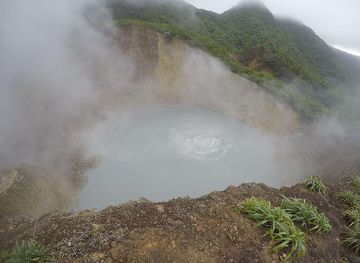
Discover Dominica: The Caribbean's Nature Island, where lush rainforests, volcanic landscapes, and vibrant culture await eco-tourists and adventure seekers.
Explore Dominica