

Saint Joseph, Dominica Travel Guide
Explore Saint Joseph in Dominica: A hidden gem on the west coast, offering stunning beaches, lush rainforests, and a rich cultural history.
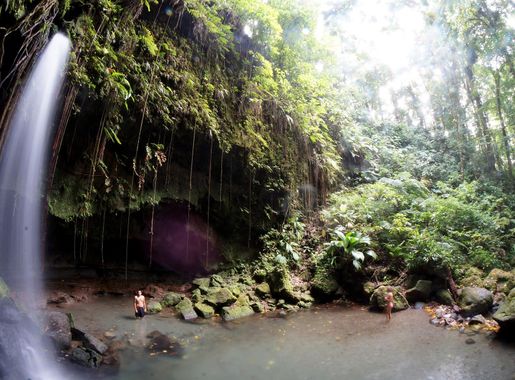
Saint Joseph is a charming village nestled on the west coast of Dominica, known for its vibrant culture and stunning natural beauty. As you stroll through the village, you'll be greeted by colorful homes and friendly locals who are always eager to share stories about their beloved home. The village's beach is a hidden gem, offering crystal-clear waters perfect for swimming and snorkeling. The sunsets here are a sight to behold, painting the sky with hues of orange and pink. For nature enthusiasts, Saint Joseph provides easy access to some of Dominica's most breathtaking landscapes. The nearby Layou River is a popular spot for kayaking and river tubing, offering a fun and adventurous way to explore the island's interior. Hiking trails abound, leading you through lush rainforests and up to stunning viewpoints where you can take in panoramic views of the coastline. Saint Joseph is also rich in history and culture. The village is home to several churches and historical sites that offer a glimpse into Dominica's colonial past. Local festivals and events are frequent, celebrating the island's unique blend of African, European, and indigenous heritage. Don’t miss the chance to sample traditional Dominican cuisine at one of the local eateries, where you can enjoy dishes made from fresh, locally-sourced ingredients.

Know before you go
Hi, I'm Eve. Here are a few practical things to know before exploring Saint Joseph.
- Visit the Layou River for kayaking and river tubing adventures.
- Don't miss the sunset at Saint Joseph Beach for a truly breathtaking experience.
- Sample traditional Dominican dishes at local eateries to get a real taste of the island.
- Explore the hiking trails for some of the best views of the coastline.
- Attend local festivals to experience the vibrant culture and heritage of Saint Joseph.
Top City Travel Guides in Saint Joseph
The cities of Saint Joseph, and the easiest places to base yourself.

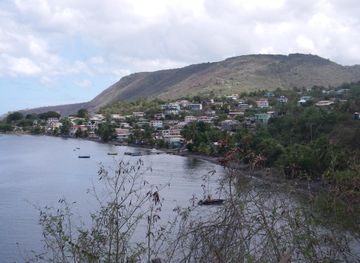
Destinations in Saint Joseph
Resorts, valleys and scenic spots worth a trip of their own.


Explore Saint Joseph: Things to Do, Places to Eat, Hotels & More
Handpicked recommendations for top attractions, local dining, accommodations, and more

Top Attractions & Sightseeing in Saint Joseph
Top-rated picks
Best Attractions

Mero Beach
Experience the unspoiled beauty of Mero Beach, a serene escape in Dominica with golden sands, clear waters, and vibrant marine life waiting to be explored.

Jacko Falls
Explore the breathtaking beauty of Jacko Falls in Dominica's lush landscape, a serene nature preserve and captivating tourist attraction.

Spanny Falls ticket entrance
Discover the breathtaking beauty of Spanny Falls in Dominica, a true gem for nature lovers and adventure seekers.
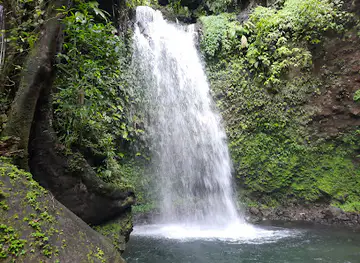
Salton Waterfalls
Explore the stunning Salton Waterfalls in Campbell, a breathtaking natural attraction perfect for nature lovers and adventure seekers alike.

Best landmarks in Saint Joseph
Top-rated picks
Best Landmarks

Titou Gorge
Experience the breathtaking beauty of Titou Gorge, a hidden gem in Dominica perfect for swimming and adventure amidst lush rainforests.

Champagne Reef, Dominica
Experience Dominica's Champagne Reef: Snorkel or dive in warm, bubbling waters amidst vibrant marine life and volcanic vents.

Dominica
Discover Dominica, the Caribbean's 'Nature Island': Unspoiled beauty, lush rainforests, and vibrant culture await your adventure.

Emerald Pool
Discover Dominica's Emerald Pool: A stunning waterfall and emerald-green pool nestled in lush rainforest, perfect for a refreshing escape.

Best restaurants in Saint Joseph
Top-rated picks
Best Restaurants

Chez Wen Cuisine
Experience exquisite seafood dining at Chez Wen Cuisine in Scott's Head, Dominica - where fresh flavors meet stunning ocean views.
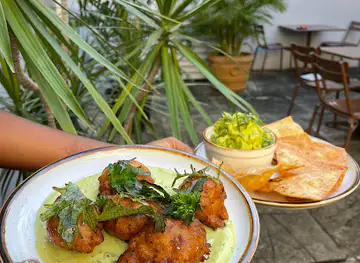
Lacou Melrose House
Experience authentic Caribbean cuisine at Lacou Melrose House in Roseau, Dominica – a culinary delight for every food lover!

Coral Reef Bar & Restaurant
Discover authentic Caribbean cuisine at Coral Reef Bar & Restaurant in Calibishie, where every meal is paired with breathtaking sea views.

Hi Rise Beach Bar
Experience vibrant Caribbean culture at Hi Rise Beach Bar – your perfect spot for delicious food and stunning ocean views in Roseau.

Best bars in Saint Joseph
Top-rated picks
Best Bars

Hi Rise Beach Bar
Experience the vibrant atmosphere and delicious cuisine at Hi Rise Beach Bar, a beachfront oasis in Roseau offering stunning views and unforgettable moments.

Escape Bar & Grill
Discover the best of Caribbean and international cuisine at Escape Bar & Grill, a culinary gem in Roseau, Dominica.

InDee's Beach Bar and Restaurant
Experience the flavors of the Caribbean at InDee's Beach Bar and Restaurant, where every meal is a celebration of local cuisine against stunning ocean views.

River Rock Cafe and Bar
Discover the lively River Rock Cafe and Bar in Trafalgar, a perfect blend of refreshing drinks, delicious bites, and a vibrant atmosphere.

Best nightclubs in Saint Joseph
Top-rated picks
Best Nightclubs

Hi Rise Beach Bar
Discover the vibrant atmosphere and stunning views at Hi Rise Beach Bar in Roseau, the perfect spot for relaxation and local flavors.

JRs Bar
Discover the vibrant atmosphere of JRs Bar in Roseau, where great drinks and live music create unforgettable nights.

The Velvet Lounge, Café-Bar
Experience the vibrant ambiance and local flavors at The Velvet Lounge, Café-Bar in Roseau, a perfect retreat for every traveler.

Club Access Bar & Grill
Discover the exhilarating nightlife at Club Access Bar & Grill in San Sauveur, where great food meets unforgettable experiences.

Best shops in Saint Joseph
Top-rated picks
Best Shops

Save-A-Lot
Explore Save-A-Lot in Roseau for budget-friendly grocery shopping and a taste of local Dominica flavors.

Mams
Explore Mams Grocery Store in Massacre for an authentic taste of local produce and snacks while immersing yourself in the vibrant community culture.

Jodie's Sweet Art
Discover the enchanting world of desserts at Jodie's Sweet Art, where every cake tells a delicious story and every pastry is a work of art!

Lindo Mart
Discover the vibrant flavors of Dominica at Lindo Mart, your essential supermarket for fresh local produce, meats, and more in Roseau.

Explore Saint Joseph on the Map
A handpicked selection of must-see spots in Saint Joseph, mapped for you.
Saint Joseph Essentials
-
Saint Joseph is located on the west coast of Dominica, approximately 20 kilometers from the capital, Roseau. The nearest international airport is Douglas-Charles Airport (DOM), located about 45 kilometers away. From the airport, you can take a taxi or rent a car for a scenic drive along the coast. Alternatively, you can use local buses which are a more economical option but may take longer.
-
Getting around Saint Joseph can be done by foot, as it is a relatively small area. For longer distances, local buses and taxis are available. Renting a car is also an option, offering more flexibility to explore the surrounding areas at your own pace. Be aware that driving is on the left side of the road.
-
The official currency in Dominica is the East Caribbean Dollar (XCD). Credit cards are accepted in most hotels, restaurants, and larger shops, but it's advisable to carry some cash for smaller establishments and local markets. ATMs are available, but ensure you have sufficient cash as services may be limited in more remote areas.
-
Saint Joseph is generally safe for tourists. However, like any travel destination, it's important to take standard precautions. Avoid walking alone at night and keep an eye on your belongings in crowded places. While there are no specific high-crime areas targeting tourists, it's always best to stay vigilant.
-
In case of emergency, dial 999 for immediate assistance. The local police station and medical facilities are available in the nearby town of Roseau. It's recommended to have travel insurance that covers medical emergencies. For minor health issues, there are pharmacies where you can purchase over-the-counter medications.
-
Fashion: Do dress modestly, especially when visiting religious sites. Avoid wearing revealing clothing. Religion: Do respect local customs and traditions. Always be respectful when visiting churches. Public Transport: Do be respectful and give up your seat to elderly passengers. Don't eat or drink on public transport. Greetings: Do greet people with a friendly 'Good day' or 'Good afternoon.' A handshake is also common. Eating & Drinking: Do try local dishes and accept food offerings graciously. Don’t refuse hospitality, as it is considered impolite.
-
To experience Saint Joseph like a local, visit the local markets where you can buy fresh produce and traditional Dominican goods. Engage with locals, as they are often friendly and willing to share stories about the area’s history and culture. Don’t miss visiting the Layou River for a refreshing swim or a relaxing day by the water. For a unique experience, join a local fishing trip or hike through the lush, surrounding landscapes.
When is the best time to visit Saint Joseph?
Useful Local Phrases for Saint Joseph
You don't need to speak the language perfectly. Even learning a few simple words can make conversations warmer—and locals usually appreciate the effort.
— Eve

Here are the phrases I use most often in Saint Joseph. Try a few—you'll be surprised how far they go! 😊
❤️
-
- HelloHello
[Heh-lo] - GoodbyeGoodbye
[Good-bye] - YesYes
[Yes] - NoNo
[No] - Please/You're welcomePlease/You're welcome
[Pleez/You’re wel-kum] - Thank youThank you
[Thank you] - Excuse me/SorryExcuse me/Sorry
[Ex-kyoos me/Sor-ee] - How are you?How are you?
[How ar you?] - Fine. And you?Fine. And you?
[Fine. And you?] - Do you speak English?Do you speak English?
[Do you speak Ing-lish?] - I don't understandI don't understand
[I don't un-der-stand]
- HelloHello
-
- I'd like to see the menu, pleaseI'd like to see the menu, please
[I'd like to see the men-yoo, pleez] - I don't eat meatI don't eat meat
[I don't eet meet] - Cheers!Cheers!
[Cheers!] - I would like to pay, pleaseI would like to pay, please
[I wood like to pay, pleez]
- I'd like to see the menu, pleaseI'd like to see the menu, please
-
- Help!Help!
[Help!] - Go away!Go away!
[Go a-way!] - Call the Police!Call the Police!
[Call the Po-leese!] - Call a doctor!Call a doctor!
[Call a doc-tor!] - I'm lostI'm lost
[I'm lost] - I'm illI'm ill
[I'm ill]
- Help!Help!
-
- I'd like to buy...I'd like to buy...
[I'd like to buy...] - I'm just lookingI'm just looking
[I'm just luk-ing] - How much is it?How much is it?
[How much is it?] - That's too expensiveThat's too expensive
[That's too ex-pen-siv] - Can you lower the price?Can you lower the price?
[Can you low-er the price?]
- I'd like to buy...I'd like to buy...
-
- What time is it?What time is it?
[What time is it?] - It's one o'clockIt's one o'clock
[It's one o'clock] - Half past (10)Half past (10)
[Half past (ten)] - MorningMorning
[Morn-ing] - AfternoonAfternoon
[Af-ter-noon] - EveningEvening
[Eve-ning] - YesterdayYesterday
[Yes-ter-day] - TodayToday
[To-day] - TomorrowTomorrow
[To-mor-row] - 11
[One] - 22
[Two] - 33
[Three] - 44
[Four] - 55
[Five] - 66
[Six] - 77
[Seven] - 88
[Eight] - 99
[Nine] - 1010
[Ten]
- What time is it?What time is it?
-
- Where's a/the...?Where's a/the...?
[Where's a/the...?] - What's the address?What's the address?
[What's the ad-dress?] - Can you show me (on the map)?Can you show me (on the map)?
[Can you show me (on the map)?] - When's the next (bus)?When's the next (bus)?
[When's the next (bus)?] - A ticket (to ....)A ticket (to ....)
[A tick-et (to ....)]
- Where's a/the...?Where's a/the...?
History of Saint Joseph
-
Before the arrival of Europeans, Dominica, including the area now known as Saint Joseph, was inhabited by the Kalinago people. They referred to the island as 'Waitukubuli,' meaning 'Tall is her body.' The Kalinago were known for their seafaring skills and lived in harmony with the lush, tropical environment.
-
Christopher Columbus is credited with the European discovery of Dominica in 1493 during his second voyage. However, it wasn't until the 17th century that French and British settlers began to vie for control over the island. Saint Joseph, originally named 'Saint Joseph de la Martinique,' was among the areas contested by these colonial powers.
-
In 1635, the French claimed Dominica and began establishing settlements, including in the area of Saint Joseph. The French influence is still evident in the local architecture and place names. The French introduced sugar plantations, utilizing enslaved Africans to work the fields, which profoundly influenced the culture and demographics of the region.
-
By the mid-18th century, the British had gained control of Dominica, including Saint Joseph, through a series of treaties and military engagements. The British continued to develop the plantation economy, focusing on sugar, coffee, and cocoa. The cultural impact of British rule is evident in the legal and educational systems that remain in place today.
-
The rugged terrain of Dominica, especially the area around Morne Prosper near Saint Joseph, became a refuge for Maroons—escaped enslaved Africans who formed independent communities. These Maroon societies were instrumental in resisting colonial control and maintaining African traditions and practices.
-
Following the abolition of slavery in 1834, Saint Joseph, like much of Dominica, saw significant social changes. Formerly enslaved people sought to establish their own communities and livelihoods. The period was marked by a shift from plantation-based agriculture to small-scale farming and the growth of local markets.
-
Saint Joseph is known for its rich cultural heritage, which is a blend of Indigenous, African, French, and British influences. Local festivals, such as the annual Saint Joseph Feast, celebrate the community's history and traditions. The area is also known for its vibrant music and dance, including genres like calypso and reggae, which reflect the island's diverse cultural tapestry.
-
Today, Saint Joseph is a bustling community that retains its historical charm while embracing modernity. The town is a gateway to some of Dominica's natural wonders, including rivers, waterfalls, and lush rainforests. Efforts to preserve the area's historical sites and promote eco-tourism have made Saint Joseph a unique destination for travelers seeking both adventure and cultural enrichment.
Neighbouring Regions of Saint Joseph
The closest regions to Saint Joseph, if you have time for more than one.


Your all‑in‑one travel companion app
Explore expert travel guides, compare and book tours, experiences, hotels, and more—all from the palm of your hand. Download now for seamless trip planning wherever your wanderlust takes you.


Explore More of Dominica
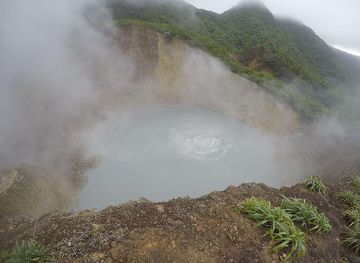
Looking beyond Saint Joseph? Discover Dominica for broader travel guides, local hot-spots, and regional highlights.
Explore DominicaSaint Joseph in Photos
Browse through our photo collection highlighting the charm and character of the destination.





Saint Joseph: The Heartbeat of Dominica's West Coast
Saint Joseph is a charming village nestled on the west coast of Dominica, known for its vibrant culture and stunning natural beauty. As you stroll through the village, you'll be greeted by colorful homes and friendly locals who are always eager to share stories about their beloved home. The village's beach is a hidden gem, offering crystal-clear waters perfect for swimming and snorkeling. The sunsets here are a sight to behold, painting the sky with hues of orange and pink. For nature enthusiasts, Saint Joseph provides easy access to some of Dominica's most breathtaking landscapes. The nearby Layou River is a popular spot for kayaking and river tubing, offering a fun and adventurous way to explore the island's interior. Hiking trails abound, leading you through lush rainforests and up to stunning viewpoints where you can take in panoramic views of the coastline. Saint Joseph is also rich in history and culture. The village is home to several churches and historical sites that offer a glimpse into Dominica's colonial past. Local festivals and events are frequent, celebrating the island's unique blend of African, European, and indigenous heritage. Don’t miss the chance to sample traditional Dominican cuisine at one of the local eateries, where you can enjoy dishes made from fresh, locally-sourced ingredients.