

Free Southwest Coast Travel Guide & Mobile App
Explore Southwest Coast with free travel guides. Discover regional history, expert tips, proposed trips, and audio guides on web or mobile app.


Explore Southwest Coast Ecuador for Guayaquil's riverfront, Santa Elena beaches, Pacific seafood, surf towns and mangrove-fringed Gulf islands.
Read more about Southwest Coast
When is the best time to visit Southwest Coast?
Best: January, August–September · 30–31°C| Month | High (°C) | Rainfall (mm) |
|---|---|---|
| January (best) | 31 | 50 |
| February | 32 | 60 |
| March | 32 | 70 |
| April | 33 | 80 |
| May | 32 | 70 |
| June | 32 | 60 |
| July | 31 | 50 |
| August (best) | 31 | 40 |
| September (best) | 30 | 50 |
| October | 31 | 60 |
| November | 31 | 70 |
| December | 32 | 80 |
Getting to and around Southwest Coast
How to get there
Transportation
Top city travel guides in Southwest Coast
The cities of Southwest Coast, and the easiest places to base yourself.
-
-

-


Swipe for more cities
Destinations in Southwest Coast
Resorts, valleys and scenic spots worth a trip of their own.
-

-


Swipe for more destinations
Best attractions in Southwest Coast
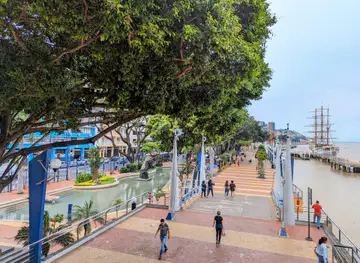
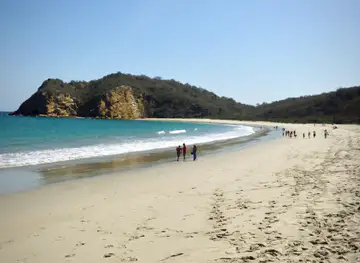
The region's attractions range from the urban heritage and riverside spaces of Guayaquil to the beaches, surf breaks and fishing coves of the Santa Elena Peninsula. In Guayaquil, visitors can explore Las Peñas, Cerro Santa Ana, the Malecón 2000 and museums that interpret the city's commercial, artistic and natural history. The Parque Histórico in Samborondón, outside central Guayaquil but within the wider metropolitan area, combines restored architecture with native vegetation and wildlife. Along the peninsula, Salinas provides resort facilities, while Ayangue is known for its sheltered bay and Montañita for surfing and a youthful coastal atmosphere. Archaeological sites at Agua Blanca and other settlements offer insight into the Manteño past. At the western tip, La Chocolatera and nearby coastal viewpoints show the meeting of powerful Pacific currents. Around Guayaquil and southern El Oro, mangrove channels, estuaries and island excursions provide opportunities for birdwatching, fishing and boat trips, with Puerto Bolívar serving as a gateway to the Jambelí archipelago.
-
 Tourist attraction
Very close to the equator
Explore the wonders of the equator in Marian, Ecuador, where nature and culture come together for an unforgettable adventure.
Best landmarks in Southwest Coast
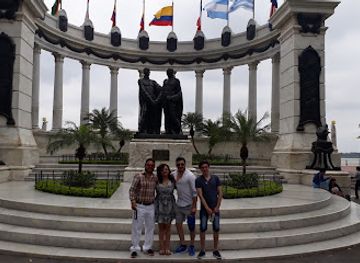
Guayaquil's most recognisable urban landmarks are concentrated around the Guayas River and the Las Peñas district. The colourful hillside streets of Las Peñas lead towards Cerro Santa Ana, whose summit provides a memorable view over the city, river and port; the district also preserves some of the city's best-known historic domestic architecture. The Rotonda monument on the Malecón commemorates the 1822 meeting of José de San Martín and Simón Bolívar, linking the waterfront with the independence history of Spanish South America. In central Guayaquil, the Metropolitan Cathedral and the Church of San Francisco represent important religious and civic elements of the modern city. On the Santa Elena Peninsula, the long shoreline at Salinas is a defining resort landscape, while the headland of La Chocolatera at the peninsula's western end is a powerful natural landmark shaped by cliffs, surf and intersecting currents. In southern coastal Ecuador, Puerto Bolívar's working harbour and the mangrove-fringed approaches to the Jambelí archipelago express the continuing relationship between ports, fisheries and the Gulf of Guayaquil.
-
Tourist attraction
Malecon 2000
Explore Guayaquil's iconic waterfront: a vibrant mix of history, culture, and entertainment along the scenic Guayas River.
-
Monument
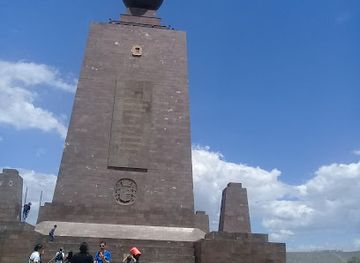
Middle of the World City
Experience the thrill of standing in two hemispheres at once at this iconic equatorial landmark just outside Quito, Ecuador.
-
Historical landmark
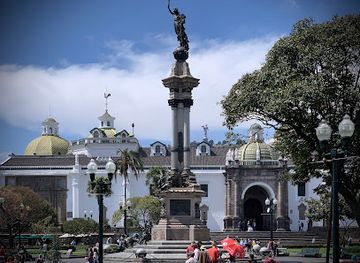
Independence Square
Discover Quito's heart at Independence Square: a historic landmark surrounded by colonial architecture and vibrant Ecuadorian culture.
-
Tourist attraction
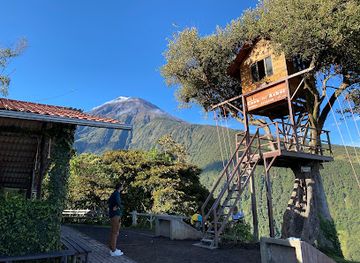
La Casa del Arbol
Experience the thrill of the 'Swing at the End of the World' at La Casa del Arbol, offering breathtaking views of the Andes and the Tungurahua volcano.
Explore Southwest Coast on the map
Plan your trip on one map. See where the top cities, national parks and sights are, and book hotels and experiences in a few clicks.
Best hotels in Southwest Coast
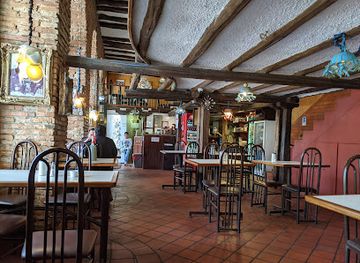
Best restaurants in Southwest Coast
Coastal cooking is the defining culinary language of the region, with seafood, green plantain, rice, cassava and fresh citrus appearing in many forms. Guayaquil is particularly associated with encebollado, a hearty fish and cassava soup served with pickled red onion, as well as ceviches, crab preparations and bolón de verde, a mashed plantain dish commonly filled or mixed with pork, cheese or seafood. On the Santa Elena Peninsula, beach restaurants and market stalls focus on grilled fish, prawns, shellfish and plantain-based accompaniments, while the fishing towns offer a more direct connection with the daily catch. Machala and the southern coast reflect the importance of bananas, cacao and agricultural produce alongside seafood. Look for busy local eateries, municipal markets and family-run restaurants, but choose shellfish carefully and favour places with good refrigeration. In Guayaquil and the larger resort towns, contemporary restaurants, cafés and international menus supplement the traditional coastal repertoire.
-
Restaurant
Fogo de Chão Ecuador
Experience authentic Brazilian cuisine at Fogo de Chão Ecuador - where every meal is a celebration of flavors and tradition.
-
Restaurant
Marrecife
Discover the rich flavors of Ecuador at Marrecife, Guayaquil's premier seafood restaurant offering an unforgettable dining experience.
-
Ecuadorian
Raymipampa Restaurant
Experience authentic Ecuadorian cuisine at Raymipampa Restaurant in Cuenca - where tradition meets flavor beside the Cathedral.
-
Restaurant
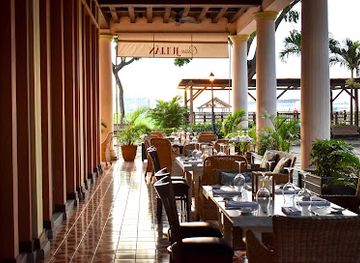
Casa Julián
Discover Casa Julián: A premier dining destination in Guayaquil offering exquisite Ecuadorian cuisine amidst beautiful historical surroundings.
Best bars in Southwest Coast
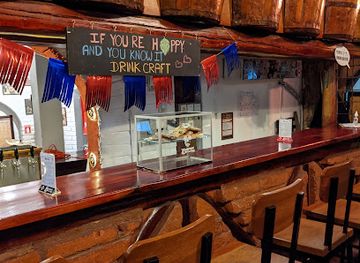
Evening life varies considerably across Southwest Coast Ecuador. Guayaquil offers the broadest choice, including hotel bars, cocktail venues, restaurants, live-music spaces and nightlife in established entertainment areas, though visitors should choose transport and neighbourhoods carefully after dark. Salinas has a seasonal seafront and resort-oriented scene, with restaurants, casual bars and venues that become busier during holidays and weekends. Montañita is the region's best-known late-night centre, combining surf-town cafés, bars, dancing and live music, particularly in the busiest travel periods. Elsewhere on the peninsula, Olón, Ayangue and smaller coastal communities tend towards relaxed restaurants, beach bars and early evening gatherings rather than a major club circuit. Machala has urban bars, restaurants and music venues serving local residents. Nightlife is not the main attraction of every coastal town, and opening arrangements can change, so check locally rather than relying on old listings.
-
Brewpub
Bandido Brewing
Discover the Craft Beers of Bandido Brewing in Quito - A Unique Brewpub Experience with Flavorful Brews and Lively Vibes.
-
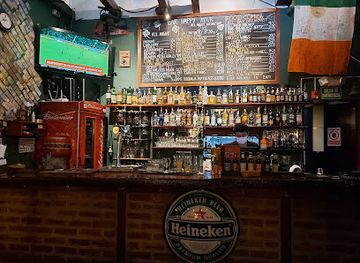
Irish pub
Finn McCool's Irish Pub
Experience the vibrant atmosphere of Finn McCool's Irish Pub, a perfect blend of Irish hospitality and local culture in the heart of Quito.
-
Grill
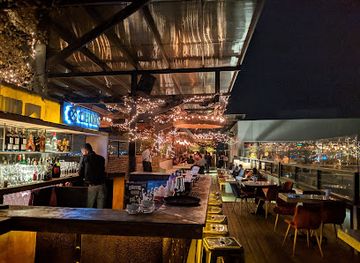
Vento RoofTop
Discover luxury dining at Vento RoofTop in Samborondón, where exquisite grilled cuisine meets breathtaking rooftop views.
-
Bar
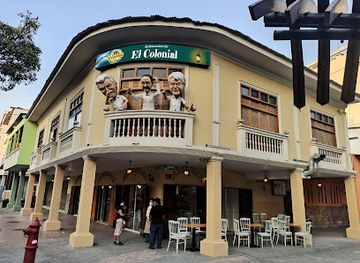
El Colonial
Discover the energetic nightlife of Guayaquil at El Colonial, where delicious food and vibrant entertainment come together for an unforgettable experience.
Best nightclubs in Southwest Coast
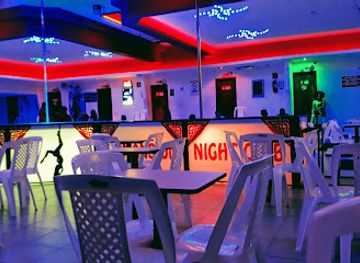
Evening life varies considerably across Southwest Coast Ecuador. Guayaquil offers the broadest choice, including hotel bars, cocktail venues, restaurants, live-music spaces and nightlife in established entertainment areas, though visitors should choose transport and neighbourhoods carefully after dark. Salinas has a seasonal seafront and resort-oriented scene, with restaurants, casual bars and venues that become busier during holidays and weekends. Montañita is the region's best-known late-night centre, combining surf-town cafés, bars, dancing and live music, particularly in the busiest travel periods. Elsewhere on the peninsula, Olón, Ayangue and smaller coastal communities tend towards relaxed restaurants, beach bars and early evening gatherings rather than a major club circuit. Machala has urban bars, restaurants and music venues serving local residents. Nightlife is not the main attraction of every coastal town, and opening arrangements can change, so check locally rather than relying on old listings.
-
Disco club
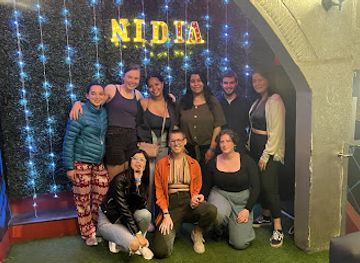
Discoteca Nidia Fuzzion Party
Discover the vibrant nightlife at Discoteca Nidia Fuzzion Party, Cuenca's premier disco club offering unforgettable evenings filled with music and dance.
-
Night club
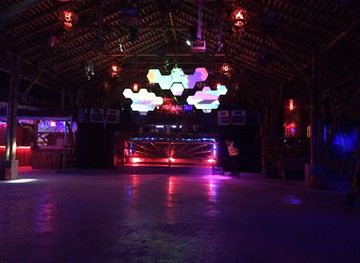
Lost Beach Club
Discover Lost Beach Club in Montañita – an electrifying nightlife hotspot with unbeatable music, stunning views, and a vibrant atmosphere.
-
Night club
La Mansión Night Club Guayaquil
Dive into the heart of Guayaquil's nightlife at La Mansión Night Club, where vibrant music and affordable fun await every visitor.
-
Night club
Danzatoria (Kika Dance Club)
Discover the exhilarating nightlife at Danzatoria (Kika Dance Club) in Quito, where music and dance create unforgettable memories.

Best shops in Southwest Coast
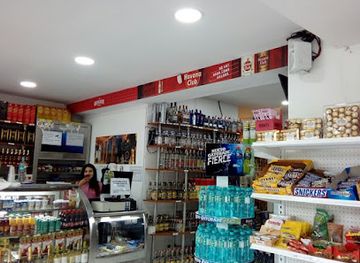
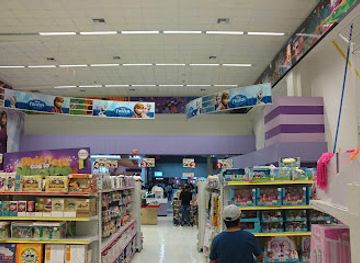
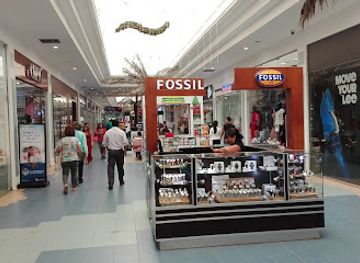
Shopping is most varied in Guayaquil, where modern commercial centres sit alongside markets, independent retailers, bookshops, craft stalls and specialist food shops. Las Peñas and the Malecón area can be useful for locally themed crafts and artworks, although visitors should distinguish handmade goods from mass-produced souvenirs. On the Santa Elena Peninsula, markets and small shops sell woven items, beach clothing, jewellery, ceramics and surf-related goods, while Montañita has a strong informal craft and clothing culture. The peninsula is also a practical place to look for regional food products such as cacao, coffee, sweets and preserved seafood, provided packaging and transport conditions are suitable. Machala's commercial areas reflect its role as a regional business centre, with produce markets and shops serving the surrounding agricultural economy. When buying archaeological-looking objects, request proof of lawful modern manufacture and never purchase genuine artefacts; Ecuador protects its cultural heritage and export of antiquities is prohibited.
-
Shopping mall
Quicentro
Explore Quicentro, Quito's vibrant shopping mall featuring a diverse selection of shops, dining, and entertainment in a modern and inviting atmosphere.
-
Shopping mall
Mall del Sol
Discover Mall del Sol, Guayaquil's ultimate shopping destination, where fashion, food, and fun come together in a vibrant atmosphere.
-
Shopping mall
San Marino Shopping
Discover the ultimate shopping experience in Guayaquil at San Marino Shopping, where fashion, food, and fun meet.
-
Shopping mall
Paseo Shopping Peninsula
Explore the vibrant Paseo Shopping Peninsula in La Libertad for a shopping and dining experience like no other, filled with local and international delights.

Get your free copy of our complete guide to Southwest Coast, delivered straight to you.
Everything on this page, from attractions and restaurants to essentials and local phrases, in one PDF you can read offline, print or share.
Already have an account? Sign in
Your Southwest Coast guide is ready.
We'll send it to · Not you? Sign out

Getting your guide ready…
We are putting together a fresh copy of the Southwest Coast guide. This can take up to a minute.
This can take a few moments. If your browser asks, choose Allow so the download can start. You'll find the guide in your Downloads folder.
Nothing happened? Download it again
Sorry, the guide is taking longer than usual. Please try again in a minute, or get it by email instead.
Southwest Coast essentials
Currency and Payment
Safety
Emergency Situations
Do's and Don'ts
Local Tips
From Eve
Local phrases worth knowing
You don't need to get them perfect. A few words go a long way, and locals appreciate the effort.
Basics
| English | Local | Say it |
|---|---|---|
| Hello | Hola | [oh-lah] |
| Goodbye | Adiós | [ah-dee-ohs] |
| Yes | Sí | [see] |
| No | No | [noh] |
| Please/You're welcome | Por favor/De nada | [por fah-vor/deh nah-dah] |
| Thank you | Gracias | [grah-syahs] |
| Excuse me/Sorry | Disculpe/Lo siento | [dees-kool-peh/loh syen-toh] |
| How are you? | ¿Cómo está? | [koh-moh es-tah] |
| Fine. And you? | Bien. ¿Y tú? | [byen. ee too] |
| Do you speak English? | ¿Habla inglés? | [ah-blah een-gles] |
| I don't understand | No entiendo | [noh en-tyen-doh] |
Eating & Drinking
| English | Local | Say it |
|---|---|---|
| I'd like to see the menu, please | Me gustaría ver el menú, por favor | [meh goo-stah-ree-ah vehr el meh-noo, por fah-vor] |
| I don't eat meat | No como carne | [noh koh-moh kar-neh] |
| Cheers! | ¡Salud! | [sah-lood] |
| I would like to pay, please | Me gustaría pagar, por favor | [meh goo-stah-ree-ah pah-gar, por fah-vor] |
Emergencies
| English | Local | Say it |
|---|---|---|
| Help! | ¡Ayuda! | [ah-yoo-dah] |
| Go away! | ¡Vete! | [veh-teh] |
| Call the Police! | ¡Llame a la policía! | [yah-meh ah lah poh-lee-see-ah] |
| Call a doctor! | ¡Llame a un médico! | [yah-meh ah oon meh-dee-koh] |
| I'm lost | Estoy perdido | [es-toy per-dee-doh] |
| I'm ill | Estoy enfermo | [es-toy en-fer-mo] |
Shopping
| English | Local | Say it |
|---|---|---|
| I'd like to buy... | Me gustaría comprar... | [meh goo-stah-ree-ah kom-prar] |
| I'm just looking | Solo estoy mirando | [soh-lo es-toy mee-ran-doh] |
| How much is it? | ¿Cuánto cuesta? | [kwan-toh kwes-tah] |
| That's too expensive | Eso es muy caro | [eh-so es moo-ee kah-roh] |
| Can you lower the price? | ¿Puedes bajar el precio? | [pweh-des bah-har el preh-syoh] |
Time & Numbers
| English | Local | Say it |
|---|---|---|
| What time is it? | ¿Qué hora es? | [keh oh-rah es] |
| It's one o'clock | Es la una | [es lah oo-nah] |
| Half past (10) | Y diez y media | [ee dyes ee meh-dee-ah] |
| Morning | Mañana | [mah-nyah-nah] |
| Afternoon | Tarde | [tar-deh] |
| Evening | Noche | [noh-cheh] |
| Yesterday | Ayer | [ah-yer] |
| Today | Hoy | [oy] |
| Tomorrow | Mañana | [mah-nyah-nah] |
| 1 | Uno | [oo-no] |
| 2 | Dos | [dohs] |
| 3 | Tres | [tres] |
| 4 | Cuatro | [kwah-troh] |
| 5 | Cinco | [seen-koh] |
| 6 | Seis | [says] |
| 7 | Siete | [syet-eh] |
| 8 | Ocho | [oh-choh] |
| 9 | Nueve | [nweh-beh] |
| 10 | Diez | [dyez] |
Transport & Directions
| English | Local | Say it |
|---|---|---|
| Where's a/the...? | ¿Dónde hay un/una...? | [dohn-deh aye oon/oo-nah] |
| What's the address? | ¿Cuál es la dirección? | [kwahl es lah dee-rek-syohn] |
| Can you show me (on the map)? | ¿Puedes mostrarme (en el mapa)? | [pweh-des mos-trar-meh (en el mah-pah)] |
| When's the next (bus)? | ¿Cuándo es el próximo (autobús)? | [kwan-doh es el prok-see-mo (ow-toh-boos)] |
| A ticket (to ....) | Un boleto (a ...) | [oon boh-leh-toh (ah ...)] |
History of Southwest Coast
Valdivia and Early Coastal Societies
The south-western Ecuadorian coast has been inhabited for thousands of years. The Valdivia culture, which flourished from approximately 3500 BCE on parts of the Pacific coast, is known for settled communities, agriculture, fishing and some of the earliest widely recognised pottery traditions in the Americas. Later societies developed increasingly complex exchange networks linking coastal settlements with inland areas. Their legacy survives through archaeological research and museum collections rather than monumental ruins, and it establishes the coast as a long-inhabited cultural landscape rather than a region shaped only by its colonial or modern port history.
The Manteño Confederation and Coastal Trade
Before Spanish conquest, the central and southern coast formed part of a maritime world associated with the Manteño culture and related coastal societies. Settlements traded along the Pacific coast and maintained connections with the interior, using seafaring knowledge, shell products, textiles and agricultural goods. On the Santa Elena Peninsula, archaeological sites such as Agua Blanca preserve evidence of Manteño occupation, including ceremonial and domestic remains. The period is important because it demonstrates the commercial and maritime sophistication of coastal communities before the arrival of European powers.
Spanish Conquest and Colonial Guayaquil
Spanish colonisation transformed the coast during the sixteenth century. Guayaquil developed on the Guayas River as a shipbuilding, river and maritime centre, although its low-lying setting made it vulnerable to fires, floods and attacks by privateers. Colonial administration, Catholic institutions and forced labour systems reshaped settlement and production, while Indigenous and African communities remained central to the region's social and economic life. The river network connected the city to agricultural hinterlands and helped establish the commercial importance that still defines Guayaquil.
Independence and the Port of Guayaquil
Guayaquil declared independence from Spanish rule on 9 October 1820, an event commemorated throughout Ecuador. The city and its surrounding province then became part of the wider military and political struggle that ended Spanish colonial authority in the region. Guayaquil's port, river access and shipbuilding traditions gave it strategic importance during the independence era and afterwards. The city's growth as Ecuador's principal commercial centre was closely linked to the movement of agricultural goods, people and ideas through the Guayas basin.
Cacao, Trade and Urban Expansion
During the nineteenth and early twentieth centuries, cacao exports made Guayaquil and the Guayas lowlands central to Ecuador's international economy. Wealth from the cacao trade helped finance urban development, while port activity connected the region to markets in Europe and the Americas. The boom also exposed deep inequalities in landholding, labour and public health. Fires and epidemics repeatedly affected the city, prompting changes in construction, sanitation and planning. Historic buildings and civic spaces in central Guayaquil reflect the later phases of this commercial expansion rather than a fully preserved colonial city.
Bananas, Ports and the Southern Coast
After cacao production was damaged by disease and economic disruption, bananas became one of Ecuador's defining export industries during the twentieth century. The lowlands around Guayas and El Oro developed extensive plantations, packing infrastructure and transport links, with Machala becoming strongly associated with banana production. Puerto Bolívar expanded as a major export port, while Guayaquil continued to dominate national commerce. The industry generated employment and foreign revenue but also involved contested labour relations and environmental pressures, themes that remain relevant to the region's contemporary economy.
Modern Coastal Tourism and Conservation
From the late twentieth century onwards, the Santa Elena Peninsula developed a wider tourism economy alongside its fishing and commercial traditions. Salinas became an established beach resort, while Montañita grew through surfing, independent travel and nightlife. Coastal tourism has also encouraged interest in archaeological heritage, mangrove ecosystems and whale watching. At the same time, urban expansion, port activity, water management and climate variability have created environmental pressures. The modern coast is therefore shaped by both leisure development and the continuing importance of fisheries, agriculture, wetlands and maritime trade.
Southwest Coast in Photos
Browse through our photo collection highlighting the charm and character of the destination.
Neighbouring regions of Southwest Coast
The closest regions to Southwest Coast, if you have time for more than one.
-

-

-
-

-


Swipe for more regions
Explore more

Explore more of Ecuador
Explore Ecuador: From the Amazon rainforest and Andean highlands to the Pacific coast and Galápagos Islands, discover diverse landscapes and vibrant cultures.
Explore Ecuador