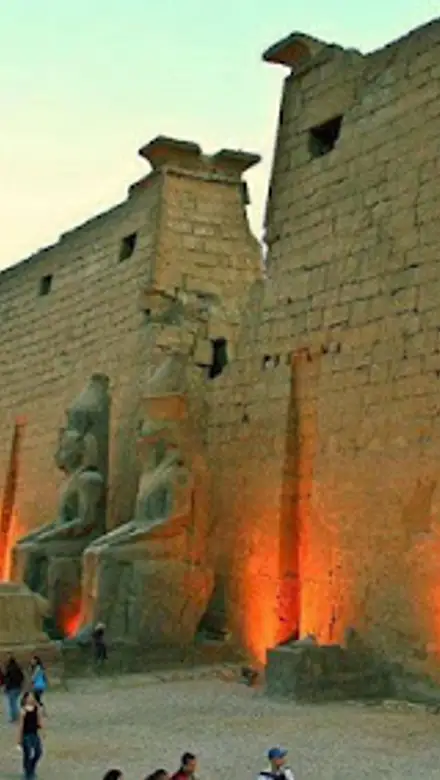
First Pylon Luxor Temple, Luxor Travel Guide
Free Guide: Discover the First Pylon at Luxor Temple, a majestic gateway to ancient Egyptian history, art, and religious traditions. A must-see landmark in Luxor.


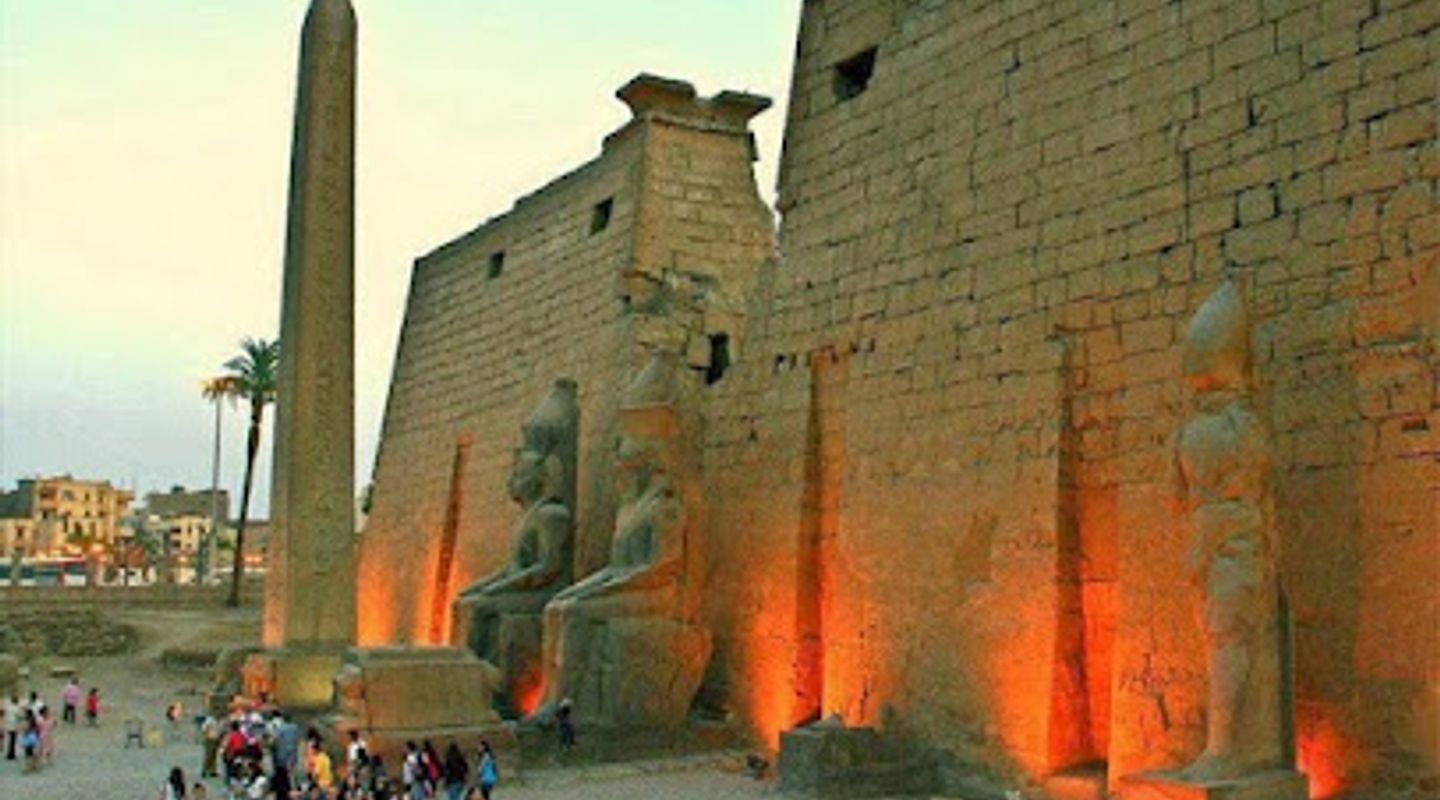
A brief summary of First Pylon Luxor Temple
Discover the First Pylon at Luxor Temple, a majestic gateway to ancient Egyptian history, art, and religious traditions. A must-see landmark in Luxor.
The First Pylon of Luxor Temple, built by Ramses II, serves as the grand entrance to this ancient complex. Adorned with colossal statues and intricate hieroglyphics, it offers a glimpse into the power and artistry of ancient Egypt, setting the stage for exploring the temple's rich history and spiritual significance.
- Address
- PJ2Q+4VF, Luxor City, Luxor, Luxor Governorate 1362501
Getting there
Walking
Public Transport
Taxi
Discover more about First Pylon Luxor Temple
Overview
The First Pylon of Luxor Temple, constructed by Pharaoh Ramses II, stands as a monumental gateway to one of Egypt's most captivating ancient sites. Dating back to approximately 1400 BCE, Luxor Temple, known in ancient times as Ipet-resyt or "the southern sanctuary," was dedicated to the Theban Triad: Amun, Mut, and Khonsu. Unlike other temples in Thebes, Luxor Temple was not dedicated to a specific god or deified pharaoh but rather to the rejuvenation of kingship. It served as a ceremonial center where pharaohs were crowned, either in reality or symbolically.As you approach the First Pylon, you're greeted by its impressive height and detailed reliefs depicting gods, pharaohs, and significant historical events, including scenes from Ramses II's military triumphs, such as the Battle of Kadesh. The entrance was originally flanked by two 25-meter-high obelisks, but today only one remains in place; its twin now stands in the Place de la Concorde in Paris. Six colossal statues of Ramses II once stood guard at the entrance, further emphasizing his power and divine status.Passing through the First Pylon, visitors enter the Great Court of Ramses II, surrounded by a double row of closed lotus bud columns. The walls of the courtyard feature reliefs depicting the pharaoh making offerings to the gods. A unique feature of Luxor Temple is the Abu El-Haggag Mosque, which was built in the 14th century and stands partially overhanging the courtyard. This mosque, along with the temple itself, stands as a testament to the site's continuous use for religious worship for over 3,400 years, having been converted from a church by the Romans in 395 AD and then into a mosque around 640 AD.The First Pylon serves not only as an architectural marvel but also as a gateway to understanding the religious practices, cultural rituals, and daily life of the ancient Egyptians. Exploring the temple complex, visitors can wander through vast courtyards, admire massive stone columns, and read intricate inscriptions that tell the story of Luxor's rich past.
Evendo Review Centre
 Google
Guest reviews
Explore First Pylon Luxor Temple on the map
A handpicked selection of must-see spots near First Pylon Luxor Temple, mapped for you.
Get your free copy of our complete guide to First Pylon Luxor Temple, delivered straight to you.
Everything on this page, from opening hours and how to get there to Eve’s tips and the best time to go, in one PDF you can read offline, print or share.
Already have an account? Sign in
Your First Pylon Luxor Temple guide is ready.
We'll send it to · Not you? Sign out

Getting your guide ready…
We are putting together a fresh copy of the First Pylon Luxor Temple guide. This can take up to a minute.
This can take a few moments. If your browser asks, choose Allow so the download can start. You'll find the guide in your Downloads folder.
Nothing happened? Download it again
Sorry, the guide is taking longer than usual. Please try again in a minute, or get it by email instead.
Other nearby places you may find interesting
The closest places of the same kind, if this one is not quite what you had in mind.
-
-
-

-
-


Swipe for more places
More to explore near First Pylon Luxor Temple
-
 Best experiences near First Pylon Luxor Temple
-
 Best hotels near First Pylon Luxor Temple
-
 Best landmarks near First Pylon Luxor Temple
-
 Best attractions near First Pylon Luxor Temple
-
 Best shops near First Pylon Luxor Temple
-
 Best restaurants near First Pylon Luxor Temple
-
 Best bars near First Pylon Luxor Temple


Do you manage this location?
Take control to get all the benefits, like improved information, better appearance, and stronger visibility across AI-powered discovery.
Explore more

Explore more of Luxor
Discover Luxor, Egypt: A mesmerizing city where ancient temples, pharaohs' tombs, and modern culture converge on the banks of the Nile River.
Explore Luxor
Explore more of Egypt
Discover Egypt: From the timeless pyramids to the vibrant Red Sea, experience a land where ancient wonders meet modern adventures.
Explore Egypt