

Remaining Luxor Obelisk, Luxor Travel Guide
Free Guide: Witness the grandeur of ancient Egypt at the Remaining Luxor Obelisk, a towering monument adorned with hieroglyphs, steeped in history and mystery.


A brief summary of Remaining Luxor Obelisk
Witness the grandeur of ancient Egypt at the Remaining Luxor Obelisk, a towering monument adorned with hieroglyphs, steeped in history and mystery.
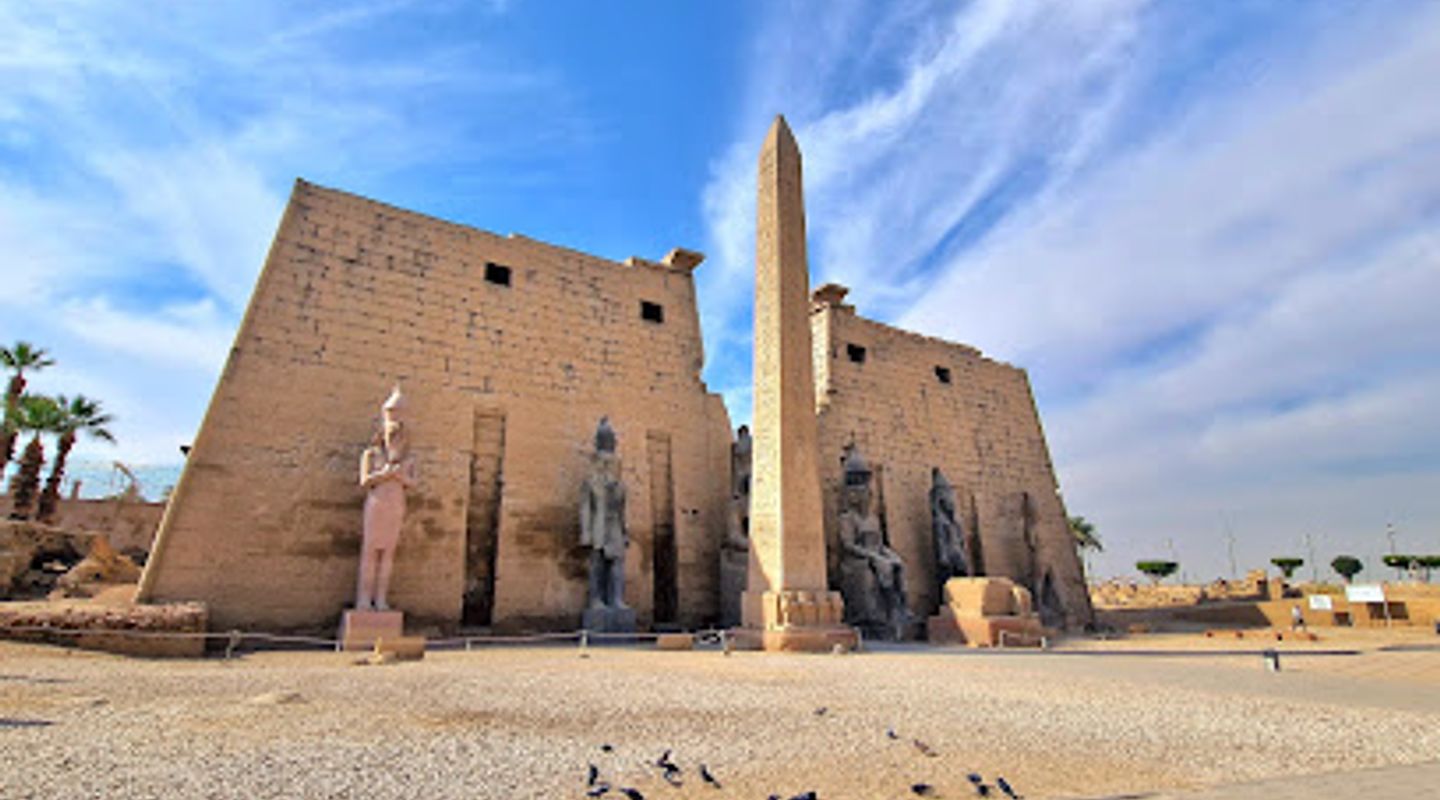
The Remaining Luxor Obelisk stands as a solitary sentinel, a red granite obelisk adorned with hieroglyphs, marking the entrance to the Luxor Temple. Once part of a pair, it offers a glimpse into the power and artistry of the Ramesses II era, with its twin now gracing the Place de la Concorde in Paris.
- Address
- PJ2Q+4WG, Luxor City, Luxor, Luxor Governorate 1362501
Getting there
Walking
Taxi
Discover more about Remaining Luxor Obelisk
Overview
Standing tall in Luxor City, the Remaining Luxor Obelisk is a remarkable testament to ancient Egyptian civilization. Carved from a single piece of red granite, this obelisk is adorned with exquisite hieroglyphs that narrate the stories of pharaohs and their divine connections, offering a glimpse into the spiritual and political significance of these structures.Originally, two obelisks stood at the entrance of the Luxor Temple, erected during the reign of Ramesses II around 1250 BC. In the 1830s, the right-hand (western) obelisk was gifted to France and now stands in the Place de la Concorde in Paris. In return, King Louis Philippe gave Pasha Muhammed Ali a large clock, which is still in the clock tower of the mosque at the Citadel of Cairo. The remaining obelisk in Luxor is slightly taller than its counterpart that is in Paris.The hieroglyphs that are carved into the obelisk in sunken relief on all four sides include coded references to Ramses II's divine power. The obelisk symbolizes the sun god Ra, with many believing that the god existed within the structure. The four baboons that are visible on the pedestal of the obelisk are carved raising their front paws. Ancient Egyptians observed baboons making such a gesture at dawn and interpreted this as the animals 'adoring' the sun.
Evendo Review Centre
 Google
Guest reviews
Explore Remaining Luxor Obelisk on the map
A handpicked selection of must-see spots near Remaining Luxor Obelisk, mapped for you.
Get your free copy of our complete guide to Remaining Luxor Obelisk, delivered straight to you.
Everything on this page, from opening hours and how to get there to Eve’s tips and the best time to go, in one PDF you can read offline, print or share.
Already have an account? Sign in
Your Remaining Luxor Obelisk guide is ready.
We'll send it to · Not you? Sign out

Getting your guide ready…
We are putting together a fresh copy of the Remaining Luxor Obelisk guide. This can take up to a minute.
This can take a few moments. If your browser asks, choose Allow so the download can start. You'll find the guide in your Downloads folder.
Nothing happened? Download it again
Sorry, the guide is taking longer than usual. Please try again in a minute, or get it by email instead.
Other nearby places you may find interesting
The closest places of the same kind, if this one is not quite what you had in mind.
-
-
-
-

-


Swipe for more places
More to explore near Remaining Luxor Obelisk
-
 Best experiences near Remaining Luxor Obelisk
-
 Best hotels near Remaining Luxor Obelisk
-
 Best landmarks near Remaining Luxor Obelisk
-
 Best attractions near Remaining Luxor Obelisk
-
 Best shops near Remaining Luxor Obelisk
-
 Best restaurants near Remaining Luxor Obelisk
-
 Best bars near Remaining Luxor Obelisk


Do you manage this location?
Take control to get all the benefits, like improved information, better appearance, and stronger visibility across AI-powered discovery.
Explore more

Explore more of Luxor
Discover Luxor, Egypt: A mesmerizing city where ancient temples, pharaohs' tombs, and modern culture converge on the banks of the Nile River.
Explore Luxor
Explore more of Egypt
Discover Egypt: From the timeless pyramids to the vibrant Red Sea, experience a land where ancient wonders meet modern adventures.
Explore Egypt
