

Free Sahel Travel Guide & Mobile App
Explore Sahel with free travel guides. Discover regional history, expert tips, proposed trips, and audio guides on web or mobile app.


Explore Sahel Eritrea’s stark mountain landscapes, Red Sea heritage and Nakfa’s powerful independence-history sites through carefully arranged travel.
Read more about Sahel
When is the best time to visit Sahel?
Best: December–February · 25–26°C| Month | High (°C) | Rainfall (mm) |
|---|---|---|
| January (best) | 25 | 1 |
| February (best) | 26 | 2 |
| March | 28 | 3 |
| April | 30 | 4 |
| May | 32 | 5 |
| June | 34 | 6 |
| July | 35 | 7 |
| August | 35 | 6 |
| September | 33 | 5 |
| October | 30 | 4 |
| November | 28 | 3 |
| December (best) | 26 | 2 |
Getting to and around Sahel
How to get there
Transportation
Top city travel guides in Sahel
The cities of Sahel, and the easiest places to base yourself.

Swipe for more cities
Destinations in Sahel
Resorts, valleys and scenic spots worth a trip of their own.
-

-


Swipe for more destinations
Best attractions in Sahel
-
Tourist attraction
ዲጋ ከርከበት Kerkebt Dam
Discover the serene beauty of Kerkebt Dam in Eritrea, a remarkable tourist attraction that blends natural splendor with essential water management.
-
Tourist attraction
Abaededsee
Experience the tranquil beauty of Abaededsee, a serene oasis in Cabuia, Eritrea, perfect for relaxation and exploration amidst nature.
-
 Hiking area
جبل يتعبر
Experience the breathtaking landscapes and serene hiking trails of جَبَل يَتَعَبَر in Keren, Eritrea, perfect for adventurers and nature lovers alike.
-
Tourist attraction
ክሳድ-እምባ
Explore Cieffa's Tourist Attraction, a serene haven in Eritrea that bridges culture and nature, ideal for an authentic travel experience.


Best landmarks in Sahel
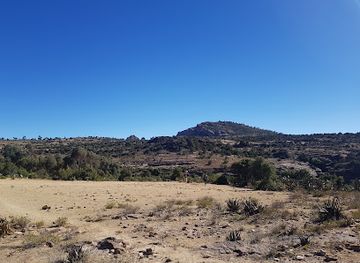
Nakfa is Sahel’s most recognisable landmark in historical terms, although it is a living settlement rather than a preserved monumental town. Its name is inseparable from Eritrea’s independence struggle, and the surrounding hills contain wartime tunnel systems, defensive works and other traces of the long conflict. These features have strong symbolic importance but may be controlled, unmarked or hazardous, so they require official permission and a knowledgeable guide. Afabet is another major historical reference point because the surrounding area witnessed the decisive 1988 battle, but it should not be approached as an independently accessible battlefield park. The region’s natural landmarks are more understated: dry mountain ridges, escarpment passes, wadis and broad rocky horizons define the visual geography and explain why the area was strategically important. The transition between high ground and the Red Sea-facing lowlands is particularly significant, linking inland pastoral routes with maritime approaches. Sahel’s landmarks therefore derive from a combination of severe terrain and twentieth-century history, rather than from a dense collection of castles, monuments or grand civic buildings.
-
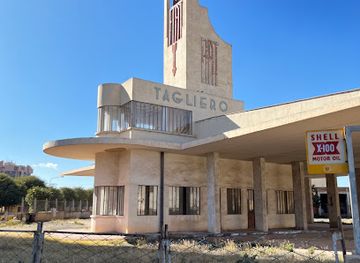
Historical landmark
Fiat Tagliero ፡ፍያት ታሌሮ
Explore the stunning Fiat Tagliero, a historical landmark in Asmara, Eritrea, known for its modernist architecture and rich cultural significance.
-
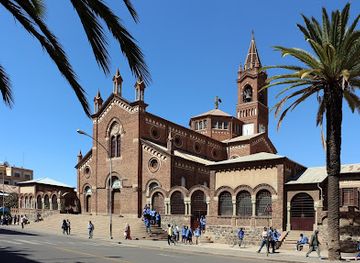
Catholic cathedral
ኣስመራ ካቴድራል | Cathedral Our Lady of the Rosary
Discover the architectural beauty and cultural significance of Cathedral Our Lady of the Rosary, a must-visit landmark in Asmara, Eritrea.
-
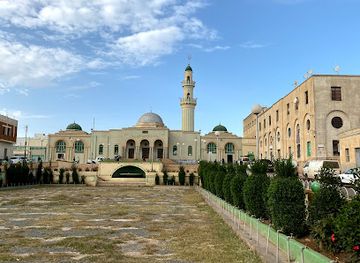
Mosque
Khulafa al-Rashidun Mosque - ጃምዕ ኹለፋእ ኣልራሺዲን
Explore the exquisite Khulafa al-Rashidun Mosque in Asmara, a cultural jewel showcasing breathtaking Islamic architecture and serene spirituality.
-
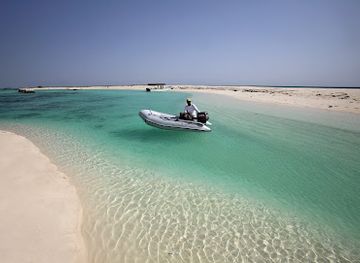
National park
Dahlak Marine National Park
Explore the breathtaking underwater wonders and stunning landscapes of Dahlak Marine National Park, a paradise for nature lovers and adventure seekers in Eritrea.
Explore Sahel on the map
Plan your trip on one map. See where the top cities, national parks and sights are, and book hotels and experiences in a few clicks.
Best hotels in Sahel
Best restaurants in Sahel
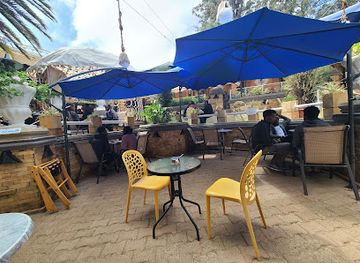
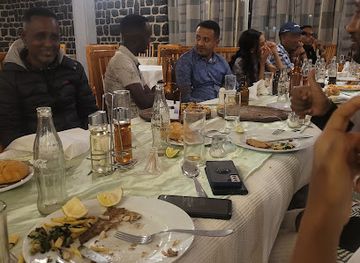
Sahel has no developed restaurant circuit, and dining is generally part of arranged travel rather than an independent culinary activity. Meals are likely to be simple and practical, based on Eritrean staples such as injera with stews, pulses, vegetables and meat where available, alongside bread, rice or pasta influenced by the country’s wider history. In Tigre-speaking lowland communities, pastoral traditions make milk, meat and grain-based foods important, though what is offered varies according to season, supply and household practice. Tea and coffee are central to social hospitality across Eritrea, while spicy berbere seasoning is widely used nationally. In remote areas, visitors should expect food to be planned by a tour organiser or accommodation provider and should carry suitable provisions for long journeys. Fresh produce and dietary alternatives can be difficult to obtain outside larger towns, so allergies and medical diets must be discussed before departure. Dining etiquette is generally best learned from local hosts, with modesty and patience more valuable than formal expectations about service or tipping.
-
Restaurant
Ghibabo Restaurant And Pizzeria
Discover Ghibabo Restaurant And Pizzeria: A top destination for authentic Eritrean and Italian cuisine in the heart of Asmara.
-
Eritrean
Golden Fork Fast Food
Experience authentic Eritrean cuisine at Golden Fork Fast Food in Asmara - a culinary gem blending tradition and flavor.
-
Cafe
Bar Pasticceria Vittoria
Experience the vibrant flavors of Asmara at Bar Pasticceria Vittoria - your go-to cafe for delightful pastries and authentic Eritrean treats.
-
Restaurant
The Roof Garden
Discover exquisite flavors and breathtaking views at The Roof Garden in Asmara - a must-visit culinary destination.

Best bars in Sahel
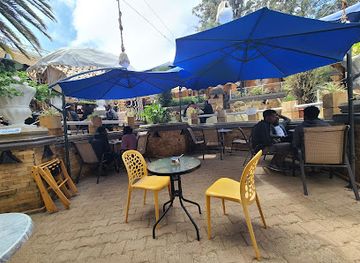
Sahel does not have a conventional nightlife scene, and evening activity is shaped by remoteness, security arrangements and early travel starts. In Nakfa or other larger settlements, social life may centre on modest cafés, tea houses and locally used eating places rather than dedicated bars or nightclubs. Eritrea’s urban nightlife traditions, including cafés, music and licensed bars, are much more evident in Asmara and Massawa, both outside the core Sahel destination. In rural Sahel, evenings are more likely to involve conversation, tea, quiet communal time and observation of the night sky, with options determined by the host or approved itinerary. Visitors should not wander after dark, both because of security procedures and because rough ground, unmarked hazards and poor lighting make independent movement unsafe. Alcohol availability is limited and should never be assumed; experiencing local evening culture does not depend on drinking.
-
Restaurant
Ghibabo Restaurant And Pizzeria
Experience the best of Eritrean cuisine and delightful pizzas at Ghibabo Restaurant And Pizzeria in Asmara.
-
Mountain peak
Emba Soira
Experience the breathtaking beauty and cultural richness of Emba Soira, Eritrea's iconic mountain peak, perfect for adventure and exploration.
-
Cafe
Bar Pasticceria Vittoria
Experience the rich flavors of Eritrean café culture at Bar Pasticceria Vittoria, a charming spot in the heart of Asmara.
-
Tour operator
Eritrea Visit
Explore Eritrea's hidden treasures with Eritrea Visit, your trusted guide to unforgettable cultural and natural experiences.
Best nightclubs in Sahel
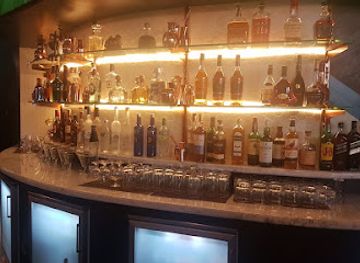
Sahel does not have a conventional nightlife scene, and evening activity is shaped by remoteness, security arrangements and early travel starts. In Nakfa or other larger settlements, social life may centre on modest cafés, tea houses and locally used eating places rather than dedicated bars or nightclubs. Eritrea’s urban nightlife traditions, including cafés, music and licensed bars, are much more evident in Asmara and Massawa, both outside the core Sahel destination. In rural Sahel, evenings are more likely to involve conversation, tea, quiet communal time and observation of the night sky, with options determined by the host or approved itinerary. Visitors should not wander after dark, both because of security procedures and because rough ground, unmarked hazards and poor lighting make independent movement unsafe. Alcohol availability is limited and should never be assumed; experiencing local evening culture does not depend on drinking.
-
Restaurant
Admas Restaurant & Bar
Discover the vibrant flavors and nightlife at Admas Restaurant & Bar, a top culinary destination in Asmara, Eritrea, showcasing local cuisine and culture.
-
Bar
Bar Jima
Experience the vibrant local culture at Bar Jima, the ultimate bar in Asmara known for its lively atmosphere and diverse drink selection.
-
Night club
Disco Club
Immerse yourself in Mitsiwa's nightlife at Disco Club, where music, dancing, and unforgettable moments await every visitor.
-
Club
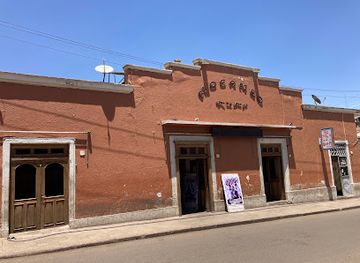
Mocambo club - ሞካምቦ
Discover the vibrant nightlife at Mocambo Club in Asmara, where music, dance, and culture collide for an unforgettable experience.

Best shops in Sahel
Shopping in Sahel is limited and practical, with small local provisions shops and market activity in larger settlements rather than purpose-built retail districts. Visitors should not expect reliable outlets for specialist equipment, medicines, international goods or souvenirs once they leave Eritrea’s main cities. Useful purchases may include locally available woven items, small handicrafts, coffee or packaged foods, but availability varies and visitors should buy only through ordinary, respectful commerce. The region’s cultural value is not represented by a single signature craft market, and removing archaeological objects, military remnants or old coins is inappropriate and may be illegal. For a wider choice of Eritrean textiles, crafts, books and food products, Asmara is the more practical shopping base and lies outside Sahel. Carry sufficient cash in nakfa, as cards and electronic payments cannot be relied upon in remote areas, and confirm that any proposed purchase or export is permitted before completing the transaction.
-
Tour operator
Eritrea Visit
Discover Eritrea's enchanting landscapes and rich culture with Eritrea Visit, your trusted tour operator in Asmara.
-
Store
Kahawta
Discover Kahawta in Asmara for an authentic shopping experience filled with Eritrean crafts, culture, and community spirit.
-
Fresh food market
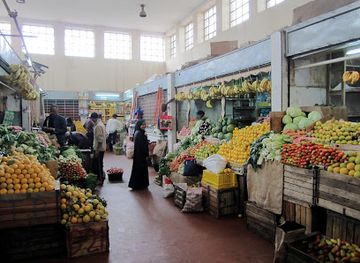
ማርካቶ | Markato
Explore the bustling Markato in Asmara, a vibrant fresh food market filled with local flavors, colors, and the heart of Eritrean culture.
-
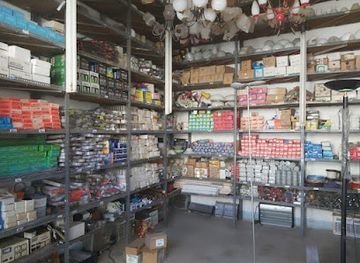
Electrical supply store
Kassa Asfaha Electric Shop (ካሳ ኣስፋሃ ናይ ኢሊክትሪክ ኣቑሑት መሸጣ)
Explore Kassa Asfaha Electric Shop in Asmara for a vast selection of electrical supplies and expert service.
Get your free copy of our complete guide to Sahel, delivered straight to you.
Everything on this page, from attractions and restaurants to essentials and local phrases, in one PDF you can read offline, print or share.
Already have an account? Sign in
Your Sahel guide is ready.
We'll send it to · Not you? Sign out

Getting your guide ready…
We are putting together a fresh copy of the Sahel guide. This can take up to a minute.
This can take a few moments. If your browser asks, choose Allow so the download can start. You'll find the guide in your Downloads folder.
Nothing happened? Download it again
Sorry, the guide is taking longer than usual. Please try again in a minute, or get it by email instead.
Sahel essentials
Currency and Payment
Safety
Emergency Situations
Do's and Don'ts
Local Tips
From Eve
Local phrases worth knowing
You don't need to get them perfect. A few words go a long way, and locals appreciate the effort.
Basics
| English | Local | Say it |
|---|---|---|
| Hello | Selam | [seh-lam] |
| Goodbye | Dehki | [deh-kee] |
| Yes | Iye | [ee-ye] |
| No | Aye | [ah-ye] |
| Please/You're welcome | Besha/Betri | [beh-sha/beh-tree] |
| Thank you | Yekenyeley | [yeh-ken-yeh-ley] |
| Excuse me/Sorry | Yemeleshal | [yeh-meh-leh-shal] |
| How are you? | Kemey alek? | [keh-mey ah-lek] |
| Fine. And you? | Kifaya. Kemey alek? | [kee-fah-ya. keh-mey ah-lek] |
| Do you speak English? | Englizi tselam? | [en-glee-zee tseh-lam] |
| I don't understand | Yemeleshal | [yeh-meh-leh-shal] |
Eating & Drinking
| English | Local | Say it |
|---|---|---|
| I'd like to see the menu, please | Menu n'kelish, besha | [meh-nu n'keh-leesh, beh-sha] |
| I don't eat meat | Eza nay koni | [eh-za nay koh-nee] |
| Cheers! | Besha! | [beh-sha] |
| I would like to pay, please | Besha, n'kelish aytey | [beh-sha, n'keh-leesh aye-tey] |
Emergencies
| English | Local | Say it |
|---|---|---|
| Help! | Aydel! | [eye-del] |
| Go away! | Zey b'k'ale! | [zay beh-k'ah-leh] |
| Call the Police! | Polis n'kelish! | [poh-lees n'keh-leesh] |
| Call a doctor! | Doktor n'kelish! | [dohk-tor n'keh-leesh] |
| I'm lost | Eza n'k'aleh | [eh-za n'kah-leh] |
| I'm ill | Eza n'k'alam | [eh-za n'kah-lahm] |
Shopping
| English | Local | Say it |
|---|---|---|
| I'd like to buy... | Abe'ri... | [ah-beh-ree] |
| I'm just looking | Abe'di n'kelish | [ah-beh-dee n'keh-leesh] |
| How much is it? | Kemey zey? | [keh-mey zay] |
| That's too expensive | Zey k'wak'wa | [zay k'wah-k'wah] |
| Can you lower the price? | Tsenek'ra price? | [tseh-neh-k'rah price] |
Time & Numbers
| English | Local | Say it |
|---|---|---|
| What time is it? | Kemey zey alay? | [keh-mey zay ah-lie] |
| It's one o'clock | Zey h'alek | [zay hah-lek] |
| Half past (10) | H'alfa (10) | [hah-lfah (10)] |
| Morning | B'le | [beh-leh] |
| Afternoon | K'wal | [kwahl] |
| Evening | B'shif | [beh-sheef] |
| Yesterday | K'we'ro | [kwah-roh] |
| Today | K'we'di | [kwah-dee] |
| Tomorrow | K'we'ro bzi | [kwah-roh bee-zee] |
| 1 | 1 | [1] |
| 2 | 2 | [2] |
| 3 | 3 | [3] |
| 4 | 4 | [4] |
| 5 | 5 | [5] |
| 6 | 6 | [6] |
| 7 | 7 | [7] |
| 8 | 8 | [8] |
| 9 | 9 | [9] |
| 10 | 10 | [10] |
Transport & Directions
| English | Local | Say it |
|---|---|---|
| Where's a/the...? | Wey n'k'aleh ...? | [weh-ee n'kah-leh ...] |
| What's the address? | Kemey zey address? | [keh-mey zay ah-dress] |
| Can you show me (on the map)? | Tsenek'ra (map) zey? | [tseh-neh-k'rah (map) zay] |
| When's the next (bus)? | Kemey b'k'aleh (bus)? | [keh-mey beh-kah-leh (bus)] |
| A ticket (to ....) | Tiket (to ...) | [tee-ket (to ...)] |
History of Sahel
Red Sea Trade and Early Regional Connections
Sahel’s position between the Eritrean highlands and the Red Sea placed it within an ancient corridor of movement linking northeastern Africa and Arabia. Pastoral routes, seasonal wells and coastal approaches connected inland communities with wider networks of exchange in livestock, salt and other goods. Written evidence is less abundant in this remote terrain than in the highland centres, but the region’s geography helps explain its long contact with Islamic, African and Arabian cultural influences. Its history was shaped less by a single urban kingdom than by mobility, water access and control of routes across the escarpment and coastal hinterland.
Islamic and Pastoral Cultural Landscapes
Over the medieval and early modern periods, Islam became a major influence across the northern Red Sea littoral and adjoining lowlands. Tigre-speaking pastoral communities and the Rashaida, whose presence in Eritrea dates from the nineteenth century, formed part of a wider social world extending around the Red Sea. Communities adapted their movements to scarce water and grazing, while kinship, trade and religious connections crossed modern frontiers. Sahel’s cultural history is consequently regional rather than confined to fixed settlements, and visitors should understand its traditions through local communities and guides rather than through monumental architecture alone.
Ottoman, Egyptian and Egyptian-Khedival Expansion
The Red Sea coast and its approaches attracted successive imperial powers seeking ports, commercial influence and strategic control. Ottoman authority was established along parts of the Eritrean coast from the sixteenth century, and nineteenth-century Egyptian expansion brought further attempts to control the interior routes and settlements. Authority in the Sahel was often uneven beyond forts and principal routes, with local leaders and pastoral communities retaining considerable influence. These centuries introduced new administrative, military and religious connections without erasing established patterns of movement across the mountains and lowlands.
Italian Rule and the Colonial Frontier
Italy established Eritrea as a colony in the late nineteenth century and developed roads, administrative posts and military infrastructure to consolidate its control. The northern lowlands and Red Sea approaches were strategically important because they connected the coast with the interior and with the wider Horn of Africa. Colonial boundaries and administrative categories altered older political geographies, while taxation, military recruitment and labour demands affected local communities. Much of the physical colonial imprint is modest or deteriorated in remote Sahel, but the period helped create the territorial framework inherited by later governments.
The Liberation Struggle and Nakfa
Sahel became central to Eritrea’s armed struggle for independence after the 1960s. The mountains around Nakfa offered defensible terrain for the Eritrean People’s Liberation Front, whose forces developed networks of tunnels, trenches, workshops, medical facilities and supply routes. Nakfa endured repeated attacks and became a symbol of resistance; Eritrea’s currency, the nakfa, takes its name from the town. The wartime landscape remains politically and emotionally important, although it is not a conventional open-air museum and access to military remnants requires official permission.
The Battle of Afabet, 1988
The Battle of Afabet in March 1988 was one of the decisive engagements of the Eritrean war of independence. EPLF forces defeated a major Ethiopian offensive in the Afabet area, capturing equipment and personnel and weakening Ethiopia’s position in northern Eritrea. The battle demonstrated the importance of local knowledge, fortified mountain terrain and coordinated mobile warfare. Afabet and the surrounding routes remain part of Eritrea’s national historical memory, though visitors should not assume that battle sites are marked, cleared or freely accessible without arrangements.
Post-Independence Administration and Restricted Travel
Eritrea achieved de facto independence in 1991 and formal independence in 1993. Sahel subsequently became part of the country’s Northern Red Sea administrative framework, while the Nakfa area retained its strong symbolic association with the liberation struggle. Remote infrastructure has remained limited, and travel outside major centres is regulated through permits and official arrangements. Contemporary Sahel is therefore shaped by both environmental constraint and political history: it is a living region of pastoral and settled communities, but also one where the practical conditions of travel reflect Eritrea’s security priorities.
Sahel in Photos
Browse through our photo collection highlighting the charm and character of the destination.
Neighbouring regions of Sahel
The closest regions to Sahel, if you have time for more than one.
-

-

-

-

-


Swipe for more regions
Explore more

Explore more of Eritrea
Discover Eritrea: A land of ancient history, stunning coastlines, and vibrant cultures nestled in the heart of the Horn of Africa.
Explore Eritrea