

Free Pärnu County Travel Guide & Mobile App
Explore Pärnu County with free travel guides. Discover regional history, expert tips, proposed trips, and audio guides on web or mobile app.


Explore Pärnu County for Estonia’s sandy coast, historic spa town, island culture, wetlands, forests and relaxed countryside escapes.
Read more about Pärnu County
When is the best time to visit Pärnu County?
Best: June–August · 21–23°C| Month | High (°C) | Rainfall (mm) |
|---|---|---|
| January | -1 | 40 |
| February | 0 | 30 |
| March | 6 | 35 |
| April | 11 | 40 |
| May | 18 | 45 |
| June (best) | 21 | 50 |
| July (best) | 23 | 60 |
| August (best) | 22 | 60 |
| September | 17 | 55 |
| October | 12 | 50 |
| November | 6 | 45 |
| December | 1 | 40 |
Getting to and around Pärnu County
How to get there
Transportation
Top city travel guides in Pärnu County
The cities of Pärnu County, and the easiest places to base yourself.
-

-

-

-


Swipe for more cities
Destinations in Pärnu County
Resorts, valleys and scenic spots worth a trip of their own.
-

-


Swipe for more destinations
Best attractions in Pärnu County
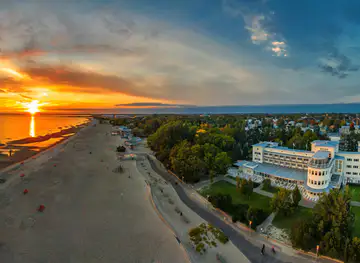
Pärnu County offers a varied combination of resort, nature and cultural attractions. In Pärnu, visitors can combine the long sandy beach and seaside promenade with the historic centre, spa facilities, the Pärnu Museum and contemporary cultural venues such as the Museum of New Art. The coastal landscape continues beyond the city at Valgeranna, while the Audru polder and surrounding meadows provide opportunities for birdwatching and quiet walks. Soomaa National Park, shared with neighbouring Viljandi County, brings a very different environment of rivers, bogs, floodplain forests and boardwalk trails; guided canoeing is particularly dependent on season and water levels. Kihnu provides insight into island traditions through its museum, cultural landscape and community life, while Manija offers a smaller-scale island visit. Inland, Tori connects equestrian heritage with river scenery, and forested districts near Kilingi-Nõmme suit walking and nature observation. The county’s attractions are less about one concentration of monuments than about the contrast between a lively summer resort, open coast, culturally distinctive islands and expansive wetlands.
-
Tourist attraction
Alpakafarm OÜ
Experience the tranquility and charm of Alpakafarm, where alpacas and local handicrafts come together in beautiful Pärnu County, Estonia.
-
Hiking area
Riisa nature trail
Discover the breathtaking Riisa Nature Trail in Pärnu County, a perfect destination for hiking enthusiasts and nature lovers seeking tranquility and adventure.
-
Tourist attraction
Tori põrgu
Explore the breathtaking views and stunning landscapes at Tori Põrgu, a must-visit natural wonder in Pärnu County, Estonia.


Best landmarks in Pärnu County
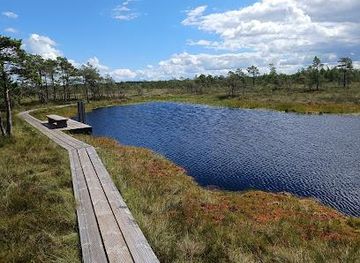
Pärnu’s most recognisable landmark landscape is shaped by its resort architecture: nineteenth- and early twentieth-century wooden villas, parks, the beach promenade and historic spa buildings express the city’s long relationship with bathing and health tourism. The old town retains traces of its medieval role, including sections and locations associated with former defensive structures, while St Elizabeth’s Church and St Catherine’s Church contribute distinctive historic silhouettes. The Pärnu River and its bridges provide important urban viewpoints, linking the central city with the wider bay. On Kihnu, the Lutheran church, cemetery and traditional settlement landscape are significant markers of the island’s maritime history and cultural continuity. Soomaa’s rivers, bogs and floodplain forests function as natural landmarks rather than monumental architecture, with seasonal flooding giving the landscape its defining character. Along the coast, Pärnu Bay, Valgeranna’s shore and the open meadows near Audru demonstrate how water, sand and low-lying land have shaped settlement, recreation and wildlife across the county.
-
Hotel
Tervise Paradiis spaa-hotell & veekeskus / Spa Hotel & Water park
Experience the ultimate relaxation and fun at Tervise Paradiis Spa Hotel & Water Park, where wellness meets adventure in the heart of Pärnu.
-
Theme park
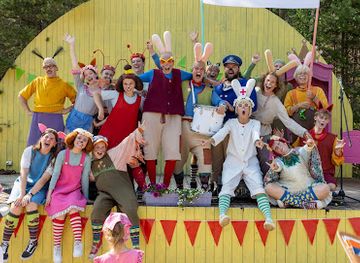
Lotte Village Theme Park
Discover the enchanting Lotte Village Theme Park in Pärnu, Estonia, where adventure, creativity, and family fun come together in a whimsical setting.
-
Beach
Pärnu Beach
Experience the beauty and vibrant atmosphere of Pärnu Beach, Estonia's premier summer destination boasting golden sands and refreshing sea.
-
Scenic spot
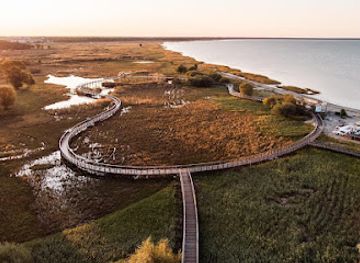
Rannaniidu matkarada
Explore the serene landscapes and natural beauty of Rannaniidu Matkarada in Pärnu, a picturesque scenic spot perfect for relaxation and adventure.


Explore Pärnu County on the map
Plan your trip on one map. See where the top cities, national parks and sights are, and book hotels and experiences in a few clicks.
Best hotels in Pärnu County
Best restaurants in Pärnu County
Pärnu has the county’s broadest dining scene, ranging from cafés and bakeries to restaurants in spa hotels, historic buildings and contemporary seaside settings. Menus often draw on Estonian staples such as rye bread, potatoes, dairy products, fish and seasonal berries, while modern kitchens reinterpret local produce without necessarily presenting a single regional cuisine. Along the coast, smoked or fresh fish is a natural choice, although availability varies by season and establishment. Rural inns and village cafés provide a more limited but often locally grounded option, while markets and farm shops can offer berries, preserves, honey, bread and other products from south-western Estonia. Kihnu’s island food traditions are linked to fishing, home baking and preserved produce, but visitors should respect the fact that the island is a working community rather than a themed dining destination. Vegetarian and international choices are easiest to find in Pärnu, particularly during the summer season.
-
Pizza
Steffani
Discover Steffani in Pärnu - a must-visit pizza restaurant offering delicious pies and an inviting atmosphere for all food lovers.
-
Family-friendly
Aleksandri Pub
Discover the family-friendly charm of Aleksandri Pub in Pärnu, where delightful dishes meet warm hospitality in a cozy setting.
-
German
Restoran Edelweiss
Experience authentic German cuisine at Restoran Edelweiss in Pärnu, where traditional flavors meet warm hospitality.
-
Cafe
Supelsaksad Pärnu
Discover Supelsaksad Pärnu: Where Local Flavors Meet Cozy Ambiance in Estonia's Culinary Scene.


Best bars in Pärnu County
Pärnu has the county’s most developed evening scene, concentrated around the centre, beach area and seasonal resort activity. Visitors will find traditional pubs, hotel lounges, cafés that stay open into the evening, cocktail-led venues and places offering live music, while summer brings the greatest choice and the latest closing times. The city also hosts cultural performances and concerts, giving nightlife an alternative to drinking-focused venues. Outside Pärnu, evening life is quieter and generally centres on village pubs, restaurants, community events and occasional live music rather than a large nightclub circuit. Kihnu and the rural districts are especially dependent on local calendars and seasonal activity, so visitors should not expect extensive late-night transport or a broad choice of venues. Responsible drinking and advance planning for the journey back are important in dispersed coastal and countryside areas.
-
Family-friendly
Aleksandri Pub
Discover the heart of Pärnu at Aleksandri Pub, where family-friendly dining meets local Estonian flavors in a cozy atmosphere.
-
Pub
Sweet Rosie Irish Pub
Experience the vibrant charm of Sweet Rosie Irish Pub in Pärnu, where local hospitality meets traditional Irish warmth.
-
Pub
Bum Bum Pubi
Discover the vibrant atmosphere and delicious cuisine at Bum Bum Pubi, a must-visit pub in the heart of Pärnu, Estonia.
-
Bar
Nikolai Lehtla
Discover the vibrant nightlife of Pärnu at Nikolai Lehtla, where a diverse drink selection and lively atmosphere await.


Best nightclubs in Pärnu County
Pärnu has the county’s most developed evening scene, concentrated around the centre, beach area and seasonal resort activity. Visitors will find traditional pubs, hotel lounges, cafés that stay open into the evening, cocktail-led venues and places offering live music, while summer brings the greatest choice and the latest closing times. The city also hosts cultural performances and concerts, giving nightlife an alternative to drinking-focused venues. Outside Pärnu, evening life is quieter and generally centres on village pubs, restaurants, community events and occasional live music rather than a large nightclub circuit. Kihnu and the rural districts are especially dependent on local calendars and seasonal activity, so visitors should not expect extensive late-night transport or a broad choice of venues. Responsible drinking and advance planning for the journey back are important in dispersed coastal and countryside areas.
-
Pub
Sweet Rosie Irish Pub
Discover the charm of Sweet Rosie Irish Pub in Pärnu, where Irish hospitality meets local flavors in a cozy coastal setting.
-
Karaoke bar
Karaokebaar Coco Loco
Experience the lively ambiance of Karaokebaar Coco Loco, Pärnu's premier karaoke bar, where music and fun come together for an unforgettable night.
-
Night club
Kultuuriklubi Tempel /avamine 2024 /
Discover the electric atmosphere of Kultuuriklubi Tempel, Pärnu's premier night club offering vibrant music and unforgettable nightlife experiences.
-
Night club
Lokaal Kassa
Experience the vibrant nightlife of Pärnu at Lokaal Kassa, where music, dancing, and fun come alive until dawn.


Best shops in Pärnu County
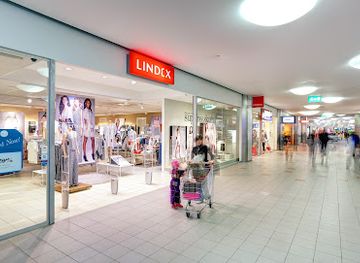
Pärnu offers the county’s most convenient shopping, with a central pedestrian area, everyday retail, independent boutiques, galleries, design shops and larger commercial centres. The selection expands in summer when visitors arrive for the resort season, but the city is not primarily a luxury-shopping destination. Look for Estonian design, woollen goods, ceramics, textiles, jewellery, books and locally produced food rather than generic souvenirs. Market stalls and farm shops may offer honey, preserves, berries, bread, smoked goods and other seasonal produce, although opening arrangements vary. Kihnu is the place to look for island-related textile traditions and small-scale handicrafts, but purchases should be made respectfully and with an understanding that handmade work is not mass-produced. In smaller county towns and villages, shopping is practical and local, with modest high streets, food shops and occasional markets rather than extensive retail districts.
-
Shopping mall
Kaubamajakas
Explore Kaubamajakas, Pärnu's vibrant shopping mall, offering everything from fashion to food in a family-friendly atmosphere.
-
Shopping mall
Pärnu Center
Experience the vibrant shopping and dining scene at Pärnu Center, a must-visit destination in Estonia's stunning coastal city.
-
Shopping mall
Port Artur
Discover shopping bliss at Port Artur, Pärnu's premier shopping mall, where local culture meets modern retail and dining.
-
Store
Magaziin
Discover a treasure trove of home goods and essentials at Magaziin in Pärnu, your go-to store for all things home and camping.


Get your free copy of our complete guide to Pärnu County, delivered straight to you.
Everything on this page, from attractions and restaurants to essentials and local phrases, in one PDF you can read offline, print or share.
Already have an account? Sign in
Your Pärnu County guide is ready.
We'll send it to · Not you? Sign out

Getting your guide ready…
We are putting together a fresh copy of the Pärnu County guide. This can take up to a minute.
This can take a few moments. If your browser asks, choose Allow so the download can start. You'll find the guide in your Downloads folder.
Nothing happened? Download it again
Sorry, the guide is taking longer than usual. Please try again in a minute, or get it by email instead.
Pärnu County essentials
Currency and Payment
Safety
Emergency Situations
Do's and Don'ts
Local Tips
From Eve
Local phrases worth knowing
You don't need to get them perfect. A few words go a long way, and locals appreciate the effort.
Basics
| English | Local | Say it |
|---|---|---|
| Hello | Tere | [teh-reh] |
| Goodbye | Head aega | [hed aye-gah] |
| Yes | Jah | [yah] |
| No | Ei | [ay] |
| Please/You're welcome | Palun | [pah-loon] |
| Thank you | Aitäh | [eye-tah] |
| Excuse me/Sorry | Vabandust | [vah-bahn-doost] |
| How are you? | Kuidas sul läheb? | [kwee-dahs sool leh-heb] |
| Fine. And you? | Hästi. Ja sina? | [hahs-tee. yah see-nah] |
| Do you speak English? | Kas sa räägid inglise keelt? | [kas sah rah-ig-eed een-glis-eh kelt] |
| I don't understand | Ma ei saa aru | [mah ay zah ah-roo] |
Eating & Drinking
| English | Local | Say it |
|---|---|---|
| I'd like to see the menu, please | Ma tahaks näha menüüd, palun | [mah tah-ahks nah-hah meh-noo-d, pah-loon] |
| I don't eat meat | Ma ei söö liha | [mah ay sir-eh lee-hah] |
| Cheers! | Terviseks! | [ter-vee-seks] |
| I would like to pay, please | Ma tahaks maksta, palun | [mah tah-ahks mahk-stah, pah-loon] |
Emergencies
| English | Local | Say it |
|---|---|---|
| Help! | Aita! | [eye-tah] |
| Go away! | Mine ära! | [mee-neh eh-rah] |
| Call the Police! | Kutsu politsei! | [koot-soo poh-lee-tseh] |
| Call a doctor! | Kutsu arst! | [koot-soo arst] |
| I'm lost | Ma olen kadunud | [mah oh-len kah-doo-nud] |
| I'm ill | Ma olen haige | [mah oh-len hi-geh] |
Shopping
| English | Local | Say it |
|---|---|---|
| I'd like to buy... | Ma tahaks osta... | [mah tah-ahks os-tah] |
| I'm just looking | Ma lihtsalt vaatan | [mah leess-tahl vah-tahn] |
| How much is it? | Kui palju see maksab? | [kwee pah-lyoo seh mak-sahb] |
| That's too expensive | See on liiga kallis | [seh on lee-gah kal-lis] |
| Can you lower the price? | Kas sa saad hinda madalamaks? | [kas sah sahd hin-dah mah-dah-lah-maks] |
Time & Numbers
| English | Local | Say it |
|---|---|---|
| What time is it? | Mis kell on? | [mis kel on] |
| It's one o'clock | Kell on üks | [kel on uks] |
| Half past (10) | Kell on pool (10) | [kel on pool (10)] |
| Morning | Hommik | [hom-mik] |
| Afternoon | Päev | [peh-ev] |
| Evening | Õhtu | [uh-thoo] |
| Yesterday | Eile | [eye-leh] |
| Today | Täna | [tah-nah] |
| Tomorrow | Homme | [hom-meh] |
| 1 | Üks | [uks] |
| 2 | Kaks | [kaks] |
| 3 | Kolm | [kolm] |
| 4 | Neli | [neh-lee] |
| 5 | Viis | [vees] |
| 6 | Kuus | [koos] |
| 7 | Seitsme | [sayts-meh] |
| 8 | Kaheksa | [kah-heh-kah] |
| 9 | Üheksa | [oo-heh-kah] |
| 10 | Kümme | [kyum-meh] |
Transport & Directions
| English | Local | Say it |
|---|---|---|
| Where's a/the...? | Kus on...? | [koos on] |
| What's the address? | Mis on aadress? | [mis on ah-dress] |
| Can you show me (on the map)? | Kas sa saad mulle näidata (kaardil)? | [kas sah sahd moo-leh nai-dah-tah (kaar-dil)] |
| When's the next (bus)? | Millal tuleb järgmine (buss)? | [mil-lahl too-leh-yahr-gmee-neh (boos)] |
| A ticket (to ....) | Pilet (....-le) | [pee-let (....-leh)] |
History of Pärnu County
Ancient Coastal Settlement and Trade
The coast and river mouths of present-day Pärnu County have supported settlement, fishing and trade for centuries. The Pärnu River offered access inland, while the islands and shallow bays connected communities with the wider Baltic world. Archaeological evidence from the region reflects changing patterns of settlement and maritime activity, although much of early life was organised through local communities rather than centralised towns. The sea, forests, rivers and seasonal wetlands continued to shape livelihoods long before the emergence of modern tourism.
Medieval Pärnu and Livonian Rule
Medieval Pärnu developed through two related settlements: Old Pärnu, associated with the bishopric, and New Pärnu, established by the Teutonic Order on the river’s northern bank in the thirteenth century. The town became a fortified centre and a point of trade within Livonia, the political and religious region that covered much of present-day Estonia and Latvia. Although the medieval fortifications were later damaged and dismantled, the town’s historic street pattern and archaeological remains preserve evidence of its importance on the south-western coast.
Swedish and Polish-Lithuanian Transitions
Pärnu County changed political hands during the conflicts that reshaped the eastern Baltic in the sixteenth and seventeenth centuries. The town was connected for a period with Polish-Lithuanian rule before coming under Swedish authority, and later became part of the Swedish realm. These transitions affected administration, military planning, trade and religious institutions. The Swedish period ended during the Great Northern War, after which the region was incorporated into the Russian Empire, beginning a long imperial phase in its history.
Imperial Pärnu and the Rise of the Resort
Under the Russian Empire, Pärnu became increasingly connected to regional markets and administrative networks. Its transformation into a resort began in 1838 with the opening of the first bathing establishment, when sea bathing and therapeutic treatments attracted visitors seeking health cures. Wooden villas, parks, promenades and spa facilities gradually gave the town a recognisable resort landscape. The tradition survived political change and remains visible in Pärnu’s architecture, wellness hotels and summer cultural calendar.
National Awakening and Estonian Independence
The nineteenth century saw the development of Estonian-language education, publishing and cultural organisations throughout the country, including south-western Estonia. Pärnu was associated with the emergence of Estonian national political life: the newspaper Pärnu Postimees, founded by Johann Voldemar Jannsen in 1857, helped strengthen public discussion in Estonian. In 1918 Estonia declared independence, and Pärnu County became part of the new republic. The interwar period brought further civic development, resort investment and improvements in transport.
War, Soviet Rule and Restoration of Independence
The Second World War and the occupations that followed brought profound disruption to Pärnu County, including military control, deportations and the reorganisation of private property and local government under Soviet rule. Pärnu continued to function as a resort, while rural areas were shaped by collective agriculture and state institutions. Estonia restored its independence in 1991. Since then, Pärnu has consolidated its role as a leading Estonian spa and cultural destination, while island communities and rural districts have worked to maintain local heritage within a changing economy.
Kihnu’s Maritime Cultural Legacy
Kihnu’s identity was formed by island geography, fishing, seafaring and periods when men were away at sea, leaving women central to household and community life. Traditional clothing, music, craft skills and seasonal customs developed within this setting and remain visible in ceremonies and everyday cultural expression. Kihnu’s cultural space was added to UNESCO’s Representative List of the Intangible Cultural Heritage of Humanity in 2003. The designation recognises a living tradition rather than a museum display, and visitors are expected to approach island communities with respect.
Pärnu County in Photos
Browse through our photo collection highlighting the charm and character of the destination.
Neighbouring regions of Pärnu County
The closest regions to Pärnu County, if you have time for more than one.
-
-

-

-

-


Swipe for more regions
Explore more

Explore more of Estonia
Discover Estonia: A perfect blend of medieval charm, modern innovation, and natural beauty in the heart of Northern Europe.
Explore Estonia