

Parc Pasteur Travel Guide
Free Guide: Escape to Parc Pasteur in Orléans: A historic green space with stunning sculptures, remarkable trees, and family-friendly attractions, perfect for a relaxing day out.


A brief summary of Parc Pasteur
Escape to Parc Pasteur in Orléans: A historic green space with stunning sculptures, remarkable trees, and family-friendly attractions, perfect for a relaxing day out.
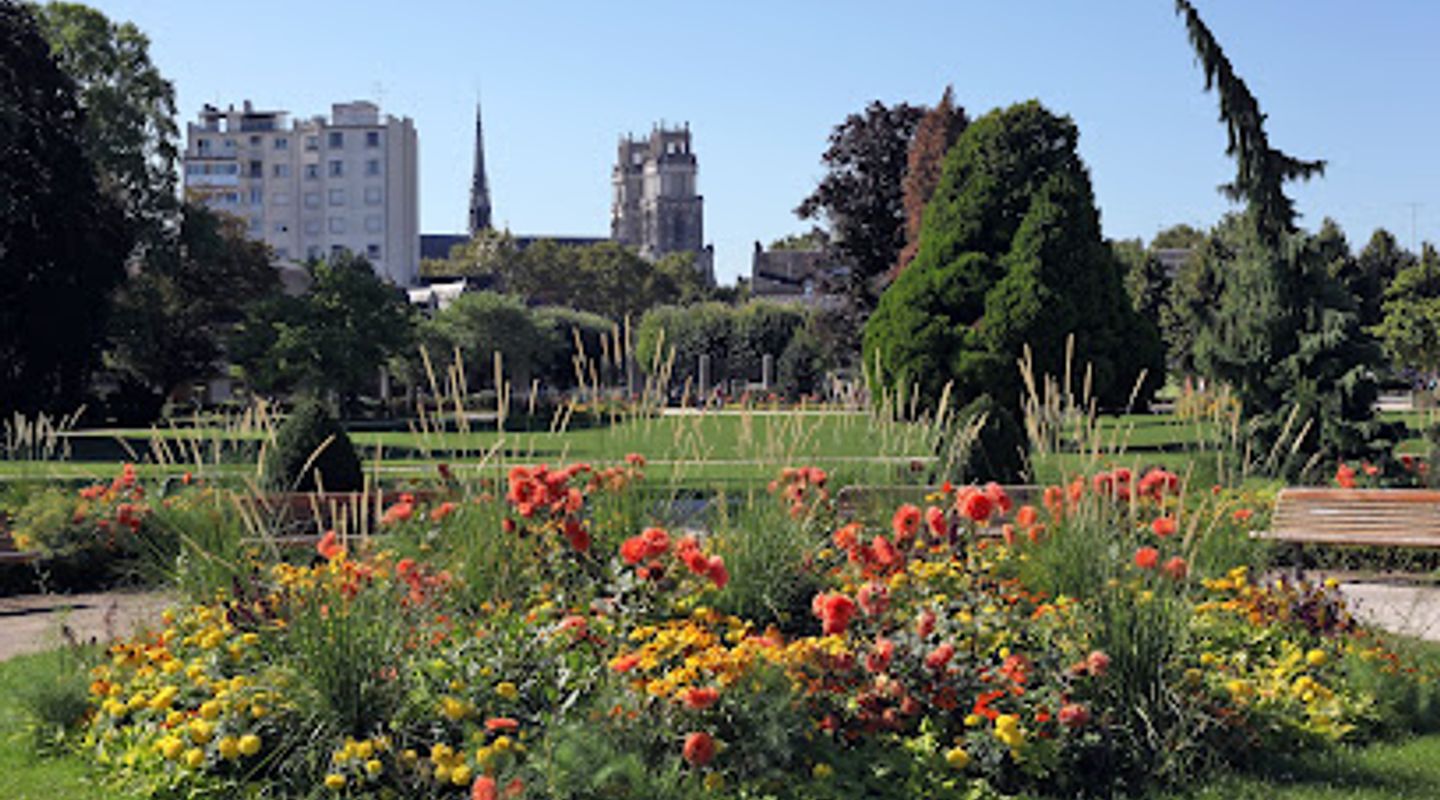
Parc Pasteur, a verdant escape in the heart of Orléans, offers a tranquil retreat from the city's bustle. Established in 1927, this 4-hectare park, named in honor of Louis Pasteur, the renowned French scientist, features a blend of formal French garden design and naturalistic landscaping. Visitors can admire remarkable trees, sculptures, and floral displays, or simply relax on the expansive lawns. With a playground, puppet theater, and a miniature train, Parc Pasteur is a delightful destination for families and individuals seeking a peaceful and engaging outdoor experience. The park's historical significance, artistic elements, and recreational amenities make it a cherished landmark in Orléans.
Opening hours
- Every day7:30 am–8 pm
Opening hours as listed on the venue’s Google Business Profile. Hours can change for services and special events, so check with the venue before you go.
- Address
- 10 Rue Pierre Premier de Serbie, 45000 Orléans
- Phone
- Website
Getting there
Walking
Public Transport
Taxi/Ride-Share
Driving
Discover more about Parc Pasteur
Overview
Parc Pasteur, a beloved green space in Orléans, offers a serene escape from the urban environment. Spanning four hectares, this park is more than just a collection of trees and flowers; it's a living testament to the city's history, art, and commitment to providing accessible recreational spaces for all. Conceived in 1913, the park's creation was spearheaded by local architect-landscaper Édouard Gitton, with significant contributions from prominent horticulturalists Eugène Turbat, Léon Chenault, and René Barbier, who carefully selected the initial plant species. Officially opened in 1927 and named in 1929 after Louis Pasteur, the renowned French scientist whose work on fermentation aided Orléans' vinegar industry, the park quickly became a cherished landmark. Parc Pasteur's design seamlessly blends formal French garden elements with more naturalistic landscaping. Visitors can stroll along meticulously maintained paths, admire vibrant flowerbeds arranged in the *mosaïculture* style (a popular floral decoration trend in Orléans at the end of the 19th century), and discover hidden sculptures nestled among the greenery. The park's centerpiece is a charming fountain that flows into a basin, perfectly aligned with the axis of the Sainte-Croix Cathedral, creating a visually stunning connection between nature and architecture. The park is home to a diverse collection of trees, many of which are designated as *arbres remarquables* (remarkable trees). Among these arboreal treasures are weeping beeches, a ginkgo biloba, a blue cedar, and a Himalayan cedar, each adding to the park's unique character and providing shade and shelter for visitors. The park also features several sculptures, including *La Source humaine* by Félix Charpentier and *Le Premier Toit* by Maxime Real del Sarte, both on loan from the Louvre Museum. Other notable sculptures include *Femme nue terrassant l'Aigle de Villeau*, *La Sculpture* by Léon Fagel, and *L'Homme au Loup* by Georges Jacquot. In 2023, a memorial to Jean Zay, created by artists Anne and Patrick Poirier, was installed in the park. Throughout the 20th century, Parc Pasteur has served as a venue for commemorative monuments. A stele dedicated to King Pierre I of Serbia was erected in 1930, followed by a bust of Léon Chenault by Charles Million in 1931. In 1970, the Monument to the Resistance Fighters and Deportees of Loiret, designed by André Bordes, was placed at the northwest corner of the park. Parc Pasteur offers a variety of activities and attractions for visitors of all ages. Children can enjoy the playground, puppet theater, and the *Petit Train Wichita*, a miniature train gifted by Orléans' sister city, Wichita, Kansas, in 1951. The train operates from May to September and offers free rides to passengers. The park also hosts regular events, such as concerts, festivals, and theatrical performances. In late August, the *Un Autre Monde* festival takes place in the park, showcasing diverse musical styles. Additionally, *Le P'tit Manège du Parc Pasteur* organizes its own festival, featuring a variety of activities and entertainment. Beyond its aesthetic and recreational offerings, Parc Pasteur also holds historical significance. Before becoming a park, the land served as a vineyard until the mid-18th century, followed by a cemetery and then family gardens until the end of World War I. The park's creation in the 1920s marked a shift towards providing public green spaces for the growing city of Orléans. Located in the Saint-Vincent district, Parc Pasteur is easily accessible and surrounded by several educational institutions, including the Pothier, Jean Zay, and Benjamin Franklin high schools. The park is bordered by Rue Eugène Vignat, Rue Jules Lemaître, Rue Ferdinand Buisson, and Rue Pierre Ier de Serbie. Whether you're seeking a peaceful stroll, a family outing, or a cultural experience, Parc Pasteur offers something for everyone. Its blend of history, art, nature, and recreation makes it a must-visit destination in Orléans.
Evendo Review Centre
 Google
Guest reviews
Explore Parc Pasteur on the map
A handpicked selection of must-see spots near Parc Pasteur, mapped for you.
Get your free copy of our complete guide to Parc Pasteur, delivered straight to you.
Everything on this page, from opening hours and how to get there to Eve’s tips and the best time to go, in one PDF you can read offline, print or share.
Already have an account? Sign in
Your Parc Pasteur guide is ready.
We'll send it to · Not you? Sign out

Getting your guide ready…
We are putting together a fresh copy of the Parc Pasteur guide. This can take up to a minute.
This can take a few moments. If your browser asks, choose Allow so the download can start. You'll find the guide in your Downloads folder.
Nothing happened? Download it again
Sorry, the guide is taking longer than usual. Please try again in a minute, or get it by email instead.
Other nearby places you may find interesting
The closest places of the same kind, if this one is not quite what you had in mind.
-
-
-
-
-


Swipe for more places
More to explore near Parc Pasteur

 Best experiences near Parc Pasteur
 Best hotels near Parc Pasteur
 Best landmarks near Parc Pasteur
 Best attractions near Parc Pasteur
 Best shops near Parc Pasteur
 Best restaurants near Parc Pasteur
 Best bars near Parc Pasteur
Do you manage this location?
Take control to get all the benefits, like improved information, better appearance, and stronger visibility across AI-powered discovery.
Explore more

Explore more of Centre-Val de Loire
Explore Centre-Val de Loire, the heart of French heritage, with its stunning châteaux, lush vineyards, and picturesque villages in the enchanting Loire Valley.
Explore Centre-Val de Loire
Explore more of France
Explore France: A land of romance, history, and unparalleled beauty, from the iconic streets of Paris to the serene landscapes of Provence and the luxury of the French Riviera.
Explore France
