

Le Cours Julien (Marseille) Travel Guide - Free
Explore Le Cours Julien in Marseille with Evendo's free guide. Find the best shops, historic streets, restaurants, and gems on web or mobile.


Le Cours Julien in Marseille blends street art, market streets, independent cafés, live music and Mediterranean night-life on a lively hillside above the Old Port.
A Hillside Quarter Above the Centre
Le Cours Julien occupies a raised, largely pedestrianised plateau in Marseille’s 6th arrondissement, just above the old market district of Noailles and beside La Plaine. Its broad central promenade, reached by flights of steps and sloping streets, is less formally composed than Marseille’s grand waterfront spaces, but it has a strong visual identity: plane trees, colourful façades, café terraces, painted shutters, mosaic details and an ever-changing succession of murals. The nearby Notre-Dame-du-Mont metro station and tram connections make the area straightforward to reach, while its compact streets reward slow exploration.Read more about Le Cours Julien
Street Art, Music and Independent Culture
Markets, Steps and Everyday Marseille
Best attractions in Le Cours Julien
The central attraction of Le Cours Julien is the neighbourhood itself: a spacious promenade framed by plane trees, cafés, terraces and façades covered with murals, paste-ups and painted shutters. The surrounding streets form one of Marseille’s most recognisable areas for informal street-art discovery, with large-scale works appearing beside small stencil pieces and constantly changing interventions. Walk the stairways and sloping lanes towards Noailles for changing views of the plateau, or continue towards La Plaine to encounter its market-oriented public life. The nearby Notre-Dame-du-Mont area provides a useful starting point for exploring the quarter’s bars, independent shops and cultural venues, while the Église Notre-Dame-du-Mont gives the district a more traditional architectural reference. These are not isolated monuments in a museum-like setting; their appeal lies in the way art, commerce, housing and everyday movement occupy the same compact urban landscape.
-
Tourist attraction
Escaliers du Cours Julien
Discover Marseille's vibrant street art scene at the Escaliers du Cours Julien, a colorful and ever-changing canvas in the heart of the city's bohemian district, a must-see for art lovers.
1 min walk · 0.1 km from neighbourhood centre
-
War memorial
Monument Des Mobiles
Discover the Monument Des Mobiles in Marseille, a poignant tribute to the Franco-Prussian War heroes, reflecting the city's rich history and enduring spirit of sacrifice.
8 min walk · 0.6 km from neighbourhood centre
-
Tourist attraction
Cours Julien
Explore Marseille's vibrant Cours Julien: a bohemian paradise of street art, quirky shops, diverse cuisine, and lively nightlife in the heart of the city.
1 min walk · 0.1 km from neighbourhood centre
-
Tourist attraction
Mural Rue de la Mode
Discover the vibrant Mural Rue de la Mode in Marseille, a colorful testament to the city's thriving street art scene and diverse cultural influences, adding a creative splash to Place Général de Gaulle.
8 min walk · 0.6 km from neighbourhood centre


Best landmarks in Le Cours Julien
Le Cours Julien itself is the neighbourhood’s principal landmark, a broad elevated public space whose trees, stair approaches and surrounding nineteenth- and twentieth-century buildings give the quarter its recognisable form. Its walls and shutters are significant examples of Marseille’s evolving street-art culture, even though individual works are temporary rather than protected monuments. The Église Notre-Dame-du-Mont, near the metro station, provides an established religious and architectural reference at the eastern side of the area. The stairways linking the plateau with lower streets are also part of its physical identity, revealing the topography that separates Le Cours Julien from Noailles. Nearby La Plaine’s open market space is relevant to the quarter’s history of commerce, but it is a neighbouring area rather than a landmark located on the Cours itself. Together these features show how public space, circulation and creative expression shape local identity.
-
Tourist attraction
Escaliers du Cours Julien
Explore the artistic heart of Marseille at Escaliers du Cours Julien, where vibrant street art meets local culture and community spirit.
1 min walk · 0.1 km from neighbourhood centre
-
Concert hall
Espace Julien
Discover the vibrant atmosphere of Espace Julien, a premier concert hall in Marseille showcasing an eclectic mix of live performances and cultural events.
1 min walk · 0.1 km from neighbourhood centre
-
Monument
Maison Diamantée
Explore the stunning Maison Diamantée in Marseille, a historic monument showcasing exquisite architecture and rich cultural heritage.
15 min walk · 1.2 km from neighbourhood centre
-
Fountain
Fontaine du Cours Julien
Discover the vibrant charm of Fontaine du Cours Julien in Marseille, a cultural oasis featuring stunning art, lively cafés, and an enchanting fountain.
1 min walk · 0.1 km from neighbourhood centre


Explore Le Cours Julien on the map
A handpicked selection of must-see spots in Le Cours Julien, mapped for you.
Best hotels in Le Cours Julien
Best restaurants in Le Cours Julien
Eating around Le Cours Julien reflects the area’s mixed, international character and its long relationship with central Marseille’s Mediterranean communities. Along the Cours and its adjoining streets, visitors find cafés, casual restaurants, vegetarian cooking, North African and Middle Eastern influences, pizzas, bakeries, brunch-oriented addresses and small places shaped by contemporary independent food culture. The quarter is particularly suited to informal dining, with terraces and compact interiors contributing to its sociable street life. Nearby Noailles adds a wider range of specialist food shops and Mediterranean ingredients, while La Plaine is associated with market shopping and everyday local commerce; both are close but distinct areas. Rather than a single traditional cuisine, Le Cours Julien offers a layered urban food scene in which long-established flavours sit beside newer creative menus. Opening days and individual businesses change, so current details should be checked locally.
-
Italian
La Cantinetta
Savor authentic Italian cuisine at La Cantinetta in Marseille—where every dish tells a story of tradition and passion.
3 min walk · 0.2 km from neighbourhood centre
-
Restaurant
Restaurant L'escalié
Experience the best of French and Mediterranean cuisine at Restaurant L'escalié in Marseille, where every dish tells a story.
1 min walk · 0.1 km from neighbourhood centre
-
Vegan
Mariposas
Experience the best of vegan cuisine at Mariposas in Marseille – where organic meets delicious in a vibrant setting.
1 min walk · 0.1 km from neighbourhood centre
-
Italian
Le Bistro Vénitien Chez Marie
Experience authentic Italian flavors at Le Bistro Vénitien Chez Marie in Marseille - a cozy spot for delicious cuisine and fine wines.
2 min walk · 0.1 km from neighbourhood centre


Best bars in Le Cours Julien
After dark, Le Cours Julien becomes one of central Marseille’s more active areas for informal socialising, with terraces, wine bars, pubs, cocktail spots and small music venues concentrated around the promenade and adjoining streets. The atmosphere is generally conversational and outdoor-oriented, although live music and late venues add energy in selected corners. Evening life is closely connected to the quarter’s independent cultural identity: audiences may move between a drink, a small performance and a restaurant rather than following a single nightclub strip. The area is lively without being defined solely by large clubs, and some streets remain residential, so noise levels and closing times vary by venue and day. Visitors should respect apartment buildings, keep routes clear on narrow pavements and use the metro or a pre-arranged taxi plan when returning late.
-
Beer hall
La Brasserie Communale
Discover La Brasserie Communale: A lively beer hall in Marseille featuring delicious cuisine, local brews, and vibrant live music.
1 min walk · 0.1 km from neighbourhood centre
-
Cocktail bar
L'ID FIXE
Experience the vibrant cocktail scene at L'ID FIXE in Marseille, where creativity meets flavor in a stylish and welcoming atmosphere.
1 min walk · 0.1 km from neighbourhood centre
-
Karaoke bar
Le Mélo
Experience the best of karaoke and French cuisine at Le Mélo, a lively spot in Marseille for food lovers and music enthusiasts alike.
1 min walk · 0.1 km from neighbourhood centre
-
Tapas Bar
Verre A Cruise - Tapas & Cocktail Bar
Discover the vibrant flavors of Mediterranean and Lebanese cuisine at Verre A Cruise, a premier tapas bar in the heart of Marseille.
2 min walk · 0.2 km from neighbourhood centre


Best nightclubs in Le Cours Julien
After dark, Le Cours Julien becomes one of central Marseille’s more active areas for informal socialising, with terraces, wine bars, pubs, cocktail spots and small music venues concentrated around the promenade and adjoining streets. The atmosphere is generally conversational and outdoor-oriented, although live music and late venues add energy in selected corners. Evening life is closely connected to the quarter’s independent cultural identity: audiences may move between a drink, a small performance and a restaurant rather than following a single nightclub strip. The area is lively without being defined solely by large clubs, and some streets remain residential, so noise levels and closing times vary by venue and day. Visitors should respect apartment buildings, keep routes clear on narrow pavements and use the metro or a pre-arranged taxi plan when returning late.
-
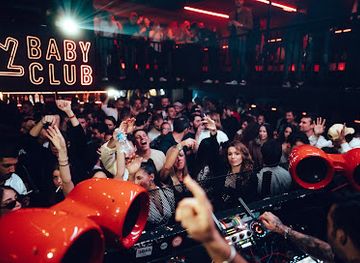
Disco club
Baby Club - Marseille
Discover the pulse of Marseille's nightlife at Baby Club, where vibrant beats and unforgettable memories await every night.
2 min walk · 0.2 km from neighbourhood centre
-
Bar
Le Pulse
Experience the vibrant nightlife at Le Pulse, a lively bar in Marseille offering great drinks and unforgettable entertainment.
1 min walk · 0.1 km from neighbourhood centre
-
Night club
Le Vogue Club
Experience the best of Marseille's nightlife at Le Vogue Club, where great food meets electrifying music in a chic atmosphere.
5 min drive · 1.5 km from neighbourhood centre
-
Club
Cancan Marseille
Discover the electrifying atmosphere of Cancan Marseille, a premier gay night club offering unforgettable nightlife and vibrant entertainment in the heart of the city.
6 min walk · 0.5 km from neighbourhood centre


Best shops in Le Cours Julien
Shopping in Le Cours Julien is mainly independent and specialist rather than department-store based. The streets around the promenade contain bookshops, record shops, vintage and second-hand clothing, small design businesses, art-related retailers, craft-oriented studios and food addresses whose stock reflects Marseille’s Mediterranean connections. The strongest pleasure comes from browsing rather than searching for a single flagship shopping street: painted façades and compact storefronts often lead to businesses that are easy to miss from the main square. For fresh produce, spices and a broader range of everyday food shopping, nearby Noailles and La Plaine are useful complements, although they have their own identities and should not be folded into Le Cours Julien. Retail turnover is part of the area’s character, so individual shops and opening patterns can change; independent businesses may also keep more limited hours than larger city-centre stores.
-
Gift shop
Marseille En Vacances
Explore Marseille En Vacances for unique clothing and gifts that embody the spirit of the Mediterranean, right in the heart of Marseille.
8 min walk · 0.7 km from neighbourhood centre
-
Store
Heritage Mecanik
Explore the charm of vintage fashion at Heritage Mecanik in Marseille, where every piece has a story and sustainable style reigns.
1 min walk · 0.1 km from neighbourhood centre
-
Second hand store
HUMANA Vintage
Explore HUMANA Vintage in Marseille for unique second-hand treasures while supporting sustainable fashion and community projects.
2 min walk · 0.1 km from neighbourhood centre
-
Vintage clothing store
COMMON
Explore COMMON, Marseille's premier vintage clothing store, where unique styles and timeless fashion come together in a vibrant shopping experience.
4 min walk · 0.3 km from neighbourhood centre


Le Cours Julien essentials
Getting There
Getting Around
Safety
Emergency Situations
Do's and Don'ts
Local Tips

From Eve
Local phrases worth knowing
You don't need to get them perfect. A few words go a long way, and locals appreciate the effort.
Basics
| English | Local | Say it |
|---|---|---|
| Hello | Bonjour | [bon-zhoor] |
| Goodbye | Au revoir | [oh ruh-vwahr] |
| Yes | Oui | [wee] |
| No | Non | [noh] |
| Please/You're welcome | S'il vous plaît | [seel voo pleh] |
| Thank you | Merci | [mehr-see] |
| Excuse me/Sorry | Excusez-moi | [ex-koo-zay mwah] |
| How are you? | Comment ça va? | [koh-mohn sah vah] |
| Fine. And you? | Bien. Et toi? | [byen. ay twah] |
| Do you speak English? | Parlez-vous anglais? | [par-lay voo ahn-glay] |
| I don't understand | Je ne comprends pas | [zhuh nuh kohm-prahnd pah] |
Eating & Drinking
| English | Local | Say it |
|---|---|---|
| I'd like to see the menu, please | Je voudrais voir le menu, s'il vous plaît | [zhuh voo-dray vwahr luh meh-nyoo seel voo pleh] |
| I don't eat meat | Je ne mange pas de viande | [zhuh nuh mahnzh pah duh vyand] |
| Cheers! | Santé! | [sahn-tay] |
| I would like to pay, please | Je voudrais payer, s'il vous plaît | [zhuh voo-dray pay-yay seel voo pleh] |
Emergencies
| English | Local | Say it |
|---|---|---|
| Help! | À l'aide! | [ah led] |
| Go away! | Allez-vous en! | [ah-lay voo zahn] |
| Call the Police! | Appelez la police! | [ah-peh-lay lah poh-leece] |
| Call a doctor! | Appelez un médecin! | [ah-peh-lay uh may-dsahn] |
| I'm lost | Je suis perdu | [zhuh swee pair-doo] |
| I'm ill | Je suis malade | [zhuh swee mah-lahd] |
Shopping
| English | Local | Say it |
|---|---|---|
| I'd like to buy... | Je voudrais acheter... | [zhuh voo-dray zah-shey...] |
| I'm just looking | Je regarde juste | [zhuh ruh-gahrd zhew-stuh] |
| How much is it? | Combien ça coûte? | [kohm-byen sah koot] |
| That's too expensive | C'est trop cher | [say troh shair] |
| Can you lower the price? | Pouvez-vous baisser le prix? | [poo-veh voo bay-say luh pree] |
Time & Numbers
| English | Local | Say it |
|---|---|---|
| What time is it? | Quelle heure est-il? | [kell er ay-teel] |
| It's one o'clock | Il est une heure | [eel ay tewn er] |
| Half past (10) | Dix heures et demie | [dees er ay dem-ee] |
| Morning | Matin | [mah-tan] |
| Afternoon | Après-midi | [ah-pray-mee-dee] |
| Evening | Soir | [swahr] |
| Yesterday | Hier | [yehr] |
| Today | Aujourd'hui | [oh-zhoor-dwee] |
| Tomorrow | Demain | [duh-man] |
| 1 | Un | [uh] |
| 2 | Deux | [duh] |
| 3 | Trois | [twah] |
| 4 | Quatre | [kah-truh] |
| 5 | Cinq | [sank] |
| 6 | Six | [sees] |
| 7 | Sept | [set] |
| 8 | Huit | [weet] |
| 9 | Neuf | [nuff] |
| 10 | Dix | [dees] |
Transport & Directions
| English | Local | Say it |
|---|---|---|
| Where's a/the...? | Où est...? | [oo ay...] |
| What's the address? | Quelle est l'adresse? | [kell ay lah-dress] |
| Can you show me (on the map)? | Pouvez-vous me montrer (sur la carte)? | [poo-veh voo muh mohn-tray sur lah kart] |
| When's the next (bus)? | Quand est le prochain (bus)? | [kawn ay luh pro-shen bus] |
| A ticket (to ....) | Un billet (pour ....) | [uhn bee-yay poor] |
History of Le Cours Julien
From Rural Slopes to Urban Plateau
Before Marseille expanded across the surrounding hills, the area now associated with Le Cours Julien lay beyond the dense core and included cultivated land on the slopes above the city. Its elevated position helped preserve a distinct relationship with the lower streets around the Old Port and Noailles. As Marseille grew during the eighteenth and nineteenth centuries, roads, housing and public spaces gradually extended over this higher ground. The name Cours Julien refers to the promenade that became the quarter’s central organising space; in French urban usage, cours denotes a broad avenue or open thoroughfare rather than a closed courtyard.
Markets and Nineteenth-Century Expansion
The plateau developed as part of Marseille’s nineteenth-century urban expansion, when new residential streets connected the older centre with higher districts. Market activity became important to the surrounding area, particularly around La Plaine, whose open space served commerce and everyday exchange. The Cours Julien’s broad layout and stair connections reflected the need to link this upper quarter with lower neighbourhoods. Apartment buildings, shops and cafés established the mixed residential and commercial character that remains visible today, while the area’s proximity to Noailles brought it into the daily economic life of central Marseille without making it part of that lower district.
A Quarter Shaped by Migration
During the twentieth century, central Marseille’s neighbourhoods were shaped by successive arrivals from across the Mediterranean and beyond, and Le Cours Julien shared in that wider transformation. Shops, cafés and restaurants around the plateau reflected changing tastes and family histories, while older buildings continued to house a varied local population. The quarter’s proximity to Noailles and La Plaine made it part of a diverse central urban zone rather than an isolated enclave. These overlapping influences remain legible in the food businesses, languages, social life and informal cultural activity found along the streets surrounding the Cours.
From Working Quarter to Creative Hub
From the late twentieth century onwards, Le Cours Julien increasingly attracted artists, musicians, independent traders and cultural organisers. Small venues, studios, cafés and specialist shops joined the existing residential and market economy, while murals and painted façades became central to the quarter’s public image. This creative reputation brought more visitors and contributed to commercial change, including rising interest in central housing and hospitality. Yet the neighbourhood remains mixed in character: its cultural identity is not confined to galleries or nightlife, but is expressed through ordinary shops, apartment streets, public gatherings and the continual reuse of its walls.
Le Cours Julien in Photos
Browse through our photo collection highlighting the charm and character of the destination.
Neighbourhoods near Le Cours Julien
The closest neighbourhoods to Le Cours Julien, if you have time for more than one stop.
-

-

-

-


Swipe for more neighbourhoods
Explore more

Explore more of Marseille
Marseille blends ancient Mediterranean history, Vieux-Port landmarks, Calanques landscapes, Provençal cuisine and lively neighbourhoods on France’s southern coast.
Explore Marseille