

Vieux Port (Marseille) Travel Guide - Free
Explore Vieux Port in Marseille with Evendo's free guide. Find the best shops, historic streets, restaurants, and gems on web or mobile.


Vieux Port Marseille combines ancient harbour history, seafood restaurants, waterfront walks, ferry trips and easy access to the city's historic centre.
The Harbour at the City's Centre
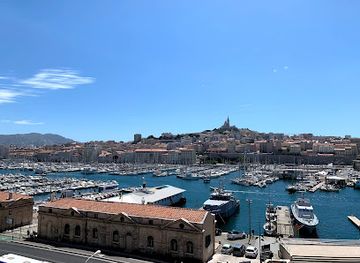
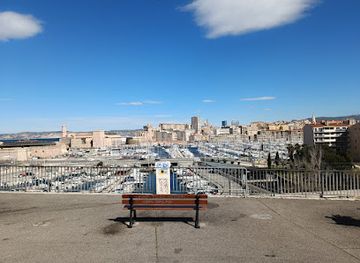
Vieux Port is Marseille's defining waterfront: a broad natural harbour framed by the quays of the north and south shores, with boats moving across water that has shaped the city for more than two millennia. The area is not a formally bounded neighbourhood so much as Marseille's central harbour district, linking the historic quarters of Le Panier, the Canebière, Noailles and the south-side streets around Cours Honoré d'Estienne d'Orves. Its most memorable moments come from simply walking the quays, watching the masts and ferries, and seeing the basilica of Notre-Dame de la Garde rise above the city in the distance.Read more about Vieux Port
Quays, Markets and Local Life
A Gateway to Marseille's Older Quarters
Best attractions in Vieux Port
The principal attraction of Vieux Port is the harbour itself, whose open water, fishing boats and dense ring of quays provide a constantly changing urban scene. Start at Quai des Belges for the fish market, then walk north along Quai du Port beneath the Ombrière, the large mirrored canopy designed by Foster + Partners, before continuing towards Hôtel de Ville and the entrance to Le Panier. On the south side, Quai de Rive Neuve leads to Cours Honoré d'Estienne d'Orves, a pedestrianised square lined with restaurants and evening terraces. Saint-Ferréol les Augustins adds a quiet religious interior close to the water. Fort Saint-Jean stands at the northern harbour entrance, adjoining the MuCEM complex and reached from the Vieux Port area by a short walk, while boat services offer a different perspective on the harbour and departures towards Frioul and the Calanques.
-
Tourist attraction
Les Petits Trains de Marseille
Discover Marseille's iconic landmarks and hidden gems with Les Petits Trains, offering scenic tours through the city's historic streets and stunning Mediterranean coastline.
3 min walk · 0.3 km from neighbourhood centre
-
Tourist attraction
Port Antique
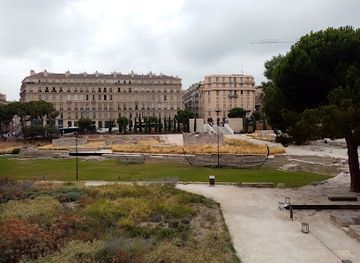
Uncover Marseille's ancient origins at the Port Antique, an archaeological site showcasing Greek and Roman ruins in the heart of the city, offering a unique glimpse into its captivating past.
5 min walk · 0.4 km from neighbourhood centre
-
Tourist attraction
Vieux port
Discover the heart of Marseille at the Vieux Port, a vibrant harbor steeped in 2600 years of history, offering fresh seafood, stunning views, and a gateway to the city's cultural treasures.
7 min walk · 0.5 km from neighbourhood centre
-
 Tourist attraction
Marseille място за снимки
Capture the soul of Marseille: Explore its historic port, vibrant neighborhoods, and stunning coastal views for unforgettable photographic moments in France's captivating Mediterranean gem.
1 min walk · 0.1 km from neighbourhood centre


Best landmarks in Vieux Port
Vieux Port's strongest landmarks are layered around the water. Hôtel de Ville, on Quai du Port, represents Marseille's civic presence beside the historic harbour, while the church of Saint-Ferréol les Augustins marks the eastern side of the waterfront with its prominent façade and long connection to the port district. At the northern entrance, Fort Saint-Jean occupies a strategic position above the sea and forms part of the wider MuCEM setting; Fort Saint-Nicolas faces it from the south, illustrating the seventeenth-century effort to control the harbour. The Ombrière is a much newer landmark, its broad reflective roof creating a distinctive public space on Quai de Rive Neuve. Together, these structures show Vieux Port as a place shaped by trade, defence, religion, government and contemporary public-realm design.
-
Cathedral
Cathédrale La Major
Discover the grandeur of Cathédrale La Major, a stunning blend of Byzantine and Romanesque architecture in the heart of Marseille.
6 min walk · 0.5 km from neighbourhood centre
-
Harbor
Old Port of Marseille
Discover the historic charm and vibrant atmosphere of the Old Port of Marseille, a stunning harbor steeped in culture and culinary delights.
6 min walk · 0.4 km from neighbourhood centre
-
Abbey
Abbaye Saint-Victor
Experience the tranquil beauty and rich history of the Abbaye Saint-Victor, a key cultural landmark in Marseille, France.
10 min walk · 0.8 km from neighbourhood centre
-
Historical landmark
Port Antique
Explore Port Antique, a historical landmark in Marseille that offers a blend of serene beauty and rich maritime history, perfect for all travelers.
5 min walk · 0.4 km from neighbourhood centre
Explore Vieux Port on the map
A handpicked selection of must-see spots in Vieux Port, mapped for you.
Best hotels in Vieux Port
Best restaurants in Vieux Port
Dining around Vieux Port is shaped by Marseille's maritime setting and Mediterranean connections. The quays and adjoining streets contain restaurants serving fish, shellfish and bouillabaisse, the city's celebrated fish stew, although the dish is traditionally a substantial meal rather than a casual snack. The historic fish market at Quai des Belges is primarily a place to observe local trade rather than a ready-to-eat food stall, while the south side around Cours Honoré d'Estienne d'Orves provides a concentration of cafés, brasseries and restaurants. Menus also reflect Provence through olive oil, vegetables, herbs and seafood, alongside North African and wider Mediterranean influences found across central Marseille. Quality and formality vary considerably, so visitors should read menus carefully, check whether fish is priced by weight and distinguish established local cooking from venues aimed mainly at passing crowds.
-
Restaurant
La cigale vieux port
Experience exquisite seafood dining at La Cigale Vieux Port, where fresh flavors meet stunning harbor views in vibrant Marseille.
1 min walk · 0.1 km from neighbourhood centre
-
French
Paulette - Restaurant Vieux Port
Experience authentic French cuisine and vibrant bar culture at Paulette - Restaurant Vieux Port in picturesque Marseille.
3 min walk · 0.3 km from neighbourhood centre
-
French
Restaurant Les Arcenaulx Marseille Vieux Port
Experience authentic French and Mediterranean cuisine at Restaurant Les Arcenaulx in Marseille's enchanting Vieux Port.
7 min walk · 0.5 km from neighbourhood centre
-
Restaurant
L'Hippocampe
Discover exquisite angler fish dishes and authentic French cuisine at L'Hippocampe, located by Marseille's beautiful port.
3 min walk · 0.3 km from neighbourhood centre


Best bars in Vieux Port
Vieux Port's evening scene is concentrated around waterfront terraces, the bars and restaurants of Cours Honoré d'Estienne d'Orves, and the streets leading towards the Canebière. The atmosphere is generally social rather than dominated by large nightclubs: people gather for aperitifs, seafood dinners, cocktails and views across the illuminated harbour. Some venues offer music or later drinking, while the adjoining centre provides a broader choice of bars and performance spaces within walking distance. The waterfront can be lively during the evening, but much of the area remains a mixed civic and residential district rather than a dedicated club quarter. Noise carries across the water, so respectful behaviour is particularly important near homes, and visitors should use normal precautions when moving between busy terraces and quieter streets at night.
-
Pub
The Queen Victoria
Discover the vibrant atmosphere and gourmet burgers at The Queen Victoria, a culinary haven in the heart of Marseille.
5 min walk · 0.4 km from neighbourhood centre
-
Irish pub
The Shamrock
Experience the lively spirit of Ireland at The Shamrock, an Irish pub in the heart of Marseille's Vieux Port, complete with beers, cocktails, and live music.
5 min walk · 0.4 km from neighbourhood centre
-
Pub
O'Malley
Discover the vibrant atmosphere of O'Malley's, an authentic Irish pub in Marseille with delicious food and a wide selection of beverages.
5 min walk · 0.4 km from neighbourhood centre
-
Bar
La Caravelle
Discover the vibrant atmosphere and stunning views at La Caravelle, the premier bar and restaurant in the heart of Marseille's Old Port.
2 min walk · 0.2 km from neighbourhood centre


Best nightclubs in Vieux Port
Vieux Port's evening scene is concentrated around waterfront terraces, the bars and restaurants of Cours Honoré d'Estienne d'Orves, and the streets leading towards the Canebière. The atmosphere is generally social rather than dominated by large nightclubs: people gather for aperitifs, seafood dinners, cocktails and views across the illuminated harbour. Some venues offer music or later drinking, while the adjoining centre provides a broader choice of bars and performance spaces within walking distance. The waterfront can be lively during the evening, but much of the area remains a mixed civic and residential district rather than a dedicated club quarter. Noise carries across the water, so respectful behaviour is particularly important near homes, and visitors should use normal precautions when moving between busy terraces and quieter streets at night.
-
Night club
TROLLEYBUS
Dive into the electrifying nightlife of Trolleybus, a renowned night club in Marseille offering unforgettable music, dancing, and an energetic atmosphere.
5 min walk · 0.4 km from neighbourhood centre
-
Night club
Le Vogue Club
Discover the heartbeat of Marseille's nightlife at Le Vogue Club, where music, dance, and culinary delights await for an unforgettable night out.
7 min walk · 0.6 km from neighbourhood centre
-
Disco club
Danceteria
Experience the vibrant nightlife of Marseille at Danceteria, where electrifying beats and a lively atmosphere create unforgettable dance memories.
7 min walk · 0.5 km from neighbourhood centre
-
Night club
Bounce Club
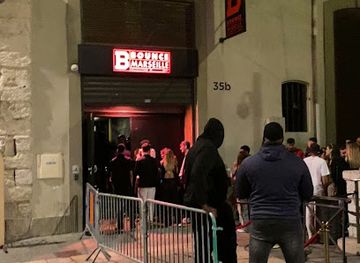
Experience the vibrant nightlife at Bounce Club in Marseille, where music, dance, and a lively atmosphere await every weekend.
6 min walk · 0.5 km from neighbourhood centre


Best shops in Vieux Port
Shopping in Vieux Port is focused more on food, maritime activity and visitor-oriented retail than on a specialist independent shopping district. The fish market on Quai des Belges is the clearest local retail tradition, offering a glimpse of Marseille's continuing relationship with the sea and early-morning commerce. Around the quays and streets leading towards Le Panier, visitors find souvenir shops, Provençal products, soaps, food gifts and small boutiques, although the exact character changes from one street to the next. The pedestrian streets around Cours Honoré d'Estienne d'Orves combine cafés with everyday and tourist-facing businesses. For broader fashion and department-store shopping, the Canebière and nearby central streets are more relevant than the harbourfront itself; the Vieux Port experience is chiefly about browsing local produce, maritime goods and small-scale shops while walking between landmarks.
-
Gift shop
Lyly Concept Store Marseille
Explore the vibrant Lyly Concept Store in Marseille for unique gifts, exquisite costume jewelry, and fashionable accessories that embody local artistry.
5 min walk · 0.4 km from neighbourhood centre
-
Gift shop
Marseille En Vacances
Discover unique gifts and stylish clothing at Marseille En Vacances, a charming shop reflecting the vibrant spirit of Marseille.
6 min walk · 0.5 km from neighbourhood centre
-
Store
Le Marseillais
Discover the heart of Marseille at Le Marseillais, where local craftsmanship meets the beauty of the waterfront.
5 min walk · 0.4 km from neighbourhood centre
-
Gift shop
Mistral Marseille
Explore Mistral Marseille: Your Destination for Unique Souvenirs and Local Artistry in the Heart of the City.
5 min walk · 0.4 km from neighbourhood centre


Vieux Port essentials
Getting There
Getting Around
Safety
Emergency Situations
Do's and Don'ts
Local Tips

From Eve
Local phrases worth knowing
You don't need to get them perfect. A few words go a long way, and locals appreciate the effort.
Basics
| English | Local | Say it |
|---|---|---|
| Hello | Bonjour | [bon-zhoor] |
| Goodbye | Au revoir | [o re-vwar] |
| Yes | Oui | [wee] |
| No | Non | [nohn] |
| Please/You're welcome | S'il vous plaît / De rien | [seel voo pleh / de ree-ehn] |
| Thank you | Merci | [mehr-see] |
| Excuse me/Sorry | Excusez-moi / Désolé | [ex-kew-zay mwah / deh-zo-leh] |
| How are you? | Comment ça va ? | [koh-mon sah vah] |
| Fine. And you? | Bien. Et vous ? | [byen. eh voo] |
| Do you speak English? | Parlez-vous anglais ? | [par-leh voo ahn-glay] |
| I don't understand | Je ne comprends pas | [zhuh nuh kohm-prahn pah] |
Eating & Drinking
| English | Local | Say it |
|---|---|---|
| I'd like to see the menu, please | Je voudrais voir la carte, s'il vous plaît | [zhuh voo-dray vwahr lah kart, seel voo pleh] |
| I don't eat meat | Je ne mange pas de viande | [zhuh nuh mahnj pah duh vee-ahnd] |
| Cheers! | Santé ! | [sahn-tay] |
| I would like to pay, please | Je voudrais payer, s'il vous plaît | [zhuh voo-dray pay-eh, seel voo pleh] |
Emergencies
| English | Local | Say it |
|---|---|---|
| Help! | Au secours ! | [oh seh-koor] |
| Go away! | Allez-vous en ! | [ah-lay vooz ahn] |
| Call the Police! | Appelez la police ! | [ah-peh-lay lah poh-lees] |
| Call a doctor! | Appelez un médecin ! | [ah-peh-lay uh may-deh-sahn] |
| I'm lost | Je suis perdu | [zhuh swee pair-doo] |
| I'm ill | Je suis malade | [zhuh swee mah-lahd] |
Shopping
| English | Local | Say it |
|---|---|---|
| I'd like to buy... | Je voudrais acheter... | [zhuh voo-dray ash-tey...] |
| I'm just looking | Je regarde juste | [zhuh ruh-gard zhust] |
| How much is it? | Combien ça coûte ? | [kohm-byen sah koot] |
| That's too expensive | C'est trop cher | [say troh shehr] |
| Can you lower the price? | Pouvez-vous baisser le prix ? | [poo-vey voo bay-say luh pree] |
Time & Numbers
| English | Local | Say it |
|---|---|---|
| What time is it? | Quelle heure est-il ? | [kel er eh-teel] |
| It's one o'clock | Il est une heure | [eel ehz un er] |
| Half past (10) | Dix et demi | [dees ay duh-mee] |
| Morning | Matin | [ma-tan] |
| Afternoon | Après-midi | [ah-pray mee-dee] |
| Evening | Soir | [swah] |
| Yesterday | Hier | [yehr] |
| Today | Aujourd'hui | [oh-zhoor-dwee] |
| Tomorrow | Demain | [duh-man] |
| 1 | Un | [uhn] |
| 2 | Deux | [duh] |
| 3 | Trois | [twah] |
| 4 | Quatre | [kat] |
| 5 | Cinq | [sank] |
| 6 | Six | [sees] |
| 7 | Sept | [sett] |
| 8 | Huit | [wheat] |
| 9 | Neuf | [nuff] |
| 10 | Dix | [dees] |
Transport & Directions
| English | Local | Say it |
|---|---|---|
| Where's a/the...? | Où se trouve un/le...? | [oo suh troov uhn/luh] |
| What's the address? | Quelle est l'adresse? | [kel eh lah-dress] |
| Can you show me (on the map)? | Pouvez-vous me montrer (sur la carte)? | [poo-vey voo muh mohn-tray (sir lah kart)] |
| When's the next (bus)? | Quand est le prochain (bus)? | [kahnd eh luh proh-shan (boos)] |
| A ticket (to ....) | Un billet (pour ....) | [uhn bee-yay (poor)] |
History of Vieux Port
The Harbour of Massalia
The Vieux Port occupies the natural inlet around which the Greek settlement of Massalia developed after its foundation by Phocaean colonists around 600 BC. The harbour's sheltered position supported maritime trade, fishing and links across the Mediterranean, establishing the relationship between Marseille and the sea that still defines the city. Much of the ancient shoreline has been altered by later construction, but archaeological remains and the continuing harbour activity connect the modern quays with this early phase. Vieux Port was not simply a scenic waterfront: it was the economic and strategic centre of Marseille for centuries.
Medieval Quays and Fortifications
During the medieval period, the harbour was closely tied to Marseille's walled town, religious institutions and merchant activity. The north side developed around the old town and the approach to Le Panier, while defensive works protected the harbour entrance. Fort Saint-Jean, whose surviving structures include later additions built over earlier fortifications, became an important guardian of the northern side. Churches and civic buildings around the quays reflected the city's commercial prosperity and its position as a Mediterranean port, although the waterfront repeatedly changed as docks, warehouses and defensive needs evolved.
The Seventeenth-Century Expansion
Under Louis XIV, Marseille expanded beyond its medieval limits during the seventeenth century, and the harbour district was reshaped by new fortifications and urban planning. Fort Saint-Nicolas was built on the south side of the harbour entrance, while Fort Saint-Jean was strengthened on the north, allowing the crown to control access to the port and the city. New quays and more regular streets altered the relationship between the old town and the water. These interventions left Vieux Port with a mixture of medieval, royal and mercantile layers that remain visible around its edges.
From Commercial Port to Civic Waterfront
Marseille's commercial harbour gradually moved westwards during the nineteenth century as the larger docks of La Joliette and later port facilities took on long-distance shipping. Vieux Port retained fishing, passenger traffic, small-scale commerce and civic importance rather than disappearing from urban life. The neighbourhood was heavily affected by the wartime destruction and post-war rebuilding of parts of the historic centre, particularly around the northern side and Le Panier. In the late twentieth and early twenty-first centuries, pedestrian improvements, cultural investment and the 2013 Marseille-Provence European Capital of Culture programme helped present the harbour increasingly as a public waterfront as well as a working port.
Vieux Port in Photos
Browse through our photo collection highlighting the charm and character of the destination.
Neighbourhoods near Vieux Port
The closest neighbourhoods to Vieux Port, if you have time for more than one stop.
-

-

-

-


Swipe for more neighbourhoods
Explore more

Explore more of Marseille
Marseille blends ancient Mediterranean history, Vieux-Port landmarks, Calanques landscapes, Provençal cuisine and lively neighbourhoods on France’s southern coast.
Explore Marseille