

Val d'Isère Travel Guide - Free Web & App
Your ultimate guide to Val d'Isère. Discover top landmarks, proposed trips, and local tips. Free on the web or via the Evendo companion app.


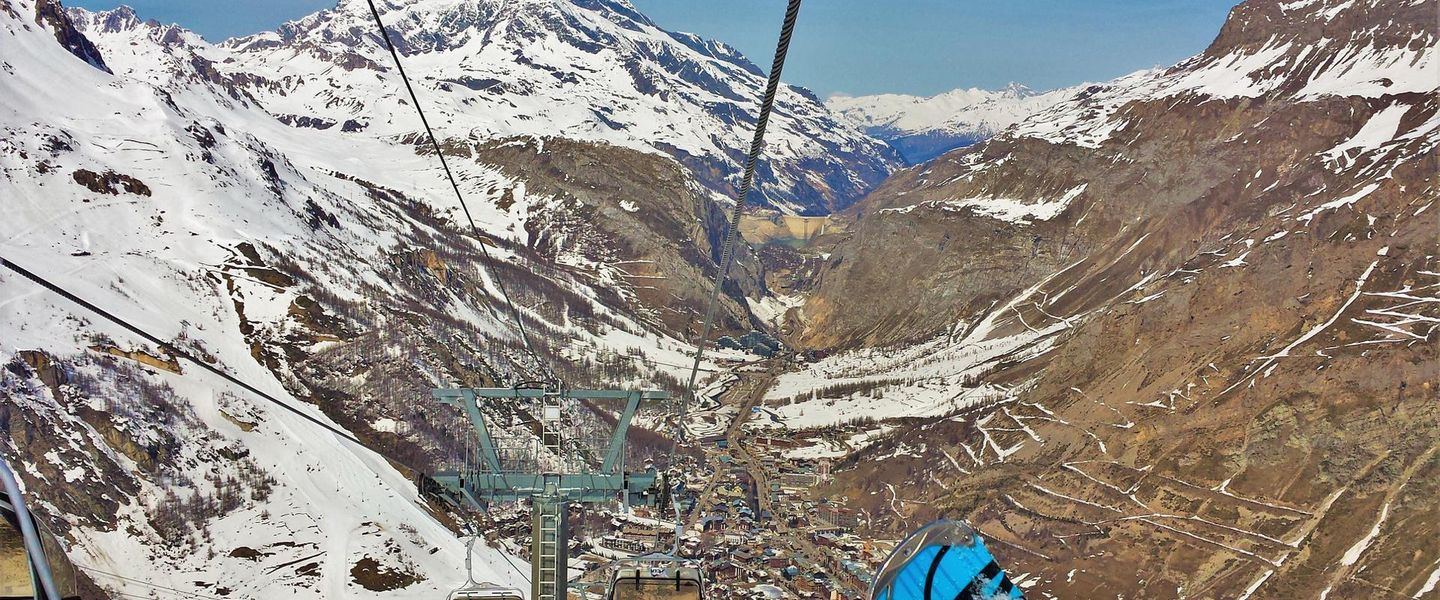


Val d’Isère, France, combines renowned skiing, the Tignes–Val d’Isère area, Savoyard village heritage, alpine hiking and the Col de l’Iseran.
High-Mountain Setting
Val d’Isère occupies the upper Isère valley in France’s Savoie region, close to the Italian frontier and surrounded by the high peaks of the Vanoise massif. The resort village stands at about 1,850 metres, with hamlets and ski sectors extending along a broad, glaciated valley towards the Col de l’Iseran, one of the highest paved mountain passes in Europe. Winter brings an extensive lift-served skiing area shared with neighbouring Tignes, while summer reveals flower-rich alpine meadows, streams, rocky ridges and long-distance walking and cycling routes.Read more about Val d'Isère
A Village with Savoyard Character
Sport, Nature and the Seasons
When is the best time to visit Val d'Isère?
Best: July–September · 16–20°C| Month | High (°C) | Rainfall (mm) |
|---|---|---|
| January | 0 | 67 |
| February | 2 | 61 |
| March | 4 | 62 |
| April | 7 | 75 |
| May | 12 | 84 |
| June | 17 | 97 |
| July (best) | 20 | 92 |
| August (best) | 19 | 89 |
| September (best) | 16 | 76 |
| October | 10 | 73 |
| November | 5 | 67 |
| December | 2 | 69 |
Getting to and around Val d'Isère
How to get there
Transportation
Best attractions in Val d'Isère
Val d’Isère’s principal attractions are its mountain landscapes and the varied sectors of the Tignes–Val d’Isère ski area, where marked pistes and lifts connect high bowls, ridges and valley slopes. In the village, the historic church of Saint-Bernard-des-Alpes and the older stone-and-timber buildings offer a glimpse of the settlement before modern ski tourism. The route towards the Col de l’Iseran leads into expansive high-alpine scenery when the pass is open, with walking and cycling opportunities around the surrounding peaks and meadows. The upper Isère valley’s hamlets provide a quieter contrast to the resort centre, while nearby protected mountain landscapes associated with the Vanoise region support walking, wildlife observation and conservation-focused exploration. In winter, snowshoeing, skiing and snowboarding dominate; in summer, marked paths, road cycling and mountain biking reveal a different landscape of streams, pastures and rocky summits.
-
National park
Parc national de la Vanoise
Discover France's first national park: a stunning alpine landscape with diverse wildlife, offering hiking and nature experiences for all.
-
Ski resort
Club Med Val d'Isère
Experience luxury and adventure at Club Med Val d'Isère, an all-inclusive ski resort in the heart of the French Alps. Ski-in/ski-out access and stunning views.
-
Farm
La Ferme de l'Adroit
Experience traditional Savoyard farming at La Ferme de l'Adroit in Val d'Isère: local cheeses, farm animals, and a taste of mountain life.
-
Hiking guide
Raquettes Val d'Isère
Explore Val d'Isère's winter wonderland on snowshoes with expert guides. Discover the serene beauty of the French Alps, away from the ski crowds.
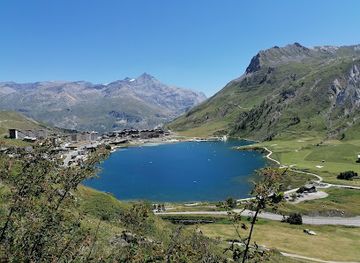
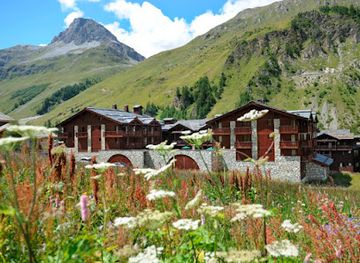
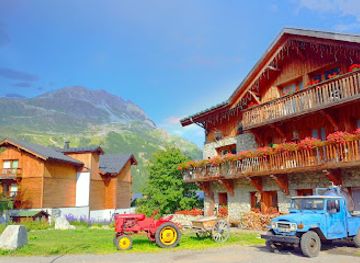
Best landmarks in Val d'Isère
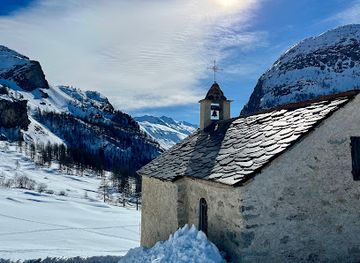
The church of Saint-Bernard-des-Alpes is Val d’Isère’s most recognisable historic landmark, its presence in the village recalling the community that existed before the modern resort. The high Col de l’Iseran is the destination’s defining road landmark when open, linking the upper Isère valley with the Maurienne and forming a dramatic threshold between settled valley and high mountain terrain. Surrounding peaks, glaciers, ridges and alpine passes provide the principal natural landmarks, viewed from marked routes and ski sectors rather than from a single town viewpoint. The old village and its stone-and-timber architecture preserve elements of Savoyard building tradition, while the wider Vanoise mountain environment gives the area ecological significance through alpine meadows, rocky habitats and protected landscapes nearby. Together, these features express Val d’Isère’s combination of rural heritage, engineering history and high-altitude sport.
-
Ski resort
Tignes ski resort
Experience the thrill of skiing in Tignes ski resort, an alpine gem in the French Alps, offering breathtaking views and diverse winter activities.
-
Ski resort
Val d'Isère station de ski & village
Experience the thrill of winter sports and the charm of alpine village life at Val d'Isère, one of the premier ski resorts in the French Alps.
-
Cabaret club
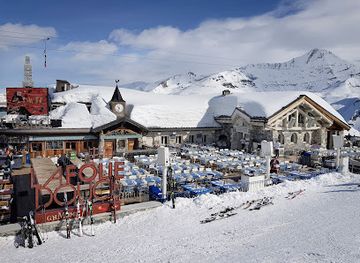
La Folie Douce Val d'Isère
Discover the unique blend of fine dining and lively entertainment at La Folie Douce Val d'Isère, a premier cabaret club in the French Alps.
-
French
La Casserole
Experience authentic French cuisine at La Casserole, nestled in the stunning Val-d'Isère, offering regional specialties in a cozy alpine setting.
Explore Val d'Isère on the map
Plan your trip on one map. See where the top attractions, landmarks, restaurants and hotels are, and book hotels and experiences in a few clicks.
Best hotels in Val d'Isère
Best restaurants in Val d'Isère
Dining in Val d’Isère ranges from relaxed cafés and mountain restaurants to hotel dining rooms and more formal establishments, with the greatest concentration in the resort village rather than on the surrounding high slopes. Savoie traditions are prominent: visitors may encounter dishes based on local cheeses, potatoes, cured meats, bread and seasonal mountain produce, alongside regional wines and spirits. Fondue, raclette and tartiflette are familiar alpine favourites, though menus also reflect modern French cooking and international demand. Mountain dining during the ski season is often connected with lift-accessed areas, while summer options depend more closely on opening dates and local activity. Visitors staying in smaller hamlets may find fewer choices and should check arrangements locally. Bourg-Saint-Maurice and other Tarentaise settlements provide additional restaurants and food shops outside the destination itself.
-
Brasserie
Brasserie Le Garage
Experience culinary delight at Brasserie Le Garage in Val-d'Isère - where delicious food meets vibrant entertainment.
-
French
La Casserole
Experience authentic French cuisine at La Casserole in Val-d'Isère—where every dish tells a story.
-
Restaurant
Café Bellevarde - Maison Louly
Experience exquisite French alpine cuisine at Café Bellevarde in Val-d'Isère – where breathtaking views meet culinary excellence.
-
Restaurant
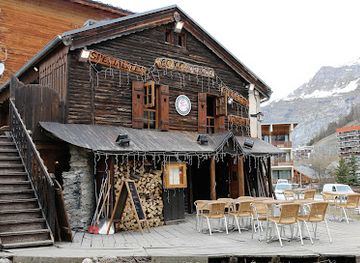
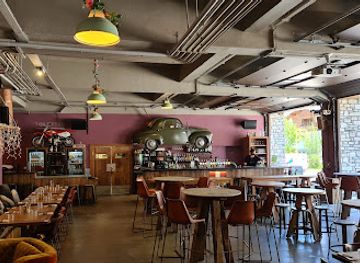
Restaurant La Baraque - Val d'Isère
Experience culinary excellence at Restaurant La Baraque in Val d'Isère - where traditional French flavors meet an inviting atmosphere.
Best bars in Val d'Isère
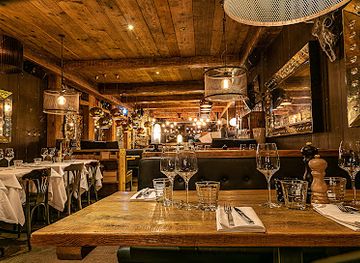
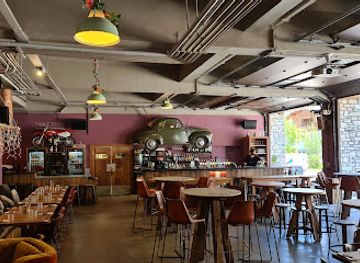
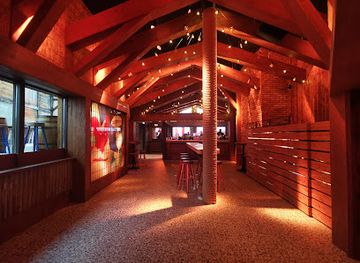
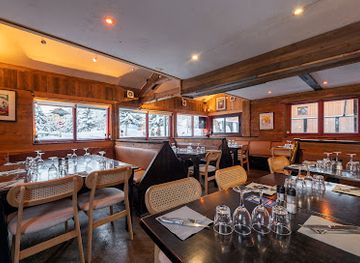
Val d’Isère has a lively après-ski tradition compared with many mountain villages, with bars, hotel lounges and pubs concentrated around the resort centre and the main accommodation areas. The atmosphere ranges from informal drinks after skiing to later evening entertainment, but the character and opening patterns of individual venues vary by season. Traditional Savoyard hospitality is also found in village bars and hotel lounges, where local wines, beers and alpine spirits may accompany food. Outside the central resort, evening options are considerably quieter, particularly in smaller hamlets and during the summer shoulder season. Visitors seeking a late night should check current local listings rather than assume that every venue operates throughout the year, while residential areas call for considerate noise levels.
-
Brasserie
Brasserie Le Garage
Experience the vibrant atmosphere and delightful flavors at Brasserie Le Garage in Val-d'Isère, where alpine dining meets lively entertainment.
-
Live music bar
Cocorico Après Ski - Val d'Isère
Experience the vibrant nightlife of Val d'Isère at Cocorico Après Ski, where live music and a lively atmosphere create unforgettable moments.
-
Bar
La Bananas
Experience the vibrant atmosphere of La Bananas in Val-d'Isère, where delicious food, refreshing cocktails, and lively entertainment await every visitor.
-
Bar
Restaurant La Baraque - Val d'Isère
Experience the culinary excellence of Restaurant La Baraque in Val d'Isère, where French cuisine meets alpine charm in a vibrant atmosphere.
Best nightclubs in Val d'Isère
Val d’Isère has a lively après-ski tradition compared with many mountain villages, with bars, hotel lounges and pubs concentrated around the resort centre and the main accommodation areas. The atmosphere ranges from informal drinks after skiing to later evening entertainment, but the character and opening patterns of individual venues vary by season. Traditional Savoyard hospitality is also found in village bars and hotel lounges, where local wines, beers and alpine spirits may accompany food. Outside the central resort, evening options are considerably quieter, particularly in smaller hamlets and during the summer shoulder season. Visitors seeking a late night should check current local listings rather than assume that every venue operates throughout the year, while residential areas call for considerate noise levels.
-
Cabaret club
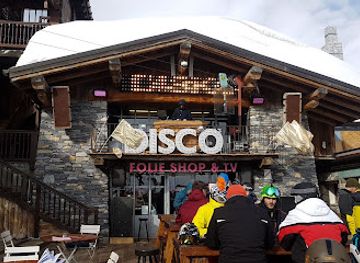
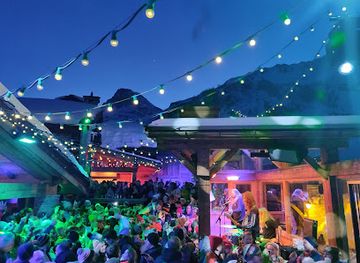
La Folie Douce Val d'Isère
Experience the vibrant atmosphere of La Folie Douce Val d'Isère, where alpine cuisine meets electrifying entertainment in the heart of the French Alps.
-
Live music bar
Cocorico Après Ski - Val d'Isère
Experience the vibrant nightlife of Val d'Isère at Cocorico Après Ski, where live music and alpine charm create unforgettable memories.
-
Night club
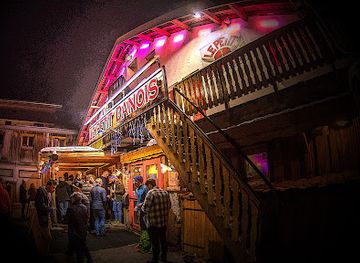
Le Petit Danois
Experience the vibrant nightlife at Le Petit Danois in Val-d'Isère, where exceptional drinks, delightful cuisine, and electrifying music create unforgettable memories.
-
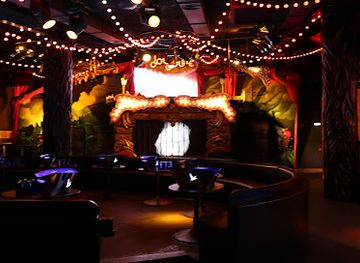
Disco club
Doudoune Club
Discover the ultimate nightlife experience at Doudoune Club, a premier disco club in Val-d'Isère offering live music, top DJs, and an electrifying atmosphere.
Best shops in Val d'Isère
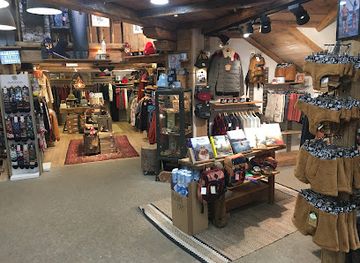
Shopping is concentrated in Val d’Isère’s resort centre, where visitors can find practical mountain equipment, ski and snowboard services, clothing, food shops, souvenirs and independent businesses serving the seasonal population. Regional products associated with Savoie, including cheeses, cured meats, biscuits, preserves and wines, make more useful gifts than generic resort merchandise, although availability varies between shops and seasons. Local art, craft and alpine-themed goods may also be found among the resort’s smaller retailers, but Val d’Isère is primarily a specialist mountain destination rather than a traditional market town. For a broader range of everyday shopping and food provisioning, Bourg-Saint-Maurice and larger settlements lower in the Tarentaise valley are more substantial retail centres. Visitors should plan ahead when travelling to remote hamlets or mountain routes, where commercial facilities are limited.
-
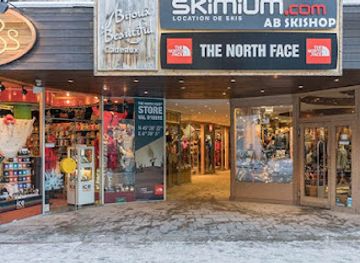
Ski rental service
Skimium - AB SKISHOP Val d'Isère
Experience the ultimate ski adventure at Skimium - AB SKISHOP Val d'Isère, your one-stop destination for top-quality ski rental and outdoor gear.
-
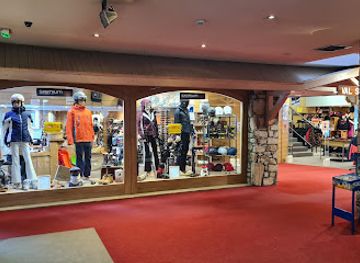
Ski rental service
Skimium - VAL SKI SHOP Val d'Isère
Discover top-notch ski rentals, expert advice, and quality gear at Skimium - VAL SKI SHOP in Val d'Isère, your ultimate skiing companion.
-
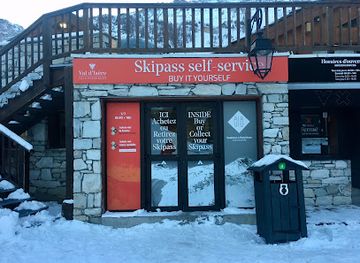
Shopping mall
Point de vente Solaise
Discover the ultimate ski shopping experience at Point de Vente Solaise in Val-d'Isère, where adventure meets style and convenience.
-
Store
Unplugged
Discover the charm of the Alps at Unplugged, a unique store in Val-d'Isère offering locally sourced souvenirs and artisanal goods.
Get your free copy of our complete guide to Val d'Isère, delivered straight to you.
Everything on this page, from attractions and restaurants to essentials and local phrases, in one PDF you can read offline, print or share.
Already have an account? Sign in
Your Val d'Isère guide is ready.
We'll send it to · Not you? Sign out

Getting your guide ready…
We are putting together a fresh copy of the Val d'Isère guide. This can take up to a minute.
This can take a few moments. If your browser asks, choose Allow so the download can start. You'll find the guide in your Downloads folder.
Nothing happened? Download it again
Sorry, the guide is taking longer than usual. Please try again in a minute, or get it by email instead.
Val d'Isère essentials
Currency and Payment
Safety
Emergency Situations
Do's and Don'ts
Local Tips
From Eve
Local phrases worth knowing
You don't need to get them perfect. A few words go a long way, and locals appreciate the effort.
Basics
| English | Local | Say it |
|---|---|---|
| Hello | Bonjour | [bon-zhoor] |
| Goodbye | Au revoir | [oh re-vwar] |
| Yes | Oui | [wee] |
| No | Non | [nohn] |
| Please/You're welcome | S'il vous plaît | [seel voo pleh] |
| Thank you | Merci | [mehr-see] |
| Excuse me/Sorry | Excusez-moi | [ex-kew-zay mwa] |
| How are you? | Comment ça va? | [koh-mohn sah vah] |
| Fine. And you? | Bien. Et toi? | [byen. ay twah] |
| Do you speak English? | Parlez-vous anglais? | [par-lay voo ahn-gl-ay] |
| I don't understand | Je ne comprends pas | [zhuh nuh kohm-prahn pah] |
Eating & Drinking
| English | Local | Say it |
|---|---|---|
| I'd like to see the menu, please | Je voudrais voir la carte, s'il vous plaît | [zhuh voo-dray vwar lah kart seel voo pleh] |
| I don't eat meat | Je ne mange pas de viande | [zhuh nuh mahnj pah duh vee-yand] |
| Cheers! | Santé! | [sahn-tay] |
| I would like to pay, please | Je voudrais payer, s'il vous plaît | [zhuh voo-dray pay-ay seel voo pleh] |
Emergencies
| English | Local | Say it |
|---|---|---|
| Help! | Au secours! | [oh suh-koor] |
| Go away! | Allez-vous en! | [ah-lay voo zah] |
| Call the Police! | Appelez la police! | [ah-peh-lay lah poh-lees] |
| Call a doctor! | Appelez un médecin! | [ah-peh-lay uh may-deh-sahn] |
| I'm lost | Je suis perdu | [zhuh swee pair-doo] |
| I'm ill | Je suis malade | [zhuh swee mah-lahd] |
Shopping
| English | Local | Say it |
|---|---|---|
| I'd like to buy... | Je voudrais acheter... | [zhuh voo-dray ah-shet-ay] |
| I'm just looking | Je regarde juste | [zhuh ruh-gard zhewst] |
| How much is it? | Combien ça coûte? | [kom-byen sah koot] |
| That's too expensive | C'est trop cher | [say troh shehr] |
| Can you lower the price? | Pouvez-vous baisser le prix? | [poo-veh voo beh-say luh pree] |
Time & Numbers
| English | Local | Say it |
|---|---|---|
| What time is it? | Quelle heure est-il? | [kel uhr ay-teel] |
| It's one o'clock | Il est une heure | [eel ay tun uhr] |
| Half past (10) | Dix et demi | [dees ay duh-mee] |
| Morning | Matin | [mah-tahn] |
| Afternoon | Après-midi | [ah-pray mee-dee] |
| Evening | Soir | [swahr] |
| Yesterday | Hier | [yehr] |
| Today | Aujourd'hui | [oh-zhoor dwee] |
| Tomorrow | Demain | [duh-mahn] |
| 1 | Un | [uhn] |
| 2 | Deux | [duh] |
| 3 | Trois | [twah] |
| 4 | Quatre | [kahtr] |
| 5 | Cinq | [sank] |
| 6 | Six | [sees] |
| 7 | Sept | [sept] |
| 8 | Huit | [weet] |
| 9 | Neuf | [nuhf] |
| 10 | Dix | [dees] |
Transport & Directions
| English | Local | Say it |
|---|---|---|
| Where's a/the...? | Où est...? | [oo eh...] |
| What's the address? | Quelle est l'adresse? | [kell eh lah-dress] |
| Can you show me (on the map)? | Pouvez-vous me montrer (sur la carte)? | [poo-veh voo muh mohn-tray (sur lah kart)] |
| When's the next (bus)? | Quand est le prochain (bus)? | [kahn eh luh proh-shan (bus)] |
| A ticket (to ....) | Un billet (pour ...) | [uhn bee-yay (poor)] |
History of Val d'Isère
An Alpine Valley before Tourism
The upper Isère valley was shaped for centuries by seasonal agriculture, pastoralism and movement across mountain passes. Communities lived in scattered hamlets and relied on cattle, sheep, hay meadows and carefully managed woodland. The difficult terrain limited large-scale industry, but the valley connected local people with neighbouring parts of Savoie and, through high passes, with valleys towards Italy. This rural economy left a distinctive settlement pattern of stone-and-timber buildings, chapels, barns and steep roofs adapted to snow.
The Parish and Saint-Bernard
Val d’Isère’s historic identity is closely associated with its parish church, dedicated to Saint Bernard of the Alps, the patron traditionally linked with travellers and mountain passes. The church and the older village around it provide a visible reminder that the settlement predates the era of mass skiing. Religious life, communal farming and the practical demands of living at high altitude shaped local traditions long before hotels, lifts and winter sports became central to the economy.
Roads, Passes and Early Visitors
Improved roads gradually made the upper valley more accessible, particularly after the construction and development of the route over the Col de l’Iseran. The pass became an important engineering and touring achievement, linking the Tarentaise with the Maurienne when open in summer. Better road access encouraged mountaineers, tourists and winter-sports pioneers to visit, although the valley remained a small rural community for much of the early twentieth century. The pattern of hamlets and farms continued to influence the later resort’s layout.
The Rise of the Ski Resort
Val d’Isère’s transformation accelerated during the twentieth century as skiing developed from a specialist mountain pursuit into an international sport. The resort invested in lifts, accommodation and pistes, while its high setting and demanding terrain attracted skilled skiers. The town’s sporting reputation was strengthened by major international competitions and by the emergence of French alpine skiing as a national sporting tradition. Modern development expanded the built area, but planning and architectural choices continued to draw on regional materials and forms in parts of the village.
Olympic Sport and Environmental Stewardship
Val d’Isère hosted the alpine events of the 1992 Albertville Winter Olympics, placing the resort firmly on the international sporting map. The event reinforced its role as a venue for elite competition as well as recreational skiing. Today, tourism coexists with measures intended to manage a fragile high-mountain environment, including protected landscapes in the wider Vanoise region and attention to water, snow, habitats and visitor pressure. The Col de l’Iseran, alpine meadows and surrounding peaks remain central to the destination’s identity beyond the ski season.
Val d'Isère in Photos
Browse through our photo collection highlighting the charm and character of the destination.
Neighbouring destination travel guides
The closest destinations to Val d'Isère, if you have time for more than one.
-

-

-

-

-


Swipe for more destinations
Explore more

Explore more of Rhône-Alpes
Discover the stunning landscapes, historic cities, and world-class ski resorts of Rhône-Alpes, a French region that offers a perfect blend of nature and culture.
Explore Rhône-Alpes
Explore more of France
Explore France: A land of romance, history, and unparalleled beauty, from the iconic streets of Paris to the serene landscapes of Provence and the luxury of the French Riviera.
Explore France