

Free Grindelwald Travel Guide & Mobile App
Plan your Grindelwald trip with Evendo. Get free guides to top attractions, restaurants, hotels, and bars. Web access or download the mobile app.


Grindelwald, Switzerland, brings Eiger views, alpine trails, winter sports, mountain railways and village culture to the heart of the Bernese Oberland.
Mountain Village and Alpine Stage
Grindelwald lies in the Bernese Oberland, in a broad valley ringed by the Eiger, Schreckhorn and Wetterhorn. Timber chalets, flower-decked balconies and pastureland give the settlement its traditional appearance, while steep mountain faces provide a dramatic backdrop from almost every road and walking path. The village is both a working alpine community and one of the Jungfrau region’s principal bases for exploring the high mountains.Read more about Grindelwald
Trails, Railways and High Landscapes
Village Life in the Bernese Oberland
When is the best time to visit Grindelwald?
Best: July–September · 18–22°C| Month | High (°C) | Rainfall (mm) |
|---|---|---|
| January | 2 | 82 |
| February | 3 | 76 |
| March | 6 | 100 |
| April | 11 | 128 |
| May | 16 | 155 |
| June | 20 | 171 |
| July (best) | 22 | 163 |
| August (best) | 21 | 151 |
| September (best) | 18 | 124 |
| October | 12 | 106 |
| November | 7 | 93 |
| December | 2 | 85 |
Getting to and around Grindelwald
How to get there
Transportation
Best attractions in Grindelwald
Grindelwald’s principal attractions are its mountain landscapes and the transport routes that make them accessible. First, reached by cable car from the village, is a starting point for walks towards Bachalpsee and high viewpoints facing the Bernese Alps. Pfingstegg offers a closer look across the valley, with paths leading into the gorge and surrounding hillside. Grindelwald Terminal provides connections towards the Eiger Glacier and the Kleine Scheidegg landscape, where the north face of the Eiger dominates the view. The First Cliff Walk adds an elevated experience for visitors comfortable with exposed walkways, while the Wetterhorn and surrounding peaks form a constantly changing natural backdrop. In the village, the Heimatmuseum presents local rural life, farming tools and domestic traditions. Summer visitors can follow meadow paths between scattered farmsteads, whereas winter brings skiing, snowshoeing and sledging across the valley’s prepared terrain.
-
Tourist attraction
St. Beatus-Höhlen, Swiss Caves
Explore the enchanting St. Beatus-Höhlen caves in Switzerland, where nature's beauty and fascinating legends await.
40 min drive · 20 km from city centre
-
Handicraft museum
Ballenberg, Swiss Open-Air Museum
Explore Ballenberg Open-Air Museum, a captivating journey through Swiss heritage with historic buildings, crafts, and scenic beauty in the heart of the Alps.
34 min drive · 14 km from city centre
-
Tourist attraction
Jungfraujoch Sphinx Observatory
Experience the breathtaking views from the Jungfraujoch Sphinx Observatory, the highest railway station in Europe, surrounded by the majestic Swiss Alps.
28 min drive · 9.4 km from city centre
-
Tourist attraction
Giessbach Waterfalls
Discover the breathtaking beauty of Giessbach Waterfalls, a natural gem near Brienz, Switzerland, where adventure and tranquility meet amidst stunning landscapes.
32 min drive · 12 km from city centre


Best landmarks in Grindelwald
The Eiger is Grindelwald’s defining natural landmark, its formidable north face forming a visual link between the village and the history of Alpine mountaineering. The Wetterhorn and Schreckhorn broaden the surrounding panorama, while the valley’s scattered wooden farmhouses and chalets express the traditional architecture of the Bernese Oberland. The village church, set against the mountain basin, remains an important local point of reference, alongside the historic core and the Heimatmuseum, which preserves material evidence of rural life. Grindelwald’s railway heritage is also visible in the station and mountain transport network, whose lines connect the settlement with Kleine Scheidegg and the high Jungfrau region. The Eiger Express terminal represents a newer stage in that story, showing how engineering continues to shape access to the Alps without diminishing the visual dominance of the peaks.
-
Tourist attraction
Jungfraujoch Sphinx Observatory
Discover the breathtaking views and exhilarating experiences at the Jungfraujoch Sphinx Observatory, the 'Top of Europe' in the Swiss Alps.
28 min drive · 9.4 km from city centre
-
Historical landmark
Yash Chopra Statue
Explore the Yash Chopra Statue in Interlaken, where cinematic history meets breathtaking Swiss landscapes for an unforgettable experience.
35 min drive · 15 km from city centre
-
Tourist attraction
Staubbachfall Waterfall
Discover the breathtaking Staubbachfall Waterfall in Lauterbrunnen, where nature's beauty and serene hiking trails converge in Switzerland's stunning Alps.
31 min drive · 11 km from city centre
-
Mountain peak
Jungfrau
Discover the breathtaking beauty and exhilarating adventures at Jungfrau, Switzerland's iconic mountain peak and outdoor paradise.
31 min drive · 11 km from city centre


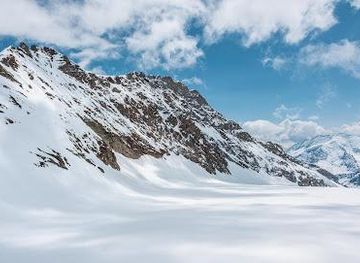
Explore Grindelwald on the map
Plan your Grindelwald trip on one map. See where the top attractions, landmarks, restaurants, bars and hotels are, find what's near where you're staying, and book hotels and experiences in a few clicks.
Best hotels in Grindelwald
Best restaurants in Grindelwald
Grindelwald’s dining culture reflects the Bernese Oberland’s pastoral traditions and the demands of a busy mountain resort. Menus commonly feature Swiss staples such as rösti, fondue, raclette, alpine cheeses and hearty soups, alongside meat, vegetarian and international dishes shaped by the village’s long relationship with visitors. Mountain restaurants and huts provide practical meals in scenic settings, while central cafés and hotel dining rooms offer more leisurely surroundings. Local produce, particularly dairy products and regional cheeses, plays an important role, and bakery counters are useful for provisions before a day on the trails. The atmosphere ranges from informal tables filled with hikers and skiers to polished dining rooms in traditional or contemporary hotels. Restaurants are concentrated around the village centre, railway areas and access points to mountain transport, with menus and opening patterns often changing between seasons.
-
Restaurant
Barrys Restaurant, Bar & Lounge
Experience exquisite dining at Barrys Restaurant, Bar & Lounge in Grindelwald – where fine cuisine meets breathtaking alpine views.
5 min walk · 0.4 km from city centre
-
Swiss
Bebbis Restaurant
Experience authentic Swiss flavors at Bebbis Restaurant in Grindelwald – where culinary tradition meets stunning alpine views.
5 min walk · 0.4 km from city centre
-
Restaurant
C und M Café Bar Restaurant
Experience authentic Swiss cuisine with breathtaking views at C und M Café Bar Restaurant in Grindelwald.
8 min walk · 0.6 km from city centre
-
Pizza
Ristorante pizzeria Da Salvi
Experience authentic Italian pizza in Grindelwald at Ristorante pizzeria Da Salvi, surrounded by stunning alpine scenery.
9 min walk · 0.7 km from city centre


Best bars in Grindelwald
Grindelwald’s evening life is sociable rather than metropolitan, centred on hotel bars, compact pubs, après-ski venues and restaurants around the village centre. In winter, ski visitors gather after the lifts close for drinks, music and informal conversation, while summer evenings are generally quieter and shaped by walks, mountain views and relaxed meals. Traditional Swiss drinks, local beers, wine and warm non-alcoholic options are widely available, and some venues offer live music or seasonal entertainment. The village does not have a large nightclub district, and nightlife varies according to the season, weather and visitor numbers. Those seeking a lively evening tend to remain near the main station and central streets, whereas accommodation in outlying hamlets offers a more peaceful atmosphere. Respect for residential areas and late-night transport limitations is important in this spread-out alpine community.
-
Bar
Barrys Restaurant, Bar & Lounge
Experience a culinary adventure with stunning views at Barrys Restaurant, Bar & Lounge in Grindelwald, where every meal is a celebration.
5 min walk · 0.4 km from city centre
-
Swiss
Bebbis Restaurant
Savor the flavors of Switzerland at Bebbis Restaurant in Grindelwald, offering traditional dishes and breathtaking views of the Alps.
5 min walk · 0.4 km from city centre
-
Restaurant
C und M Café Bar Restaurant
Experience delectable Swiss cuisine and breathtaking mountain views at C und M Café Bar Restaurant in Grindelwald.
8 min walk · 0.6 km from city centre
-
Bar
Avocado Bar Grindelwald
Discover the vibrant Avocado Bar in Grindelwald, where delicious avocado dishes and unique drinks await in a cozy atmosphere.
7 min walk · 0.5 km from city centre


Best nightclubs in Grindelwald
Grindelwald’s evening life is sociable rather than metropolitan, centred on hotel bars, compact pubs, après-ski venues and restaurants around the village centre. In winter, ski visitors gather after the lifts close for drinks, music and informal conversation, while summer evenings are generally quieter and shaped by walks, mountain views and relaxed meals. Traditional Swiss drinks, local beers, wine and warm non-alcoholic options are widely available, and some venues offer live music or seasonal entertainment. The village does not have a large nightclub district, and nightlife varies according to the season, weather and visitor numbers. Those seeking a lively evening tend to remain near the main station and central streets, whereas accommodation in outlying hamlets offers a more peaceful atmosphere. Respect for residential areas and late-night transport limitations is important in this spread-out alpine community.
-
Restaurant
Barrys Restaurant, Bar & Lounge
Discover exquisite dining and breathtaking views at Barrys Restaurant, Bar & Lounge in beautiful Grindelwald, Switzerland.
5 min walk · 0.4 km from city centre
-
Bar
Avocado Bar Grindelwald
Discover the vibrant Avocado Bar Grindelwald, where fresh flavors meet breathtaking alpine views, creating the perfect culinary escape.
7 min walk · 0.5 km from city centre
-
Bar
Espressobar
Experience the cozy charm of Espressobar in Grindelwald, your go-to bar for delightful drinks and stunning mountain views.
6 min walk · 0.5 km from city centre
-
Bar
Bus Stop Bar
Experience the charm of the Swiss Alps at Bus Stop Bar, where relaxation meets vibrant social life in a cozy alpine setting.
7 min drive · 2.3 km from city centre


Best shops in Grindelwald
Shopping in Grindelwald is compact and closely connected with mountain life, Swiss craftsmanship and the practical needs of visitors. Central streets contain outdoor equipment shops, sports retailers, bakeries, supermarkets and stores selling clothing suited to hiking and winter activities. Souvenir shops offer carved wooden objects, cowbells, textiles, postcards and chocolate, while Swiss cheese and other regional food products provide more useful reminders of the Bernese Oberland. The village also has boutiques and specialist retailers associated with a resort economy, though it is not a major destination for department-store or luxury shopping. Visitors interested in local character should look beyond branded outdoor goods to the small displays of dairy produce, traditional household objects and alpine craftwork found around the centre and railway areas. Opening patterns can vary with the season, particularly outside the busiest visitor periods.
-
Supermarket
Coop Supermarkt Grindelwald
Discover the convenience of Coop Supermarkt Grindelwald, your essential shopping stop for local delights and international flavors in the Swiss Alps.
3 min walk · 0.2 km from city centre
-
Watch store
Kirchhofer – V-TIME
Explore luxurious timepieces at Kirchhofer – V-TIME in Grindelwald, where elegance meets the breathtaking beauty of the Swiss Alps.
14 min walk · 1.1 km from city centre
-
Shopping mall
Eiger+
Discover the alpine charm of Grindelwald at Eiger+, where shopping meets stunning mountain views.
3 min walk · 0.2 km from city centre
-
Sporting goods store
Backdoor Snowboard | Ski | Running Shop Grindelwald
Discover ultimate winter sports gear and expert advice at Backdoor Snowboard Shop in Grindelwald, the hub for skiing, snowboarding, and running.
7 min walk · 0.6 km from city centre


Get your free copy of our complete guide to Grindelwald, delivered straight to you.
Everything on this page, from attractions and restaurants to essentials and local phrases, in one PDF you can read offline, print or share.
Already have an account? Sign in
Your Grindelwald guide is ready.
We'll send it to · Not you? Sign out

Getting your guide ready…
We are putting together a fresh copy of the Grindelwald guide. This can take up to a minute.
This can take a few moments. If your browser asks, choose Allow so the download can start. You'll find the guide in your Downloads folder.
Nothing happened? Download it again
Sorry, the guide is taking longer than usual. Please try again in a minute, or get it by email instead.
Grindelwald essentials
Currency and Payment
Safety
Emergency Situations
Do's and Don'ts
Local Tips
From Eve
Local phrases worth knowing
You don't need to get them perfect. A few words go a long way, and locals appreciate the effort.
Basics
| English | Local | Say it |
|---|---|---|
| Hello | Gruessi | [groo-eh-see] |
| Goodbye | Uf Widerluege | [oof vee-der-loo-geh] |
| Yes | Ja | [yah] |
| No | Nei | [nye] |
| Please/You're welcome | Bitte | [bit-teh] |
| Thank you | Merci vilmal | [mehr-see veel-mahl] |
| Excuse me/Sorry | Entschuldigung | [ent-shool-dee-goong] |
| How are you? | Wie goots? | [vee goots] |
| Fine. And you? | Guet, und dir? | [gweet, oond deer] |
| Do you speak English? | Redsch du Englischt? | [retsh doo eng-leesh-t] |
| I don't understand | Ich verstand nöd | [eekh fair-shtahnd nud] |
Eating & Drinking
| English | Local | Say it |
|---|---|---|
| I'd like to see the menu, please | Ich möcht gärn d'Menükarte luege, bitte | [eekh merkht gairn deh-meh-noo-kahr-teh loo-geh, bit-teh] |
| I don't eat meat | Ich esse kei Fleisch | [eekh ess-eh ky fly-sh] |
| Cheers! | Proscht! | [proh-sht] |
| I would like to pay, please | Ich möcht zahle, bitte | [eekh merkht tsah-leh, bit-teh] |
Emergencies
| English | Local | Say it |
|---|---|---|
| Help! | Hilf! | [hilf] |
| Go away! | Gang weg! | [gang vehg] |
| Call the Police! | Rouf d'Polizei! | [roof deh-poh-lee-tsay] |
| Call a doctor! | Rouf en Dokter! | [roof ehn dok-tehr] |
| I'm lost | Ich ha mi verlore | [eekh hah mee fair-loh-reh] |
| I'm ill | Ich bin chrank | [eekh been khrahngk] |
Shopping
| English | Local | Say it |
|---|---|---|
| I'd like to buy... | Ich möcht ... koufe | [eekh merkht ... kou-feh] |
| I'm just looking | Ich luege nume | [eekh loo-geh noo-meh] |
| How much is it? | Wieviel koscht das? | [vee-veel koh-sht dass] |
| That's too expensive | Das isch z' teuer | [dass eesh tsoo toy-ehr] |
| Can you lower the price? | Chasch du de Priis reduziere? | [khasht doo deh prees reh-doot-see-reh] |
Time & Numbers
| English | Local | Say it |
|---|---|---|
| What time is it? | Wieviel Uhr isch es? | [vee-veel oor eesh ess] |
| It's one o'clock | Es isch eis | [ess eesh eyes] |
| Half past (10) | Halb (11) | [halb] |
| Morning | Morge | [mohr-geh] |
| Afternoon | Namittag | [nah-mit-tahg] |
| Evening | Abig | [ah-beeg] |
| Yesterday | Gestere | [geh-steh-reh] |
| Today | Hüt | [hoot] |
| Tomorrow | Morn | [mohrn] |
| 1 | Eis | [eyes] |
| 2 | Zwei | [tsv-eye] |
| 3 | Drei | [dry] |
| 4 | Vier | [feer] |
| 5 | Fünf | [foonts] |
| 6 | Sechs | [zehks] |
| 7 | Siebe | [zee-buh] |
| 8 | Acht | [ahkht] |
| 9 | Nüni | [noo-nee] |
| 10 | Zäh | [tsay] |
Transport & Directions
| English | Local | Say it |
|---|---|---|
| Where's a/the...? | Wo isch es nächscht... | [voh eesh ess nehksht] |
| What's the address? | Was isch d'Adresse? | [vahs eesh dah-dreh-suh] |
| Can you show me (on the map)? | Chasch mir das zeige (uf em Plan)? | [khasht meer dahs tsigh-eh (oof em plahn)] |
| When's the next (bus)? | Wänn fahrt de nächscht (Bus)? | [wenn fahrt deh nehksht (boos)] |
| A ticket (to ....) | E Billett (nach ...) | [eh bill-ett (nahkh)] |
History of Grindelwald
Medieval Valley and Monastic Lands
The name Grindelwald is recorded in medieval sources, with the settlement developing within a high valley whose meadows and wooded slopes supported farming and seasonal pasture. During the Middle Ages, interests in the area were held by religious and feudal institutions, including the monastery of Interlaken. The valley’s inhabitants lived through an agricultural economy based on livestock, haymaking and alpine grazing, while routes over the surrounding passes connected communities in the Bernese Oberland. Much of the later landscape, including scattered farmsteads and pasture divisions, reflects this long relationship between settlement and mountain agriculture. Grindelwald was not a fortified urban centre but a rural community whose identity grew from its valley, its church and the practical use of steep alpine terrain.
From Bernese Rule to Modern Switzerland
Political authority over the Bernese Oberland gradually became associated with the city-state of Bern, and the region was incorporated into the wider Swiss political order during the upheavals of the late eighteenth and early nineteenth centuries. The creation of the modern Swiss federal state in 1848 placed Grindelwald within the Canton of Bern and the new Swiss Confederation. For local residents, administration changed more quickly than everyday life: farming, cheese-making and transhumance remained central, while mountain paths continued to serve practical rather than recreational purposes. The valley’s dramatic scenery was increasingly noticed by travellers, writers and mountaineers, laying the foundations for a transformation that would bring international tourism without erasing its rural origins.
Mountaineering and the Eiger
Nineteenth-century mountaineering gave Grindelwald a new international profile. The first ascent of the Eiger was achieved in 1858 by a British-Swiss party led by Charles Barrington, placing the mountain among the era’s celebrated alpine objectives. Grindelwald became an important base for expeditions towards the Eiger, Wetterhorn and surrounding peaks, supported by guides whose knowledge of glaciers, rock and changing weather was essential. Inns and early visitor facilities expanded as the valley received climbers and landscape tourists. This period also shaped the visual identity that still defines Grindelwald: the village was increasingly presented as a gateway to formidable peaks, while local expertise became part of the region’s cultural and economic heritage.
Railways Open the High Alps
Transport infrastructure changed Grindelwald’s accessibility in the late nineteenth and early twentieth centuries. The arrival of railway connections linked the village with Interlaken and the wider Swiss network, making journeys that had once depended on mountain roads considerably easier. Further lines and mountain railways connected Grindelwald with Kleine Scheidegg and the Jungfrau region, allowing visitors to reach higher landscapes while supporting local trade and employment. The Jungfrau Railway eventually reached the Jungfraujoch in 1912, a major engineering achievement that transformed high-altitude sightseeing. Tourism expanded around these connections, although agriculture and seasonal pastoral work continued to shape the valley’s appearance and community life.
Tourism, Skiing and Alpine Stewardship
During the twentieth century, Grindelwald developed from a mountaineering base into a year-round resort. Winter sports brought skiing, snowboarding, sledging and other activities to the valley, while summer visitors followed hiking routes and mountain railways towards panoramic viewpoints. Hotels, chalets and holiday apartments spread beyond the historic core, and tourism became the principal economic force. At the same time, the community remained conscious of the pressures created by building, traffic and intensive use of fragile alpine terrain. Contemporary Grindelwald balances a highly developed visitor infrastructure with working farms, protected landscapes and traditions of mountain guiding, reflecting a continuing negotiation between access to the Alps and care for the environment.
Grindelwald in Photos
Browse through our photo collection highlighting the charm and character of the destination.
Cities near Grindelwald
The closest cities to Grindelwald, if you have time for more than one stop.
-

-
-
-
-


Swipe for more cities
Explore more

Explore more of Switzerland
Discover Switzerland's majestic landscapes, vibrant cities, and rich culture. From alpine adventures to urban exploration, experience the best of Europe in one destination.
Explore Switzerland