

Free Murren Travel Guide & Mobile App
Plan your Murren trip with Evendo. Get free guides to top attractions, restaurants, hotels, and bars. Web access or download the mobile app.


Mürren, Switzerland, pairs car-free Alpine scenery with Schilthorn views, mountain railways, hiking trails, winter sports and Bernese Oberland charm.
Mountain Village and Alpine Setting
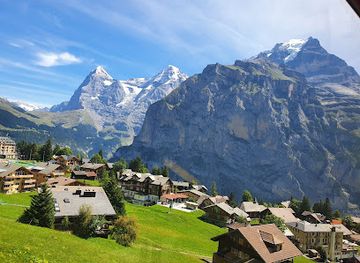
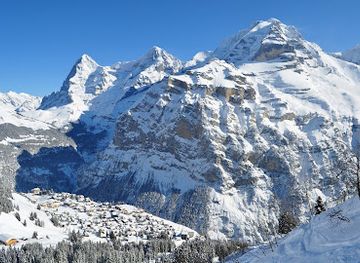
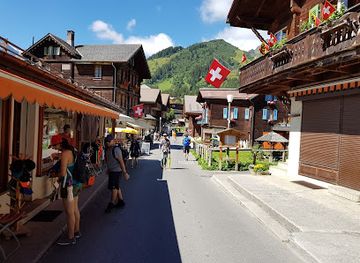
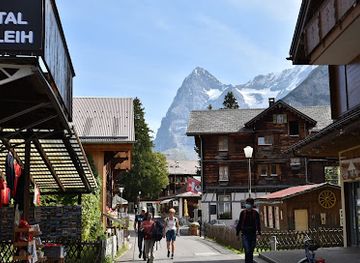
Mürren stands on a sunny terrace above the Lauterbrunnen Valley in the Bernese Oberland, facing a serrated wall of peaks that includes the Eiger, Mönch and Jungfrau. At around 1,638 metres, this compact, car-free village is reached by mountain railway and cableway rather than by road, preserving a calm atmosphere of timber chalets, flower-filled balconies and narrow lanes. Cows graze on steep alpine pastures around the settlement, while footpaths lead towards high viewpoints, meadows and neighbouring mountain villages.Read more about Murren
Heritage and Village Life
Views, Sport and the Schilthorn
When is the best time to visit Murren?
Best: July–September · 14–19°C| Month | High (°C) | Rainfall (mm) |
|---|---|---|
| January | -1 | 61 |
| February | 0 | 59 |
| March | 2 | 74 |
| April | 7 | 83 |
| May | 11 | 132 |
| June | 17 | 158 |
| July (best) | 19 | 161 |
| August (best) | 18 | 147 |
| September (best) | 14 | 117 |
| October | 9 | 98 |
| November | 5 | 77 |
| December | 1 | 67 |
Getting to and around Murren
How to get there
Transportation
Best attractions in Murren
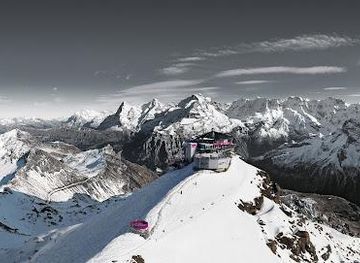
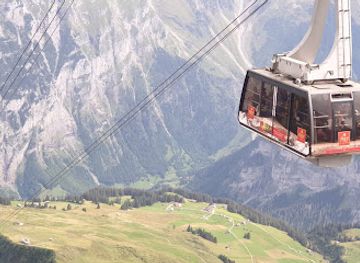
Mürren's principal attractions are defined by its position above the Lauterbrunnen Valley. The Schilthorn cableway leads to Piz Gloria, whose revolving restaurant and panoramic platform face the Eiger, Mönch and Jungfrau and recall its role in On Her Majesty's Secret Service. Closer to the village, Allmendhubel provides an accessible mountain setting with broad views, walking paths and family-oriented seasonal facilities. The village itself is an attraction, with timber chalets, flower-decked balconies and lanes free from ordinary road traffic. Hiking routes to Gimmelwald reveal older farm buildings and steep pasture, while the Mürrenbachfall drops dramatically from the cliffs above the settlement. In winter, ski runs and the historic Inferno race landscape become central to the visitor experience; in summer, marked paths lead through meadows and towards high viewpoints. The mountain railway to Grütschalp is also part of the sightseeing experience, linking the village to the forested slopes above Lauterbrunnen.
-
Mountain cable car
Piz Gloria
Discover Piz Gloria at Schilthorn: Iconic mountain views, thrilling hikes, and exquisite dining await in the heart of the Swiss Alps.
13 min drive · 4.4 km from city centre
-
Observation deck
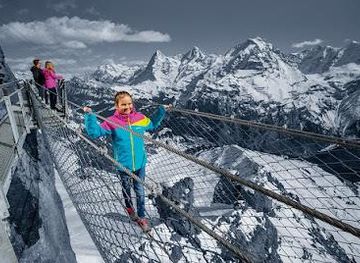
Thrill Walk, Birg
Experience the breathtaking Thrill Walk at Birg, where adventure meets stunning alpine views in the heart of the Swiss Alps.
8 min drive · 2.8 km from city centre
-
Waterfall
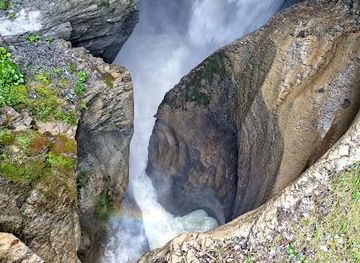
Trümmelbach
Discover Trümmelbach Falls, a breathtaking series of waterfalls hidden within the Swiss Alps, showcasing nature's raw power and beauty.
6 min drive · 2.0 km from city centre
-
Waterfall
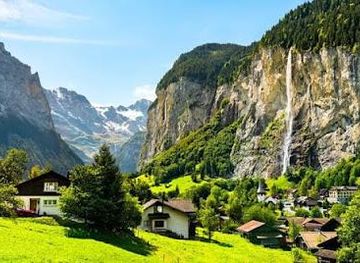
Staubbach Falls
Experience the breathtaking beauty of Staubbach Falls, one of Switzerland's highest waterfalls, nestled in the enchanting Lauterbrunnen Valley.
11 min drive · 3.5 km from city centre
Best landmarks in Murren
Mürren's most recognisable landmarks combine mountain engineering, village architecture and cinematic history. Piz Gloria on the Schilthorn is the defining summit structure, known for its revolving restaurant, extensive alpine outlook and association with On Her Majesty's Secret Service. Below it, the Mürren–Schilthorn cableway represents the transport infrastructure that makes the high mountain accessible while preserving the settlement's car-free character. Within the village, traditional Bernese Oberland chalets and the small church form a modest architectural landscape rather than a monumental one, with timber façades and rooflines reflecting local building traditions. The Lauterbrunnen–Mürren railway is another significant feature, linking the high terrace with Grütschalp and the valley. Nearby waterfalls and cliff faces, particularly the Mürrenbachfall, are natural landmarks that explain the village's dramatic setting and its long association with Alpine tourism.
-
Observation deck
Thrill Walk, Birg
Explore the Thrill Walk at Birg - where breathtaking views and exhilarating adventures meet in the Swiss Alps.
8 min drive · 2.8 km from city centre
-
Scenic spot
Mürren Viewpoint
Experience breathtaking views of the Swiss Alps at Mürren Viewpoint, an unforgettable scenic spot for nature lovers and adventure seekers.
4 min walk · 0.3 km from city centre
-
Hotel
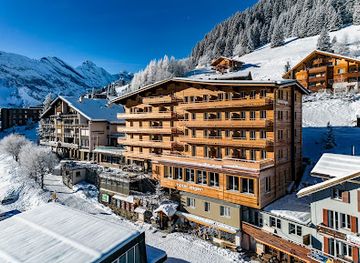
Hotel Eiger Muerren
Discover the breathtaking beauty of the Swiss Alps at Hotel Eiger Mürren, where luxury meets adventure in a picturesque alpine village.
7 min walk · 0.6 km from city centre
-
 Hotel
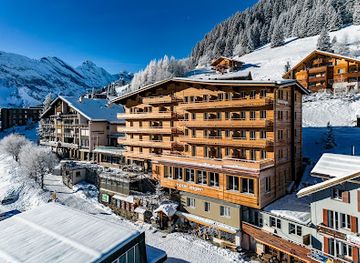
HotelHotel Edelweiss Superior
Discover the charm of Hotel Edelweiss Superior, your gateway to the Swiss Alps, where relaxation meets adventure in stunning mountain landscapes.
5 min walk · 0.4 km from city centre
Explore Murren on the map
Plan your Murren trip on one map. See where the top attractions, landmarks, restaurants, bars and hotels are, find what's near where you're staying, and book hotels and experiences in a few clicks.
Best hotels in Murren
Best restaurants in Murren
Dining in Mürren reflects its mountain-resort setting, with menus shaped by Swiss alpine cooking and the needs of hikers and winter visitors. Cheese fondues, raclette, rösti and hearty soups are common specialities, while regional cheeses and cured meats appear in simple plateau dishes and picnic provisions. Village hotels and independent restaurants provide much of the evening dining, alongside cafés and mountain restaurants near the lifts and walking routes. Meals at high stations tend to focus on warming, practical food, whereas village establishments offer more varied interpretations of Swiss and international cooking. Bakeries and small food shops are useful for provisions before a hike, although selection can be more seasonal and limited than in larger towns. The nearby Lauterbrunnen Valley and wider Bernese Oberland share many of these traditions, with dairy farming, alpine pasture and mountain tourism all influencing the region's food culture.
-
Swiss
Restaurant Weidstübli
Experience authentic Swiss cuisine amidst stunning alpine scenery at Restaurant Weidstübli in Lauterbrunnen.
11 min drive · 3.5 km from city centre
-
Restaurant
Hotel Eiger Muerren
Discover unparalleled comfort and stunning mountain views at Hotel Eiger Mürren – your perfect alpine getaway.
7 min walk · 0.6 km from city centre
-
Swiss
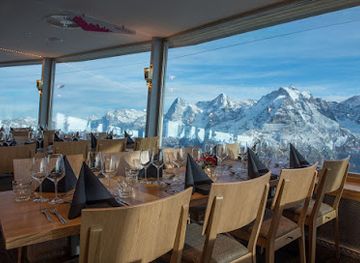
Schilthorn - Piz Gloria 360°- Restaurant
Discover culinary delights and breathtaking views at Schilthorn - Piz Gloria, an iconic Swiss restaurant perched high in the Alps.
13 min drive · 4.4 km from city centre
-
Swiss
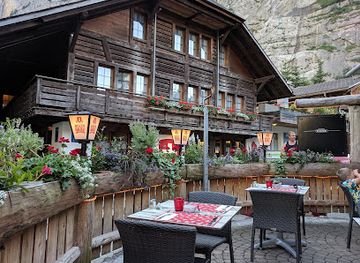
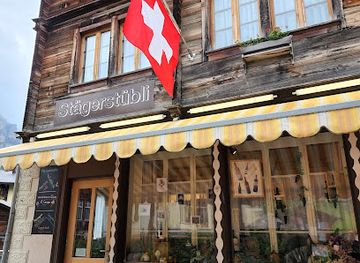
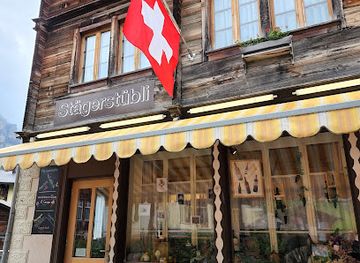
Restaurant Stägerstübli
Savor authentic Swiss dishes at Restaurant Stägerstübli while enjoying breathtaking views in beautiful Mürren.
2 min walk · 0.1 km from city centre
Best bars in Murren
Mürren has a restrained evening scene suited to a small mountain village rather than a club-oriented resort. Hotel lounges, traditional bars and informal après-ski venues provide places for drinks and conversation after a day on the slopes or trails, with the liveliest atmosphere generally found during the winter season. Some restaurants continue the evening with Swiss wines, local beer and warm, social dining, while accommodation bars offer quieter settings for guests. Cultural evenings, seasonal music and local events may add variety, but schedules change and should not be assumed. There are no large nightclub districts, and late-night options are limited compared with Interlaken or larger Swiss resorts. The car-free streets become particularly peaceful after the final mountain transport, making the village's evening character more about alpine stillness, conversation and views than high-energy nightlife.
-
Restaurant
Hotel Eiger Muerren
Experience the perfect blend of gourmet dining and wellness in the stunning Swiss Alps at Hotel Eiger Mürren, a haven for relaxation and culinary delight.
7 min walk · 0.6 km from city centre
-
Swiss
Restaurant Stägerstübli
Experience authentic Swiss dining at Restaurant Stägerstübli in Mürren, where local flavors and breathtaking views create a memorable culinary experience.
2 min walk · 0.1 km from city centre
-
Chinese
Tham Restaurant
Delve into authentic Chinese flavors at Tham Restaurant in Mürren, Switzerland, with breathtaking mountain views and warm hospitality.
4 min walk · 0.3 km from city centre
-
Restaurant
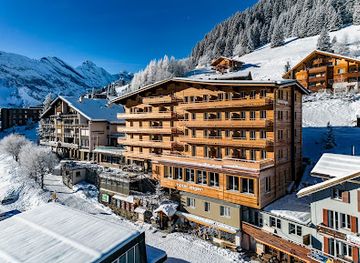
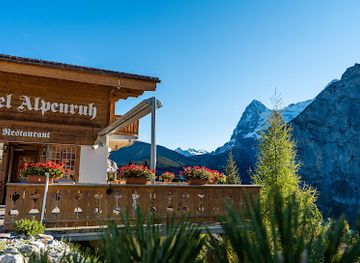
Hotel Alpenruh
Discover the charm of Hotel Alpenruh in Mürren - a perfect blend of cozy accommodation and exquisite Swiss cuisine in the Swiss Alps.
2 min walk · 0.1 km from city centre
Best nightclubs in Murren
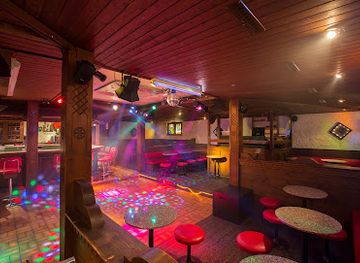
Mürren has a restrained evening scene suited to a small mountain village rather than a club-oriented resort. Hotel lounges, traditional bars and informal après-ski venues provide places for drinks and conversation after a day on the slopes or trails, with the liveliest atmosphere generally found during the winter season. Some restaurants continue the evening with Swiss wines, local beer and warm, social dining, while accommodation bars offer quieter settings for guests. Cultural evenings, seasonal music and local events may add variety, but schedules change and should not be assumed. There are no large nightclub districts, and late-night options are limited compared with Interlaken or larger Swiss resorts. The car-free streets become particularly peaceful after the final mountain transport, making the village's evening character more about alpine stillness, conversation and views than high-energy nightlife.
-
Club
Sportchalet Mürren
Discover the alpine charm of Sportchalet Mürren, where adventure meets relaxation in the stunning Swiss Alps.
2 min walk · 0.1 km from city centre
-
Bistro
Time Out Bistro
Experience the flavors of the Swiss Alps at Time Out Bistro in Mürren, a cozy dining spot with breathtaking views and delightful local cuisine.
6 min walk · 0.5 km from city centre
-
Nightclub
Bliemli Chäller
Discover the electrifying vibe of Bliemli Chäller, Mürren's premier nightclub, where alpine charm meets unforgettable nightlife.
1 min walk · 0.1 km from city centre
Best shops in Murren
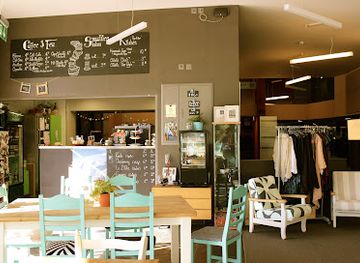
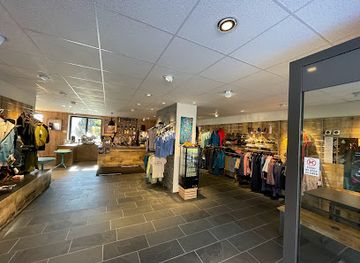
Shopping in Mürren is compact and practical, centred on small village shops, sports retailers, food stores and businesses serving hikers and winter visitors. The most characteristic purchases are Swiss and Bernese Oberland products such as regional cheese, chocolate, biscuits, cured foods and locally inspired craft items. Outdoor shops provide equipment and clothing for changing mountain conditions, while souvenir shelves commonly feature Alpine imagery, Swiss symbols and references to the Schilthorn's film history. There is no large shopping district or department-store scene, and supplies may be more limited and seasonal than in Interlaken. Independent shops and hotel-based retailers contribute to the village's intimate character, while larger-scale shopping is available in valley towns and Interlaken. Visitors should distinguish locally produced food and crafts from generic souvenirs, particularly when looking for an authentic Alpine keepsake.
-
Café
Café LIV
Discover the cozy charm of Café LIV in Mürren, where delicious breakfasts, brunches, and delightful cakes await amidst stunning alpine views.
3 min walk · 0.2 km from city centre
-
Supermarket
Coop
Discover the best of local Swiss products at Coop Supermarket in Mürren, your essential stop for quality food and treats in the heart of the Alps.
1 min walk · 0.1 km from city centre
-
Sporting goods store
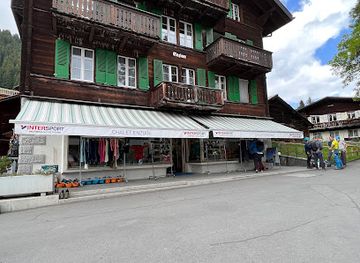
Intersport Mürren (Ski Rental & Sport Store)
Explore the Swiss Alps with top-quality rentals and expert advice at Intersport Mürren, your go-to sporting goods store in the heart of the mountains.
4 min walk · 0.4 km from city centre
-
Sporting goods store
Intersport Mürren (Via Ferrata Rental & Outdoor Clothing)
Explore the Swiss Alps with top-notch gear from Intersport Mürren, your one-stop shop for outdoor adventures and via ferrata rentals.
2 min walk · 0.2 km from city centre
Get your free copy of our complete guide to Murren, delivered straight to you.
Everything on this page, from attractions and restaurants to essentials and local phrases, in one PDF you can read offline, print or share.
Already have an account? Sign in
Your Murren guide is ready.
We'll send it to · Not you? Sign out

Getting your guide ready…
We are putting together a fresh copy of the Murren guide. This can take up to a minute.
This can take a few moments. If your browser asks, choose Allow so the download can start. You'll find the guide in your Downloads folder.
Nothing happened? Download it again
Sorry, the guide is taking longer than usual. Please try again in a minute, or get it by email instead.
Murren essentials
Currency and Payment
Safety
Emergency Situations
Do's and Don'ts
Local Tips
From Eve
Local phrases worth knowing
You don't need to get them perfect. A few words go a long way, and locals appreciate the effort.
Basics
| English | Local | Say it |
|---|---|---|
| Hello | Grüezi | [groo-ay-tsee] |
| Goodbye | Adieu | [ah-dyuh] |
| Yes | Ja | [yah] |
| No | Nein | [nine] |
| Please/You're welcome | Bitte | [bih-tuh] |
| Thank you | Danke | [dahn-kuh] |
| Excuse me/Sorry | Entschuldigung | [ent-shool-dee-goong] |
| How are you? | Wie geht es Ihnen? | [vee gayt es een-en] |
| Fine. And you? | Gut. Und Ihnen? | [goot oont een-en] |
| Do you speak English? | Sprechen Sie Englisch? | [shpre-khen zee eng-leesh] |
| I don't understand | Ich verstehe nicht | [ikh fair-shtay-uh nikht] |
Eating & Drinking
| English | Local | Say it |
|---|---|---|
| I'd like to see the menu, please | Ich möchte die Speisekarte sehen, bitte | [ikh merkh-tuh dee shpy-zuh-kahr-tuh zay-en, bih-tuh] |
| I don't eat meat | Ich esse kein Fleisch | [ikh ess-uh kine fly-sh] |
| Cheers! | Zum Wohl! | [tzoom vohl] |
| I would like to pay, please | Ich möchte bezahlen, bitte | [ikh merkh-tuh buh-tsah-len, bih-tuh] |
Emergencies
| English | Local | Say it |
|---|---|---|
| Help! | Hilfe! | [hil-fuh] |
| Go away! | Geh weg! | [gay vekh] |
| Call the Police! | Rufen Sie die Polizei! | [roo-fen zee dee poh-lee-tsai] |
| Call a doctor! | Rufen Sie einen Arzt! | [roo-fen zee iyn-en ahrts] |
| I'm lost | Ich bin verloren | [ikh been fair-loh-ren] |
| I'm ill | Ich bin krank | [ikh been krunk] |
Shopping
| English | Local | Say it |
|---|---|---|
| I'd like to buy... | Ich möchte kaufen... | [ikh merkh-tuh kow-fen] |
| I'm just looking | Ich schaue nur | [ikh shou-uh noor] |
| How much is it? | Wie viel kostet es? | [vee feel koh-stet es] |
| That's too expensive | Das ist zu teuer | [dahs ist tsoo toy-er] |
| Can you lower the price? | Können Sie den Preis senken? | [kuh-nen zee den price sen-ken] |
Time & Numbers
| English | Local | Say it |
|---|---|---|
| What time is it? | Wie viel Uhr ist es? | [vee feel oor ist es] |
| It's one o'clock | Es ist ein Uhr | [es ist iyn oor] |
| Half past (10) | Halb zehn | [halb tsayn] |
| Morning | Morgen | [mohr-ghen] |
| Afternoon | Nachmittag | [nahk-mit-tahk] |
| Evening | Abend | [ah-bent] |
| Yesterday | Gestern | [geh-stern] |
| Today | Heute | [hoy-tuh] |
| Tomorrow | Morgen | [mohr-ghen] |
| 1 | eins | [ynes] |
| 2 | zwei | [tsvay] |
| 3 | drei | [dry] |
| 4 | vier | [feer] |
| 5 | fünf | [foonf] |
| 6 | sechs | [zeks] |
| 7 | sieben | [zee-ben] |
| 8 | acht | [ahkt] |
| 9 | neun | [noyn] |
| 10 | zehn | [tsayn] |
Transport & Directions
| English | Local | Say it |
|---|---|---|
| Where's a/the...? | Wo ist ein/der...? | [voh ist iyn/dehr] |
| What's the address? | Was ist die Adresse? | [vahs ist dee ah-dreh-seh] |
| Can you show me (on the map)? | Können Sie mir zeigen (auf der Karte)? | [kuh-nen zee meer tsay-gen (ouf dehr kahr-teh)] |
| When's the next (bus)? | Wann kommt der nächste (Bus)? | [vahn kohmt dehr nikh-stuh (boos)] |
| A ticket (to ....) | Eine Fahrkarte (nach ....) | [iyn-uh fahr-kahr-teh (nahkh)] |
History of Murren
Walser Settlement in the Alps
Mürren developed as a Walser settlement, reflecting the movement of German-speaking alpine farmers across high valleys and mountain terraces. Its elevated position above the Lauterbrunnen Valley suited summer pasture and small-scale agriculture, while the steep terrain limited the size of the community. Traditional timber buildings, farm structures and the village's dispersed pattern preserve traces of this pastoral origins, even though tourism now shapes much of daily life. The wider Bernese Oberland remained connected through seasonal work, livestock movement and trade between valley settlements and high pastures.
The Arrival of Alpine Tourism
During the nineteenth century, the Alps became increasingly attractive to travellers, mountaineers and artists, and Mürren began to receive visitors drawn by its views of the Eiger, Mönch and Jungfrau. Early tourism gradually introduced inns, improved paths and a more organised hospitality economy without transforming the village into a large urban resort. The surrounding Lauterbrunnen Valley, already known for waterfalls and dramatic cliffs, helped establish the area as a destination for exploration and mountain excursions.
Railways Connect the Village
Mountain transport changed Mürren's relationship with the outside world in the late nineteenth and early twentieth centuries. The Lauterbrunnen–Mürren mountain railway, opened in stages from 1891, linked the village with Grütschalp and Lauterbrunnen, while the route through the valley and later cableway connections made access more dependable. These links supported tourism, local supplies and winter activity while preserving Mürren's car-free character. The railway remains a defining part of the village experience and its practical connection to the Bernese Oberland network.
Winter Sports and the Inferno Race
Mürren became an important centre for organised winter sports during the twentieth century. The Inferno ski race, first held in 1928, developed into one of the area's best-known sporting traditions, using a long and demanding course from the Schilthorn area towards Lauterbrunnen. Ski tourism encouraged the growth of lifts, hotels and seasonal services, but the village remained relatively compact. Winter sports also strengthened Mürren's international profile while reflecting the challenging terrain that defines the surrounding mountains.
The Schilthorn and Film History
The summit of the Schilthorn gained wider recognition when the revolving Piz Gloria restaurant was used as a major filming location for On Her Majesty's Secret Service, released in 1969. The building and cableway had been developed during the same period, and the cinematic association became part of the mountain's modern identity. Today the Schilthorn combines a high-altitude viewpoint, transport engineering and film history, while Mürren below continues to present a more traditional village landscape.
Murren in Photos
Browse through our photo collection highlighting the charm and character of the destination.
Cities near Murren
The closest cities to Murren, if you have time for more than one stop.
-

-
-
-

-


Swipe for more cities
Explore more

Explore more of Switzerland
Discover Switzerland's majestic landscapes, vibrant cities, and rich culture. From alpine adventures to urban exploration, experience the best of Europe in one destination.
Explore Switzerland