

Free Altmark Travel Guide & Mobile App
Explore Altmark with free travel guides. Discover regional history, expert tips, proposed trips, and audio guides on web or mobile app.


Explore Altmark in northern Germany for medieval towns, brick Gothic churches, Elbe landscapes, cycling routes and quiet rural heritage.
Read more about Altmark
When is the best time to visit Altmark?
Best: June–August · 21–23°C| Month | High (°C) | Rainfall (mm) |
|---|---|---|
| January | 3 | 35 |
| February | 4 | 30 |
| March | 8 | 35 |
| April | 12 | 40 |
| May | 18 | 50 |
| June (best) | 21 | 55 |
| July (best) | 23 | 60 |
| August (best) | 23 | 60 |
| September | 19 | 50 |
| October | 14 | 45 |
| November | 7 | 40 |
| December | 4 | 35 |
Getting to and around Altmark
How to get there
Transportation
Best attractions in Altmark
Altmark’s attractions are dispersed across a spacious rural landscape rather than concentrated in one resort or city. The historic centres of Stendal, Tangermünde and Salzwedel provide medieval churches, town gates, civic buildings and museums, while smaller settlements reveal Romanesque village churches and traditional farm architecture. Tangermünde is particularly suited to combining heritage with walks beside the Elbe, whereas Stendal offers the region’s strongest urban concentration of historic buildings. The Freilichtmuseum Diesdorf presents rural life through moved and preserved farm buildings, gardens and craft traditions. Around Arendsee, the lake supports swimming, boating and lakeside recreation, with woodland and open-country walks nearby. The Elbe floodplains and adjacent wetlands are valuable for cycling, landscape photography and birdwatching, especially during migration periods. Visitors interested in local history can explore regional archaeological and cultural collections in Salzwedel and other towns, while the Altmark’s network of quiet roads makes independent touring a central part of the experience. Seasonal fairs, church concerts and town festivals add activity without changing the region’s predominantly unhurried character.
-
Tourist attraction
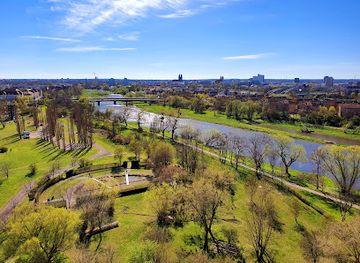
Elbauenpark
Discover Magdeburg's Elbauenpark: A vibrant urban oasis with gardens, history, and attractions for all ages.
-
Amusement park
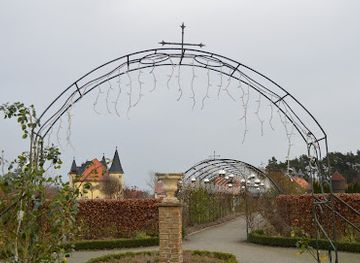
Märchenpark und Duftgarten Salzwedel
Discover a magical world where fairy tales and fragrant gardens come to life in Salzwedel's enchanting amusement park.
-
Tourist attraction
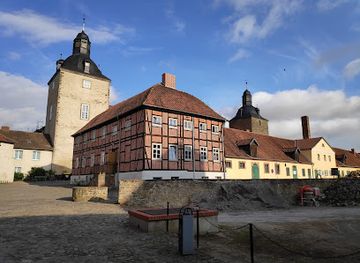
Hundisburg Castle
Discover Hundisburg Castle: A stunning Baroque palace with historic gardens and cultural events near Haldensleben, Saxony-Anhalt.
-
Tourist attraction
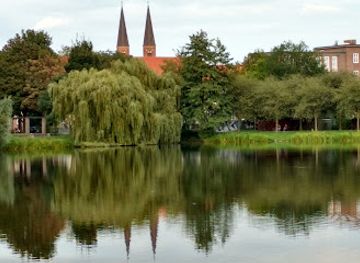
Hansestadt Stendal - Tiergarten
Discover diverse wildlife in a charming lakeside setting at Tiergarten Stendal, a family-friendly animal park in the heart of the Altmark region.
Best landmarks in Altmark
Tangermünde’s skyline of brick churches, town walls, gates and castle remains is Altmark’s most coherent historic landmark ensemble. Its elevated position above the Elbe explains both its defensive importance and its distinctive views across the river landscape. In Stendal, the Cathedral of St Nicholas, the Church of St Mary and the Church of St Peter express the wealth of the medieval Hanseatic town, while surviving sections of the walls and gates mark its former limits. Salzwedel is recognised by the towers and brick Gothic churches of its old town, including St Mary’s and St Catherine’s, set among historic timber-framed buildings. The Arendsee is a natural landmark rather than a monument: its broad inland waters and wooded shores form one of the region’s most notable recreational landscapes. Elsewhere, the small Romanesque village churches and brick farmsteads of the Altmark are important collectively, showing how medieval religious foundations and later rural building traditions shaped the countryside. The Elbe itself, with its wide floodplain and shifting banks, remains the region’s defining geographical feature.
-
Amusement park
Märchenpark und Duftgarten Salzwedel
Explore Märchenpark und Duftgarten Salzwedel, where fairy tales come alive amidst stunning gardens, ideal for family fun and enchanting adventures.
-
Castle
Tangermünde Castle
Visit Tangermünde Castle, a breathtaking medieval fortress offering rich history, stunning architecture, and scenic views of the Elbe River.
-
Restaurant
Haus Altmark
Experience authentic German cuisine and warm hospitality at Haus Altmark, a charming restaurant and hotel in the heart of Gardelegen.
-
Museum
Otto-von-Bismarck-Stiftung Schönhausen / Bismarck-Museum
Explore the Otto von Bismarck Stiftung Schönhausen, a museum dedicated to Germany's iconic Chancellor, offering a journey through history and political legacy.
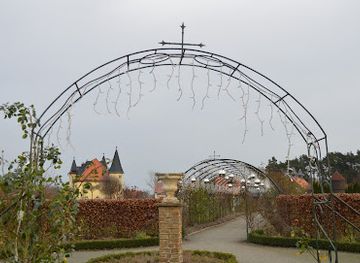
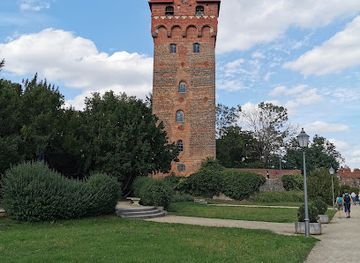
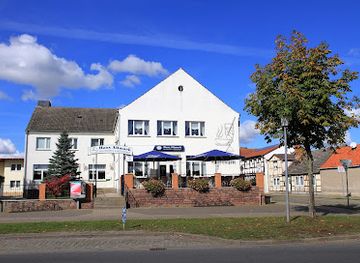
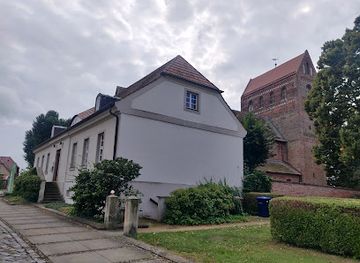
Explore Altmark on the map
Plan your trip on one map. See where the top cities, national parks and sights are, and book hotels and experiences in a few clicks.
Best hotels in Altmark
Best restaurants in Altmark
Dining in Altmark reflects northern German country cooking, local agriculture and the practical traditions of market towns. Menus commonly draw on potatoes, seasonal vegetables, pork, game, freshwater fish and substantial breads, while village inns and traditional restaurants provide familiar regional dishes alongside broader German cuisine. Salzwedel Baumkuchen, a layered cake traditionally baked over a rotating spit, is the area’s most recognisable speciality and is widely associated with the town. Cakes, pastries and coffee are important parts of the afternoon café tradition, particularly in historic centres. Restaurants in Stendal, Salzwedel and Tangermünde offer the widest choice, from contemporary kitchens to conventional regional dining, while rural inns tend to have more limited and seasonal menus. Farmers’ markets, bakeries and local food shops are useful for assembling provisions for cycling or lakeside excursions. Regional beer and non-alcoholic drinks are widely available, and freshwater fish may appear on menus near the Elbe and Arendsee, although availability depends on season and the individual establishment.
-
Restaurant
Fischerhof Gahrns GmbH
Experience fresh flavors at Fischerhof Gahrns in Gardelegen – a unique blend of restaurant and fish farm offering local culinary delights.
-
Restaurant
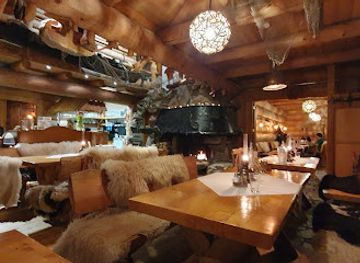
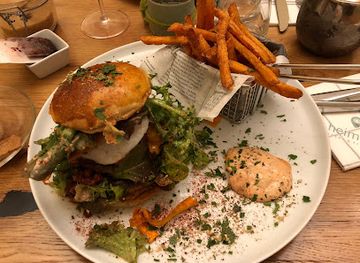
heimart
Experience exquisite dining at Heimart in Salzwedel—where local flavors meet exceptional culinary artistry.
-
German
Zur Wildgans
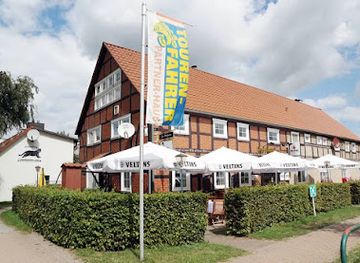
Discover traditional German cuisine and warm hospitality at Zur Wildgans in Arendsee - your perfect retreat in nature.
-
Restaurant
Restaurant Dubrovnik-Kalbe Milde
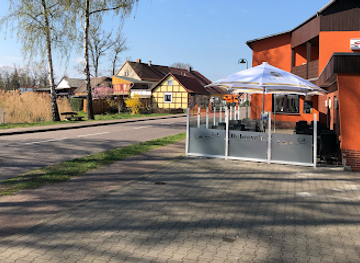
Experience authentic Croatian cuisine at Restaurant Dubrovnik-Kalbe Milde - a hidden gem for food lovers in central Germany.
Best bars in Altmark
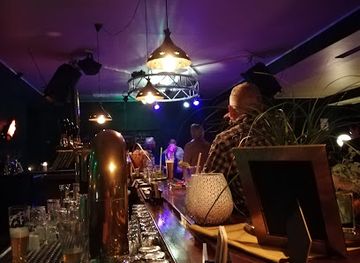
Altmark’s evening life is modest and town-centred rather than built around large nightclub districts. Traditional pubs, hotel bars, cafés and restaurants provide the main opportunities for an evening out, with the greatest choice in Stendal, Salzwedel and Tangermünde. Historic inns and renovated town-centre premises may offer local beer, wine, spirits and simple food, while occasional live music, theatre performances and cultural events bring activity to otherwise quiet evenings. Arendsee can feel livelier during the summer holiday period, particularly around lakeside accommodation and seasonal events, but it is not a major nightlife resort. In smaller villages, the social calendar is more likely to revolve around community halls, club events or local festivals than late-opening bars. Visitors should check current arrangements before relying on a particular venue, especially outside the larger towns and during the colder months.
-
Fish store
Fischerei Kagel
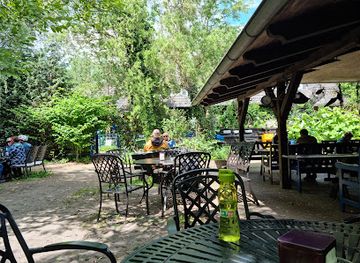
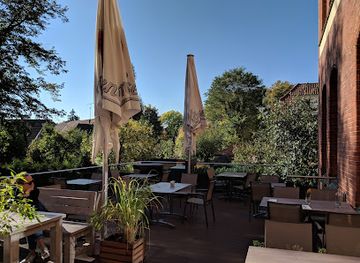
Discover the freshest seafood and a charming beer garden at Fischerei Kagel in Schrampe, where taste meets tradition.
-
Bar
Montego Beachclub • Magdeburg
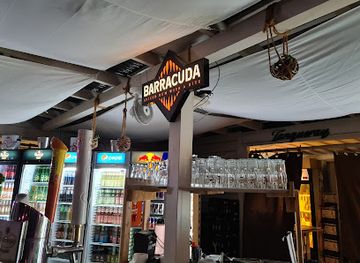
Experience vibrant nightlife and beach volleyball at Montego Beachclub in Magdeburg, a perfect blend of fun, drinks, and friendly competition.
-
Restaurant
heimart
Experience exceptional dining at Heimart in Salzwedel, where local ingredients meet culinary artistry in an elegant setting.
-
Restaurant
Bester Döner
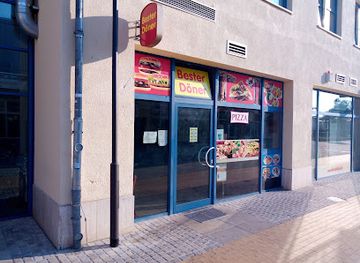
Experience the taste of Turkey at Bester Döner, Osterburg's beloved restaurant for authentic döner kebabs and warm hospitality.
Best nightclubs in Altmark
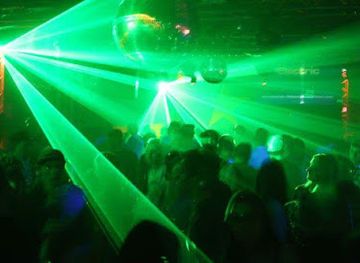
Altmark’s evening life is modest and town-centred rather than built around large nightclub districts. Traditional pubs, hotel bars, cafés and restaurants provide the main opportunities for an evening out, with the greatest choice in Stendal, Salzwedel and Tangermünde. Historic inns and renovated town-centre premises may offer local beer, wine, spirits and simple food, while occasional live music, theatre performances and cultural events bring activity to otherwise quiet evenings. Arendsee can feel livelier during the summer holiday period, particularly around lakeside accommodation and seasonal events, but it is not a major nightlife resort. In smaller villages, the social calendar is more likely to revolve around community halls, club events or local festivals than late-opening bars. Visitors should check current arrangements before relying on a particular venue, especially outside the larger towns and during the colder months.
-
Bar
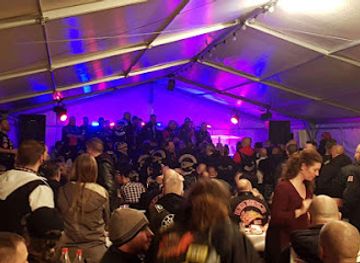
HAMC Altmark
Experience the vibrant nightlife at HAMC Altmark, a beloved bar in Salzwedel offering a warm atmosphere and an extensive drink selection.
-
Disco club
Flash Club & Diskothek
Dive into the thrilling nightlife of Osterburg at Flash Club & Diskothek, where music and dance come alive in a vibrant atmosphere.
-
Bar
Herr (O) Bar
Discover the lively nightlife of Gardelegen at Herr (O) Bar, where good drinks and great company await.
-
Disco club
Miami Live Stendal
Dive into the vibrant nightlife at Miami Live Stendal, where music, dancing, and unforgettable moments await you in the heart of Germany.

Best shops in Altmark
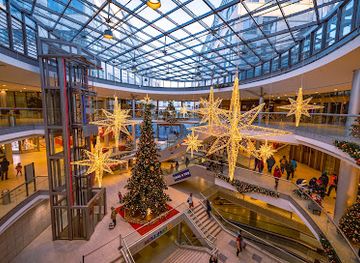
Shopping in Altmark is concentrated in the historic high streets of Stendal, Salzwedel, Tangermünde, Gardelegen and Osterburg, where everyday retail is mixed with independent cafés, bookshops, galleries, bakeries and craft businesses. Salzwedel is the natural place to look for Baumkuchen and other regional bakery products, while farmers’ markets and village markets may offer seasonal fruit, vegetables, preserves, honey and locally made goods. Tangermünde’s preserved centre has a selection of small shops aimed at visitors, including craft, food and heritage-related products, but it is not a large-scale shopping destination. Stendal provides the broadest general retail choice, including national chains alongside independent businesses. In rural districts, opening days and stock can be limited, so it is sensible to buy provisions in a larger town before a cycling or countryside excursion. Useful souvenirs include regional food, handmade ceramics, woodwork, textiles, books on local history and products from Altmark producers rather than generic German merchandise.
-
Shopping mall
City Carré Magdeburg
Experience the vibrant shopping scene at City Carré Magdeburg, where modern retail meets local charm in the heart of the city.
-
Shopping mall
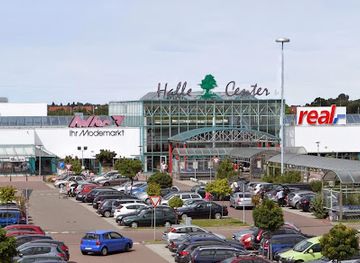
Halle Center
Discover the Halle Center in Landsberg, a vibrant shopping mall with diverse stores, delicious dining, and exciting entertainment options for all ages.
-
Shopping mall
Florapark
Explore Florapark, Magdeburg's vibrant shopping mall with diverse stores, dining, and entertainment for a memorable experience.
-
Supermarket
Kaufland Salzwedel
Discover fresh local produce, artisanal goods, and a wide variety of essentials at Kaufland Salzwedel – the ultimate shopping hub for tourists.
Get your free copy of our complete guide to Altmark, delivered straight to you.
Everything on this page, from attractions and restaurants to essentials and local phrases, in one PDF you can read offline, print or share.
Already have an account? Sign in
Your Altmark guide is ready.
We'll send it to · Not you? Sign out

Getting your guide ready…
We are putting together a fresh copy of the Altmark guide. This can take up to a minute.
This can take a few moments. If your browser asks, choose Allow so the download can start. You'll find the guide in your Downloads folder.
Nothing happened? Download it again
Sorry, the guide is taking longer than usual. Please try again in a minute, or get it by email instead.
Altmark essentials
Currency and Payment
Safety
Emergency Situations
Do's and Don'ts
Local Tips
From Eve
Local phrases worth knowing
You don't need to get them perfect. A few words go a long way, and locals appreciate the effort.
Basics
| English | Local | Say it |
|---|---|---|
| Hello | Hallo | [Hah-loh] |
| Goodbye | Auf Wiedersehen | [Owf Vee-der-zay-en] |
| Yes | Ja | [Yah] |
| No | Nein | [Nine] |
| Please/You're welcome | Bitte | [Bi-teh] |
| Thank you | Danke | [Dahn-keh] |
| Excuse me/Sorry | Entschuldigung | [Ent-shool-dee-goong] |
| How are you? | Wie geht's? | [Vee gates?] |
| Fine. And you? | Gut. Und dir? | [Goot. Oond deer?] |
| Do you speak English? | Sprechen Sie Englisch? | [Shpreh-khen Zee Eng-lish?] |
| I don't understand | Ich verstehe nicht | [Ish fer-shtay-eh nikht] |
Eating & Drinking
| English | Local | Say it |
|---|---|---|
| I'd like to see the menu, please | Ich möchte die Speisekarte sehen, bitte | [Ish merkh-teh dee Shpy-zeh-kar-teh zay-en, bi-teh] |
| I don't eat meat | Ich esse kein Fleisch | [Ish ess-eh kyne Flysh] |
| Cheers! | Prost! | [Prohst!] |
| I would like to pay, please | Ich möchte bezahlen, bitte | [Ish merkh-teh beh-tsah-len, bi-teh] |
Emergencies
| English | Local | Say it |
|---|---|---|
| Help! | Hilfe! | [Hil-feh!] |
| Go away! | Geh weg! | [Geh vek!] |
| Call the Police! | Rufen Sie die Polizei! | [Roof-en Zee dee Po-li-tsai!] |
| Call a doctor! | Rufen Sie einen Arzt! | [Roof-en Zee eye-nen Artst!] |
| I'm lost | Ich habe mich verlaufen | [Ish hah-beh mikh fer-lau-fen] |
| I'm ill | Ich bin krank | [Ish bin krank] |
Shopping
| English | Local | Say it |
|---|---|---|
| I'd like to buy... | Ich möchte ... kaufen | [Ish merkh-teh ... kau-fen] |
| I'm just looking | Ich schaue nur | [Ish shau-eh noor] |
| How much is it? | Wie viel kostet es? | [Vee feel kost-et es?] |
| That's too expensive | Das ist zu teuer | [Dahs ist tsoo toy-er] |
| Can you lower the price? | Könnten Sie den Preis senken? | [Kurn-ten Zee den Price zen-ken?] |
Time & Numbers
| English | Local | Say it |
|---|---|---|
| What time is it? | Wie spät ist es? | [Vee shpaet ist es?] |
| It's one o'clock | Es ist ein Uhr | [Es ist ine Oor] |
| Half past (10) | Halb (10) | [Halb (10)] |
| Morning | Morgen | [Mor-gen] |
| Afternoon | Nachmittag | [Nahch-mit-tahg] |
| Evening | Abend | [Ah-bent] |
| Yesterday | Gestern | [Ges-tern] |
| Today | Heute | [Hoy-teh] |
| Tomorrow | Morgen | [Mor-gen] |
| 1 | eins | [Ayns] |
| 2 | zwei | [Tsvy] |
| 3 | drei | [Dry] |
| 4 | vier | [Fear] |
| 5 | fünf | [Finf] |
| 6 | sechs | [Zex] |
| 7 | sieben | [Zee-ben] |
| 8 | acht | [Acht] |
| 9 | neun | [Noyn] |
| 10 | zehn | [Tsen] |
Transport & Directions
| English | Local | Say it |
|---|---|---|
| Where's a/the...? | Wo ist ein/eine...? | [Vo ist ine/ine...?] |
| What's the address? | Was ist die Adresse? | [Vahs ist dee Ah-dress-eh?] |
| Can you show me (on the map)? | Könnten Sie mir (auf der Karte) zeigen? | [Kurn-ten Zee meer (owf der Kar-teh) tsai-gen?] |
| When's the next (bus)? | Wann kommt der nächste (Bus)? | [Vahn komt der nay-shte (Boos)?] |
| A ticket (to ....) | Ein Ticket (nach ....) | [Ine Ti-ket (nahkh ....)] |
History of Altmark
Prehistoric Settlement and Early Farming
Altmark has been occupied since prehistoric times, with archaeological evidence of early farming communities, burial monuments and later settlements across its sandy soils and river margins. The region’s relatively open terrain made it suitable for agriculture and movement, while waterways supported communication and access to natural resources. Archaeological museums and local collections preserve finds from different periods, although much of the evidence is encountered through dispersed sites rather than a single monumental complex. This long settlement history helps explain why apparently rural landscapes often contain layered traces of former villages, field systems and burial places.
Slavic Communities and the Eastern March
During the early medieval period, the northern Elbe region was inhabited by Germanic and Slavic communities and formed part of a shifting frontier between political powers. In the tenth century, the area became associated with the Northern March, a frontier territory founded by the Ottonian rulers. Political control was uneven, and conflict and settlement reshaped the region over subsequent generations. The term Altmark later expressed its position as an old march connected with the territories of Brandenburg, giving the region a historical identity that predates the modern state of Saxony-Anhalt.
Medieval Towns, Churches and Trade
From the twelfth century onwards, German settlement and ecclesiastical foundations expanded across Altmark. Towns such as Stendal, Salzwedel and Tangermünde developed through trade, craft production and river connections, while parish churches, monasteries and village churches established a durable architectural network. Brick became an important building material in the northern German plain, producing the sober Gothic forms visible in many regional churches. Stendal and Salzwedel joined the Hanseatic trading world, and Tangermünde gained importance through its position on the Elbe and its association with Brandenburg’s rulers.
Tangermünde and Brandenburg Power
Tangermünde became particularly prominent in the late Middle Ages under the Luxembourg and Hohenzollern dynasties. Emperor Charles IV used its castle and town as an important northern residence in the fourteenth century, and the settlement later served as a centre of Brandenburg administration. Its walls, gates, castle remains and civic buildings still reveal this political importance. The town’s position above the Elbe also made it vulnerable to fire, war and changing trade patterns, yet enough of its medieval and early modern structure survived to make it one of Altmark’s clearest historical townscapes.
The Altmark within Prussia
Altmark became firmly integrated into Brandenburg-Prussian political structures and, after the Napoleonic period, into the Prussian province of Saxony. Administrative reform, improved roads and later railway construction connected its market towns more closely with Magdeburg, Berlin and other regional centres. Agriculture remained dominant, supported by estates, villages and small towns, while craft and service industries grew around transport links. The nineteenth century also strengthened the region’s cultural interest in local antiquities, churches and folk traditions, encouraging the collection and preservation of objects that now appear in regional museums.
Railways, Agriculture and Rural Modernisation
Railway expansion in the nineteenth and early twentieth centuries changed the practical geography of Altmark. Stendal became an important railway junction, while branch lines connected other towns and supported the movement of grain, livestock, timber and manufactured goods. Mechanisation gradually altered farming, although the region remained less industrialised than many parts of central Germany. Rural settlements retained their agricultural character, with brick farmhouses, timber-framed buildings, manor estates and village churches forming the visible landscape of a society shaped more by land use and transport than by large factories.
Division, Borderland Life and Reunification
After 1945, Altmark lay in the Soviet occupation zone and subsequently in the German Democratic Republic. The inner German border ran to the west and north-west of the region, restricting movement towards Lower Saxony and contributing to its peripheral position. Agriculture was collectivised, and many small railway lines and rural services later declined. Since German reunification, historic centres, churches and village buildings have undergone extensive conservation, while tourism has developed around cycling, the Elbe, lake landscapes and cultural heritage. The region’s spacious character is therefore both a longstanding geographic feature and part of its modern historical experience.
Altmark in Photos
Browse through our photo collection highlighting the charm and character of the destination.
Neighbouring regions of Altmark
The closest regions to Altmark, if you have time for more than one.
-

-

-

-

-


Swipe for more regions
Explore more

Explore more of Germany
Experience Germany: where history meets innovation, and urban energy blends with natural beauty. Discover diverse cultures, delicious cuisine, and stunning landscapes.
Explore Germany