Albrecht von Graefe, Berlin Travel Guide
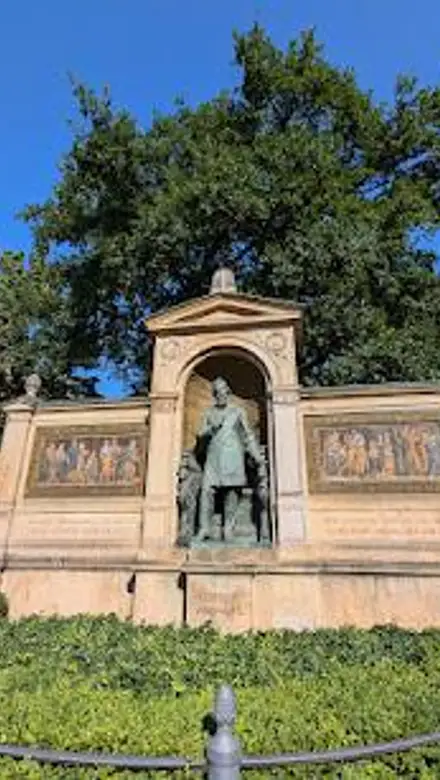
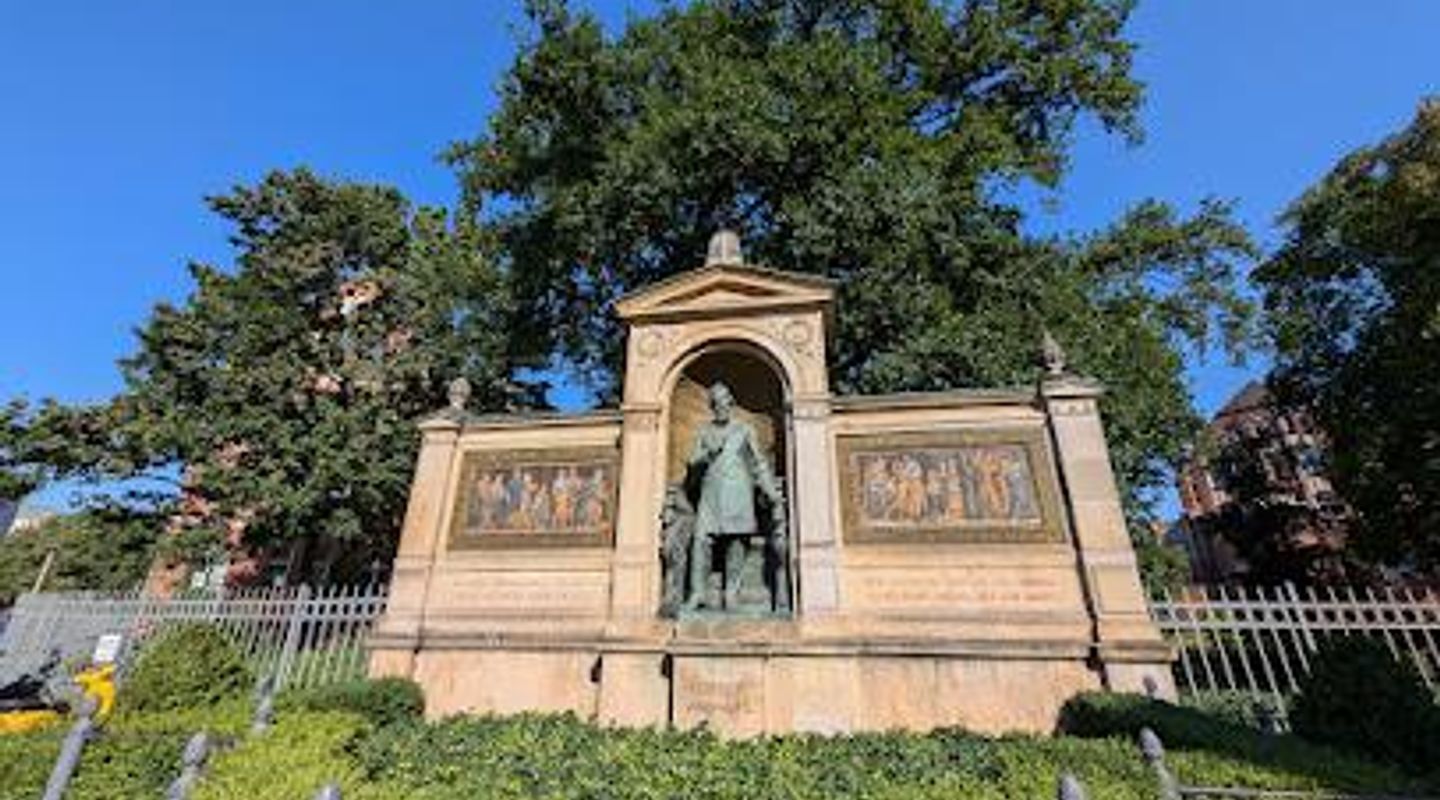
A tribute to Albrecht von Graefe, the father of modern ophthalmology, this sculpture on the Charité Hospital campus honors his groundbreaking contributions to eye care and medical science.
The Albrecht von Graefe sculpture in Berlin's Mitte district commemorates Friedrich Wilhelm Ernst Albrecht von Graefe, a pioneering figure in modern ophthalmology. Created by Rudolf Siemering and inaugurated in 1882, the bronze sculpture depicts von Graefe holding an ophthalmoscope, symbolizing his groundbreaking work in eye care. Located on the Charité Hospital campus, the monument serves as a reminder of von Graefe's significant contributions to the field, including advancements in glaucoma treatment and the founding of the Archiv für Ophthalmologie. The sculpture's artistic details, including terracotta reliefs depicting eye patients, and its historical context within one of Berlin's most renowned medical institutions, make it a compelling site for those interested in medical history and public art. A visit offers a moment of reflection on the legacy of a medical visionary and the evolution of eye care.
A brief summary to Albrecht von Graefe
- Schumannstraße 3, Berlin, Mitte, 10117, DE

Know before you go
Hi, I'm Eve. Here are a few practical things to know before exploring Albrecht von Graefe.
- Combine your visit with a tour of the Charité Hospital campus to explore other historical medical landmarks.
- Take a moment to read the inscription from Friedrich Schiller's "William Tell" on the monument, reflecting on the importance of sight.
- Visit the nearby Tieranatomisches Theater (Veterinary Anatomy Theater) for a unique perspective on anatomical studies.
Do you manage this location?
Take control to get all the benefits, like improved information, better appearance, and stronger visibility across AI-powered discovery. Learn more about listing your business on Evendo
Activate your presenceExplore Albrecht von Graefe on the Map
A handpicked selection of must-see spots near Albrecht von Graefe, mapped for you.
Getting There
-
Public Transport
The Albrecht von Graefe sculpture is easily accessible via public transport. From Berlin Hauptbahnhof (main train station), take the Bus 147 towards Ostbahnhof and get off at the Charité Campus Mitte stop or Schumannstraße stop. Alternatively, from Friedrichstraße station, take the same Bus 147 towards U Leopoldplatz and alight at the Charité Campus Mitte or Schumannstraße stop. From either stop, it's a short walk to the Charité Hospital campus where the sculpture is located. A single BVG ticket (AB zone) costs €3.20.
-
Walking
From the S+U Friedrichstraße station, the sculpture is approximately a 15-20 minute walk. Exit the station towards the north (towards the river Spree), cross the river, and walk along the riverbank. Turn left onto Schumannstraße. The Charité Hospital campus will be on your right. Follow signs for the main entrance and the sculpture will be within the campus grounds. This is a pleasant walk through Berlin's historic Mitte district.
-
Taxi/Ride-Share
A taxi or ride-share from Berlin Hauptbahnhof to Schumannstraße 3, Berlin, will typically cost between €10-€15, depending on traffic. The journey usually takes around 10-15 minutes. Be sure to specify 'Charité Campus' as the destination to ensure the driver takes you to the correct location within the hospital grounds.
-
Driving
If driving, parking is available in the vicinity of the Charité Hospital, including paid parking spaces on Luisenstraße, Hannoversche Straße and Schumannstraße. There is also a multi-story parking lot at Luisenstraße 47-52. Parking fees typically range from €1-€3 per hour. Be aware that parking in central Berlin can be limited, especially during peak hours, so allow extra time to find a space.
Discover more about Albrecht von Graefe













Your all‑in‑one travel companion app
Explore expert travel guides, compare and book tours, experiences, hotels, and more—all from the palm of your hand. Download now for seamless trip planning wherever your wanderlust takes you.


Explore More of Berlin
Looking beyond Albrecht von Graefe? Discover Berlin for broader travel guides, local hot-spots, and regional highlights.
Explore Berlin