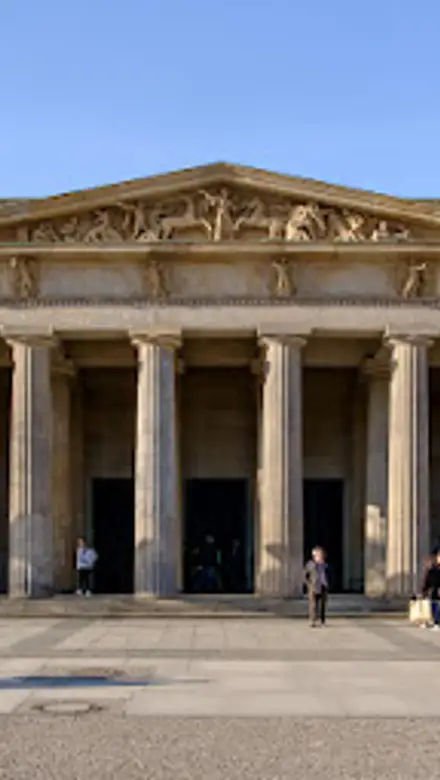
Neue Wache, Berlin Travel Guide
Free Guide: Reflect on history and loss at the Neue Wache, Berlin's central memorial to the victims of war and dictatorship, featuring the poignant 'Mother with her Dead Son' sculpture.


A brief summary of Neue Wache
Reflect on history and loss at the Neue Wache, Berlin's central memorial to the victims of war and dictatorship, featuring the poignant 'Mother with her Dead Son' sculpture.
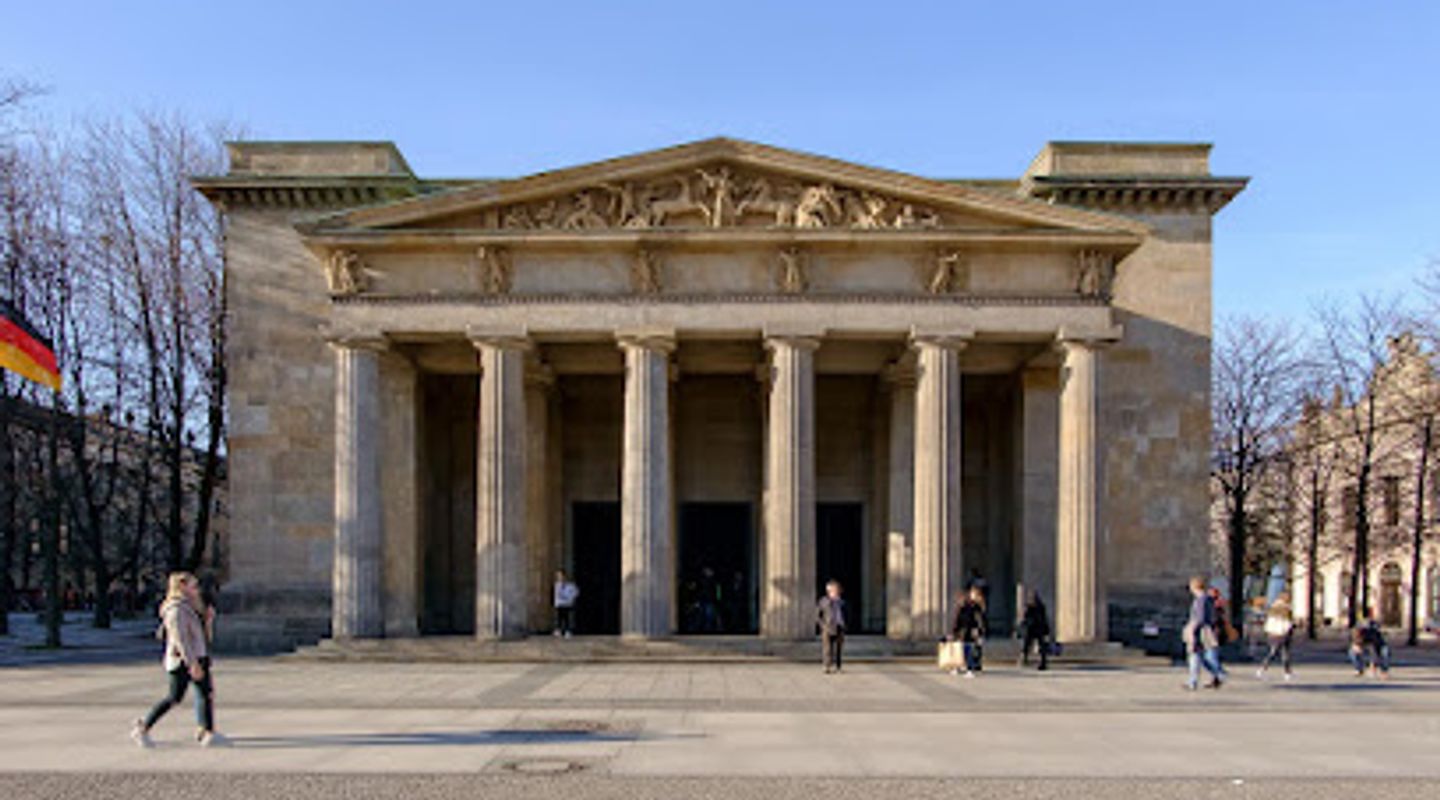
The Neue Wache, or New Guardhouse, stands as a poignant reminder of Germany's tumultuous past. Designed by Karl Friedrich Schinkel in neoclassical style, it was originally a royal guardhouse before transforming into a memorial. Today, it serves as the Central Memorial of the Federal Republic of Germany to the Victims of War and Dictatorship. The building's austere exterior belies the emotional weight held within its walls. Inside, visitors encounter Käthe Kollwitz's powerful sculpture, 'Mother with her Dead Son,' a heart-wrenching depiction of grief and loss. The Neue Wache offers a space for reflection amidst the bustling city, inviting contemplation on the enduring impact of conflict and tyranny. Its location on Unter den Linden places it within easy reach of other major Berlin landmarks, making it a significant stop for those seeking to understand the city's complex history.
Opening hours
- Every day10 am–6 pm
Opening hours as listed on the venue’s Google Business Profile. Hours can change for services and special events, so check with the venue before you go.
- Address
- Unter den Linden 4, 10117 Berlin
- Phone
- Website
Getting there
Walking
Public Transport
Taxi/Ride-Share
Discover more about Neue Wache
Overview
The Neue Wache, located on Unter den Linden in Berlin's Mitte district, is more than just a building; it's a profound statement on remembrance and reconciliation. Designed by Karl Friedrich Schinkel, Prussia's most celebrated architect, and completed in 1818, the Neue Wache (New Guardhouse) initially served as a guardhouse for the royal troops. Its neoclassical design, featuring a Doric portico and a simple, yet imposing facade, reflects the architectural sensibilities of the era. However, its purpose has evolved dramatically over the centuries, mirroring the shifting political and social landscape of Germany. Originally conceived as a memorial to those who fell in the Napoleonic Wars, the Neue Wache has undergone several transformations. In 1931, it was rededicated as a memorial to the victims of World War I. After severe damage during World War II, the East German government reconstructed the building in 1960, transforming it into a memorial to the victims of fascism and militarism. During this period, an eternal flame burned within its walls, and the remains of an unknown soldier and a concentration camp victim were interred. Following German reunification in 1990, the Neue Wache was reconceived once again. In 1993, it was designated the Central Memorial of the Federal Republic of Germany to the Victims of War and Dictatorship. This designation broadened the scope of remembrance to encompass all victims of conflict and oppression, regardless of nationality or circumstance. The interior was redesigned to create a space for quiet contemplation and reflection. The centerpiece of the Neue Wache is an enlarged replica of Käthe Kollwitz's sculpture, 'Mother with her Dead Son'. This poignant sculpture depicts a mother cradling her lifeless son, embodying the universal pain and suffering caused by war. The sculpture is placed directly under an oculus, an opening in the roof that exposes it to the elements. Rain, snow, and sunlight fall upon the sculpture, symbolizing the vulnerability and enduring nature of grief. The starkness of the room, with its bare walls and simple design, amplifies the emotional impact of the sculpture. The choice of Kollwitz's Pietà was not without controversy. Some critics argued that it was not an appropriate symbol for all victims of war and dictatorship, particularly those who suffered under the Nazi regime. However, Chancellor Helmut Kohl defended the choice, arguing that the sculpture's universal message of sorrow and loss transcended specific historical events. The Neue Wache's location on Unter den Linden, Berlin's grand boulevard, further enhances its significance. Situated between Humboldt University and the German Historical Museum, it stands as a reminder of the past amidst the city's vibrant present. The building's proximity to other major landmarks, such as the Brandenburg Gate and Museum Island, makes it an integral part of Berlin's historical and cultural landscape. Visiting the Neue Wache is a deeply moving experience. The simplicity of the space and the power of Kollwitz's sculpture create an atmosphere of profound reflection. It is a place to remember the victims of war and tyranny, to contemplate the consequences of violence and oppression, and to reaffirm the importance of peace and reconciliation. The Neue Wache serves as a constant reminder of the need to learn from the past and to work towards a more just and peaceful future. It is a place where visitors can connect with the shared humanity that binds us together, regardless of our backgrounds or beliefs. The Neue Wache is open daily to the public and admission is free. Visitors are encouraged to maintain a respectful silence within the memorial. Photography is permitted, but flash photography is prohibited. The memorial is accessible to visitors with disabilities. Beyond its historical and emotional significance, the Neue Wache also offers a valuable educational experience. It provides visitors with an opportunity to learn about the history of Germany and the impact of war and dictatorship on its people. It also encourages critical thinking about the nature of remembrance and the challenges of creating a memorial that is both meaningful and inclusive. The Neue Wache is not just a memorial; it is a living testament to the resilience of the human spirit. It is a place where visitors can confront the darkness of the past and find hope for the future. It is a place where we can honor the memory of those who have suffered and commit ourselves to building a world where such suffering never happens again. A visit to the Neue Wache is an essential experience for anyone seeking to understand the complexities of German history and the enduring power of the human spirit.
Evendo Review Centre
 Google
Guest reviews
Explore Neue Wache on the map
A handpicked selection of must-see spots near Neue Wache, mapped for you.
Get your free copy of our complete guide to Neue Wache, delivered straight to you.
Everything on this page, from opening hours and how to get there to Eve’s tips and the best time to go, in one PDF you can read offline, print or share.
Already have an account? Sign in
Your Neue Wache guide is ready.
We'll send it to · Not you? Sign out

Getting your guide ready…
We are putting together a fresh copy of the Neue Wache guide. This can take up to a minute.
This can take a few moments. If your browser asks, choose Allow so the download can start. You'll find the guide in your Downloads folder.
Nothing happened? Download it again
Sorry, the guide is taking longer than usual. Please try again in a minute, or get it by email instead.
Unlock the best of Neue Wache
Skip-the-line tickets, guided tours with entry, and walking tours of the area, booked in a few clicks.
 Tour with entry
Self-Guided Tours In Berlin With 100 Captivating Audio Stories
from $3.19 Tour with entry
Berlin Interactive City Tour
from $7.48 Tour with entry
Haunts and Horrors of Berlin GPS Self Guided Audio Walking Tour
from $9.26 Tour with entry
Berlin WWII and Third Reich Self Guided Walking Tour with an APP
from $9.49




Other nearby places you may find interesting
The closest places of the same kind, if this one is not quite what you had in mind.
-
-
-
-
-


Swipe for more places
More to explore near Neue Wache

 Best experiences near Neue Wache
 Best hotels near Neue Wache
 Best landmarks near Neue Wache
 Best attractions near Neue Wache
 Best shops near Neue Wache
 Best restaurants near Neue Wache
 Best bars near Neue Wache
Do you manage this location?
Take control to get all the benefits, like improved information, better appearance, and stronger visibility across AI-powered discovery.
Explore more

Explore more of Berlin
Berlin: A fascinating blend of history, culture, and modernity, offering everything from historic landmarks to vibrant nightlife and culinary delights.
Explore Berlin
Explore more of Germany
Experience Germany: where history meets innovation, and urban energy blends with natural beauty. Discover diverse cultures, delicious cuisine, and stunning landscapes.
Explore Germany