Background

Schinkelplatz: A Historical Heart in Berlin

Discover Schinkelplatz in Berlin's Mitte: A serene square steeped in history, framed by architectural landmarks, and a gateway to the city's cultural heart.

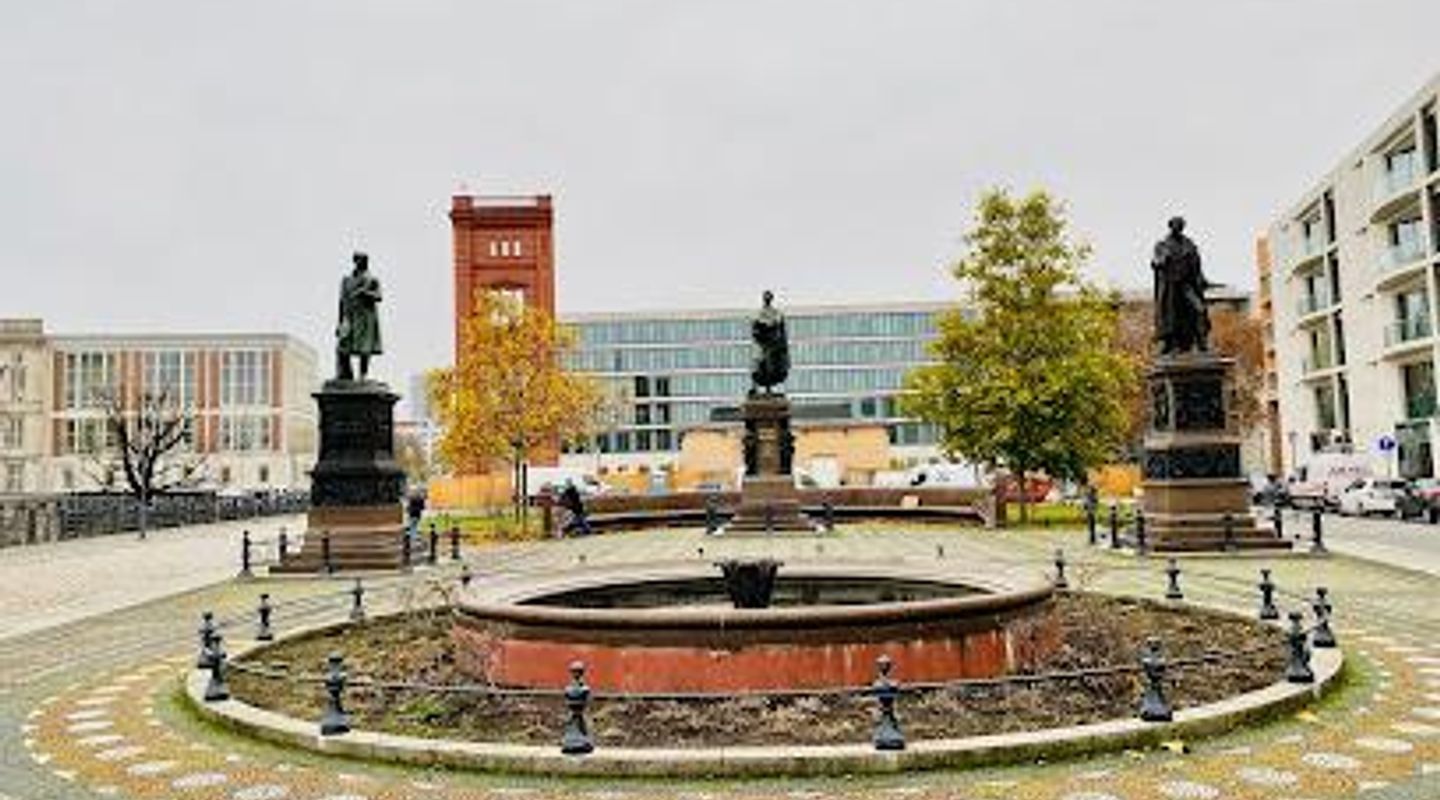
Schinkelplatz, nestled in Berlin's Mitte district, is a captivating square named after the renowned architect Karl Friedrich Schinkel. Reconstructed in 2008 after wartime destruction and GDR-era repurposing, it offers a serene escape amidst the city's vibrant energy. Flanked by significant architectural landmarks like the Friedrichswerdersche Church and the future Bauakademie, the square showcases a harmonious blend of historical and modern design. Visitors can admire statues of prominent figures, including Schinkel himself, and enjoy the picturesque setting that reflects Berlin's rich cultural heritage. Its central location near Museum Island and Unter den Linden makes it an essential stop for any traveler seeking to immerse themselves in Berlin's history and architectural beauty. Schinkelplatz provides a tranquil yet historically rich experience.

A brief summary to Schinkelpl.

  • Berlin, Mitte, 10117, DE

Local tips

  • Visit the Friedrichswerdersche Church to admire its neo-Gothic architecture and collection of 19th-century sculptures.
  • Explore the nearby Museum Island, a UNESCO World Heritage site, to discover world-renowned museums like the Pergamon Museum and the Neues Museum.
  • Witness the ongoing reconstruction of the Bauakademie, a project that aims to revive Karl Friedrich Schinkel's innovative architectural concepts.
  • Take a stroll along the Kupfergraben canal to reach the Schloßplatz and the newly rebuilt Humboldt Forum.
  • Enjoy the blend of historical and modern architecture surrounding the square, reflecting Berlin's complex history and resilience.
widget icon

Getting There

  • Public Transport

    Schinkelplatz is easily accessible via Berlin's extensive public transport network. The closest U-Bahn (subway) stations are U Museumsinsel (U5 line) and Hausvogteiplatz (U2 line), each a short walk away. Several bus lines also serve the area, with stops at Werderscher Markt and Staatsoper. From either station, follow signs towards Schinkelplatz, orienting yourself towards the Friedrichswerdersche Church. A single fare for a short trip within Berlin (AB zone) is €2.20, while a standard single ticket is €3.80. A day ticket for zone AB costs €10.60, offering unlimited travel for 24 hours.

  • Walking

    From Unter den Linden boulevard, walk east towards Museum Island and the Humboldt Forum. Turn south onto Oberwallstraße, then east onto Niederlagstraße. Schinkelplatz will be on your right, marked by the statues and the open space in front of the Friedrichswerdersche Church. This walk is approximately 5-10 minutes and offers views of the surrounding historical buildings.

  • Taxi/Ride-Share

    Taxis and ride-sharing services are readily available throughout Berlin. A short taxi ride from a central location like Alexanderplatz or Brandenburg Gate to Schinkelplatz will typically cost between €8-€12, depending on traffic and the specific route. Be sure to specify 'Schinkelplatz' as your destination to the driver.

Unlock the Best of Schinkelpl.

Buy tickets

    No tickets available

Book tours with entry

    No tours available

Book tours without entry

    No tours available

Discover more about Schinkelpl.

Schinkelplatz, a small public square in the heart of Berlin's Mitte district, is steeped in history and architectural significance. Created in 1837 based on plans by Peter Joseph Lenné, it was named in 1869 after Karl Friedrich Schinkel, the celebrated architect whose neoclassical influence permeates the surrounding area. The square's history is one of transformation, destruction, and eventual rebirth, mirroring the tumultuous journey of Berlin itself. Originally conceived as part of the Friedrichswerder suburb, Schinkelplatz quickly became a focal point, framed by significant buildings designed or influenced by Schinkel. These included the Friedrichswerdersche Church, a neo-Gothic masterpiece that now houses 19th-century sculptures, and the Bauakademie (Building Academy), Schinkel's pioneering architectural college, which is currently undergoing reconstruction. The square provided a harmonious setting for these structures, reflecting Schinkel's vision of urban design. However, the ravages of World War II left Schinkelplatz in ruins. The subsequent division of Berlin saw the square fall under East German control. In a move that dramatically altered the area's character, the East German government constructed its Foreign Ministry building on a large portion of the square, effectively erasing much of its original layout and historical context. This act was part of a broader effort to reshape Berlin's cityscape according to socialist ideals, often at the expense of its pre-war heritage. Following German reunification, efforts began to restore Schinkelplatz to its former glory. The Foreign Ministry building was eventually demolished, and in 2007-2008, the square was reconstructed based on historical plans. Today, Schinkelplatz once again serves as a vital public space, offering a tranquil respite from the bustling city. The reconstructed square features statues of Karl Friedrich Schinkel, along with other prominent figures like agronomist Albert Thaer and statesman Christian Beuth, honoring their contributions to Prussian society. The square's design reflects a blend of historical accuracy and modern sensibilities. While the statues and overall layout evoke its 19th-century origins, the surrounding buildings showcase contemporary architecture, creating an intriguing juxtaposition of old and new. The location of the former Bauakademie is marked by a lightweight steel structure covered with panels depicting the building's original facade, offering a glimpse of Schinkel's architectural vision while awaiting its full reconstruction. Schinkelplatz's significance extends beyond its physical appearance. It serves as a reminder of Berlin's complex history, embodying both the destruction of war and the resilience of the city's spirit. Its location in the heart of Mitte, surrounded by iconic landmarks such as Museum Island, the Humboldt Forum, and Unter den Linden, makes it a central point for tourists and locals alike. Visitors to Schinkelplatz can explore the nearby Friedrichswerdersche Church, admiring its neo-Gothic architecture and collection of 19th-century sculptures. They can also witness the ongoing reconstruction of the Bauakademie, a project that aims to revive Schinkel's innovative architectural concepts. The square itself provides a pleasant space for relaxation, offering benches and green areas where visitors can soak in the atmosphere and reflect on the city's rich heritage. Moreover, Schinkelplatz acts as a gateway to the cultural treasures of Museum Island, a UNESCO World Heritage site that houses world-renowned museums such as the Pergamon Museum, the Neues Museum, and the Altes Museum. A short walk along the Kupfergraben canal leads to the Schloßplatz and the newly rebuilt Humboldt Forum, a cultural center that occupies the site of the former Berlin City Palace. The area surrounding Schinkelplatz is also home to numerous restaurants, cafes, and shops, catering to a diverse range of tastes and interests. Whether seeking traditional German cuisine, international flavors, or unique souvenirs, visitors will find plenty of options within easy reach. Schinkelplatz stands as a testament to Berlin's enduring appeal, blending history, culture, and modern urban life. Its reconstruction symbolizes the city's commitment to preserving its heritage while embracing the future. For travelers seeking to understand Berlin's past and present, a visit to Schinkelplatz is an enriching and unforgettable experience. Today, Schinkelplatz is more than just a square; it's a vibrant public space that hosts various events and activities throughout the year. From open-air concerts to art installations, the square serves as a stage for Berlin's thriving cultural scene. Its central location and historical significance make it a popular gathering place for locals and tourists alike, fostering a sense of community and connection. As the reconstruction of the Bauakademie progresses, Schinkelplatz is poised to become an even more prominent architectural and cultural landmark. The restored Bauakademie will not only revive Schinkel's original vision but also serve as a center for architectural education and innovation, ensuring that his legacy continues to inspire future generations. In conclusion, Schinkelplatz offers a unique and compelling experience for travelers seeking to explore Berlin's rich history and vibrant culture. Its blend of architectural landmarks, historical significance, and modern urban life makes it an essential destination for anyone visiting the German capital. Whether admiring the statues, exploring the nearby museums, or simply soaking in the atmosphere, Schinkelplatz provides a memorable glimpse into the heart and soul of Berlin.

Popular Experiences near Schinkelpl.

Popular Hotels near Schinkelpl.

Select Currency