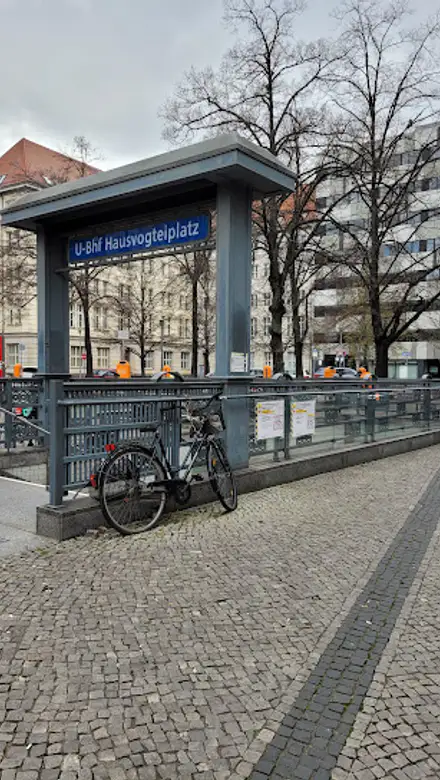
Hausvogteiplatz, Berlin Travel Guide
Free Guide: Discover Hausvogteiplatz in Berlin-Mitte, a square steeped in history as the former heart of Berlin's garment industry, now a place of remembrance and urban renewal.


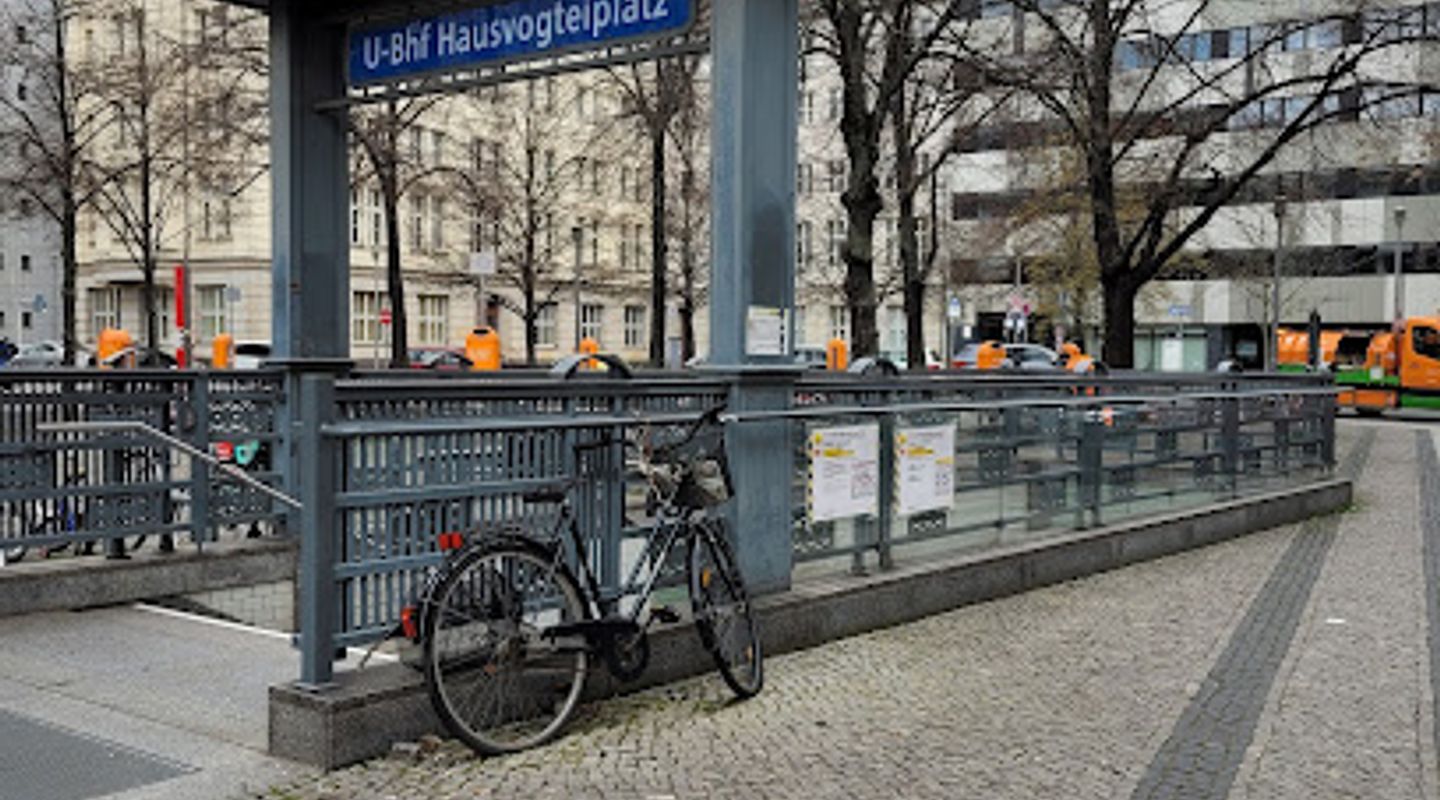
A brief summary of Hausvogteiplatz
Discover Hausvogteiplatz in Berlin-Mitte, a square steeped in history as the former heart of Berlin's garment industry, now a place of remembrance and urban renewal.
Hausvogteiplatz, a modestly sized, skewed triangular square in Berlin's Mitte district, holds a significant place in the city's history. Emerging from former fortifications, it rose to prominence in the 19th and early 20th centuries as the heart of Berlin's garment industry, the 'Berliner Konfektion.' Jewish entrepreneurs played a crucial role in establishing this ready-to-wear clothing hub, which adapted Parisian haute couture for mass production. The square suffered extensive damage during World War II, but remnants of its past, including the Haus zur Berolina, a historic commercial building, and a poignant memorial to Jewish garment workers, serve as reminders of its vibrant, and ultimately tragic, history. Today, Hausvogteiplatz offers a blend of historical reflection and modern urban life, making it a compelling, if understated, stop for those interested in Berlin's multifaceted past.
Opening hours
- Every dayOpen 24 hours
Opening hours as listed on the venue’s Google Business Profile. Hours can change for services and special events, so check with the venue before you go.
- Address
- 10117 Berlin
- Website
Getting there
Public Transport
Bus
Taxi/Ride-Share
Walking
Discover more about Hausvogteiplatz
Overview
Hausvogteiplatz, nestled in the heart of Berlin's Mitte district, is more than just a public square; it's a living testament to the city's dynamic past, a place where echoes of industry, innovation, and tragedy resonate. This unassuming, slightly skewed triangular space, situated at the intersection of Friedrichswerder and Friedrichstadt, occupies land that was once part of Berlin's formidable fortifications. While its physical presence might not immediately command attention, the stories woven into its fabric offer a compelling glimpse into Berlin's economic and social history. In the 19th and early 20th centuries, Hausvogteiplatz blossomed into the epicenter of Berlin's garment industry, known as the 'Berliner Konfektion'. This burgeoning industry revolutionized fashion, adapting the exclusive designs of Parisian haute couture for mass production. Jewish entrepreneurs, many of whom had immigrated to Berlin from Posen, played a pivotal role in establishing and expanding this ready-to-wear clothing hub. They created a system of 'Zwischenmeister' (subcontractors) and 'Heimarbeiterinnen' (home-seamstresses), employing thousands of women, often under harsh conditions, to produce affordable, stylish clothing for a wide clientele. Around 1860, approximately 20 clothing manufacturers were based around Hausvogteiplatz; a decade later, that number had doubled. By 1875, Berlin-made clothes were being exported to the Netherlands, the United Kingdom, Sweden, Switzerland, and the United States. The 'Konfektion' industry not only transformed the fashion landscape but also became a significant economic engine for Berlin, providing employment and driving trade. The success of Hausvogteiplatz as a fashion center was tragically cut short by the rise of Nazism. Beginning in 1933, Jewish business owners were systematically persecuted, forced to sell their companies and properties at drastically reduced prices or without any compensation. By 1939, the German fashion industry had been completely 'Aryanized,' purged of its Jewish members. Thousands of Jewish garment workers and entrepreneurs were deported and murdered during the Holocaust, their contributions erased from official memory. World War II inflicted further devastation on Hausvogteiplatz. Allied bombing raids in 1944 and 1945 caused widespread destruction, leaving much of the square and its surrounding buildings in ruins. The U-Bahn station was severely damaged, and the once-thriving center of the 'Konfektion' industry lay in tatters. Miraculously, a single linden tree survived the war and the harsh post-war winters, becoming a symbol of resilience amidst the destruction. In 2000, a memorial designed by Rainer Görss, the 'Denkzeichen Modezentrum Hausvogteiplatz' (Memorial to the Fashion Center Hausvogteiplatz), was erected to commemorate the Jewish garment workers and business owners who were persecuted during the Nazi era. The memorial consists of three double-sided mirrors arranged in a triangle. Inside the triangle, metal text plates provide information about the fate of the Jewish manufacturers, serving as a poignant reminder of their contributions and the injustices they suffered. The memorial is located near the entrance to the Hausvogteiplatz U-Bahn station, ensuring that visitors are confronted with this important aspect of the square's history. Today, Hausvogteiplatz is a blend of historical reflection and modern urban life. While the garment industry is long gone, the square remains a bustling transportation hub and a place of remembrance. The Haus zur Berolina, one of the few original buildings to survive the war, has been reconstructed and modernized, housing offices and commercial spaces. The square itself has been redesigned with green spaces and a fountain, providing a pleasant environment for pedestrians. Visiting Hausvogteiplatz offers a unique opportunity to connect with Berlin's past. The memorial serves as a powerful reminder of the human cost of intolerance and the importance of remembering the contributions of those who were persecuted. The surrounding architecture, both old and new, reflects the city's ongoing process of rebuilding and renewal. While Hausvogteiplatz may not be as grand or imposing as some of Berlin's other landmarks, its understated charm and rich history make it a worthwhile stop for those seeking a deeper understanding of the city's multifaceted past. Take a moment to reflect on the stories etched into the square's very foundation, and you'll gain a new appreciation for the resilience and complexity of Berlin.
Evendo Review Centre
 Google
Guest reviews
Explore Hausvogteiplatz on the map
A handpicked selection of must-see spots near Hausvogteiplatz, mapped for you.
Get your free copy of our complete guide to Hausvogteiplatz, delivered straight to you.
Everything on this page, from opening hours and how to get there to Eve’s tips and the best time to go, in one PDF you can read offline, print or share.
Already have an account? Sign in
Your Hausvogteiplatz guide is ready.
We'll send it to · Not you? Sign out

Getting your guide ready…
We are putting together a fresh copy of the Hausvogteiplatz guide. This can take up to a minute.
This can take a few moments. If your browser asks, choose Allow so the download can start. You'll find the guide in your Downloads folder.
Nothing happened? Download it again
Sorry, the guide is taking longer than usual. Please try again in a minute, or get it by email instead.
Other nearby places you may find interesting
The closest places of the same kind, if this one is not quite what you had in mind.
-
-
-
-
-


Swipe for more places
More to explore near Hausvogteiplatz

 Best experiences near Hausvogteiplatz
 Best hotels near Hausvogteiplatz
 Best landmarks near Hausvogteiplatz
 Best attractions near Hausvogteiplatz
 Best shops near Hausvogteiplatz
 Best restaurants near Hausvogteiplatz
 Best bars near Hausvogteiplatz
Do you manage this location?
Take control to get all the benefits, like improved information, better appearance, and stronger visibility across AI-powered discovery.
Explore more
Explore more of Mitte
Discover Mitte: Berlin's vibrant core, where history, culture, and modernity converge to create an unforgettable destination for every traveler.
Explore Mitte
Explore more of Berlin
Berlin: A fascinating blend of history, culture, and modernity, offering everything from historic landmarks to vibrant nightlife and culinary delights.
Explore Berlin