Background

Friedrichsbrücke: A Historic Crossing

A historic Berlin bridge connecting Museum Island with the mainland, offering stunning views and a glimpse into the city's rich past and vibrant present.

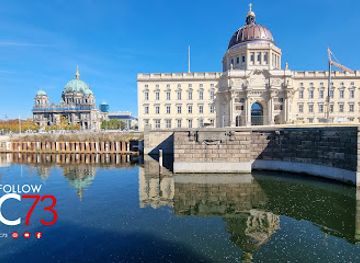
The Friedrichsbrücke, a bridge in Berlin's Mitte district, gracefully spans the Spree River, connecting Museum Island with the mainland. With a history dating back to 1703, it has undergone numerous transformations, reflecting Berlin's evolving architectural landscape. Today's structure, rebuilt in 2014, blends historical elements with modern engineering, offering pedestrians stunning views of the Berlin Cathedral, Museum Island, and the vibrant city life along the Spree. The bridge is more than just a crossing; it's a landmark that embodies Berlin's resilience and its commitment to preserving its rich heritage while embracing the future. Its location makes it a perfect spot for tourists exploring the city's cultural heart.

A brief summary to Friedrichsbrücke 1

  • Friedrichsbrücke 1, Berlin, Mitte, 10178, DE

Local tips

  • Visit during sunset for the most picturesque views of the Berlin Cathedral and Museum Island illuminated against the evening sky.
  • Combine your visit with a tour of Museum Island to explore world-renowned museums like the Pergamon Museum and Neues Museum.
  • Take a leisurely stroll along the Spree Riverbank after crossing the bridge to enjoy the vibrant atmosphere and discover hidden gems.
widget icon

Getting There

  • Public Transport

    From Alexanderplatz, take the U5 subway line towards Hauptbahnhof (Central Station). Get off at the 'Museumsinsel' station, which is directly adjacent to the Friedrichsbrücke. A single fare for zone AB is €3.80. Alternatively, from Hackescher Markt S-Bahn station, it's a short 5-minute walk to the bridge, following the signs towards Museum Island.

  • Walking

    If you are already on Museum Island, the Friedrichsbrücke is easily accessible on foot. From the Berlin Cathedral, walk west along the Spree River for about 5 minutes. The bridge will be directly in front of you, connecting Museum Island to the mainland. No costs involved.

  • Taxi/Ride-Share

    A taxi or ride-share from Brandenburg Gate to Friedrichsbrücke will typically cost between €12 and €18, depending on traffic. The journey usually takes around 10-15 minutes. Ask the driver to drop you off at the entrance of Museum Island near the bridge for easy access.

Unlock the Best of Friedrichsbrücke 1

Buy tickets

    No tickets available

Book tours with entry

    No tours available

Book tours without entry

    No tours available

Discover more about Friedrichsbrücke 1

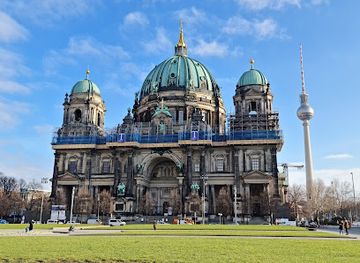
Friedrichsbrücke, or Frederick's Bridge, is a vital and picturesque bridge in Berlin, Germany, connecting the historic Museum Island with the mainland district of Mitte. Spanning the Spree River, this bridge is not merely a functional structure but a testament to Berlin's layered history and architectural evolution. The bridge's origins trace back to 1703 when it was first constructed as a wooden bridge known as the Große Pomeranzenbrücke (Great Pomeranian Bridge), named after the nearby Pomeranzenhaus, an orangery. This initial construction marked an important crossing point between Cölln and Berlin, two cities that later merged to form the core of modern Berlin. Over the centuries, the bridge has been rebuilt and redesigned multiple times, each iteration reflecting the prevailing architectural styles and the growing needs of the city. In 1769, King Frederick II, also known as Frederick the Great, commissioned a new vaulted brick bridge to replace the aging wooden structure. This bridge featured a flap in the middle to allow for the passage of ships, crucial for the city's growing trade and commerce. In 1792, it was renamed Friedrichsbrücke in honor of the Prussian king. As Berlin continued to expand in the 19th century, the Friedrichsbrücke underwent further transformations. In 1823, the brick arches and bridge flap were replaced with cast-iron Tudor arches to accommodate increasing traffic. However, the demands of a rapidly growing city soon outstripped this design, and between 1873 and 1875, the bridge was widened and redesigned as a six-span structure with stone pillars and cast-iron sheets. By the late 19th century, the bridge required another complete reconstruction to meet the needs of modern shipping. The rebuilt Friedrichsbrücke, completed in 1894, featured higher headroom and a wider span, essential for accommodating larger vessels navigating the Spree. Obelisks were added at both ends of the bridge, enhancing its aesthetic appeal and solidifying its status as a prominent landmark. During World War II, the Friedrichsbrücke suffered severe damage when it was blasted by the Wehrmacht in 1945. After the war, a temporary wooden bridge served as a makeshift crossing until a more permanent solution could be implemented. In 1981, a prestressed concrete frame bridge was constructed as a footbridge, spanning 56.5 meters without river piers. This functional but uninspired structure remained in place for several decades. In 2012, a comprehensive reconstruction project began to restore the Friedrichsbrücke to its historical width of 27 meters. Completed in 2014, the current bridge blends historical elements with modern engineering. The design incorporates natural stone cladding and parapets, harmonizing with the surrounding cityscape and the architectural ensemble of Museum Island. The renovated obelisks at each end of the bridge further emphasize its historical character. Today, the Friedrichsbrücke serves as a vital pedestrian and bicycle link, offering stunning views of the Spree River, the Berlin Cathedral, and the world-renowned museums of Museum Island. Its central location makes it an integral part of any tourist's exploration of Berlin's cultural heart. The bridge is not only a crossing point but also a place to pause and appreciate the beauty of the city. Walking across the Friedrichsbrücke, visitors can admire the intricate details of the bridge's design, the reflections of the surrounding buildings in the Spree, and the bustling activity along the riverbanks. The bridge provides easy access to Museum Island, a UNESCO World Heritage site home to five internationally acclaimed museums: the Altes Museum, the Neues Museum, the Alte Nationalgalerie, the Bode Museum, and the Pergamon Museum. These museums house an extraordinary collection of art and artifacts, spanning ancient civilizations to 19th-century European painting. The Friedrichsbrücke is also conveniently located near other major attractions, including the Berlin Cathedral, the Lustgarten, and the Humboldt Forum. The Berlin Cathedral, with its imposing dome and ornate interior, is one of the city's most iconic landmarks. The Lustgarten, a public park in front of the cathedral, provides a tranquil green space for relaxation and contemplation. The Humboldt Forum, a newly opened museum and cultural center, showcases art, culture, and history from around the world. In the evenings, the Friedrichsbrücke takes on a magical quality as it is illuminated by soft lighting, creating a romantic atmosphere. The bridge becomes a popular spot for couples and photographers, offering stunning views of the illuminated Berlin Cathedral and the reflections in the Spree. The Friedrichsbrücke stands as a symbol of Berlin's resilience, its ability to rebuild and reinvent itself while preserving its rich history. It is a testament to the city's commitment to culture, art, and architecture. Whether you are a history buff, an art lover, or simply a traveler seeking to experience the beauty of Berlin, the Friedrichsbrücke is a must-see destination.

Popular Experiences near Friedrichsbrücke 1

Popular Hotels near Friedrichsbrücke 1

Select Currency