Höhlenruine Riesenburg, Upper Palatinate Travel Guide
Explore the dramatic remnants of a collapsed karst cave in the heart of Franconian Switzerland, with stunning rock formations and panoramic valley views.
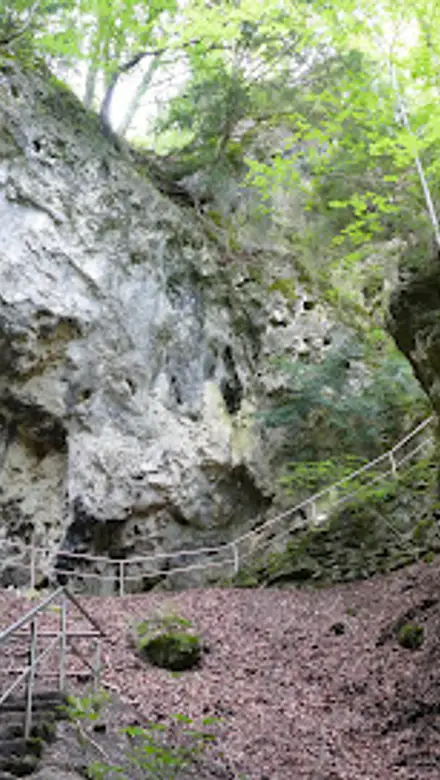
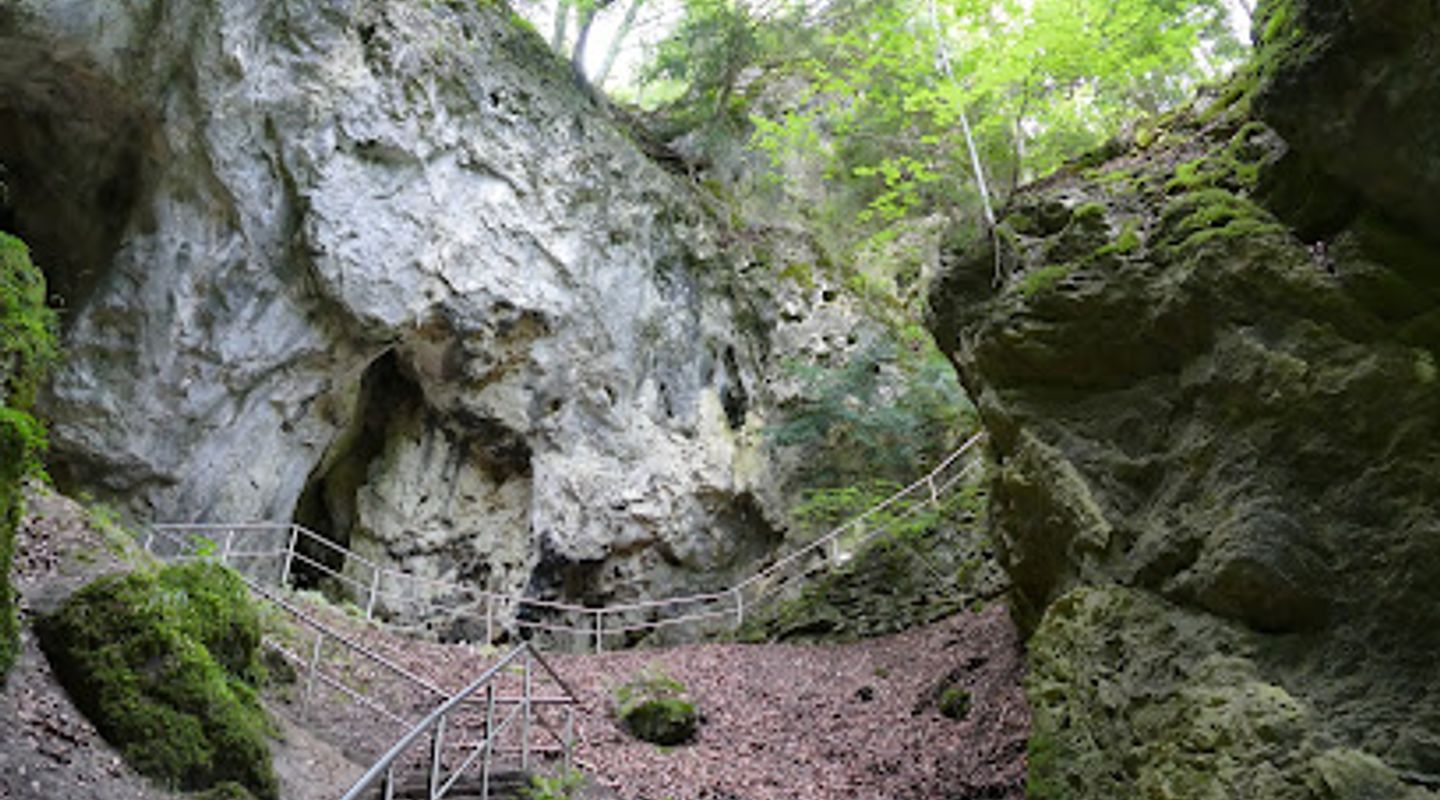
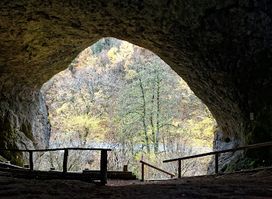
The Höhlenruine Riesenburg, or Giant's Castle Cave Ruins, is a captivating natural monument in the heart of Franconian Switzerland. This geological wonder is the remnant of a massive karst cave formed from Frankendolomite rock over millions of years. Water erosion gradually dissolved the stone, creating a vast underground chamber. Over time, parts of the cave ceiling collapsed, leaving behind impressive natural bridges, towering rock formations, and a unique landscape that beckons exploration. Today, visitors can wander through the ruins, marvel at the scale of the former cave, and enjoy panoramic views of the surrounding Wiesenttal valley. The site is easily accessible and offers a fascinating glimpse into the region's geological past, making it a worthwhile stop for nature lovers and history enthusiasts alike. It's a place where you can feel the power of nature and imagine the immense forces that shaped this extraordinary landscape.
A brief summary to Höhlenruine Riesenburg
- Forchheimer Str. 8, Wiesenttal, 91346, DE
- Click to display
- Click to display

Know before you go
Hi, I'm Eve. Here are a few practical things to know before exploring Höhlenruine Riesenburg.
- Wear sturdy shoes as the terrain can be uneven and rocky.
- Visit early in the morning or late afternoon to avoid crowds and enjoy the best lighting for photography.
- Combine your visit with a hike on one of the many trails in the surrounding Wiesenttal valley.
- Check the weather forecast before your visit, as the trails can be slippery when wet.
Do you manage this location?
Take control to get all the benefits, like improved information, better appearance, and stronger visibility across AI-powered discovery. Learn more about listing your business on Evendo
Activate your presenceOther nearby places you may find interesting
The closest places of the same kind, if this one is not quite what you had in mind.

Explore Höhlenruine Riesenburg on the Map
A handpicked selection of must-see spots near Höhlenruine Riesenburg, mapped for you.
Getting There
-
Driving
If driving, navigate to Wiesenttal. From the town center, follow signs for Forchheimer Straße (St2191) towards Doos. The Riesenburg is located just off this road. Look for the 'Wanderparkplatz Riesenburg' on the left side of the road, approximately 4.5 km from Behringersmühle. Parking is free at the Wanderparkplatz. From the parking area, follow the marked trail and steps up to the cave ruins.
-
Public Transport
To reach the Riesenburg by public transport, take a train to Forchheim (Bavaria). From Forchheim, take bus line 389 towards Ebermannstadt. Get off at the 'Wiesenttal, Forchheimer Str.' bus stop. From there, it is approximately a 20-minute walk (1.6 km) to the Riesenburg. Follow Forchheimer Straße (St2191) towards Doos. The Riesenburg will be on your left. Check the bus schedule in advance, as services may be limited, especially on weekends and holidays. A single bus fare from Forchheim to Wiesenttal costs approximately €4-€6.
-
Walking
If you are already in Wiesenttal, numerous hiking trails lead to the Riesenburg. Follow the signs towards Doos and look for the Riesenburg signs. The hike from Wiesenttal center to the Riesenburg is approximately 4 km and takes about 1-1.5 hours. Be sure to wear comfortable shoes and bring water.
Discover more about Höhlenruine Riesenburg













Your all‑in‑one travel companion app
Explore expert travel guides, compare and book tours, experiences, hotels, and more—all from the palm of your hand. Download now for seamless trip planning wherever your wanderlust takes you.


Explore More of Upper Palatinate
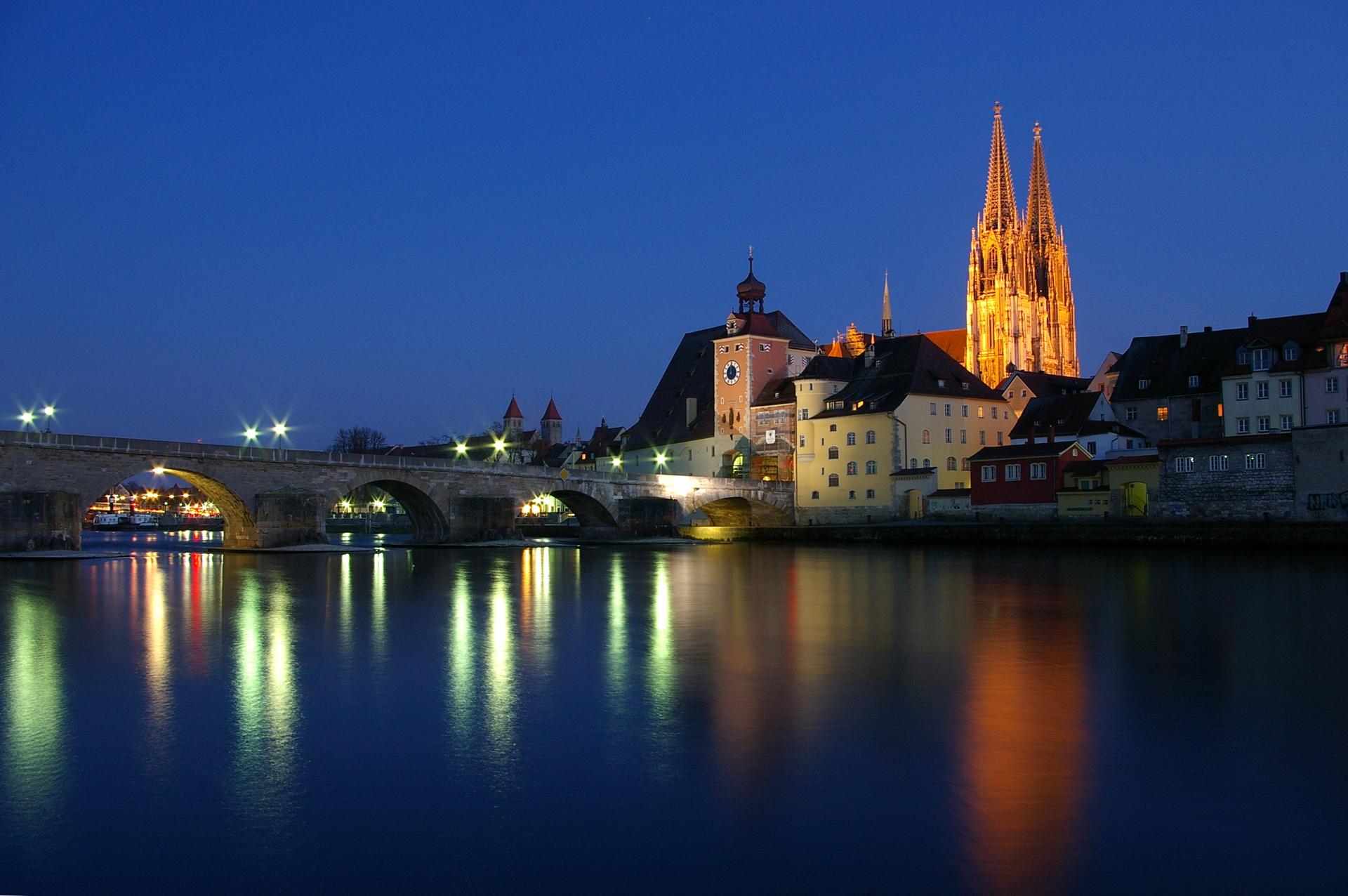
Looking beyond Höhlenruine Riesenburg? Discover Upper Palatinate for broader travel guides, local hot-spots, and regional highlights.
Explore Upper Palatinate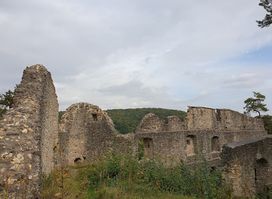
Explore the medieval Burgruine in Simmelsdorf, a historical landmark offering stunning views and a glimpse into Bavaria's rich past, surrounded by picturesque hiking trails.
Explore the enchanting Ludwigshöhle in Ahorntal - a perfect blend of history and nature with stunning hiking trails and geological wonders.