Wasserturm Travel Guide
Free Guide: Discover the Wasserturm, a medieval tower in Nuremberg's old town, offering a glimpse into the city's rich history and architectural heritage alongside the picturesque Pegnitz River.


A brief summary of Wasserturm
Discover the Wasserturm, a medieval tower in Nuremberg's old town, offering a glimpse into the city's rich history and architectural heritage alongside the picturesque Pegnitz River.
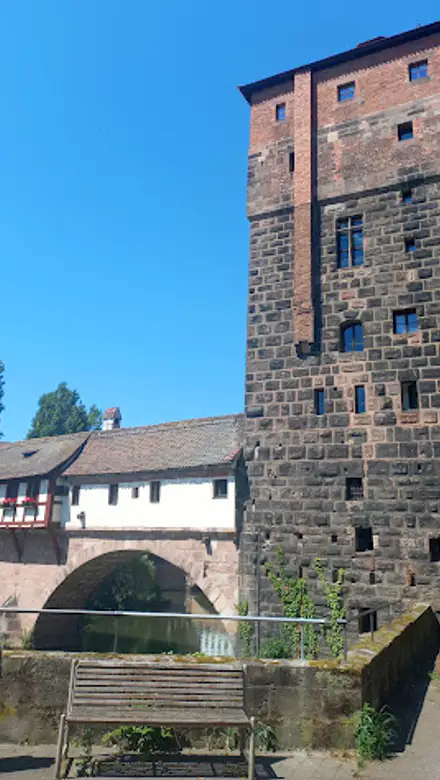
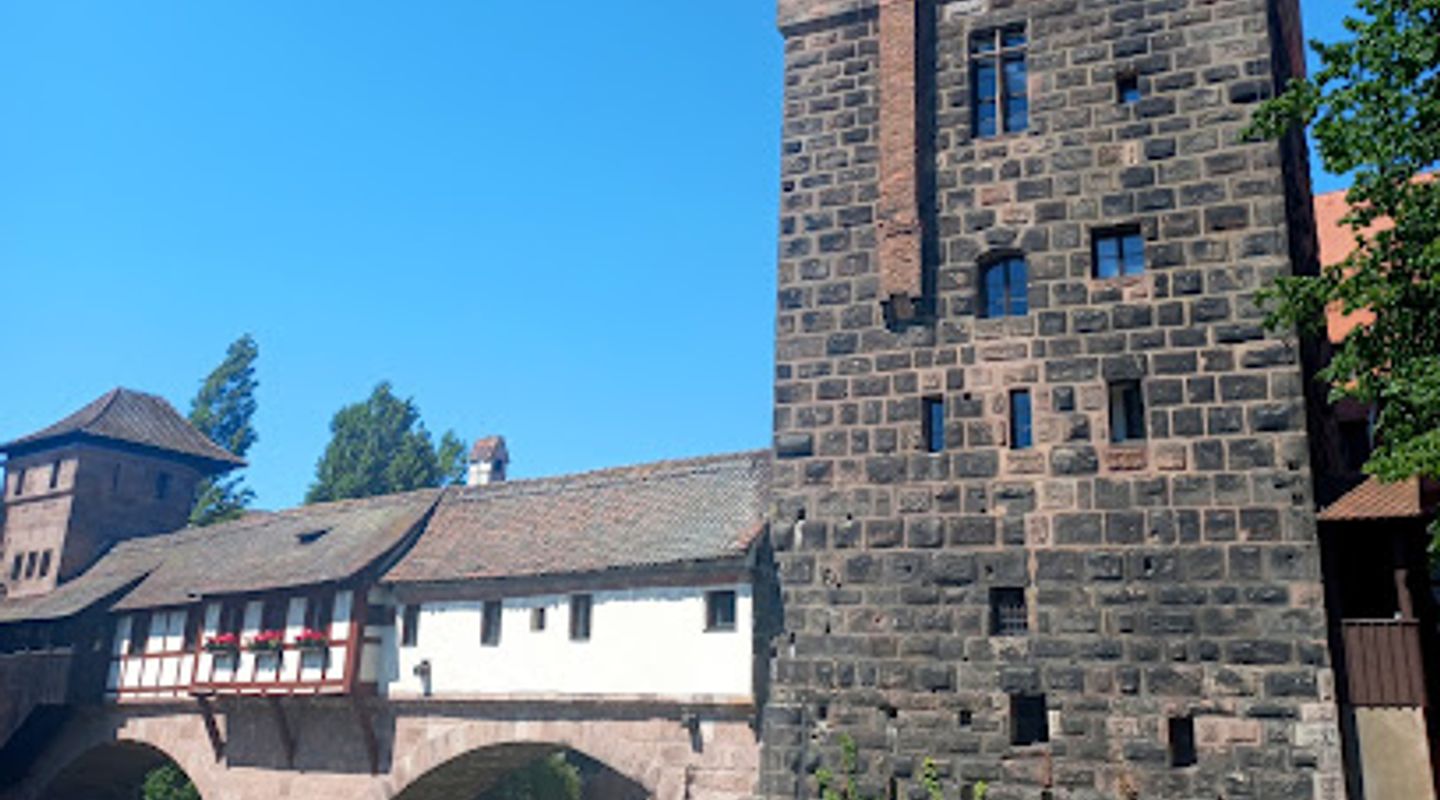
The Wasserturm, or Water Tower, is a striking medieval tower integrated into Nuremberg's historic city fortifications. Erected in the early 14th century, it initially protected the Pegnitz River's outflow. Over time, its function evolved, serving as a prison before becoming part of a student residence in conjunction with the Weinstadel. Today, it stands as a picturesque landmark, a testament to Nuremberg's rich history and architectural heritage. Its sturdy construction, featuring both ashlar blocks and brickwork, along with its charming integration into the riverside landscape, makes it a captivating sight for visitors exploring the city's old town.
Opening hours
- Mon–Sat12 pm–6 pm
- SunClosed
Opening hours as listed on the venue’s Google Business Profile. Hours can change for services and special events, so check with the venue before you go.
- Address
- 90403 Nuremberg
Getting there
Public Transport
Walking
Taxi/Ride-Share
Discover more about Wasserturm
Overview
The Wasserturm, a prominent feature of Nuremberg's skyline, is more than just a historical landmark; it's a tangible link to the city's medieval past. Constructed between 1320 and 1325, this robust tower was initially an integral part of Nuremberg's penultimate city wall, strategically positioned to safeguard the outflow of the Pegnitz River. Its location, nestled on the northern bank of the river and connected to the Weinstadel, highlights its importance in the city's defense system. The tower's architecture is a fascinating blend of functionality and medieval design. The lower levels are built with sturdy ashlar blocks, while the upper stories showcase brickwork, reflecting the construction techniques of the era. Equipped with embrasures and windows, the Wasserturm provided a vantage point for defenders and served as a deterrent to potential invaders. Its hipped roof adds a touch of elegance to its otherwise imposing structure. As Nuremberg's fortifications evolved with the construction of the final city wall around 1400, the Wasserturm gradually lost its primary defensive function. However, its strategic location and solid construction made it a valuable asset for other purposes. It was repurposed as a prison, holding those who had run afoul of the city's laws. This chapter in the tower's history adds a layer of intrigue to its already compelling story. In a twist of fate, plans in 1940 envisioned the demolition of the Wasserturm as part of a redevelopment project along the Pegnitz's northern bank. Fortunately, these plans never came to fruition, and the tower was spared. Instead, it found new life as part of a student residence, integrated with the neighboring Weinstadel. This adaptive reuse has ensured the preservation of the Wasserturm for future generations. Today, the Wasserturm stands as a picturesque element of Nuremberg's old town. Its image, often captured alongside the Weinstadel and the Henkersteg bridge, is a favorite postcard motif, symbolizing the city's unique charm. The tower's historical significance, combined with its architectural appeal, makes it a must-see attraction for visitors exploring Nuremberg's rich heritage. Walking along the Pegnitz River, one cannot help but be drawn to the Wasserturm's imposing presence. Its sturdy walls, weathered by time, tell tales of medieval defenses, prison cells, and the lives of countless individuals who have passed through its shadow. The Wasserturm is a reminder of Nuremberg's enduring spirit and its ability to adapt and thrive throughout the centuries. For those interested in delving deeper into the Wasserturm's history, the Stadtlexikon Nürnberg offers a wealth of information. This comprehensive encyclopedia provides detailed insights into the tower's construction, its various functions, and its place in Nuremberg's urban development. The Wasserturm is easily accessible to visitors exploring Nuremberg's old town. It is located near the Maxbrücke bridge and is a short walk from other notable landmarks such as the Weinstadel and the Henkersteg. Public transportation options are readily available, making it convenient to reach the tower from various parts of the city. While the Wasserturm itself is not open to the public, its exterior can be admired from the surrounding streets and bridges. The best views can be had from the Maxbrücke, which offers a panoramic perspective of the tower, the Weinstadel, and the Pegnitz River. The ensemble of these historical structures creates a captivating scene that embodies Nuremberg's unique character. The Wasserturm is more than just a historical artifact; it is a living part of Nuremberg's identity. Its presence on the city's skyline serves as a constant reminder of its rich past and its enduring spirit. Whether you are a history enthusiast, an architecture lover, or simply a traveler seeking to experience the essence of Nuremberg, the Wasserturm is sure to leave a lasting impression.
Evendo Review Centre
 Google
Guest reviews
Explore Wasserturm on the map
A handpicked selection of must-see spots near Wasserturm, mapped for you.
Get your free copy of our complete guide to Wasserturm, delivered straight to you.
Everything on this page, from opening hours and how to get there to Eve’s tips and the best time to go, in one PDF you can read offline, print or share.
Already have an account? Sign in
Your Wasserturm guide is ready.
We'll send it to · Not you? Sign out

Getting your guide ready…
We are putting together a fresh copy of the Wasserturm guide. This can take up to a minute.
This can take a few moments. If your browser asks, choose Allow so the download can start. You'll find the guide in your Downloads folder.
Nothing happened? Download it again
Sorry, the guide is taking longer than usual. Please try again in a minute, or get it by email instead.
Unlock the best of Wasserturm
Skip-the-line tickets, guided tours with entry, and walking tours of the area, booked in a few clicks.

Other nearby places you may find interesting
The closest places of the same kind, if this one is not quite what you had in mind.
-
-
-
-
-


Swipe for more places
More to explore near Wasserturm

 Best experiences near Wasserturm
 Best hotels near Wasserturm
 Best landmarks near Wasserturm
 Best attractions near Wasserturm
 Best shops near Wasserturm
 Best restaurants near Wasserturm
 Best bars near Wasserturm
Do you manage this location?
Take control to get all the benefits, like improved information, better appearance, and stronger visibility across AI-powered discovery.
Explore more

Explore more of Upper Palatinate
Discover Upper Palatinate: A Bavarian treasure trove of medieval charm, natural beauty, and vibrant cultural festivities.
Explore Upper Palatinate
Explore more of Germany
Experience Germany: where history meets innovation, and urban energy blends with natural beauty. Discover diverse cultures, delicious cuisine, and stunning landscapes.
Explore Germany