
Falkenhaus, Wurzburg Travel Guide
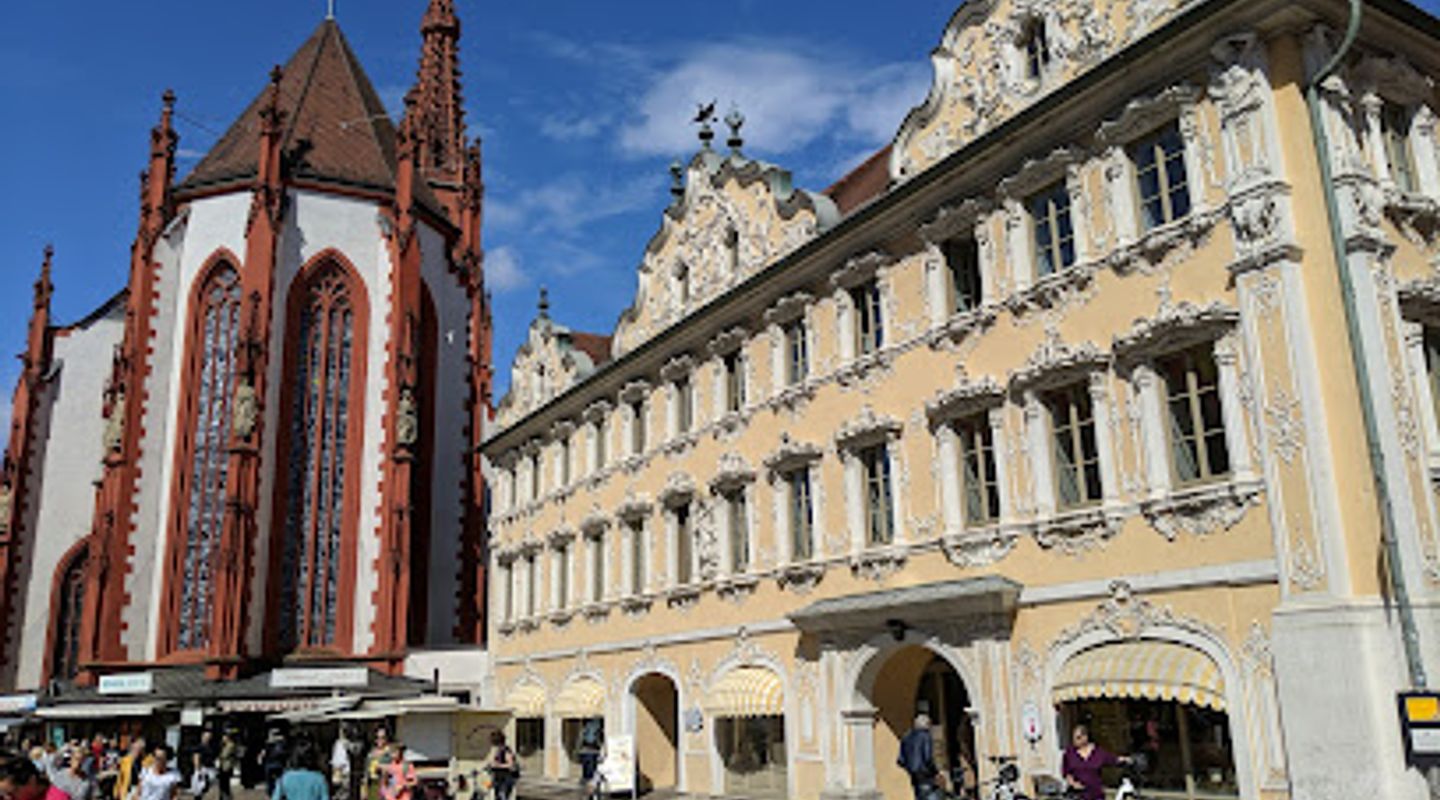
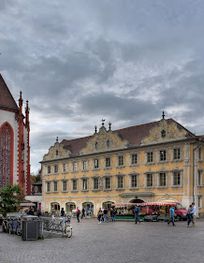
Discover the Falkenhaus in Würzburg, a stunning Rococo masterpiece on the Marktplatz, housing the Tourist Information Center and city library, reflecting the city's rich history and vibrant culture.
The Falkenhaus, gracing Würzburg's Marktplatz, is a historical landmark celebrated for its stunning Rococo facade. Originally a residence for cathedral priests in the 14th century, it transformed into the 'Zum Falken' inn in 1735. The building's current appearance, with its ornate stucco decorations and vibrant colors, dates back to 1751, commissioned by the innkeeper's widow. Severely damaged during World War II, the Falkenhaus was meticulously reconstructed in the 1950s using old photographs. Today, it houses the Tourist Information Center and the city library, making it a central hub for visitors and locals alike. Its location on the bustling Marktplatz, surrounded by other historical sites and shops, makes it a must-see destination for anyone exploring Würzburg's rich cultural heritage. The Falkenhaus stands as a testament to the city's resilience and architectural beauty, offering a glimpse into the opulence of the 18th century.
A brief summary to Falkenhaus
- Marktpl. 9, Würzburg, Altstadt, 97070, DE
- Click to display
- Click to display
- Monday 10 am-6 pm
- Tuesday 10 am-6 pm
- Wednesday 10 am-6 pm
- Thursday 10 am-6 pm
- Friday 10 am-6 pm
- Saturday 10 am-2 pm
- Sunday 10 am-2 pm

Know before you go
Hi, I'm Eve. Here are a few practical things to know before exploring Falkenhaus.
- Visit the Falkenhaus during the week to avoid larger crowds and enjoy a more relaxed experience of the architecture.
- Combine your visit with a stop at the adjacent Marienkapelle and explore the Marktplatz for local shops and cafes.
- Check out the Tourist Information Center inside the Falkenhaus for maps, event tickets, and valuable insights into Würzburg's attractions.
Do you manage this location?
Take control to get all the benefits, like improved information, better appearance, and stronger visibility across AI-powered discovery. Learn more about listing your business on Evendo
Activate your presenceOther nearby places you may find interesting
The closest places of the same kind, if this one is not quite what you had in mind.



Explore Falkenhaus on the Map
A handpicked selection of must-see spots near Falkenhaus, mapped for you.
Unlock the Best of Falkenhaus
Buy tickets
-
No tickets available
Book tours with entry


Getting There
-
Walking
The Falkenhaus is centrally located on the Marktplatz in Würzburg's Altstadt, making it easily accessible on foot from most central locations. From the Würzburg Hbf (main train station), walk south for approximately 1 km (0.6 miles) to reach the Marktplatz. As you approach the Marktplatz, look for the distinctive yellow Rococo facade of the Falkenhaus, situated next to the Marienkapelle. The walk is straightforward and passes many other historical sights. Alternatively, from the Alte Mainbrücke (Old Main Bridge), walk east towards the Marktplatz, passing the Marienkapelle; the Falkenhaus will be on your left.
-
Public Transport
Several tram and bus lines serve the Marktplatz area. Check the WVV (Würzburger Verkehrs- und Tarifverbund) website or app for the most up-to-date schedules and routes. Tram lines 1, 3, and 5 have stops near the Marktplatz (Domstraße or Rathaus). From these stops, it's a short walk to the Falkenhaus. A single ticket for a short trip (Kurzstrecke) costs approximately €2.00. You can purchase tickets from machines at the tram stops or via the FAIRTIQ app.
-
Taxi/Ride-Share
Taxis and ride-sharing services are readily available in Würzburg. A short taxi ride from the Würzburg Hbf to the Marktplatz will cost approximately €8-€12, depending on traffic. Simply ask to be dropped off at the Marktplatz near the Marienkapelle, and you'll easily spot the Falkenhaus.
-
Driving
If driving, be aware that parking in the immediate vicinity of the Marktplatz is limited. The Marktgarage, an underground parking garage directly beneath the Marktplatz, offers convenient parking. Access to the Marktgarage is via Karmelitenstraße or Martinstraße. Parking fees at the Marktgarage are approximately €2.50 per hour. Keep in mind that the Altstadt is a pedestrian zone, so driving directly to the Falkenhaus is not possible; you'll need to park and walk the final short distance.
Discover more about Falkenhaus













Your all‑in‑one travel companion app
Explore expert travel guides, compare and book tours, experiences, hotels, and more—all from the palm of your hand. Download now for seamless trip planning wherever your wanderlust takes you.


Explore More of Wurzburg
Looking beyond Falkenhaus? Discover Wurzburg for broader travel guides, local hot-spots, and regional highlights.
Explore Wurzburg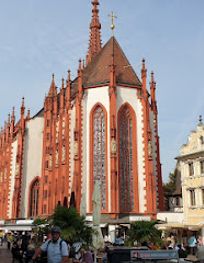
Discover the Brückenstatue Jungfrau Maria in Würzburg, a historical landmark offering breathtaking views and rich cultural significance along the beautiful Alte Mainbrücke.
Explore the architectural beauty and serene atmosphere of Maria Chapel, a historic Catholic church in the heart of Würzburg's Old Town.
