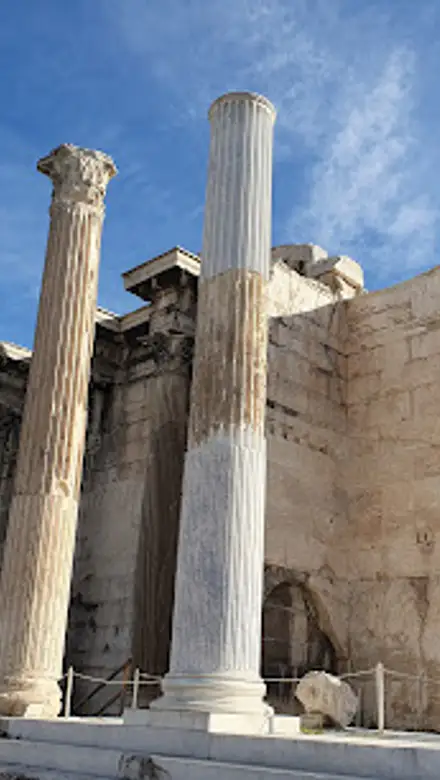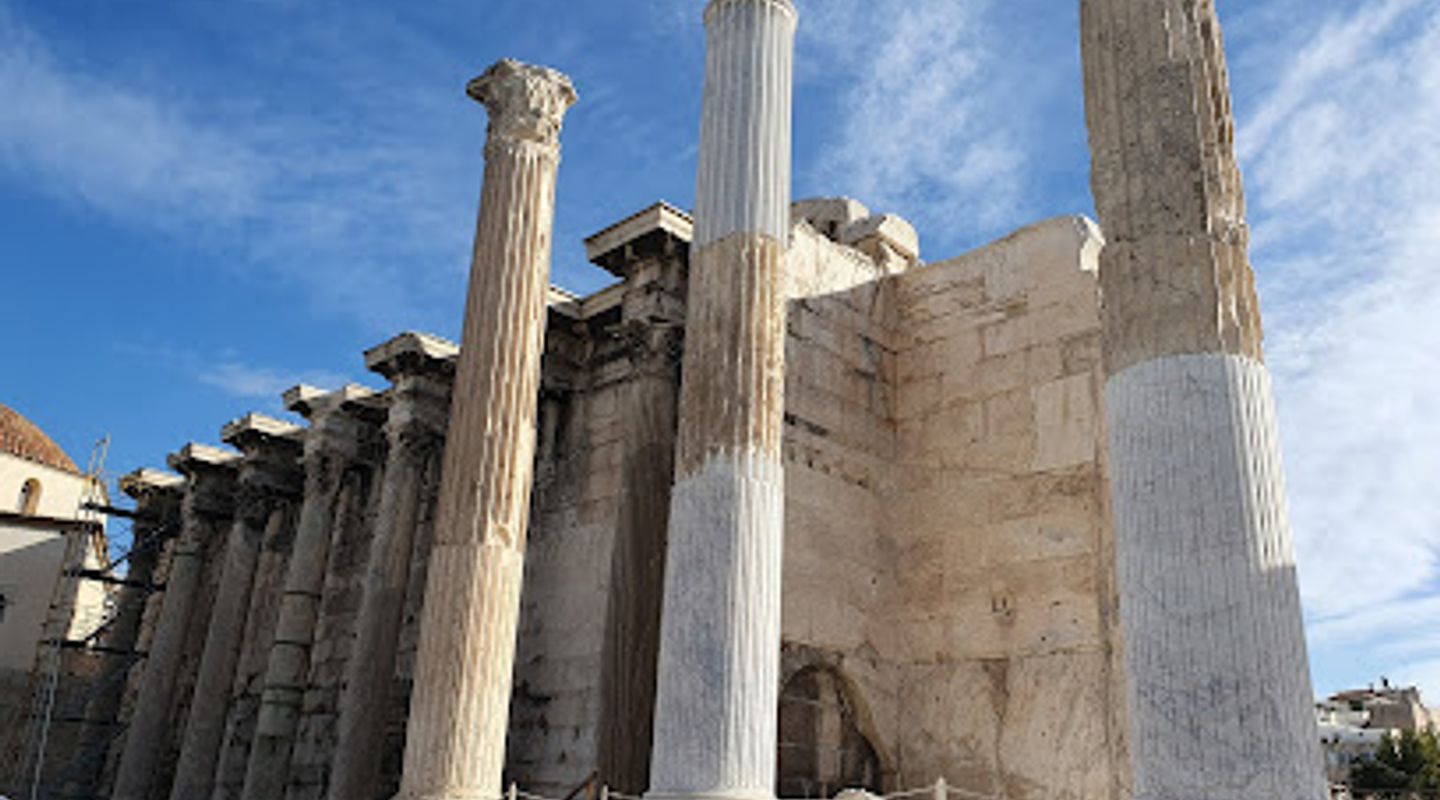
Hadrian's Library, Attica Travel Guide
Explore the ruins of Hadrian's Library in Athens, a testament to Roman Emperor Hadrian's vision for the city as a cultural hub.
Explore the ruins of Hadrian's Library, a grand structure built in 132 AD by Roman Emperor Hadrian as a cultural center for Athens. Once the city's largest library, it housed thousands of scrolls and served as a meeting place for intellectuals.
A brief summary to Hadrian's Library
- Κ, Areos 3, Τ, Athens, 105 55, GR
- Click to display
- Monday 8 am-8 pm
- Tuesday 8 am-8 pm
- Wednesday 8 am-8 pm
- Thursday 8 am-8 pm
- Friday 8 am-8 pm
- Saturday 8 am-8 pm
- Sunday 8 am-8 pm

Know before you go
Hi, I'm Eve. Here are a few practical things to know before exploring Hadrian's Library.
- Visit early in the morning or later in the afternoon to avoid crowds, especially during peak tourist season.
- Combine your visit with a trip to the nearby Ancient Agora and Roman Agora for a comprehensive historical experience.
- Take some time to research the history of the library beforehand to enhance your understanding and appreciation of the site.
- Wear comfortable shoes, as you'll be walking on uneven surfaces and exploring the ruins.
Do you manage this location?
Take control to get all the benefits, like improved information, better appearance, and stronger visibility across AI-powered discovery. Learn more about listing your business on Evendo
Activate your presenceOther nearby places you may find interesting
The closest places of the same kind, if this one is not quite what you had in mind.




Explore Hadrian's Library on the Map
A handpicked selection of must-see spots near Hadrian's Library, mapped for you.
Unlock the Best of Hadrian's Library
Book tours with entry


Getting There
-
Public Transport
Hadrian's Library is easily accessible via the Athens Metro. Take Line 1 (Green) or Line 3 (Blue) to Monastiraki Station. The library entrance is a short, 2-minute walk from the station, located on Areos Street, next to the Tzistarakis Mosque. A single metro ticket costs €1.20 and is valid for 90 minutes. Alternatively, a day ticket is available for €4.10.
-
Walking
If you are already in the city center, particularly near Monastiraki Square or the Roman Agora, Hadrian's Library is easily reachable on foot. The entrance is located on Areos Street, a few steps from Monastiraki Square. Walking from Syntagma Square will take approximately 15-20 minutes.
-
Taxi
Taxis are readily available throughout Athens. You can hail a taxi from the street or use a ride-hailing app like Uber or FreeNow. A short taxi ride from Syntagma Square to Hadrian's Library typically costs between €8 and €12. Keep in mind that there is a base fare of €1.80, and the rate per kilometer is €0.90 during the day and €1.25 at night. A pre-booking fee of €1.20 may apply when using ride-hailing apps.
Discover more about Hadrian's Library













Your all‑in‑one travel companion app
Explore expert travel guides, compare and book tours, experiences, hotels, and more—all from the palm of your hand. Download now for seamless trip planning wherever your wanderlust takes you.


Explore More of Attica

Looking beyond Hadrian's Library? Discover Attica for broader travel guides, local hot-spots, and regional highlights.
Explore Attica
Discover a serene sanctuary in Athens: Explore the Holy Church of the All-Great Taxiarchs and the Virgin Mary Gregorousa's rich history and artistry.
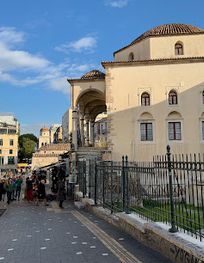
Explore the vibrant tapestry of modern Greek culture in the heart of Athens, from the 18th century to today, through captivating exhibits and historical buildings.