

Free Euboea Travel Guide & Mobile App
Explore Euboea with free travel guides. Discover regional history, expert tips, proposed trips, and audio guides on web or mobile app.


Explore Euboea for ancient cities, thermal springs, forested mountains, Aegean beaches and traditional villages close to mainland Greece.
Read more about Euboea
Getting to and around Euboea
How to get there
Transportation
Top city travel guides in Euboea
The cities of Euboea, and the easiest places to base yourself.

Swipe for more cities
Best attractions in Euboea
Euboea’s attractions range from ancient urban remains to long beaches, thermal waters and mountain landscapes. The archaeological site of Eretria reveals streets, houses, sanctuaries and a theatre from one of the island’s prominent ancient city-states, while Lefkandi offers a more remote and archaeologically significant glimpse of Early Iron Age Euboea. Chalkida provides urban waterfront life and access to the unusual currents of the Evripos Strait. In the north, Edipsos is associated with naturally heated springs, and the Lichadonisia islets offer a seasonal setting for boat trips from the Gulf of Evia. Mount Dirfis and the forests around Steni appeal to walkers, while Mount Ochi and the Dimosari Gorge give southern Euboea a more rugged character. Beaches vary from developed resorts to remote coves, with the eastern coast generally more exposed to open Aegean conditions. Monasteries, village churches, small museums and traditional settlements add cultural depth between the larger centres. The island is best experienced as a sequence of distinct areas rather than as a single resort destination.
-
Tourist attraction
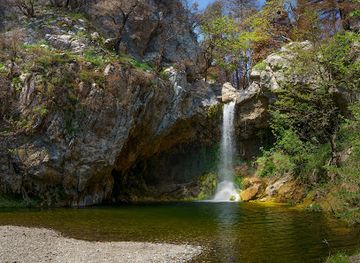
Drymonas Waterfalls
Discover the enchanting Drymonas Waterfalls, a stunning natural attraction in Greece offering breathtaking views and a serene escape into nature's beauty.
-
Tourist attraction
Chalkida's Seaside
Experience the stunning beauty and vibrant atmosphere of Chalkida's Seaside, a must-visit coastal destination in Greece.
-
Tourist attraction
Karababa Castle
Discover the enchanting Karababa Castle, a historical gem in Xirovrisi, where breathtaking views and rich heritage await every traveler.
-
Tourist attraction
Agios Dimitrios Παραλία - Φαράγγι Αγίου Δημητρίου
Experience the breathtaking beauty and serene ambiance of Agios Dimitrios Paralia, a hidden coastal gem in Greece that promises unforgettable moments.


Best landmarks in Euboea
The Evripos Strait and its bridges at Chalkida form Euboea’s most recognisable urban landmark, linking the island to mainland Greece at a narrow and historically strategic passage. Eretria’s ancient theatre, temple remains and urban excavations mark the site of a city that played a major role in the Archaic Greek world. At Lefkandi, the archaeological remains and finds from the Toumba area illuminate the Early Iron Age rather than the better-known classical period. In the south, Mount Ochi is a defining natural landmark, associated with the distinctive drystone structures known as drakospita, or dragon houses, whose purpose and date continue to be discussed by scholars. The old fortifications of Karystos and the Castello Rosso above the town evoke the island’s medieval and Venetian history. Northern Euboea is marked by dense wooded slopes, deep ravines and the thermal-water landscape of Edipsos, while the eastern coastline provides a contrasting sequence of exposed headlands and open Aegean horizons. Together these places express the island’s geographical and historical variety.
-
Tourist attraction
Drymonas Waterfalls
Discover Evia's hidden gem: Drymonas Waterfalls. Hike through lush forests to refreshing cascades and serene pools. A perfect nature escape.
-
Castle
Karababa Castle
Explore Karababa Castle: Ottoman-era fortress with Venetian design, offering panoramic views and historical insights near Chalkida.
-
Archaeological museum
Archaeological Museum of Eretria
Discover Eretria's ancient past through fascinating artifacts at the Archaeological Museum, showcasing finds from the Bronze Age to Roman times.
-
Historical landmark
The Bull of Oreos
Marvel at the ancient Bull of Oreos, a stunning marble sculpture that embodies the rich history and artistic heritage of Euboea, Greece.


Explore Euboea on the map
Plan your trip on one map. See where the top cities, national parks and sights are, and book hotels and experiences in a few clicks.
Best hotels in Euboea
Best restaurants in Euboea
Euboean cooking reflects the island’s combination of farming, fishing, mountain pasture and coastal trade. Tavernas serve grilled fish, octopus, small fried fish, seasonal vegetables, pulses and salads dressed with local olive oil, while inland menus often include goat, lamb and pork prepared with herbs. Local cheeses, honey, olives and preserved products are common in village shops and family-run restaurants, and northern Euboea is known for forest and agricultural produce shaped by its greener landscape. Around Chalkida and the larger coastal towns, cafés and seafood restaurants provide a wider range of contemporary Greek dishes, whereas mountain villages tend to favour slower meals built around meat, cheese, greens and wood-fired bread. In Edipsos, Eretria and other resort areas, dining is geared towards visitors but still includes regional specialities. Farmers’ markets and small producers are useful for discovering honey, olive products, fruit, herbs and wine from Euboea and nearby Central Greece.
-
Greek
Taverna Kissos
Experience authentic Greek flavors at Taverna Kissos in Steni Dirfyos - where tradition meets taste.
-
Restaurant
Zefiros - Cafe | Restaurant | Events
Discover Zefiros in Nea Artaki – where delicious Greek cuisine meets stunning seaside views.
-
Restaurant
Taverna Platanos
Experience authentic Greek flavors at Taverna Platanos in Steni Dirfyos—where every meal is a celebration of local culinary traditions.
-
Greek
Remétzo
Experience authentic Greek cuisine at Remétzo in Eretria - where tradition meets modern culinary excellence.


Best bars in Euboea
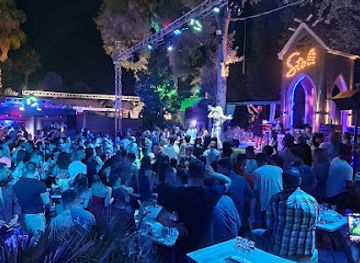
Evening life in Euboea is concentrated in Chalkida, coastal resorts and university-influenced parts of the larger towns, while rural districts generally favour tavernas, cafés and traditional village squares. Chalkida has the island’s broadest choice of waterfront cafés, bars and late-opening venues, with activity focused around the city rather than a single formal nightlife quarter. Eretria, Karystos, Edipsos and other seaside towns become busier in summer, when restaurants, beach bars and music venues extend their hours, although the atmosphere remains seasonal. In mountain villages, evenings are quieter and often centre on family tavernas, local festivals or cafés serving coffee and drinks. Visitors should not expect a continuous nightclub scene across the island; distances, winding roads and limited late transport make it sensible to stay near the area where an evening is planned. Breweries, wine selections and regional spirits may appear on modern menus, but nightlife is not dependent on drinking.
-
Bar
Balthazar
Experience the vibrant atmosphere and exquisite Mediterranean cuisine at Balthazar, a top bar and restaurant in Athens, Greece.
-
Bar
BALUSE seascape all day bar
Discover relaxation at BALUSE Seascape All Day Bar in Aliveri, where stunning ocean views and delightful drinks create unforgettable memories.
-
Bar
Xenia food cocktail cafe
Discover the vibrant charm and culinary delights of Xenia Food Cocktail Cafe in Chalkida, where every meal is a celebration of flavors and atmosphere.
-
Restaurant
Riviera restobar
Experience a perfect blend of culinary delights and seaside views at Riviera Restobar in Eretria, where every meal is a celebration of flavor.


Best nightclubs in Euboea
Evening life in Euboea is concentrated in Chalkida, coastal resorts and university-influenced parts of the larger towns, while rural districts generally favour tavernas, cafés and traditional village squares. Chalkida has the island’s broadest choice of waterfront cafés, bars and late-opening venues, with activity focused around the city rather than a single formal nightlife quarter. Eretria, Karystos, Edipsos and other seaside towns become busier in summer, when restaurants, beach bars and music venues extend their hours, although the atmosphere remains seasonal. In mountain villages, evenings are quieter and often centre on family tavernas, local festivals or cafés serving coffee and drinks. Visitors should not expect a continuous nightclub scene across the island; distances, winding roads and limited late transport make it sensible to stay near the area where an evening is planned. Breweries, wine selections and regional spirits may appear on modern menus, but nightlife is not dependent on drinking.
-
Disco club
D-side Club
Experience the electrifying nightlife at D-side Club in Nea Chalkidona, where music, dance, and fun come alive until dawn.
-
Disco club
Πεταλούδα Summer Club
Discover the vibrant nightlife at Πεταλούδα Summer Club in Karystos, where music, dance, and summer magic come alive under the stars.
-
Night club
Atlantis Club Oropos
Discover the electrifying nightlife at Atlantis Club Oropos, a premier destination for dance lovers in the heart of Greece.
-
Night club
Gaz Summer Style Club
Dive into the vibrant nightlife of Chalcis at Gaz Summer Style Club, where Greek and international music create an unforgettable party experience.



Best shops in Euboea
Shopping in Euboea is strongest in market towns and coastal settlements rather than in large dedicated retail districts. Chalkida has the widest selection of everyday shops, bakeries, food stores and independent businesses, while Eretria, Karystos, Edipsos and other resorts combine practical retail with seasonal boutiques and souvenir shops. Look for locally produced honey, olive oil, olives, cheeses, dried herbs, preserves and wine, particularly in village shops and food markets. Southern Euboea has long associations with marble and stone working, and small craft outlets may sell locally made objects, although quality and provenance vary. Pottery, woven goods, religious items and handmade soaps are also found in areas frequented by visitors. Farmers’ markets and weekly town markets are more useful for regional produce than for formal souvenirs, but their days differ by locality and should be checked locally. In smaller villages, shops may close during the hottest part of the day or outside the summer season, so plan food purchases before heading to remote beaches or mountain areas.
-
Outlet mall
Designer Outlet Athens
Discover unbeatable deals at Designer Outlet Athens, where luxury meets affordability in a delightful shopping experience.
-
Confectionery store
Gardenia
Discover the sweet side of Amarynthos at Gardenia, a delightful confectionery store and ice cream shop offering irresistible treats for every palate.
-
Coffee shop
Platanenhof
Discover the charm of Platanenhof, a delightful coffee shop in Androniani, serving quality brews in a picturesque setting.
-
Resort hotel
Evia Silence
Experience ultimate relaxation at Evia Silence, a resort hotel offering vegetarian cuisine and yoga retreats amidst the beautiful Porto Bufallo coast.


Get your free copy of our complete guide to Euboea, delivered straight to you.
Everything on this page, from attractions and restaurants to essentials and local phrases, in one PDF you can read offline, print or share.
Already have an account? Sign in
Your Euboea guide is ready.
We'll send it to · Not you? Sign out

Getting your guide ready…
We are putting together a fresh copy of the Euboea guide. This can take up to a minute.
This can take a few moments. If your browser asks, choose Allow so the download can start. You'll find the guide in your Downloads folder.
Nothing happened? Download it again
Sorry, the guide is taking longer than usual. Please try again in a minute, or get it by email instead.
Euboea essentials
Currency and Payment
Safety
Emergency Situations
Do's and Don'ts
Local Tips
From Eve
Local phrases worth knowing
You don't need to get them perfect. A few words go a long way, and locals appreciate the effort.
Basics
| English | Local | Say it |
|---|---|---|
| Hello | Γειά σου | [Yia sou] |
| Goodbye | Αντίο | [Adío] |
| Yes | Ναι | [Ne] |
| No | Όχι | [Óchi] |
| Please/You're welcome | Παρακαλώ | [Parakaló] |
| Thank you | Ευχαριστώ | [Efcharistó] |
| Excuse me/Sorry | Συγγνώμη | [Signómi] |
| How are you? | Τι κάνεις; | [Ti káneis?] |
| Fine. And you? | Καλά. Εσύ; | [Kalá. Esý?] |
| Do you speak English? | Μιλάς αγγλικά; | [Milás angliká?] |
| I don't understand | Δεν καταλαβαίνω | [Den katalavéno] |
Eating & Drinking
| English | Local | Say it |
|---|---|---|
| I'd like to see the menu, please | Θα ήθελα να δω το μενού, παρακαλώ | [Tha íthela na do to menou, parakaló] |
| I don't eat meat | Δεν τρώω κρέας | [Den tróo kréas] |
| Cheers! | Στην υγειά μας! | [Stin ygiá mas!] |
| I would like to pay, please | Θα ήθελα να πληρώσω, παρακαλώ | [Tha íthela na pliróso, parakaló] |
Emergencies
| English | Local | Say it |
|---|---|---|
| Help! | Βοήθεια! | [Voítheia!] |
| Go away! | Φύγε! | [Fýge!] |
| Call the Police! | Καλέστε την αστυνομία! | [Kaléste tin astynomía!] |
| Call a doctor! | Καλέστε έναν γιατρό! | [Kaléste énan giatró!] |
| I'm lost | Έχω χαθεί | [Écho chatheí] |
| I'm ill | Είμαι άρρωστος | [Eímai árrhostos] |
Shopping
| English | Local | Say it |
|---|---|---|
| I'd like to buy... | Θα ήθελα να αγοράσω... | [Tha íthela na agoráso...] |
| I'm just looking | Απλά κοιτάω | [Ap lá kitáo] |
| How much is it? | Πόσο κοστίζει; | [Póso kostízei?] |
| That's too expensive | Είναι πολύ ακριβό | [Eínai polý akrivó] |
| Can you lower the price? | Μπορείς να μειώσεις την τιμή; | [Borís na meiṓseis tin timí?] |
Time & Numbers
| English | Local | Say it |
|---|---|---|
| What time is it? | Τι ώρα είναι; | [Ti óra eínai?] |
| It's one o'clock | Είναι μία η ώρα | [Eínai mía i óra] |
| Half past (10) | Δέκα και μισή | [Déka kai misí] |
| Morning | Πρωί | [Proí] |
| Afternoon | Απόγευμα | [Apógevma] |
| Evening | Βράδυ | [Vrády] |
| Yesterday | Χθες | [Chthes] |
| Today | Σήμερα | [Símera] |
| Tomorrow | Αύριο | [Ávrio] |
| 1 | 1 | [1] |
| 2 | 2 | [2] |
| 3 | 3 | [3] |
| 4 | 4 | [4] |
| 5 | 5 | [5] |
| 6 | 6 | [6] |
| 7 | 7 | [7] |
| 8 | 8 | [8] |
| 9 | 9 | [9] |
| 10 | 10 | [10] |
Transport & Directions
| English | Local | Say it |
|---|---|---|
| Where's a/the...? | Πού είναι ένα/το...; | [Poú eínai éna/to...?] |
| What's the address? | Ποια είναι η διεύθυνση; | [Poia eínai i diéfthynsi?] |
| Can you show me (on the map)? | Μπορείς να μου δείξεις (στο χάρτη); | [Borís na mou deíxeis (sto chártis)?] |
| When's the next (bus)? | Πότε είναι το επόμενο (λεωφορείο); | [Póte eínai to epómeno (leoforeío)?] |
| A ticket (to ....) | Ένα εισιτήριο (για ...) | [Éna eisitírio (gia ...)] |
History of Euboea
Prehistoric Euboea and Lefkandi
Euboea was inhabited long before the classical city-states, and the settlement of Lefkandi near the central part of the island is one of its most important archaeological sites. Excavations revealed a substantial Early Iron Age community and the Toumba building, associated with an elite burial and dating to the tenth century BC. The finds demonstrate that Aegean societies remained organised and connected during a period once described as a cultural decline. Lefkandi’s pottery, metalwork and imported objects also point to maritime links with the eastern Mediterranean, a pattern that would remain central to Euboea’s later history.
Chalcis and Eretria in the Archaic Greek World
The city-states of Chalcis and Eretria became major powers in ancient Euboea. Their rivalry was connected to the Lelantine War, traditionally regarded as one of the earliest conflicts between Greek poleis, while both cities established colonies and trading connections across the Aegean and beyond. Eretria’s sanctuary, theatre, houses and public buildings show the scale of its urban life, and Chalcis benefited from its position beside the Euripus Strait. Euboean sailors, craftsmen and merchants contributed to the wider expansion of Greek culture during the Archaic period.
Classical, Macedonian and Roman Euboea
During the classical period, Euboea became entangled in the rivalries of Athens, Sparta and Macedonia. Chalcis was especially important to Athenian control of the region because the island lay close to the mainland and commanded routes through the Euboean Gulf. Macedonian influence followed the rise of Philip II and Alexander’s successors, before Rome established authority in Greece. Under Roman rule, the island remained agriculturally productive and strategically placed, while Eretria gradually lost the political importance it had possessed in earlier centuries.
Byzantine and Venetian Negroponte
After the division of the Roman Empire, Euboea formed part of the Byzantine world, with Christian communities, fortified settlements and monasteries shaping the landscape. Following the Fourth Crusade in 1204, the island became known in western sources as Negroponte and was divided among Latin rulers. Venetian influence grew, particularly in Chalcis, whose fortifications guarded the narrow Euripus passage. The medieval remains found around the island reflect a period of competition between Byzantine, Latin and later Venetian powers in the eastern Mediterranean.
Ottoman Rule and the Ottoman-Venetian Wars
The Ottomans captured Chalcis in 1470 after a major siege, bringing Euboea into the Ottoman Empire. The island’s strategic position meant that it remained involved in later conflicts between Ottoman and Venetian forces, especially around the fortified approaches to the Euripus. Administration, settlement and trade changed under Ottoman rule, while Christian communities, monasteries and local agricultural economies continued in different forms. The period left architectural and historical traces that are visible in fortifications, religious buildings and older settlements.
Integration into the Modern Greek State
Euboea became part of the expanding Greek state during the early nineteenth century, following the War of Independence and the diplomatic settlements that established modern Greece. Chalkida developed as the island’s administrative and commercial centre, while coastal shipping and agriculture linked Euboea to mainland markets. Roads, bridges and later motor transport reduced the island’s physical isolation, although its mountainous east and south retained a more dispersed settlement pattern than the central urban areas.
Mining, Industry and Contemporary Transformation
Modern Euboea has supported a range of extractive and industrial activities, including lignite mining around Aliveri, marble and stone working in the south, and magnesite mining in northern areas. These industries brought employment and infrastructure but also altered particular landscapes. Tourism expanded around beaches, thermal springs and mountain villages, while agriculture, fishing and small-scale food production remained important. The extensive wildfires that affected parts of Euboea in 2021 highlighted the island’s vulnerability to drought, heat and changing land-use pressures, as well as the importance of forest restoration and resilient rural communities.
Euboea in Photos
Browse through our photo collection highlighting the charm and character of the destination.
Neighbouring regions of Euboea
The closest regions to Euboea, if you have time for more than one.
-

-
-

-

-


Swipe for more regions
Explore more
Explore more of Greece
Discover Greece: A land where ancient history meets modern vibrancy, offering stunning islands, crystal-clear seas, and unforgettable cultural experiences.
Explore Greece