

Free Central Greece Travel Guide & Mobile App
Explore Central Greece with free travel guides. Discover regional history, expert tips, proposed trips, and audio guides on web or mobile app.


Central Greece combines Delphi, mountain villages, Byzantine heritage, Euboean coastlines and island traditions across a varied mainland region.
Read more about Central Greece
When is the best time to visit Central Greece?
Best: May, September–October · 23–29°C| Month | High (°C) | Rainfall (mm) |
|---|---|---|
| January | 12 | 52 |
| February | 13 | 49 |
| March | 16 | 46 |
| April | 21 | 40 |
| May (best) | 26 | 35 |
| June | 31 | 28 |
| July | 34 | 20 |
| August | 34 | 18 |
| September (best) | 29 | 27 |
| October (best) | 23 | 40 |
| November | 17 | 45 |
| December | 13 | 52 |
Getting to and around Central Greece
How to get there
Transportation
Top city travel guides in Central Greece
The cities of Central Greece, and the easiest places to base yourself.
-

-

-
-

-

-


Swipe for more cities
Destinations in Central Greece
Resorts, valleys and scenic spots worth a trip of their own.
-

-

-

-


Swipe for more destinations
Best attractions in Central Greece
Central Greece offers an unusually broad mixture of archaeological, cultural and outdoor attractions. Delphi is the defining historic site of Phocis, with its sanctuary, museum and mountain setting, while Boeotia provides the Archaeological Museum of Thebes, the ancient remains of Orchomenus and the battlefield landscape of Chaeronea. The Monastery of Hosios Loukas, near Distomo, is a major Byzantine monument with celebrated mosaics. Around Thermopylae, museums and monuments explain the Persian Wars and the changing geography of the pass. Mount Parnassus and the surrounding villages support walking, winter sports and scenic drives, while Evrytania is known for forested mountains, rivers and outdoor activities around Karpenisi. Euboea adds thermal resorts, fishing ports, beaches, wooded northern landscapes and archaeological sites at Eretria and Chalkis. Skyros offers beaches, hill-country walks and a strong island craft tradition. The attraction landscape is therefore dispersed: visitors should combine a few major sites with smaller museums, monasteries, villages and natural areas rather than treat the region as a single urban circuit.
-
Beach
Koukounaries Beach
Experience the golden sands and crystal-clear waters of Koukounaries Beach, a natural paradise on the island of Skiathos.
-
Monastery
Holy Monastery Mega Spileon
Discover the beauty of Holy Monastery Mega Spileon in Kalavryta, a captivating spiritual retreat offering breathtaking views and rich history.
-
Beach
Paralia Milopotamos
Discover the iconic Paralia Milopotamos in Pelion: turquoise waters, stunning rock formations, and unforgettable Aegean beauty.
-
Tourist attraction
Lalaria beach
Discover the breathtaking beauty of Lalaria Beach in Skiathos, with its unique white pebbles, turquoise waters, and stunning rock formations.


Best landmarks in Central Greece
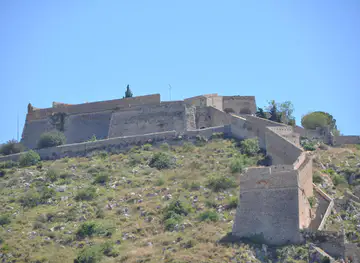
Delphi's Temple of Apollo, theatre and polygonal retaining wall form Central Greece's most recognisable historic ensemble, set beneath the cliffs of Mount Parnassus. The stone Monastery of Hosios Loukas in Boeotia is an outstanding Byzantine landmark, distinguished by its domes, marble decoration and medieval mosaics. The Lion of Chaeronea, a monumental funerary sculpture near the site of the 338 BC battle, remains one of Boeotia's most memorable ancient markers. Thermopylae's modern monuments and museum recall the strategic pass made famous by the battle of 480 BC, even though the coastline has shifted since antiquity. In Euboea, the Evripos Strait and Chalkida's waterfront express the island's geographical identity, while the Karababa Fortress stands above the channel as a reminder of the area's military importance. Southern Euboea's Castello Rosso near Karystos, ancient Eretria's theatre and acropolis, and the forested ridges of Evrytania provide further landmarks in which architecture, history and landscape are closely connected.
-
Historical landmark
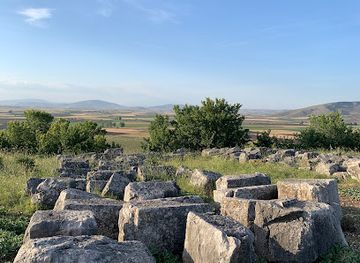
Hellenistic Acropolis of Proerna
Discover the enchanting Hellenistic Acropolis of Proerna in Neo Monastiri, a historical landmark steeped in ancient Greek history and breathtaking views.
Explore Central Greece on the map
Plan your trip on one map. See where the top cities, national parks and sights are, and book hotels and experiences in a few clicks.
Best hotels in Central Greece
Best restaurants in Central Greece
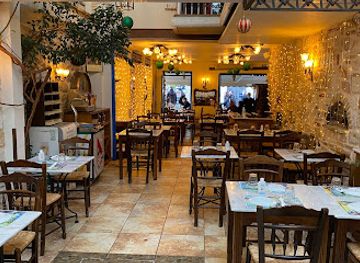
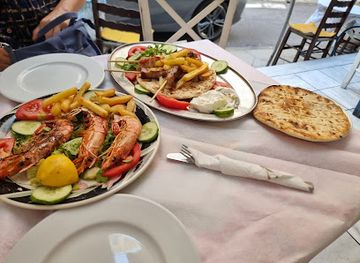
Dining in Central Greece follows the geography of the region. Mountain villages in Evrytania, Phocis and Parnassus serve rustic pies, beans, seasonal greens, grilled meats and local cheeses, often alongside bread, olives and preserves. Euboea's coastal towns and fishing villages focus on simply cooked fish, shellfish and meze, while inland producers contribute olives, honey, wine, figs and other fruit. The island is particularly associated with figs from the Kymi area, although availability is seasonal. Around Delphi and Arachova, tavernas cater to visitors while retaining the wider mainland tradition of grilled meats, cheeses and baked dishes. Small cafés and bakeries are useful for coffee, pastries and regional pies, and village markets provide a practical way to find local produce. Dining hours can be flexible outside the main towns, and establishments in remote areas may have a shorter seasonal schedule than those in the larger coastal centres.
-
Greek
Efcharis restaurant
Discover the authentic taste of Greece at Efcharis Restaurant in Athens - where tradition meets flavor in every dish.
-
Greek
Aspro Alogo (i.e. White Horse) Traditional Greek Food
Experience the essence of Greece with authentic flavors at Aspro Alogo, a traditional restaurant that delights every palate.
-
Greek
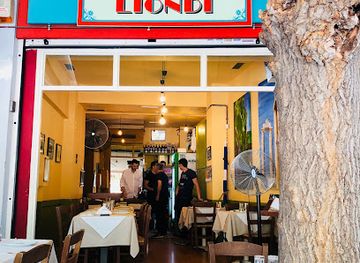
LIONDI Traditional Greek Restaurant
Discover authentic Greek flavors at LIONDI Traditional Greek Restaurant in Athens – where every dish tells a story.
-
Greek
MIRONI Greek Restaurant
Discover MIRONI Greek Restaurant in Athens for an authentic taste of Greece with traditional dishes and warm hospitality.

Best bars in Central Greece
Evening life in Central Greece is generally centred on cafés, tavernas and traditional bars rather than a continuous nightclub scene. Chalkida has the region's broadest urban choice, with waterfront cafés, restaurants and bars that become particularly active in warmer months. Livadeia, Lamia and Thebes also provide ordinary town nightlife, while Delphi and Arachova combine restaurants with bars serving visitors and local residents, with Arachova especially busy during the winter mountain season. In Evrytania, evening entertainment tends to focus on cosy cafés, tavernas and small bars in Karpenisi and nearby villages. Euboean coastal resorts may become livelier in summer, but quieter settlements close earlier and Skyros has a more intimate island atmosphere. Local wines, beer, spirits and coffee are widely available; drinking is not necessary to participate in the region's evening culture.
-
Bar
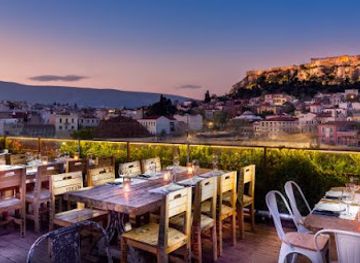
Couleur Locale
Discover the vibrant atmosphere of Couleur Locale, a bar and bistro in Athens offering stunning views of the Acropolis and delicious Mediterranean cuisine.
-
Bar
360 Cocktail Bar
Discover the vibrant nightlife of Athens at 360 Cocktail Bar, featuring panoramic views and exquisite cocktails in a chic rooftop setting.
-
Cocktail bar
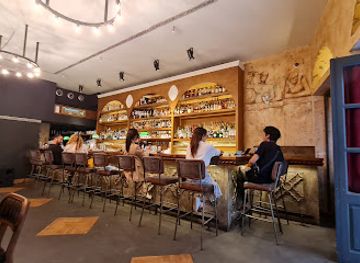
Upupa Epops
Discover the vibrant atmosphere and innovative cocktails at Upupa Epops, a premier cocktail bar in Athens, where every sip tells a story.
-
Bar
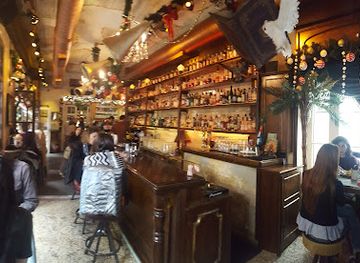
The Clumsies
Experience the vibrant cocktail culture of Athens at The Clumsies, where innovative drinks and a lively atmosphere await.

Best nightclubs in Central Greece
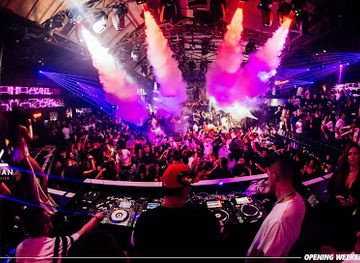
Evening life in Central Greece is generally centred on cafés, tavernas and traditional bars rather than a continuous nightclub scene. Chalkida has the region's broadest urban choice, with waterfront cafés, restaurants and bars that become particularly active in warmer months. Livadeia, Lamia and Thebes also provide ordinary town nightlife, while Delphi and Arachova combine restaurants with bars serving visitors and local residents, with Arachova especially busy during the winter mountain season. In Evrytania, evening entertainment tends to focus on cosy cafés, tavernas and small bars in Karpenisi and nearby villages. Euboean coastal resorts may become livelier in summer, but quieter settlements close earlier and Skyros has a more intimate island atmosphere. Local wines, beer, spirits and coffee are widely available; drinking is not necessary to participate in the region's evening culture.
-
Night club
EKEI
Experience the vibrant nightlife of Athens at EKEI, where eclectic music and a diverse crowd create unforgettable nights of fun and excitement.
-
Night club
Lohan Athens Nightclub
Discover the vibrant nightlife of Athens at Lohan Nightclub, a luxurious and energetic venue perfect for dancing and live music.
-
Night club
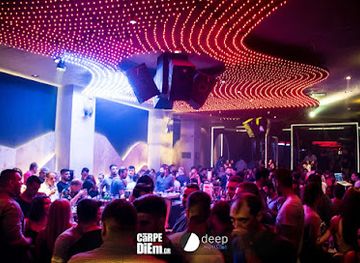
Deep Club
Experience the pulse of Heraklion at Deep Club, where unforgettable nights come alive with vibrant music and a lively atmosphere.
-
Disco club
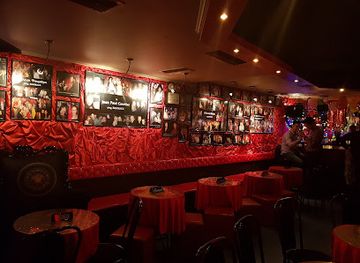
Koukles Club Drag Queen Show
Experience the electrifying performances and vibrant atmosphere at Koukles Club Drag Queen Show in Athens, a must-visit destination for nightlife lovers.

Best shops in Central Greece
Shopping in Central Greece is strongest in market towns, island settlements and villages rather than in large specialist retail districts. Chalkida offers the broadest urban selection, including everyday shops, food stores, cafés and independent businesses, while Lamia, Thebes, Livadeia and Karpenisi serve as practical regional centres. In Delphi and Arachova, visitors will find woven goods, leather items, carved objects, local foods and souvenirs, but should distinguish genuinely local products from generic Greek gifts. Euboea is a good place to look for olive oil, honey, wine, dried figs, herbs and other farm produce, particularly through small food shops and seasonal markets. Skyros is known for distinctive crafts, including carved wooden furniture, ceramics, textiles and decorative objects. Bakeries, delicatessens and village producers are often more rewarding for edible purchases than formal souvenir shops; check transport and customs rules before carrying agricultural products across borders.
-
Gift shop
The Mall Athens
Discover The Mall Athens, a vibrant shopping destination with diverse stores, delicious dining, and family-friendly entertainment for an unforgettable experience.
-
Outlet mall
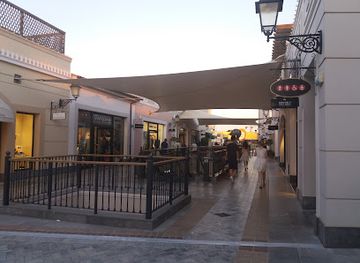
Designer Outlet Athens
Discover unbeatable deals and a diverse shopping experience at Designer Outlet Athens, your ultimate destination for fashion and lifestyle needs.
-
Vintage clothing store
Kilo-Shop
Explore Kilo-Shop in Athens for unique vintage clothing and sustainable fashion that captures the essence of style and history.
-
Store
Papanikolaou, K., & Co. E.E. "Store Center Plaka"
Explore the vibrant Store Center Plaka for unique Greek souvenirs, local crafts, and delightful gifts in the heart of Athens.


Get your free copy of our complete guide to Central Greece, delivered straight to you.
Everything on this page, from attractions and restaurants to essentials and local phrases, in one PDF you can read offline, print or share.
Already have an account? Sign in
Your Central Greece guide is ready.
We'll send it to · Not you? Sign out

Getting your guide ready…
We are putting together a fresh copy of the Central Greece guide. This can take up to a minute.
This can take a few moments. If your browser asks, choose Allow so the download can start. You'll find the guide in your Downloads folder.
Nothing happened? Download it again
Sorry, the guide is taking longer than usual. Please try again in a minute, or get it by email instead.
Central Greece essentials
Currency and Payment
Safety
Emergency Situations
Do's and Don'ts
Local Tips
From Eve
Local phrases worth knowing
You don't need to get them perfect. A few words go a long way, and locals appreciate the effort.
Basics
| English | Local | Say it |
|---|---|---|
| Hello | Γειά σου | [Yia sou] |
| Goodbye | Αντίο | [Antio] |
| Yes | Ναι | [Ne] |
| No | Όχι | [Ochi] |
| Please/You're welcome | Παρακαλώ | [Parakalo] |
| Thank you | Ευχαριστώ | [Efharisto] |
| Excuse me/Sorry | Συγγνώμη | [Signomi] |
| How are you? | Πώς είσαι; | [Pos ise?] |
| Fine. And you? | Καλά. Εσύ; | [Kala. Esi?] |
| Do you speak English? | Μιλάς αγγλικά; | [Milas agglika?] |
| I don't understand | Δεν καταλαβαίνω | [Den katalavaino] |
Eating & Drinking
| English | Local | Say it |
|---|---|---|
| I'd like to see the menu, please | Θα ήθελα να δω το μενού, παρακαλώ | [Tha ithela na do to menu, parakalo] |
| I don't eat meat | Δεν τρώω κρέας | [Den troo kreas] |
| Cheers! | Στην υγειά μας! | [Stin ygeia mas!] |
| I would like to pay, please | Θα ήθελα να πληρώσω, παρακαλώ | [Tha ithela na plirosso, parakalo] |
Emergencies
| English | Local | Say it |
|---|---|---|
| Help! | Βοήθεια! | [Voitheia!] |
| Go away! | Φύγε! | [Fyge!] |
| Call the Police! | Καλέστε την αστυνομία! | [Kaleste tin astynomia!] |
| Call a doctor! | Καλέστε έναν γιατρό! | [Kaleste enan giatro!] |
| I'm lost | Έχω χαθεί | [Echo chathei] |
| I'm ill | Είμαι άρρωστος/η | [Ime arrostos/i] |
Shopping
| English | Local | Say it |
|---|---|---|
| I'd like to buy... | Θα ήθελα να αγοράσω... | [Tha ithela na agoraso...] |
| I'm just looking | Απλώς κοιτάω | [Aplos kitao] |
| How much is it? | Πόσο κοστίζει; | [Poso kostizei?] |
| That's too expensive | Είναι πολύ ακριβό | [Ine poli akrivo] |
| Can you lower the price? | Μπορείς να ρίξεις την τιμή; | [Boreis na rixis tin timi?] |
Time & Numbers
| English | Local | Say it |
|---|---|---|
| What time is it? | Τι ώρα είναι; | [Ti ora ine?] |
| It's one o'clock | Είναι μία η ώρα | [Ine mia i ora] |
| Half past (10) | Δέκα και μισή | [Deka kai misi] |
| Morning | Πρωί | [Proi] |
| Afternoon | Απόγευμα | [Apogevma] |
| Evening | Βράδυ | [Vrady] |
| Yesterday | Χθες | [Chthes] |
| Today | Σήμερα | [Simera] |
| Tomorrow | Αύριο | [Avrio] |
| 1 | 1 | [1] |
| 2 | 2 | [2] |
| 3 | 3 | [3] |
| 4 | 4 | [4] |
| 5 | 5 | [5] |
| 6 | 6 | [6] |
| 7 | 7 | [7] |
| 8 | 8 | [8] |
| 9 | 9 | [9] |
| 10 | 10 | [10] |
Transport & Directions
| English | Local | Say it |
|---|---|---|
| Where's a/the...? | Πού είναι ένα/το...; | [Pou ine ena/to...?] |
| What's the address? | Ποια είναι η διεύθυνση; | [Poia ine i diefthynsi?] |
| Can you show me (on the map)? | Μπορείς να μου δείξεις (στο χάρτη); | [Boreis na mou deixeis (sto charti)?] |
| When's the next (bus)? | Πότε είναι το επόμενο (λεωφορείο); | [Pote ine to epomeno (leoforio)?] |
| A ticket (to ....) | Μία εισιτήριο (για ....) | [Mia eisitirio (gia ....)] |
History of Central Greece
Early Settlements and Bronze Age Boeotia
Central Greece has been inhabited since prehistoric times, with fertile plains and defensible hills supporting settled communities. In Boeotia, Thebes became a major centre during the Bronze Age and appears in the traditions surrounding the Mycenaean world. Archaeological remains at Thebes, Orchomenus and other sites show the development of palatial, religious and agricultural communities before the political landscape of classical Greece emerged. The region's myths, including those associated with Oedipus, Cadmus and Hercules, also preserve the enduring cultural importance of Boeotia, even though myth and archaeological history are not interchangeable.
Classical States and the Sanctuary of Delphi
During the classical period, Boeotia was shaped by the power of Thebes and the Boeotian League, while Phocis controlled the approaches to the sanctuary of Apollo at Delphi. Delphi attracted pilgrims and envoys from across the Greek world, and its oracle played a significant religious and political role. The Sacred Way, treasuries, temple precinct and theatre visible today reflect centuries of patronage and competition among Greek communities. Central Greece was also repeatedly drawn into wider conflicts, including the Persian Wars and the struggles between Athens, Sparta and Thebes.
Thermopylae and the Persian Wars
The narrow passage at Thermopylae, near present-day Lamia, became famous for the battle fought there in 480 BC. A force led by the Spartan king Leonidas resisted the invading Persian army before the position was outflanked. The battle was part of a wider campaign rather than an isolated event, and the landscape has changed considerably because of sediment deposited along the Malian Gulf. Nevertheless, Thermopylae remains an important historical place, with monuments and a visitor centre interpreting the conflict and its later cultural memory.
Roman Rule and the Transformation of Delphi
Central Greece became part of the Roman sphere after the Roman conquest of the Greek mainland in the second century BC. Delphi continued to function as a religious centre under Roman rule, although its political influence gradually diminished. Roman roads, settlements and administrative structures connected the region more closely with the wider eastern Mediterranean. At the same time, urban centres such as Thebes and Chalkis remained significant within changing imperial networks. The later spread of Christianity altered the role of older sanctuaries, and many ancient building materials were reused in subsequent construction.
Byzantine Monastic and Urban Heritage
After the division of the Roman world, Central Greece formed part of the Byzantine Empire and acquired a strong Christian architectural legacy. The Monastery of Hosios Loukas in Boeotia, founded in the tenth century, is the region's most celebrated Byzantine monument, known for its mosaics, domed churches and monastery complex. Euboea and the mainland also contained fortified settlements and churches linked to agricultural communities and maritime routes. Byzantine influence remained visible even after political authority in the area fragmented during the medieval period.
Frankish, Venetian and Ottoman Rule
Following the Fourth Crusade in 1204, Central Greece was divided among Latin and Greek powers, including the lordship of Athens, the marquisate of Bodonitsa and Venetian interests in Euboea. Chalkida, known in the medieval period as Negroponte, was a strategic port on the Euripus Strait. Ottoman rule was established progressively during the fifteenth century and lasted for several centuries, although Venetian control returned briefly in parts of Euboea. Fortresses, church traditions and settlement patterns across the region reflect this succession of political authorities.
War of Independence and the Modern Region
Central Greece was a major theatre during the Greek War of Independence, which began in 1821. Battles and local resistance took place around Phthiotis, Boeotia, Phocis and Euboea, while the gradual formation of the modern Greek state reshaped administration and transport. In the nineteenth and twentieth centuries, agriculture, mining, shipping, tourism and manufacturing developed unevenly across the region. Contemporary Central Greece combines historic towns and rural communities with industrial areas near major transport corridors, mountain tourism around Parnassus and Evrytania, and coastal and island economies.
Central Greece in Photos
Browse through our photo collection highlighting the charm and character of the destination.
Neighbouring regions of Central Greece
The closest regions to Central Greece, if you have time for more than one.
-
-
-

-

-


Swipe for more regions
Explore more
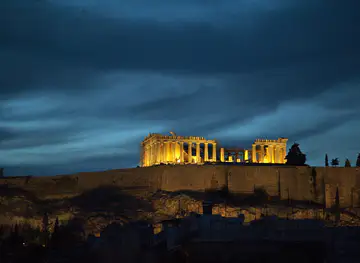
Explore more of Greece
Discover Greece: A land where ancient history meets modern vibrancy, offering stunning islands, crystal-clear seas, and unforgettable cultural experiences.
Explore Greece