

Free Saint Patrick Travel Guide & Mobile App
Explore Saint Patrick with free travel guides. Discover regional history, expert tips, proposed trips, and audio guides on web or mobile app.


Explore Saint Patrick in Grenada for Atlantic beaches, Levera’s wetlands, Kalinago history, rural villages and wide views towards the Grenadines.
Read more about Saint Patrick
When is the best time to visit Saint Patrick?
Best: February–April · 29–30°C| Month | High (°C) | Rainfall (mm) |
|---|---|---|
| January | 29 | 100 |
| February (best) | 29 | 75 |
| March (best) | 29 | 75 |
| April (best) | 30 | 75 |
| May | 30 | 100 |
| June | 31 | 150 |
| July | 31 | 175 |
| August | 31 | 200 |
| September | 31 | 150 |
| October | 30 | 150 |
| November | 30 | 150 |
| December | 30 | 100 |
Getting to and around Saint Patrick
How to get there
Transportation
Top city travel guides in Saint Patrick
The cities of Saint Patrick, and the easiest places to base yourself.

Swipe for more cities
Destinations in Saint Patrick
Resorts, valleys and scenic spots worth a trip of their own.

Swipe for more destinations
Best attractions in Saint Patrick
Saint Patrick’s attractions are spread between the Atlantic coast, rural hills and the small centre of Sauteurs. Levera National Park combines coastal scenery, woodland and the Levera Pond wetland, with views towards the Grenadines and a beach known for seasonal sea-turtle nesting. Bathway Beach offers a broad strand and open-ocean atmosphere, although its surf means that swimming conditions require judgement. In Sauteurs, Carib’s Leap provides an important historical viewpoint connected with Kalinago resistance and Grenada’s Indigenous past. Inland roads lead through agricultural districts such as Mount Rich, where the landscape is shaped by small farms, tropical vegetation and steep valleys. Visitors interested in natural history can look for coastal and wetland birdlife, while those seeking a quieter cultural experience can explore village churches, local shops and the working landscape rather than a concentration of formal museums. The parish suits visitors who enjoy combining scenery, history and rural travel at an unhurried pace.
-
Tourist attraction
Belmont Estate
Explore Belmont Estate in Grenada: A historic plantation offering cocoa tours, lush gardens, and authentic Grenadian culture and cuisine.
-
Bar
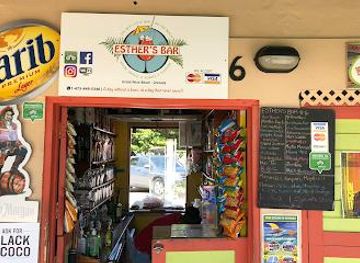
Esther's Bar
Experience the vibrant flavors and lively atmosphere of Esther's Bar, a beachfront treasure on Grand Anse Beach, Grenada.
-
Stadium
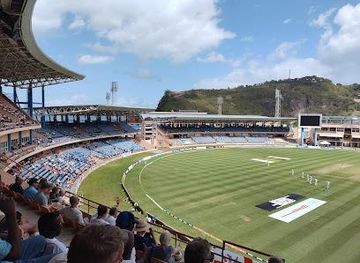
Grenada National Cricket Stadium
Experience the thrill of cricket and Grenadian culture at the Grenada National Cricket Stadium in St. George's. A must-visit for sports enthusiasts!
-
Historical landmark
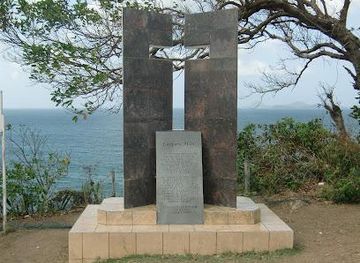
Leapers Hill
Discover Leapers Hill in Sauteurs, Grenada: a historic landmark offering panoramic views and a poignant reflection on the island's past.

Best landmarks in Saint Patrick
Carib’s Leap at Sauteurs is Saint Patrick’s most resonant historical landmark, traditionally associated with the 1651 Kalinago refusal to submit to French colonial forces. Its significance lies in the memory of Indigenous resistance as much as in the elevated coastal view. Levera National Park is a geographical landmark of northern Grenada, where open Atlantic water, wetland, forest and beach meet in a relatively undeveloped setting. Bathway Beach is another defining feature, recognised by its long curve of sand and exposed northern-coast surf. The parish’s churches and village buildings provide more intimate markers of settlement, reflecting Grenada’s Catholic, Anglican and post-colonial history. Across the interior, steep green hills, agricultural plots and winding roads form a cultural landscape rather than a single monumental site. Together these places express Saint Patrick’s identity through Indigenous memory, coastline, rural settlement and the continuing relationship between communities and the land.
-
Island
Grenada
Discover Grenada: Spice Island charm, lush rainforests, pristine beaches, and vibrant culture await in this Caribbean paradise.
-
Tourist attraction
Belmont Estate
Discover Grenada's heritage at Belmont Estate: a 300-year-old plantation offering cocoa tours, a museum, local cuisine, and lush gardens.
-
Fortress
Fort George
Explore Fort George in Grenada: a historic fortress with panoramic views, offering a glimpse into the island's colonial past.
-
Historical landmark
Fort Frederick
Explore Grenada's history at Fort Frederick: panoramic views, unique architecture, and a fascinating glimpse into the island's colonial past.
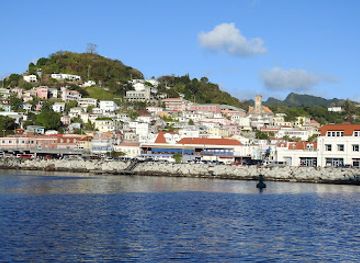
Explore Saint Patrick on the map
Plan your trip on one map. See where the top cities, national parks and sights are, and book hotels and experiences in a few clicks.
Best hotels in Saint Patrick
Best restaurants in Saint Patrick
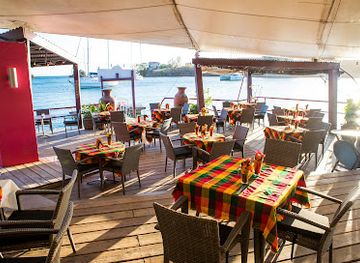
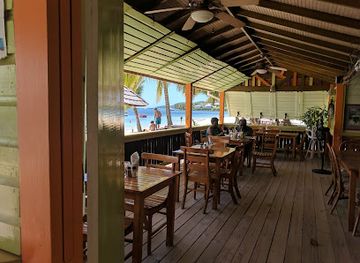
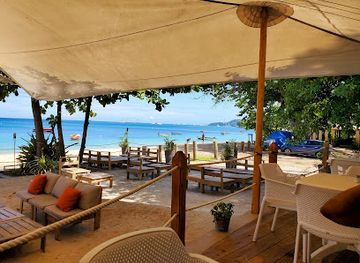
Dining in Saint Patrick is informal and closely connected to local communities, with small restaurants, village takeaways, cafés and rum shops providing much of the everyday choice. Menus may include oil down, Grenada’s national one-pot dish of breadfruit, salted meat or fish, coconut milk and vegetables, alongside grilled fish, chicken, rice, provisions and seasonal produce. The parish’s agricultural setting makes nutmeg, cocoa, bananas, plantain, mangoes and root vegetables familiar parts of local cooking, while fresh fish reflects the northern coast’s maritime economy. Sauteurs is the most practical place to look for a range of simple meals, although options outside the main settlements can be limited and hours may vary. Visitors should distinguish local home-style cooking from resort dining found elsewhere in Grenada; Saint Patrick’s food culture is better understood through modest portions, fresh ingredients and relaxed community settings than through a dense restaurant scene.
-
Caribbean
Dodgy Dock Restaurant Grenada
Experience the fusion of Caribbean and Mexican flavors at Dodgy Dock Restaurant in Grenada's stunning True Blue area.
-
Restaurant
Coconut Beach Restaurant & Bar
Experience authentic Caribbean flavors at Coconut Beach Restaurant & Bar on Grand Anse Beach in Grenada.
-
Restaurant
61° West Restaurant + Beach bar
Experience exquisite dining at 61° West Restaurant + Beach Bar on Grand Anse Beach – where every meal is paired with stunning ocean views.
-
Restaurant
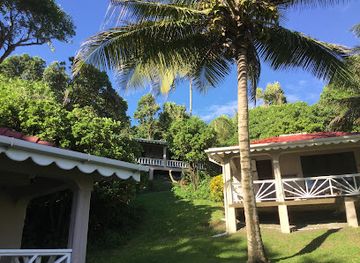
Petite Anse Hotel & Restaurant
Experience the perfect blend of relaxation and culinary delight at Petite Anse Hotel & Restaurant in Grenada.
Best bars in Saint Patrick
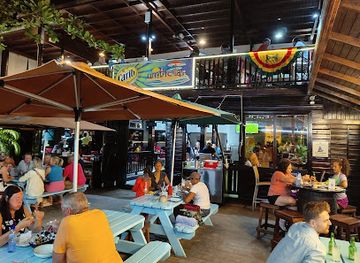
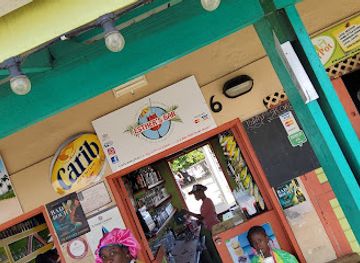
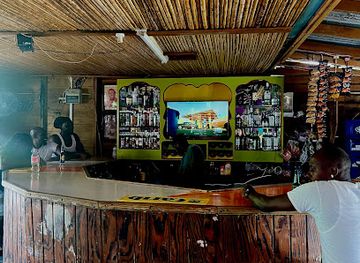
Saint Patrick has a modest evening scene centred on rum shops, village bars, small restaurants and informal gatherings rather than large clubs. Sauteurs is the parish’s main place for an evening drink or meal, while smaller communities may have local bars where conversation, music and televised sport are more significant than a formal nightlife programme. Traditional Grenadian rum drinks, local beers and non-alcoholic refreshments are widely available, but opening arrangements can vary and late-night transport is limited. Occasional community celebrations and live music may create a livelier atmosphere, though visitors should confirm current details locally rather than rely on a permanent events calendar. The parish is better suited to quiet evenings, sunset views and social dining than to a dedicated club circuit, and returning to rural accommodation after dark requires arranging transport in advance.
-
Bar
Umbrella's Beach Bar
Experience the vibrant beachside atmosphere and mouthwatering cuisine at Umbrella's Beach Bar, a true gem on Grand Anse Beach in Grenada.
-
Bar
Esther's Bar
Discover the vibrant atmosphere of Esther's Bar, where refreshing cocktails meet stunning views on Grand Anse Beach in Grenada.
-
Bar
Shy's Bar
Discover the vibrant atmosphere of Shy's Bar in Victoria, Grenada - a perfect spot for cocktails and local charm at an inexpensive price.
-
Restaurant
Armadillo Guesthouse & Restaurant
Experience the warmth of Grenadian hospitality at Armadillo Guesthouse & Restaurant, where local flavors and comfort meet stunning scenery.
Best nightclubs in Saint Patrick
Saint Patrick has a modest evening scene centred on rum shops, village bars, small restaurants and informal gatherings rather than large clubs. Sauteurs is the parish’s main place for an evening drink or meal, while smaller communities may have local bars where conversation, music and televised sport are more significant than a formal nightlife programme. Traditional Grenadian rum drinks, local beers and non-alcoholic refreshments are widely available, but opening arrangements can vary and late-night transport is limited. Occasional community celebrations and live music may create a livelier atmosphere, though visitors should confirm current details locally rather than rely on a permanent events calendar. The parish is better suited to quiet evenings, sunset views and social dining than to a dedicated club circuit, and returning to rural accommodation after dark requires arranging transport in advance.
-
Bar
Esther's Bar
Experience the vibrant atmosphere of Esther's Bar on Grand Anse Beach, where refreshing drinks meet stunning Caribbean views.
-
Bar
Rocky's Beach Bar
Discover the vibrant ambiance and delightful flavors of Rocky's Beach Bar, a must-visit in St. George's, Grenada, where relaxation meets local culture.
-
Night club
Moonlight City
Discover the electrifying nightlife of Moonlight City in La Poterie, Grenada, where vibrant music and an inviting atmosphere create unforgettable nights.
-
Bar
Freedom St. Night Club
Unleash your spirit at Freedom St. Night Club in The Lime, Grenada – a vibrant bar with music, dance, and unforgettable nightlife experiences.


Best shops in Saint Patrick
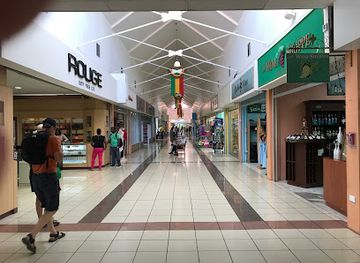
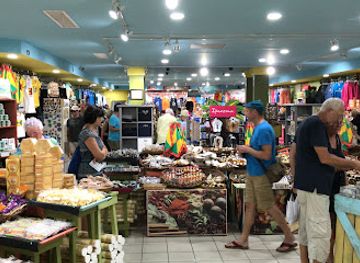
Shopping in Saint Patrick is local and practical rather than centred on major retail developments. Sauteurs has the parish’s most useful concentration of small shops and services, while village stores provide everyday provisions, snacks, drinks and household goods. Visitors may find locally grown spices, cocoa, nutmeg products, preserves, fruit and other agricultural goods through small traders or community connections, although availability and packaging vary. Craft items and simple souvenirs are more likely to appear in informal outlets or near visitor sites than in a dedicated shopping quarter. Farmers’ produce reflects the parish’s rural economy, with seasonal differences in fruit, vegetables and provisions. For a wider selection of branded goods, galleries and specialist souvenirs, travellers generally need to shop in the south-western part of Grenada outside Saint Patrick. Buying directly from reputable local sellers and asking about permitted transport of plant or food products helps support the community while avoiding customs complications.
-
Shopping mall
Spiceland Mall
Explore Spiceland Mall in Grenada, where shopping meets Caribbean culture with a mix of local and international brands, dining, and lively ambiance.
-
Tourist attraction
Belmont Estate
Immerse yourself in Grenadian heritage at Belmont Estate, where history and nature converge in a captivating visitor experience.
-
Shopping mall
Esplanade Shopping Complex
Experience the perfect blend of shopping and local culture at Esplanade Shopping Complex in St. George's, Grenada.
-
Market
Grand Anse Craft and Spice Market
Discover Grenada's rich culture at the Grand Anse Craft and Spice Market, where vibrant local crafts and spices await every visitor.
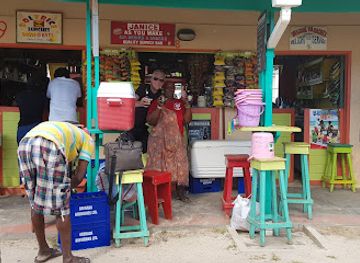
Get your free copy of our complete guide to Saint Patrick, delivered straight to you.
Everything on this page, from attractions and restaurants to essentials and local phrases, in one PDF you can read offline, print or share.
Already have an account? Sign in
Your Saint Patrick guide is ready.
We'll send it to · Not you? Sign out

Getting your guide ready…
We are putting together a fresh copy of the Saint Patrick guide. This can take up to a minute.
This can take a few moments. If your browser asks, choose Allow so the download can start. You'll find the guide in your Downloads folder.
Nothing happened? Download it again
Sorry, the guide is taking longer than usual. Please try again in a minute, or get it by email instead.
Saint Patrick essentials
Currency and Payment
Safety
Emergency Situations
Do's and Don'ts
Local Tips
From Eve
Local phrases worth knowing
You don't need to get them perfect. A few words go a long way, and locals appreciate the effort.
Basics
| English | Local | Say it |
|---|---|---|
| Hello | Hello | [Heh-loh] |
| Goodbye | Goodbye | [Good-bye] |
| Yes | Yes | [Yes] |
| No | No | [No] |
| Please/You’re welcome | Please/You’re welcome | [Pleez/Yooh're welcome] |
| Thank you | Thank you | [Thank yooh] |
| Excuse me/Sorry | Excuse me/Sorry | [Ex-kyoos mee/Saw-ree] |
| How are you? | How yuh doin'? | [How yuh doin'?] |
| Fine. And you? | Fine. An' yuh? | [Fine. An' yuh?] |
| Do you speak English? | Yuh speakin' English? | [Yuh speakin' English?] |
| I don't understand | I eh understand | [I eh understand] |
Eating & Drinking
| English | Local | Say it |
|---|---|---|
| I’d like to see the menu, please | I wan' see di menu, please | [I wan' see di menu, please] |
| I don’t eat meat | I no eat meat | [I no eat meat] |
| Cheers! | Cheers! | [Cheers!] |
| I would like to pay, please | I wan' pay, please | [I wan' pay, please] |
Emergencies
| English | Local | Say it |
|---|---|---|
| Help! | Help! | [Help!] |
| Go away! | Go way! | [Go way!] |
| Call the Police! | Call di Police! | [Call di Police!] |
| Call a doctor! | Call a doctor! | [Call a doctor!] |
| I’m lost | I lost | [I lost] |
| I’m ill | I sick | [I sick] |
Shopping
| English | Local | Say it |
|---|---|---|
| I’d like to buy... | I wan' buy... | [I wan' buy...] |
| I’m just looking | I just lookin' | [I just lookin'] |
| How much is it? | How much dat? | [How much dat?] |
| That’s too expensive | Dat too pricey | [Dat too pricey] |
| Can you lower the price? | Yuh can lower di price? | [Yuh can lower di price?] |
Time & Numbers
| English | Local | Say it |
|---|---|---|
| What time is it? | Wah time it be? | [Wah time it be?] |
| It’s one o’clock | It one o'clock | [It one o'clock] |
| Half past (10) | Half past (10) | [Half past (10)] |
| Morning | Mornin' | [Mornin'] |
| Afternoon | Afternoon | [Afternoon] |
| Evening | Evenin' | [Evenin'] |
| Yesterday | Yesterday | [Yesterday] |
| Today | Today | [Today] |
| Tomorrow | Tomorrow | [Tomorrow] |
| 1 | 1 | [1] |
| 2 | 2 | [2] |
| 3 | 3 | [3] |
| 4 | 4 | [4] |
| 5 | 5 | [5] |
| 6 | 6 | [6] |
| 7 | 7 | [7] |
| 8 | 8 | [8] |
| 9 | 9 | [9] |
| 10 | 10 | [10] |
Transport & Directions
| English | Local | Say it |
|---|---|---|
| Where's a/the...? | Wheh di...? | [Wheh di...?] |
| What's the address? | Wah di address? | [Wah di address?] |
| Can you show me (on the map)? | Can yuh show me (pon di map)? | [Can yuh show me (pon di map)?] |
| When's the next (bus)? | When di nex' (bus)? | [When di nex' (bus)?] |
| A ticket (to ....) | A ticket (to ....) | [A ticket (to ....)] |
History of Saint Patrick
Kalinago Presence and Carib’s Leap
Before European colonisation, Grenada was inhabited by Indigenous peoples, including Kalinago communities who resisted attempts to impose colonial control. Sauteurs is associated with the 1651 Carib’s Leap, when Kalinago people are traditionally said to have leapt from the coastal cliffs rather than surrender to French forces. The event has become one of the most important historical memories in northern Grenada. The site is not simply a scenic overlook: it represents the violence of colonisation and the loss of Indigenous autonomy, and it remains central to the parish’s historical identity.
French Settlement in the Seventeenth Century
French colonisation expanded in Grenada during the seventeenth century, bringing new settlements, Catholic institutions and plantation agriculture. Northern Grenada became part of a colonial economy connected to the wider Caribbean through sugar and other export crops. French influence remains visible in aspects of place names, religious heritage and the cultural history of the island, although later British rule reshaped administration and public life. The settlements and agricultural districts of Saint Patrick developed within these wider colonial changes.
Plantation Agriculture and Enslavement
From the colonial period into the nineteenth century, plantations formed a major part of Grenada’s economy. Sugar was important earlier, while coffee, cocoa and other crops also contributed to estate production. This system depended on the enslavement of Africans and their descendants, whose labour and resistance shaped the island’s society. Estate landscapes, old agricultural roads and the pattern of rural settlement provide reminders of this history, even where plantation buildings have disappeared. Emancipation in 1834, followed by the end of the apprenticeship system in 1838, transformed labour relations without removing economic inequality.
The Growth of Smallholder Farming
After emancipation, many formerly enslaved people pursued independent farming, wage labour and village life beyond the plantation system. In Saint Patrick, the interior hills and northern districts became associated with smallholdings producing crops such as cocoa, bananas, spices and provisions. This agricultural pattern helped create the dispersed communities seen today. Nutmeg and cocoa became especially important to Grenada’s export identity, although production has always been vulnerable to hurricanes, plant disease and changing world prices. Farming remains part of the parish’s physical and cultural landscape.
British Rule and Parish Development
Grenada passed from French to British control in the eighteenth century, and the island remained a British colony until independence in 1974. During this period, roads, churches, schools, estates and administrative structures developed unevenly across the island. Saint Patrick’s northern settlements retained a predominantly rural character, with Sauteurs serving as a local centre for trade, worship and public life. The parish’s architecture and religious institutions reflect the layered legacy of French Catholic and British colonial influence rather than a single cultural tradition.
Agricultural Change and Hurricane Ivan
Modern Saint Patrick has continued to depend on a mixture of farming, fishing, public services and small-scale commerce, while tourism has grown selectively around beaches, landscapes and heritage. Hurricane Ivan, which struck Grenada in 2004, caused extensive damage across the island, including to homes, vegetation and agricultural production. Recovery altered the appearance and economic circumstances of many communities. The event also demonstrated the vulnerability of Grenada’s rural economy and coastal infrastructure to severe tropical weather.
Contemporary Northern Grenada
Since independence, Saint Patrick has remained one of Grenada’s more rural parishes, with a strong connection to farming, village networks and the northern sea lanes. Conservation at Levera and wider interest in Indigenous history have added environmental and cultural dimensions to local tourism. The parish’s contemporary identity is therefore built from several strands: Kalinago memory, colonial and post-emancipation history, agriculture, fishing and the practical life of communities spread across a rugged coastline and hilly interior.
Saint Patrick in Photos
Browse through our photo collection highlighting the charm and character of the destination.
Neighbouring regions of Saint Patrick
The closest regions to Saint Patrick, if you have time for more than one.
-

-

-

-

-


Swipe for more regions
Explore more
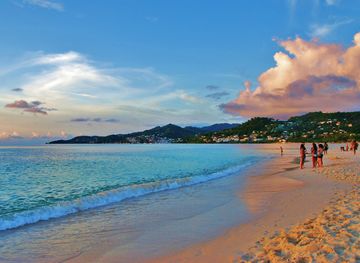
Explore more of Grenada
Discover Grenada, the Spice Isle of the Caribbean, where lush landscapes, pristine beaches, and rich cultural heritage create a tropical paradise for all travelers.
Explore Grenada