

Cayos Cochinos Travel Guide - Free Web & App
Your ultimate guide to Cayos Cochinos. Discover top landmarks, proposed trips, and local tips. Free on the web or via the Evendo companion app.


Cayos Cochinos, Honduras, pairs coral reefs, quiet beaches and Garifuna culture with snorkelling, diving and island adventures from La Ceiba.
Reefs, Cays and Caribbean Waters
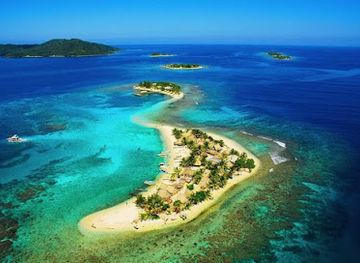
Cayos Cochinos is a small archipelago in the Caribbean Sea, roughly between the mainland port city of La Ceiba and the Bay Islands of Roatán and Utila. It comprises two larger forested islands, Cayo Mayor and Cayo Menor, together with a group of smaller sandy and rocky cays surrounded by coral reefs, seagrass beds and clear tropical water. The islands form part of a protected marine landscape whose appeal lies less in extensive development than in the meeting of reef, beach, woodland and open sea.Read more about Cayos Cochinos
Garifuna Heritage and Island Life
Exploring the Marine Monument
When is the best time to visit Cayos Cochinos?
Best: May–June, September · 30°C| Month | High (°C) | Rainfall (mm) |
|---|---|---|
| January | 29 | 70 |
| February | 29 | 60 |
| March | 29 | 50 |
| April | 30 | 40 |
| May (best) | 30 | 30 |
| June (best) | 30 | 30 |
| July | 30 | 30 |
| August | 30 | 30 |
| September (best) | 30 | 30 |
| October | 30 | 40 |
| November | 29 | 50 |
| December | 29 | 60 |
Getting to and around Cayos Cochinos
How to get there
Transportation
Best attractions in Cayos Cochinos
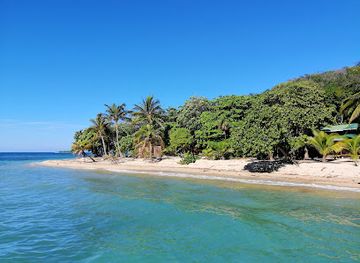
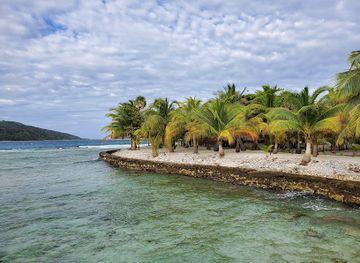
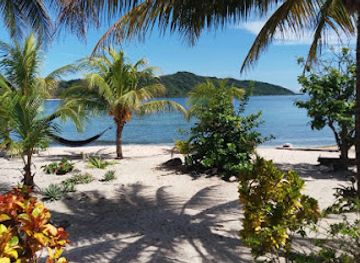
The principal attraction of Cayos Cochinos is its protected marine environment, where snorkelling and diving may reveal coral communities, reef fish and other tropical marine life in relatively shallow water. Cayo Mayor and Cayo Menor provide the archipelago’s larger landmasses, with forested terrain, small beaches and elevated viewpoints contrasting with the low sandy cays scattered around them. Chachahuate offers insight into Garifuna island life, while boat journeys through the surrounding waters provide the defining perspective of the archipelago. Visitors may also encounter fishing communities and mainland coastal settlements such as Sambo Creek and Nueva Armenia when arranging access from Honduras’s Caribbean shore. Attractions are dispersed and conditions are changeable, so excursions are shaped by local guidance, sea state, conservation rules and the practical limitations of a small island environment rather than by a dense network of visitor facilities.
-
Tourist attraction
Paseo de los Ceibeños
Discover the colorful Paseo de los Ceibeños in La Ceiba, a vibrant waterfront promenade perfect for dining, strolling, and experiencing local culture.
-
Tourist attraction
Jungle Top Adventures Zipline
Experience the thrill of jungle ziplining at Jungle Top Adventures in Coxen Hole, Bay Islands, where nature and adventure collide in breathtaking harmony.
-
Tourist attraction
Bodden Tours: Mayan Jungle Canopy Zipline | Victor's Monkey & Sloth Sanctuary
Explore the breathtaking Mayan jungle with Bodden Tours, featuring thrilling ziplines and an unforgettable encounter with monkeys and sloths.
-
Tourist attraction
Roatan Institute for Marine Sciences
Experience the vibrant marine life and conservation efforts at the Roatan Institute for Marine Sciences, an eco-tourism gem in Sandy Bay.


Best landmarks in Cayos Cochinos
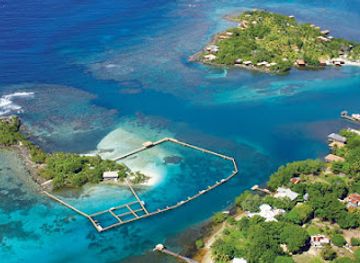
The defining landmarks of Cayos Cochinos are natural: the forested profiles of Cayo Mayor and Cayo Menor, the small surrounding cays and the coral reefs that connect them into a protected Caribbean seascape. The reefs are ecologically important habitats and are central to the archipelago’s identity, although their condition is sensitive to careless anchoring, contact and pollution. Chachahuate is a significant cultural landmark in the broader sense, representing the continuing presence of Garifuna island communities and their maritime way of life. There are no large urban monuments or extensive historic buildings within the archipelago; its significance lies in the relationship between land, reef, sea routes and community heritage. Mainland landing places such as Sambo Creek and Nueva Armenia are important gateways, but they should not be confused with landmarks situated on the cays themselves.
-
Public beach
Centros de Visitantes
Explore the pristine beauty of Centros de Visitantes, a tropical paradise in Chamelecón, Honduras, perfect for relaxation, adventure, and cultural experiences.
-
Non-governmental organization
Fundación Cayos Cochinos / Honduras Coral Reef Fund
Discover the vibrant marine life and stunning coral reefs at Fundación Cayos Cochinos, a non-profit dedicated to environmental conservation in Honduras.
-
 Cottage
Cabañas Laru Beya
Discover paradise at Cabañas Laru Beya in Cayos Cochinos, where stunning beaches meet cozy accommodations for an unforgettable tropical experience.
-
Island
Cayo Cochino Menor
Experience the serene beauty and vibrant marine life at Cayo Cochino Menor, the hidden paradise of the Bay Islands in Honduras.
Explore Cayos Cochinos on the map
Plan your trip on one map. See where the top attractions, landmarks, restaurants and hotels are, and book hotels and experiences in a few clicks.
Best hotels in Cayos Cochinos
Best restaurants in Cayos Cochinos
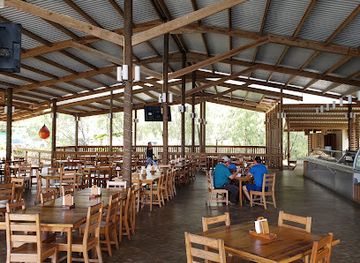
Dining in Cayos Cochinos is closely tied to local households, guest accommodation, community arrangements and pre-booked excursions rather than to a developed restaurant scene. Meals may feature freshly caught fish or other seafood, rice, plantain, coconut and cassava, reflecting the wider Garifuna food culture of Honduras’s Caribbean coast. Visitors should confirm in advance whether food and drinking water are included with a boat trip or overnight stay, particularly when visiting the smaller cays. Chachahuate and other communities may offer locally prepared food through agreed arrangements, while La Ceiba, Sambo Creek and Nueva Armenia provide the broadest choice of restaurants, cafés and provisions before departure. Supplies and menus on the islands can be limited, and visitors should avoid assuming that meals will be available without prior planning.
-
Restaurant
Cric Cric Burger
Discover the best of fast food at Cric Cric Burger in La Ceiba – where tasty burgers meet vibrant local culture.
-
Restaurant
Snapper's Restaurant
Experience the vibrant flavors of Brick Bay at Snapper's Restaurant - where fresh seafood meets warm island hospitality.
-
Restaurant
Gio's Restaurant
Discover Gio's Restaurant in Flowers Bay – where authentic Honduran flavors meet breathtaking ocean views.
-
Restaurant
Blue Bahía Beach Grill
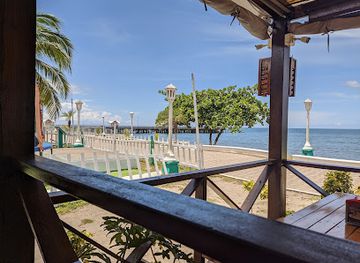
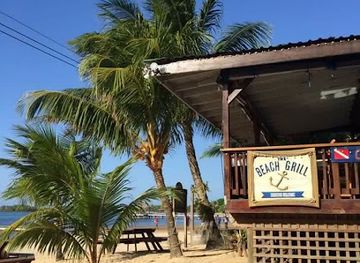
Savor exquisite dishes and refreshing drinks at Blue Bahía Beach Grill with stunning ocean views in Sandy Bay, Roatan.
Best bars in Cayos Cochinos
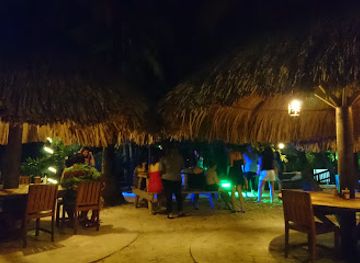
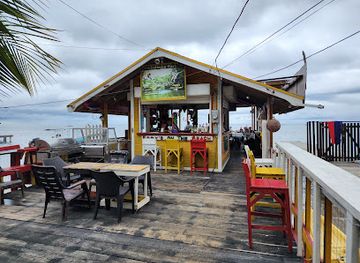
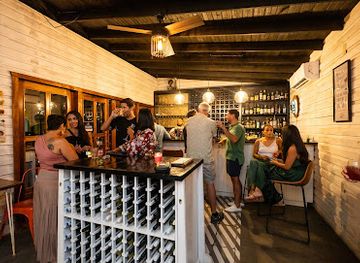
Cayos Cochinos has no substantial nightlife district or established nightclub scene. Evenings are generally quiet, shaped by the rhythms of island accommodation, community life and the sea rather than by commercial entertainment. A locally arranged meal, conversation or Garifuna music and drumming experience may offer a more appropriate way to understand the cultural character of the area, but performances should never be assumed or treated as automatic tourist entertainment. Visitors staying on the archipelago should confirm what evening facilities are available before travelling. La Ceiba has Honduras’s most developed evening scene in this part of the coast, with bars and restaurants, while Sambo Creek and other mainland communities offer a quieter local atmosphere.
-
Grill
Calkett's Bar & Restaurant
Experience the flavors of the Caribbean at Calkett's Bar & Restaurant, where great food and stunning ocean views await in Roatán.
-
Grill
Eddy's on the Beach
Experience the flavors of the Bay Islands at Eddy's on the Beach, where grilled delights meet stunning ocean views.
-
Bar
Fino Sport Bar
Experience the vibrant nightlife of Coxen Hole at Fino Sport Bar - a local favorite for drinks, sports, and socializing.
-
Bar
Bodega 22 | Cigar, Whiskey & Wine Bar
Discover the ultimate relaxation at Bodega 22, Roatan's premier cigar, whiskey, and wine bar, nestled in the vibrant Macaw Market.

Best nightclubs in Cayos Cochinos
Cayos Cochinos has no substantial nightlife district or established nightclub scene. Evenings are generally quiet, shaped by the rhythms of island accommodation, community life and the sea rather than by commercial entertainment. A locally arranged meal, conversation or Garifuna music and drumming experience may offer a more appropriate way to understand the cultural character of the area, but performances should never be assumed or treated as automatic tourist entertainment. Visitors staying on the archipelago should confirm what evening facilities are available before travelling. La Ceiba has Honduras’s most developed evening scene in this part of the coast, with bars and restaurants, while Sambo Creek and other mainland communities offer a quieter local atmosphere.
-
Island
Cayos Cochinos
Explore Cayos Cochinos: A hidden paradise of pristine beaches and vibrant marine life in the Bay Islands of Honduras.
-
Cottage
Cabañas Laru Beya
Experience the serene beauty of Cabañas Laru Beya, a cozy cottage retreat in Cayos Cochinos, perfect for relaxation and adventure amidst stunning natural landscapes.
-
Island
Cayo Cochino Menor
Unwind in the breathtaking beauty of Cayo Cochino Menor, where pristine beaches and vibrant marine life create an unforgettable island escape.
-
Bar
Bodega 22 | Cigar, Whiskey & Wine Bar
Experience the ultimate blend of cigars, whiskey, and wine at Bodega 22 in Roatan's Macaw Market, where luxury meets local charm.

Best shops in Cayos Cochinos
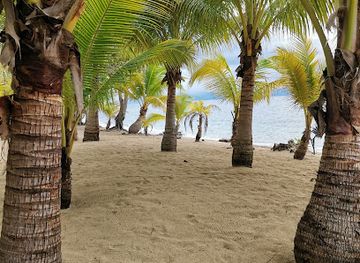
Shopping opportunities within Cayos Cochinos are modest and are generally connected with community-made items, locally prepared food and practical services rather than permanent retail streets. Visitors may find small-scale crafts or locally produced goods through agreed community visits, particularly where Garifuna cultural activity is part of the itinerary, but availability is variable and purchases should be made respectfully and directly. The most useful shopping before an excursion takes place in La Ceiba, where visitors can obtain cash, snacks, drinking water, sun protection, medicines and equipment. Sambo Creek and Nueva Armenia may provide more limited local provisions. Bring essential supplies from the mainland and avoid buying coral, shells, archaeological material or wildlife products, whether offered as souvenirs or collected independently.
-
Island
Cayos Cochinos
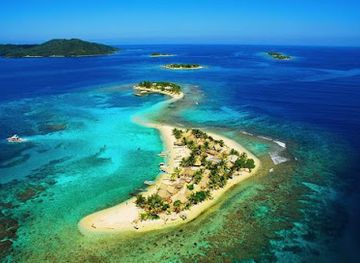
Discover the unspoiled beauty of Cayos Cochinos, an idyllic island paradise in the Caribbean, where vibrant marine life meets rich cultural heritage.
-
Museum
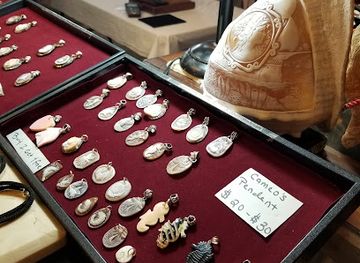
Stone Castle Cameo Factory Institute
Explore the exquisite craftsmanship of cameos at the Stone Castle Cameo Factory Institute in the stunning Bay Islands.
-
Shopping mall
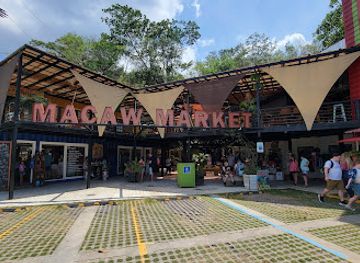
Macaw Container Market
Explore the Macaw Container Market in Roatan for unique souvenirs, delicious food, and a vibrant local experience in the heart of the Bay Islands.
-
Souvenir store
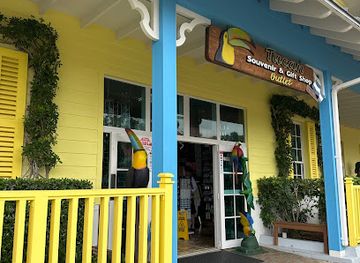
Tucan Gift Shop
Explore the vibrant Tucan Gift Shop in Dixon Cove for unique, handmade souvenirs that capture the spirit of the Bay Islands.
Get your free copy of our complete guide to Cayos Cochinos, delivered straight to you.
Everything on this page, from attractions and restaurants to essentials and local phrases, in one PDF you can read offline, print or share.
Already have an account? Sign in
Your Cayos Cochinos guide is ready.
We'll send it to · Not you? Sign out

Getting your guide ready…
We are putting together a fresh copy of the Cayos Cochinos guide. This can take up to a minute.
This can take a few moments. If your browser asks, choose Allow so the download can start. You'll find the guide in your Downloads folder.
Nothing happened? Download it again
Sorry, the guide is taking longer than usual. Please try again in a minute, or get it by email instead.
Cayos Cochinos essentials
Currency and Payment
Safety
Emergency Situations
Do's and Don'ts
Local Tips
From Eve
Local phrases worth knowing
You don't need to get them perfect. A few words go a long way, and locals appreciate the effort.
Basics
| English | Local | Say it |
|---|---|---|
| Hello | ¡Hola! | [O-la] |
| Goodbye | ¡Adiós! | [Ah-dios] |
| Yes | Sí | [See] |
| No | No | [No] |
| Please/You're welcome | Por favor/De nada | [Por fa-vor/De na-da] |
| Thank you | Gracias | [Gra-cias] |
| Excuse me/Sorry | Disculpe/Lo siento | [Dis-kul-pe/Lo see-en-to] |
| How are you? | ¿Cómo estás? | [Ko-mo es-tas] |
| Fine. And you? | Bien. ¿Y tú? | [Bee-en. Ee too] |
| Do you speak English? | ¿Hablas inglés? | [A-blas in-gles] |
| I don't understand | No entiendo | [No en-tien-do] |
Eating & Drinking
| English | Local | Say it |
|---|---|---|
| I'd like to see the menu, please | Me gustaría ver el menú, por favor | [Me gus-ta-ria ver el me-nu, por fa-vor] |
| I don't eat meat | No como carne | [No ko-mo kar-ne] |
| Cheers! | ¡Salud! | [Sa-lud] |
| I would like to pay, please | Me gustaría pagar, por favor | [Me gus-ta-ria pa-gar, por fa-vor] |
Emergencies
| English | Local | Say it |
|---|---|---|
| Help! | ¡Ayuda! | [Ay-u-da] |
| Go away! | ¡Vete! | [Ve-te] |
| Call the Police! | ¡Llama a la policía! | [Ya-ma a la po-li-sia] |
| Call a doctor! | ¡Llama a un médico! | [Ya-ma a un me-di-ko] |
| I'm lost | Estoy perdido | [Es-toy per-di-do] |
| I'm ill | Estoy enfermo | [Es-toy en-fer-mo] |
Shopping
| English | Local | Say it |
|---|---|---|
| I'd like to buy... | Me gustaría comprar... | [Me gus-ta-ria kom-prar] |
| I'm just looking | Sólo estoy mirando | [So-lo es-toy mee-ran-do] |
| How much is it? | ¿Cuánto cuesta? | [Kwan-to kwe-sta] |
| That's too expensive | Eso es demasiado caro | [E-so es de-ma-sia-do ka-ro] |
| Can you lower the price? | ¿Puede bajar el precio? | [Pwe-de ba-har el pre-sio] |
Time & Numbers
| English | Local | Say it |
|---|---|---|
| What time is it? | ¿Qué hora es? | [Ke o-ra es] |
| It's one o'clock | Es la una | [Es la u-na] |
| Half past (10) | Media (10) | [Me-di-a (diez)] |
| Morning | Mañana | [Ma-nya-na] |
| Afternoon | Tarde | [Tar-de] |
| Evening | Noche | [No-che] |
| Yesterday | Ayer | [A-yer] |
| Today | Hoy | [Hoy] |
| Tomorrow | Mañana | [Ma-nya-na] |
| 1 | Uno | [U-no] |
| 2 | Dos | [Dos] |
| 3 | Tres | [Tres] |
| 4 | Cuatro | [Kwa-tro] |
| 5 | Cinco | [Sin-ko] |
| 6 | Seis | [Seis] |
| 7 | Siete | [Sye-te] |
| 8 | Ocho | [O-cho] |
| 9 | Nueve | [Nwe-ve] |
| 10 | Diez | [Diez] |
Transport & Directions
| English | Local | Say it |
|---|---|---|
| Where's a/the...? | ¿Dónde está...? | [Don-de es-ta] |
| What's the address? | ¿Cuál es la dirección? | [Kwal es la di-rek-cion] |
| Can you show me (on the map)? | ¿Puede mostrarme (en el mapa)? | [Pwe-de mos-trar-me (en el ma-pa)] |
| When's the next (bus)? | ¿Cuándo es el próximo (autobús)? | [Kwan-do es el pro-ksi-mo (au-to-bus)] |
| A ticket (to ....) | Un boleto (a ....) | [Un bo-le-to (a)] |
History of Cayos Cochinos
A Caribbean Reef Archipelago
Cayos Cochinos is a low tropical archipelago shaped by the geological and ecological processes of the Caribbean basin rather than by a long tradition of urban settlement. Coral reefs, shallow marine habitats, beaches and forested islands developed within the wider Mesoamerican Caribbean marine environment. The cays’ small scale and exposed position have limited large-scale construction, while their reefs have made the area important for marine research, fishing and conservation. The landscape visitors see today is therefore a combination of natural island formation and long interaction between coastal communities and the sea.
Garifuna Settlement and Seafaring
The cultural history of Cayos Cochinos is closely connected with the Garifuna communities of Honduras’s Caribbean coast. Garifuna people descend from Indigenous Caribbean and Arawak populations and Africans brought to the Caribbean during the colonial period; their language, music, foodways and maritime traditions form a major part of the region’s identity. Communities on and around the archipelago have historically relied on fishing and small-scale coastal livelihoods. Chachahuate is particularly associated with island life, while mainland communities such as Sambo Creek and Nueva Armenia serve as important cultural and transport links.
Protection and Marine Research
Growing concern over reef health, fishing pressure and coastal development led to formal protection of the archipelago and its surrounding waters. Cayos Cochinos was declared a Natural Monument in the 1990s and later became the Cayos Cochinos Marine Monument, covering terrestrial and marine areas. Conservation organisations and research initiatives have supported monitoring, environmental education and the management of marine resources. Protection has not removed the relationship between local communities and the sea; instead, it has created an ongoing balance between conservation objectives, traditional livelihoods and carefully managed tourism.
Contemporary Visitor Destination
Tourism developed around the archipelago’s reefs, beaches and cultural character, with La Ceiba becoming the principal mainland gateway. Visitors generally arrive by boat for day trips, snorkelling, diving, fishing or community visits, while the islands themselves retain a relatively limited infrastructure compared with Honduras’s larger Caribbean resorts. The protected status of Cayos Cochinos has helped preserve its low-density character, although marine conservation remains dependent on responsible visitor conduct, regulated activities and continued cooperation with the communities that live in and around the protected area.
Cayos Cochinos in Photos
Browse through our photo collection highlighting the charm and character of the destination.
Cities in Cayos Cochinos
The towns and cities of Cayos Cochinos, and the easiest places to base yourself.
-

-

-


Swipe for more cities
Neighbouring destination travel guides
The closest destinations to Cayos Cochinos, if you have time for more than one.
-

-

-

-

-


Swipe for more destinations
Explore more

Explore more of Colón Region
Explore the Colón Region in Honduras: A blend of pristine beaches, lush rainforests, and vibrant Garífuna culture, perfect for nature lovers and history buffs alike.
Explore Colón Region
Explore more of Honduras
Discover Honduras: From ancient Maya ruins and vibrant cities to stunning beaches and lush rainforests, this Central American gem offers something for every traveler.
Explore Honduras