

Free Eastern Plains Travel Guide & Mobile App
Explore Eastern Plains with free travel guides. Discover regional history, expert tips, proposed trips, and audio guides on web or mobile app.


Explore Honduras's Eastern Plains through Olancho's cattle country, Talgua's archaeology, and the forests and waterways of La Mosquitia.
Read more about Eastern Plains
When is the best time to visit Eastern Plains?
Best: January–March · 30–31°C| Month | High (°C) | Rainfall (mm) |
|---|---|---|
| January (best) | 30 | 75 |
| February (best) | 31 | 70 |
| March (best) | 31 | 65 |
| April | 32 | 80 |
| May | 34 | 95 |
| June | 34 | 85 |
| July | 34 | 75 |
| August | 34 | 80 |
| September | 34 | 90 |
| October | 33 | 95 |
| November | 32 | 80 |
| December | 31 | 75 |
Getting to and around Eastern Plains
How to get there
Transportation
Destinations in Eastern Plains
Resorts, valleys and scenic spots worth a trip of their own.

Swipe for more destinations
Best attractions in Eastern Plains
The Eastern Plains offer a markedly different attraction landscape from Honduras's more developed Caribbean resorts and western highlands. Around Catacamas, the Caves of Talgua combine archaeological interest with a striking limestone environment, while the forests and uplands near the Sierra de Agalta provide opportunities for guided walks, birdwatching and rural exploration. Juticalpa and Catacamas are useful bases for learning about Olancho's agricultural and ranching culture, local churches, markets and everyday commerce. Farther east, the Río Plátano Biosphere Reserve, Patuca National Park and adjacent forest territories centre on canoe journeys, wildlife observation, rainforest trails and Indigenous cultural interpretation. These are logistically demanding environments rather than conventional day-trip attractions, and access should be arranged through knowledgeable local guides or community organisations. Rivers, lagoons and wetlands are as important to the experience as formal visitor sites, while seasonal conditions can shape what is possible. The region is best suited to travellers interested in archaeology, conservation, birdlife, river landscapes and community-based travel.
-
Farm
Finca La Cantadora
Explore the lush landscapes and fresh flavors of Finca La Cantadora, a serene farm near La Tigra National Park in Tegucigalpa, Honduras.
-
Tourist attraction
Christ of the Picacho
Explore the iconic Christ of the Picacho in Tegucigalpa, a majestic statue offering stunning views and a deep sense of faith and peace.
-
Museum
Museo de la Memoria - Antigua Casa Presidencial
Discover the rich history of Honduras at Museo de la Memoria, a captivating museum located in the former presidential palace in Tegucigalpa.
-
Tourist attraction
Mirador El Picacho
Explore stunning views and natural beauty at Mirador El Picacho, a top tourist attraction in Tegucigalpa, Honduras, perfect for relaxation and photography.
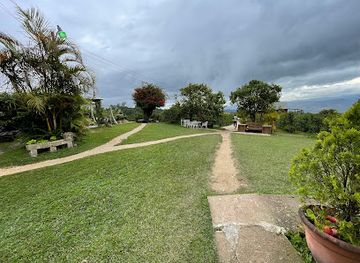
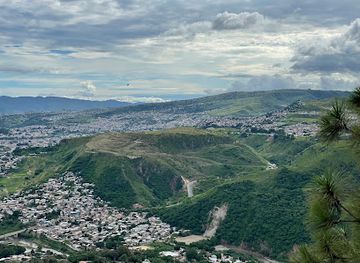
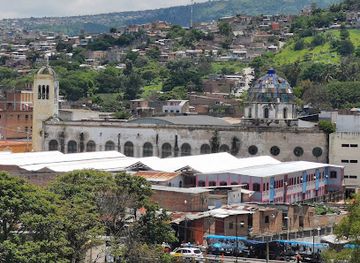

Best landmarks in Eastern Plains
The Caves of Talgua near Catacamas are among the Eastern Plains' most distinctive archaeological landmarks. Their limestone chambers and ancient human remains connect a dramatic natural setting with evidence of pre-Columbian funerary practice. In the wider Olancho landscape, the broad valleys around Juticalpa and Catacamas, framed by forested hills and the Sierra de Agalta, express the region's long association with cattle, agriculture and frontier settlement more clearly than a single monumental building. Farther east, the Río Plátano and Patuca river systems are geographical landmarks in their own right: their forests, wetlands and waterways define how people travel and live across La Mosquitia. The Río Plátano Biosphere Reserve is also a landmark of international conservation importance, combining natural habitats with Indigenous cultural landscapes. Because many eastern landmarks are remote and lightly developed, their significance lies in the relationship between landscape, archaeology, living communities and biodiversity rather than in polished visitor infrastructure.
-
Tourist attraction
Cataratas Pulhapanzak
Experience the majestic Cataratas Pulhapanzak in Honduras: a stunning waterfall with thrilling adventures, rich history, and breathtaking natural beauty near Lake Yojoa.
-
Museum
Fortaleza de San Fernando
Discover the fascinating history and stunning views at Fortaleza de San Fernando in Omoa, a must-visit museum and tourist attraction in Honduras.
-
Tourist attraction
Aguas Termales Presidente
Discover natural healing at Aguas Termales Presidente, a serene paradise in Lempira known for its rejuvenating hot springs and breathtaking landscapes.
-
Park
Parque Cerro Juana Lainez
Immerse yourself in nature at Parque Cerro Juana Lainez, a tranquil park offering scenic views and a peaceful retreat in Tegucigalpa.
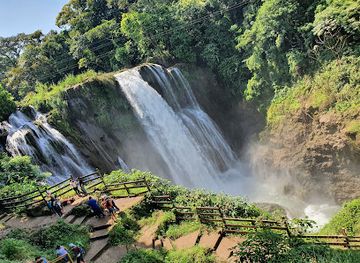
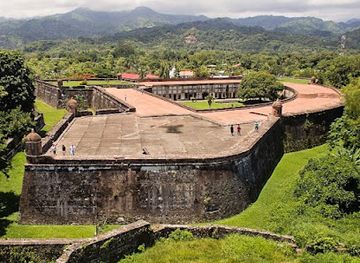
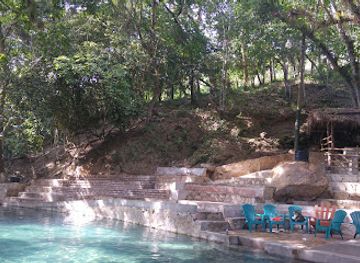
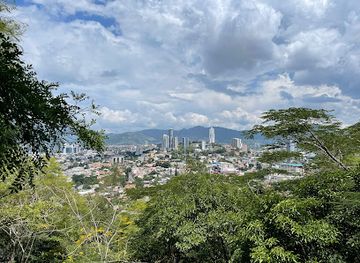
Explore Eastern Plains on the map
Plan your trip on one map. See where the top cities, national parks and sights are, and book hotels and experiences in a few clicks.
Best hotels in Eastern Plains
Best restaurants in Eastern Plains
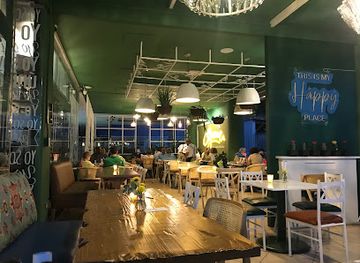
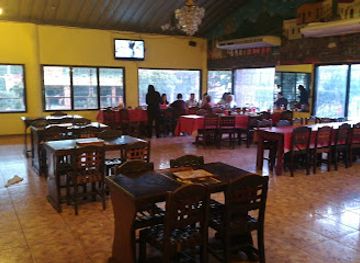
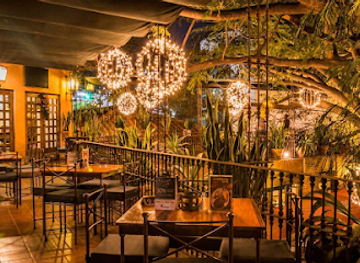
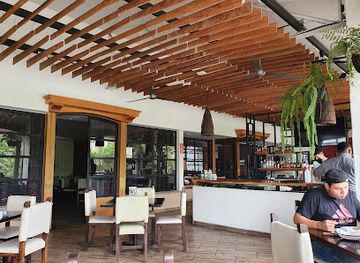
Dining in the Eastern Plains reflects the contrast between Olancho's inland farming economy and the Caribbean-influenced foodways of La Mosquitia. In Juticalpa and Catacamas, small restaurants, markets and family-run eateries commonly serve Honduran staples based on maize, beans, rice, meat, eggs, plantain and fresh cheese, with cattle and dairy products particularly important in Olancho's rural economy. Soups, grilled meats and substantial home-style meals are practical features of interior travel, while bakeries and market stalls provide snacks for long road journeys. In eastern river and coastal communities, availability varies considerably, but fish, seafood, coconut and plantain may appear alongside regional staples. Visitors should not expect a dense restaurant scene outside the principal towns, and remote excursions require advance planning for food and drinking water. Local produce markets can offer a more accurate impression of the region's culinary life than formal dining rooms.
-
Restaurant
La Creperia
Experience the best of Tegucigalpa's culinary scene at La Creperia with delicious crepes, burgers, and pastries in a family-friendly atmosphere.
-
Honduran
El Patio
Discover the flavors of Honduras at El Patio, Tegucigalpa's premier destination for authentic Honduran dishes in a welcoming atmosphere.
-
Restaurant
Hacienda Real Honduras
Experience exquisite Latin American cuisine at Hacienda Real Honduras, where every dish tells a story of flavor and tradition.
-
Restaurant
NiFu NiFa
Experience the finest culinary creations at NiFu NiFa in Tegucigalpa – where local flavors meet international flair.
Best bars in Eastern Plains
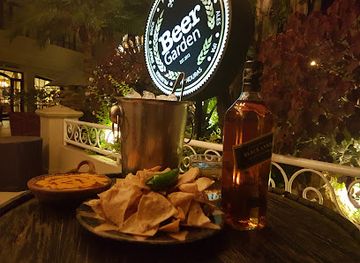
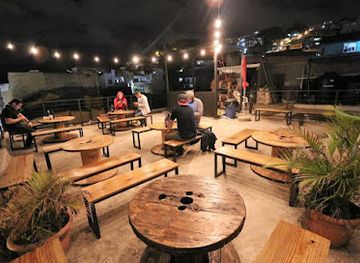
Evening life in the Eastern Plains is concentrated in Juticalpa, Catacamas and other larger Olancho towns, where modest bars, cafés, restaurants and music venues serve local residents and travellers. The atmosphere is generally more social and town-based than club-oriented, with entertainment varying by day, season and local events. In smaller communities, evenings tend to centre on family gatherings, food and conversation rather than a formal nightlife district. La Mosquitia has little conventional bar or nightclub infrastructure, and visitors on forest or river itineraries usually spend nights at simple lodgings, camps or community guesthouses. In all areas, use trusted transport after dark, keep valuables discreet and follow the advice of local hosts. Drinking is not necessary to engage with local culture, and visitors should respect community rules, particularly in Indigenous territories and remote accommodation.
-
Irish pub
Mc Allister's Irish Pub
Discover the authentic Irish experience at Mc Allister's Irish Pub in Tegucigalpa, where delicious food and vibrant atmosphere await.
-
Bar
Beer Garden Clarion
Discover a vibrant atmosphere at Beer Garden Clarion, Tegucigalpa's go-to bar for local brews and live music in a lush outdoor setting.
-
Restaurant
La Ronda Rooftop
Discover La Ronda Rooftop in Tegucigalpa, where culinary excellence meets stunning city views in a vibrant and lively atmosphere.
-
Bar
Indie Lounge
Indie Lounge in Tegucigalpa: A vibrant bar offering diverse drinks and a lively atmosphere, perfect for experiencing the city's nightlife.


Best nightclubs in Eastern Plains
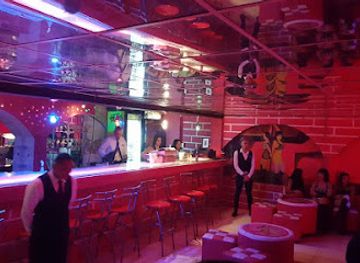
Evening life in the Eastern Plains is concentrated in Juticalpa, Catacamas and other larger Olancho towns, where modest bars, cafés, restaurants and music venues serve local residents and travellers. The atmosphere is generally more social and town-based than club-oriented, with entertainment varying by day, season and local events. In smaller communities, evenings tend to centre on family gatherings, food and conversation rather than a formal nightlife district. La Mosquitia has little conventional bar or nightclub infrastructure, and visitors on forest or river itineraries usually spend nights at simple lodgings, camps or community guesthouses. In all areas, use trusted transport after dark, keep valuables discreet and follow the advice of local hosts. Drinking is not necessary to engage with local culture, and visitors should respect community rules, particularly in Indigenous territories and remote accommodation.
-
Bar
Indie Lounge
Experience vibrant nightlife at Indie Lounge in Tegucigalpa, offering a diverse drink selection and an energetic atmosphere perfect for socializing.
-
Night club
Club BCIE
Dive into the vibrant nightlife of Tegucigalpa at Club BCIE, where music and dance unite in an unforgettable experience.
-
 Bar
BarBlack Bar
Immerse yourself in the lively nightlife of Tegucigalpa at Black Bar, where vibrant music and a welcoming atmosphere await.
-
Night club
Club Pink Pussycat TGU
Discover the vibrant nightlife of Tegucigalpa at Club Pink Pussycat TGU, where music and energy create unforgettable moments.

Best shops in Eastern Plains
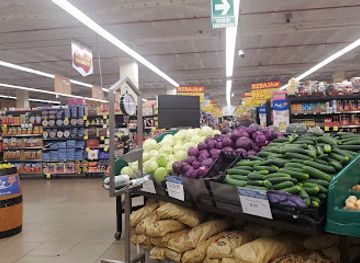
Shopping in the Eastern Plains is practical, local and closely tied to market-town life. Juticalpa and Catacamas have the broadest selection of everyday shops, food stalls, pharmacies and market trading, while smaller Olancho towns provide basic provisions and locally produced goods rather than extensive retail districts. Visitors can look for Honduran coffee, beans, cacao, dairy products, sweets, woven items and other regional food products, although availability and packaging vary. In Indigenous communities in and around La Mosquitia, crafts and other products should be bought directly and respectfully where community-based sales are established; avoid purchasing archaeological objects, wildlife products or timber whose origin is unclear. Markets are useful places to observe the circulation of maize, plantain, fruit, meat and household goods, but opening patterns change. Carry small denominations of lempiras for rural purchases, since card payments and formal souvenir shops are uncommon outside the principal towns.
-
Shopping mall
City Mall
Experience the vibrant shopping scene at City Mall in Tegucigalpa, where local culture meets international brands and delightful dining options.
-
Shopping mall
Multiplaza
Experience the vibrant shopping and entertainment at Multiplaza, Tegucigalpa's premier shopping destination with a mix of local and international brands.
-
Shopping mall
Mall Galerías del Valle
Explore the vibrant Mall Galerías del Valle, San Pedro Sula's premier shopping destination with diverse retail, dining, and entertainment options for everyone.
-
Shopping mall
CityMall San Pedro Sula
Discover shopping, dining, and local culture at CityMall San Pedro Sula, a vibrant hub for tourists and locals alike.



Get your free copy of our complete guide to Eastern Plains, delivered straight to you.
Everything on this page, from attractions and restaurants to essentials and local phrases, in one PDF you can read offline, print or share.
Already have an account? Sign in
Your Eastern Plains guide is ready.
We'll send it to · Not you? Sign out

Getting your guide ready…
We are putting together a fresh copy of the Eastern Plains guide. This can take up to a minute.
This can take a few moments. If your browser asks, choose Allow so the download can start. You'll find the guide in your Downloads folder.
Nothing happened? Download it again
Sorry, the guide is taking longer than usual. Please try again in a minute, or get it by email instead.
Eastern Plains essentials
Currency and Payment
Safety
Emergency Situations
Do's and Don'ts
Local Tips
From Eve
Local phrases worth knowing
You don't need to get them perfect. A few words go a long way, and locals appreciate the effort.
Basics
| English | Local | Say it |
|---|---|---|
| Hello | Hola | [O-la] |
| Goodbye | Adiós | [A-dee-os] |
| Yes | Sí | [See] |
| No | No | [No] |
| Please/You're welcome | Por favor | [Por fa-vor] |
| Thank you | Gracias | [Gra-thi-as] |
| Excuse me/Sorry | Perdón | [Per-don] |
| How are you? | ¿Cómo estás? | [Ko-mo es-tas] |
| Fine. And you? | Bien. ¿Y tú? | [Bee-en. Ee too] |
| Do you speak English? | ¿Hablas inglés? | [A-blas in-glays] |
| I don't understand | No entiendo | [No en-tien-do] |
Eating & Drinking
| English | Local | Say it |
|---|---|---|
| I'd like to see the menu, please | Me gustaría ver el menú, por favor | [Me gus-ta-ria ver el me-nu, por fa-vor] |
| I don't eat meat | No como carne | [No ko-mo car-ne] |
| Cheers! | ¡Salud! | [Sa-lud] |
| I would like to pay, please | Me gustaría pagar, por favor | [Me gus-ta-ria pa-gar, por fa-vor] |
Emergencies
| English | Local | Say it |
|---|---|---|
| Help! | ¡Ayuda! | [A-yu-da] |
| Go away! | ¡Vete! | [Ve-te] |
| Call the Police! | ¡Llama a la policía! | [Ya-ma a la po-li-cia] |
| Call a doctor! | ¡Llama a un doctor! | [Ya-ma a un doc-tor] |
| I'm lost | Estoy perdido | [Es-toy per-di-do] |
| I'm ill | Estoy enfermo | [Es-toy en-fer-mo] |
Shopping
| English | Local | Say it |
|---|---|---|
| I'd like to buy... | Me gustaría comprar... | [Me gus-ta-ria kom-prar] |
| I'm just looking | Solo estoy mirando | [So-lo es-toy mi-ran-do] |
| How much is it? | ¿Cuánto cuesta? | [Kwan-to kwes-ta] |
| That's too expensive | Eso es muy caro | [E-so es mwee ka-ro] |
| Can you lower the price? | ¿Puedes bajar el precio? | [Pwe-des ba-har el pre-cio] |
Time & Numbers
| English | Local | Say it |
|---|---|---|
| What time is it? | ¿Qué hora es? | [Ke o-ra es] |
| It's one o'clock | Es la una | [Es la u-na] |
| Half past (10) | Y media (10) | [Ee me-dia] |
| Morning | Mañana | [Ma-nya-na] |
| Afternoon | Tarde | [Tar-de] |
| Evening | Noche | [No-che] |
| Yesterday | Ayer | [A-yer] |
| Today | Hoy | [Oi] |
| Tomorrow | Mañana | [Ma-nya-na] |
| 1 | Uno | [Oo-no] |
| 2 | Dos | [Dos] |
| 3 | Tres | [Tres] |
| 4 | Cuatro | [Kwa-tro] |
| 5 | Cinco | [Sin-co] |
| 6 | Seis | [Seys] |
| 7 | Siete | [Sye-te] |
| 8 | Ocho | [O-cho] |
| 9 | Nueve | [Nwe-ve] |
| 10 | Diez | [Dyez] |
Transport & Directions
| English | Local | Say it |
|---|---|---|
| Where's a/the...? | ¿Dónde está un/una...? | [Don-de es-ta un/una] |
| What's the address? | ¿Cuál es la dirección? | [Kwal es la di-rec-cion] |
| Can you show me (on the map)? | ¿Puedes mostrarme (en el mapa)? | [Pwe-des mos-trar-me en el ma-pa] |
| When's the next (bus)? | ¿Cuándo es el próximo (bus)? | [Kwan-do es el pro-xi-mo] |
| A ticket (to ....) | Un boleto (a ....) | [Un bo-le-to a] |
History of Eastern Plains
Indigenous societies and the Talgua burials
The eastern interior has a long pre-Columbian history, although much of it remains known through archaeology rather than monumental architecture. The Talgua Caves near Catacamas contain human remains and evidence of burial practices dating to the centuries before Spanish rule. Their setting in the limestone landscape of Olancho illustrates how caves and river valleys formed part of the region's cultural geography. Farther east, Miskito, Pech and Tawahka peoples maintained distinct societies adapted to forests, rivers and coastal wetlands, with exchange networks linking the Caribbean lowlands to the interior.
Spanish expansion into Olancho
Spanish colonisation reached the Olancho interior during the sixteenth century, but control was uneven and contested. Settlers, missionaries and colonial authorities concentrated around accessible valleys and river routes, while extensive forests and Indigenous territories remained difficult for outsiders to administer. Mining, cattle raising and agriculture gradually altered parts of the interior. The region's modern towns developed from this frontier history, though Indigenous communities in the east retained their own languages, territories and social institutions.
Caribbean trade and the forest frontier
The eastern lowlands were connected to the Caribbean as much by waterways and coastal exchange as by roads. Miskito communities played an important role in regional trade, while British influence along parts of the Caribbean coast complicated Spanish claims before the independence period. Timber, especially valuable hardwoods, became an important commercial resource in the nineteenth and twentieth centuries. River transport and small coastal settlements linked forest products and agricultural goods with the wider Caribbean economy.
Cattle, agriculture and the Olancho interior
Olancho became strongly associated with cattle ranching, maize, beans and other forms of agricultural production. Its broad valleys and grasslands encouraged large-scale rural land use, while forest clearance expanded in some areas as roads improved. Juticalpa and Catacamas grew as commercial centres serving dispersed farming communities. This development brought economic opportunity but also pressure on forests, watersheds and customary lands, issues that continue to shape debates about conservation and rural livelihoods.
Indigenous autonomy and modern territorial identities
The easternmost part of Honduras is home to Miskito, Pech and Tawahka communities whose histories predate the modern Honduran state. Their territorial rights, languages and cultural practices remain central to understanding La Mosquitia and adjoining forest regions. The Tawahka Asangni Biosphere Reserve and other protected areas overlap with landscapes used by Indigenous communities. Travel in this part of Honduras therefore involves more than observing wilderness: it requires recognition of community governance, customary use and the historical pressures placed on Indigenous territories.
Protected forests and the conservation era
During the late twentieth century, Honduras established major protected areas in the east, including the Río Plátano Biosphere Reserve and Patuca National Park. The Río Plátano reserve, recognised by UNESCO as a World Heritage Site, protects an extensive combination of rainforest, rivers, wetlands and Indigenous cultural landscapes. Conservation has faced persistent challenges from illegal logging, land clearance, cattle expansion and limited enforcement. The region's present identity is consequently shaped by the tension between environmental protection, local livelihoods and national development.
Eastern Plains in Photos
Browse through our photo collection highlighting the charm and character of the destination.
Neighbouring regions of Eastern Plains
The closest regions to Eastern Plains, if you have time for more than one.
-

-

-

-

-


Swipe for more regions
Explore more

Explore more of Honduras
Discover Honduras: From ancient Maya ruins and vibrant cities to stunning beaches and lush rainforests, this Central American gem offers something for every traveler.
Explore Honduras