

Mylapore (Chennai) Travel Guide - Free
Explore Mylapore in Chennai with Evendo's free guide. Find the best shops, historic streets, restaurants, and gems on web or mobile.


Mylapore, Chennai blends Kapaleeshwarar Temple, Carnatic music, flower markets, heritage churches, South Indian food and lively temple streets.
Temple Quarter and Coastal Heritage
Mylapore is one of Chennai’s most storied neighbourhoods, a south-central district where temple rituals, music, commerce and ordinary residential life unfold around the towering gopuram of Kapaleeshwarar Temple. Its name is commonly linked to Mayilapuram, or the place of the peacock, reflecting the legend associated with the temple’s goddess. Although modern roads and apartment buildings have reshaped the area, the old street pattern remains legible around the temple: the four Mada Streets form a broad ceremonial circuit, while smaller lanes lead towards flower stalls, sari shops, cafés and houses with shaded verandas.Read more about Mylapore
Streets of Music, Worship and Daily Life
Churches, Tanks and Cultural Institutions
Best attractions in Mylapore
Kapaleeshwarar Temple is Mylapore’s central attraction, recognised by its colourful gateway tower, sculpted deities and the devotional activity surrounding the shrine of Shiva and Karpagambal. The four Mada Streets create a broad walking circuit around the temple and are particularly atmospheric during festival processions, while the temple tank offers a more open view of the quarter. Kutchery Road and R.K. Mutt Road reveal the neighbourhood’s everyday life through flower sellers, small eateries, religious businesses and cultural venues. The Ramakrishna Math provides a calm space for visitors interested in the area’s religious institutions, and San Thome Basilica, near the southern edge of the historic Mylapore area, adds a significant Christian landmark and a different architectural tradition. Local sabhas and cultural halls become important attractions during Chennai’s music and dance season.
-
 Tourist attraction
Santhome Cathedral Basilica
Explore the sacred Santhome Cathedral Basilica in Chennai, a historical and architectural marvel built upon the tomb of St. Thomas the Apostle.
16 min walk · 1.2 km from neighbourhood centre
-
Park
Nageswara Rao Park
Escape to Chennai's green heart: Nageswara Rao Park in Mylapore offers a tranquil retreat with lush flora, recreation, and community events.
5 min walk · 0.4 km from neighbourhood centre
-
Tourist attraction
Kamarajar Statue
Honor the legacy of K. Kamaraj at this iconic statue near Marina Beach, a symbol of leadership and social welfare.
5 min drive · 1.7 km from neighbourhood centre
-
Tourist attraction
Amarajeevi Potti Sreeramulu Memorial Building
A serene memorial in Chennai honoring Potti Sreeramulu, the freedom fighter whose sacrifice led to the creation of Andhra Pradesh.
7 min walk · 0.5 km from neighbourhood centre


Best landmarks in Mylapore
Kapaleeshwarar Temple is Mylapore’s principal architectural and symbolic landmark, with its soaring gopuram, sculptural programme and processional streets expressing the structure of a traditional Tamil temple town. The temple tank is an equally important part of the local historical landscape, creating an open civic and ritual space amid dense streets. The Ramakrishna Math on R.K. Mutt Road represents the neighbourhood’s continuing religious and educational institutions, while San Thome Basilica near the coastal side of Mylapore embodies the area’s long Christian association and stands apart from the temple quarter’s Dravidian visual language. The four Mada Streets are landmarks in urban form rather than single monuments: their width and alignment preserve the ceremonial geography that continues to guide festivals, commerce and everyday movement.
-
Tourist attraction
Chennai Lighthouse
Discover Chennai Lighthouse, a historic maritime landmark offering stunning views of Marina Beach and a glimpse into the city's nautical heritage.
5 min drive · 1.6 km from neighbourhood centre
-
Sculpture
Mahatma Gandhi Statue
Experience the serene beauty of the Mahatma Gandhi Statue at Marina Beach, a symbol of peace and cultural heritage in Chennai.
5 min drive · 1.8 km from neighbourhood centre
-
Hindu temple
Kapaleeshwarar Temple
Explore the architectural beauty and spiritual essence of Kapaleeshwarar Temple, a historic Hindu temple in the heart of Chennai's Mylapore.
5 min walk · 0.4 km from neighbourhood centre
-
Hindu temple
Arulmigu Mundakakanni Amman Temple
Experience the spiritual essence of Chennai at Arulmigu Mundakakanni Amman Temple, a captivating destination for cultural immersion and tranquility.
8 min walk · 0.7 km from neighbourhood centre


Explore Mylapore on the map
A handpicked selection of must-see spots in Mylapore, mapped for you.
Best hotels in Mylapore
Best restaurants in Mylapore
Mylapore’s food culture is closely tied to its temples, households, coffee traditions and long-established South Indian eateries. The area is well suited to exploring vegetarian tiffin such as idli, dosa, vada and pongal, often accompanied by sambar, chutneys and strong filter coffee. Kutchery Road, R.K. Mutt Road and the streets around the temple contain cafés, sweet shops, snack counters and restaurants serving familiar Tamil and broader South Indian dishes, while bakeries and contemporary cafés provide a more modern layer. Festival periods bring additional demand for traditional sweets and savoury snacks, though temporary stalls and availability can change. Visitors should expect a mixture of quick counter service, family restaurants and sit-down dining rather than a concentrated restaurant district, with local food reflecting Mylapore’s devotional, domestic and cultural life.
-
Chicken
Tovo Mylapore
Discover Tovo Mylapore: A premier destination for chicken lovers offering unique flavors and a vibrant dining atmosphere in Chennai.
17 min walk · 1.4 km from neighbourhood centre
-
Vegetarian
Nithya Amirtham - Mylapore
Discover authentic vegetarian cuisine at Nithya Amirtham in Mylapore, Chennai - where tradition meets taste in every dish.
5 min walk · 0.4 km from neighbourhood centre
-
Barbecue
Grill Box R K Salai
Savor mouthwatering barbecue delights at Grill Box R K Salai in Chennai - where every meal is a celebration of flavor and fun.
15 min walk · 1.2 km from neighbourhood centre
-
Buffet
27 Culinary Street
Explore an exquisite buffet experience at 27 Culinary Street in Mylapore – where Indian flavors meet barbecue delights in a vibrant setting.
15 min walk · 1.2 km from neighbourhood centre


Best bars in Mylapore
Mylapore is not one of Chennai’s principal late-night clubbing districts, and its evening character is shaped more by temple activity, cultural performances, cafés and family-oriented restaurants than by large nightclubs. Around the Mada Streets, evening processions, devotional gatherings and ordinary shopping keep the streets active, while Kutchery Road and the roads towards Alwarpet and Royapettah offer more opportunities for cafés and licensed restaurants. Music and dance sabhas are especially important during the Margazhi season, when performances provide a distinctly local form of evening entertainment. Alcohol-focused venues are limited in the immediate temple quarter, and visitors should remember that quieter residential lanes lie close to the commercial roads. Check current programmes and venue policies before planning an evening around a performance.
-
Grill
Libarrel
Discover the vibrant flavors of Libarrel, a grill restaurant in Mylapore, Chennai, where traditional tastes meet modern dining experiences.
16 min walk · 1.2 km from neighbourhood centre
-
Bar
Bay 146
Experience the perfect blend of sophistication and flavor at Bay 146, a premier bar and lounge in Mylapore, Chennai, offering exquisite cuisine and a vibrant atmosphere.
18 min walk · 1.4 km from neighbourhood centre
-
Bar
Bronx Sea View Resto Bar
Discover the perfect blend of stunning views and exquisite cuisine at Bronx Sea View Resto Bar in Chennai.
5 min drive · 1.6 km from neighbourhood centre
-
Bar
Time Bar
Discover the vibrant nightlife at Time Bar in Mylapore, Chennai, where innovative cocktails and a lively atmosphere await you.
4 min walk · 0.3 km from neighbourhood centre


Best nightclubs in Mylapore
Mylapore is not one of Chennai’s principal late-night clubbing districts, and its evening character is shaped more by temple activity, cultural performances, cafés and family-oriented restaurants than by large nightclubs. Around the Mada Streets, evening processions, devotional gatherings and ordinary shopping keep the streets active, while Kutchery Road and the roads towards Alwarpet and Royapettah offer more opportunities for cafés and licensed restaurants. Music and dance sabhas are especially important during the Margazhi season, when performances provide a distinctly local form of evening entertainment. Alcohol-focused venues are limited in the immediate temple quarter, and visitors should remember that quieter residential lanes lie close to the commercial roads. Check current programmes and venue policies before planning an evening around a performance.
-
Bar
Bay 146
Discover the essence of fine dining at Bay 146, where exquisite cuisine meets vibrant nightlife in Chennai's Mylapore.
18 min walk · 1.4 km from neighbourhood centre
-
Lounge
The Regency Club Lounge
Experience the elegance and comfort of The Regency Club Lounge in Chennai—a perfect retreat for relaxation and social indulgence.
6 min drive · 2.2 km from neighbourhood centre
-
Night club
Gatsby 2000
Experience the vibrant nightlife at Gatsby 2000, Chennai's premier night club offering a glamorous ambiance and unforgettable energy.
6 min drive · 1.9 km from neighbourhood centre
-
Bar
Bronx Sea View Resto Bar
Experience vibrant nightlife and stunning views at Bronx Sea View Resto Bar in Mylapore, Chennai, offering an eclectic menu and refreshing drinks.
5 min drive · 1.6 km from neighbourhood centre



Best shops in Mylapore
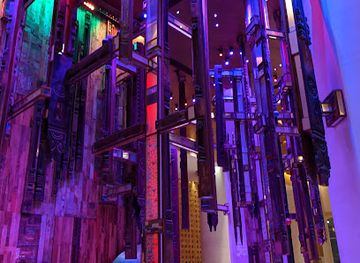
Shopping in Mylapore is concentrated around the temple approaches, Kutchery Road, R.K. Mutt Road and adjoining lanes, where local retail remains closely connected to religious and household life. Flower sellers offer jasmine and garlands for worship, while shops stock brass lamps, images, puja articles, devotional books, traditional clothing, jewellery and festival necessities. Sweet shops and savoury snack counters are part of the neighbourhood’s edible retail culture, and sari and textile businesses add to its longstanding connection with South Indian dress. The area is not primarily a polished boutique quarter; its appeal lies in small specialist shops, market-style displays and the practical commerce of a busy residential district. Bargaining practices vary, so visitors should ask the price clearly and handle delicate or ceremonial goods respectfully.
-
Religious goods store
Sri Vijaya Stores
Discover the essence of spirituality at Sri Vijaya Stores, Mylapore's premier destination for authentic Pooja materials and religious goods.
3 min walk · 0.2 km from neighbourhood centre
-
Gift shop
Aishwarya Stores
Discover unique gifts and local crafts at Aishwarya Stores in Mylapore, Chennai – a shopper's paradise for souvenirs and more.
4 min walk · 0.3 km from neighbourhood centre
-
Gift shop
AISHWARYA STORES MYLAPORE
Explore the vibrant Aishwarya Stores in Mylapore, Chennai, for unique gifts and authentic handicrafts that embody the spirit of Indian culture.
4 min walk · 0.3 km from neighbourhood centre
-
Store
N. Mada St. Mada St. Mylapore
Discover the vibrant shopping and rich cultural heritage of N. Mada Street in Mylapore, a must-visit destination in Chennai.
5 min walk · 0.4 km from neighbourhood centre


Mylapore essentials
Getting There
Getting Around
Safety
Emergency Situations
Do's and Don'ts
Local Tips

From Eve
Local phrases worth knowing
You don't need to get them perfect. A few words go a long way, and locals appreciate the effort.
Basics
| English | Local | Say it |
|---|---|---|
| Hello | வணக்கம் | [Vaṇakkam] |
| Goodbye | பிரியாவிடை | [Piriyāviṭai] |
| Yes | ஆம் | [Ām] |
| No | இல்லை | [Illai] |
| Please/You're welcome | தயவுசெய்து/வணக்கம் | [Tayavuceytu/Vaṇakkam] |
| Thank you | நன்றி | [Naṉṟi] |
| Excuse me/Sorry | மன்னிக்கவும் | [Maṉṉikkavum] |
| How are you? | நீங்கள் எப்படி இருக்கிறீர்கள்? | [Nīṅkaḷ eppaṭi irukkiṟīrkaḷ?] |
| Fine. And you? | நல்லது. நீங்கள் எப்படி? | [Nallatu. Nīṅkaḷ eppaṭi?] |
| Do you speak English? | நீங்கள் ஆங்கிலம் பேசுகிறீர்களா? | [Nīṅkaḷ āṅkiḷam pēcu kiṟīrkaḷā?] |
| I don't understand | எனக்கு புரியவில்லை | [Eṉakku puriyavillai] |
Eating & Drinking
| English | Local | Say it |
|---|---|---|
| I'd like to see the menu, please | மெனுவைப் பார்க்க விரும்புகிறேன் | [Meṉuvai pārkka virumpukiṟēṉ] |
| I don't eat meat | நான் இறைச்சி சாப்பிட மாட்டேன் | [Nāṉ iṟaicci sāppiṭa māṭṭēṉ] |
| Cheers! | வாழ்க! | [Vāḻka!] |
| I would like to pay, please | எனக்கு பணம் செலுத்த விரும்புகிறேன் | [Eṉakku paṇam celutta virumpukiṟēṉ] |
Emergencies
| English | Local | Say it |
|---|---|---|
| Help! | உதவி! | [Utavi!] |
| Go away! | போய் விடு! | [Pōy viṭu!] |
| Call the Police! | கோபுரத்துக்கு அழைக்கவும்! | [Kōpurattukku aḻaikkavum!] |
| Call a doctor! | மருத்துவனை அழைக்கவும்! | [Maruttuvaṉai aḻaikkavum!] |
| I'm lost | நான் தொலைந்துவிட்டேன் | [Nāṉ tolaintaviṭṭēṉ] |
| I'm ill | நான் நோயுற்றேன் | [Nāṉ nōyuṭṭēṉ] |
Shopping
| English | Local | Say it |
|---|---|---|
| I'd like to buy... | நான் வாங்க விரும்புகிறேன்... | [Nāṉ vāṅka virumpukiṟēṉ...] |
| I'm just looking | நான் பார்ப்பதற்காகவே இங்கு இருக்கிறேன் | [Nāṉ pārppataṟkākavē iṅku irukkiṟēṉ] |
| How much is it? | இதன் விலை எ столько? | [Itaṉ vilai eṉṉa?] |
| That's too expensive | அது மிகவும் விலையுயர்ந்தது | [Atu mikavum vilaiyuyaṉtatu] |
| Can you lower the price? | விலையை குறைக்க முடியுமா? | [Vilaiyai kuṟaikka muṭiyumā?] |
Time & Numbers
| English | Local | Say it |
|---|---|---|
| What time is it? | என்ன நேரம்? | [Eṉṉa nēram?] |
| It's one o'clock | இது ஒன்று மணிக்கு | [Itu oṉṟu maṇikku] |
| Half past (10) | பத்து மணிக்குப் பிறகு | [Pattu maṇikkup piṟaku] |
| Morning | காலை | [Kālai] |
| Afternoon | மதியம் | [Matiyam] |
| Evening | மாலை | [Mālai] |
| Yesterday | நேற்று | [Nēṟṟu] |
| Today | இன்று | [Iṉṟu] |
| Tomorrow | நாளை | [Nāḷai] |
| 1 | ஒன்று | [Oṉṟu] |
| 2 | இரண்டு | [Iraṇṭu] |
| 3 | மூன்று | [Mūṉṟu] |
| 4 | நான்கு | [Nāṉku] |
| 5 | ஐந்து | [Ainthu] |
| 6 | ஆறு | [Āṟu] |
| 7 | ஏழு | [Ēḻu] |
| 8 | எட்டு | [Eṭṭu] |
| 9 | ஒன்பது | [Oṉpatu] |
| 10 | பத்து | [Pattu] |
Transport & Directions
| English | Local | Say it |
|---|---|---|
| Where's a/the...? | எங்கு ஒரு ...? | [Eṅku oru ...?] |
| What's the address? | என்ன முகவரி? | [Eṉṉa mukavari?] |
| Can you show me (on the map)? | நீங்கள் எனக்கு (வரைப்படத்தில்) காட்ட முடியுமா? | [Nīṅkaḷ eṉakku (varaiyappaṭattil) kāṭṭa muṭiyumā?] |
| When's the next (bus)? | அடுத்த (பஸ்) எப்போது? | [Aṭutta (pas) eppōtu?] |
| A ticket (to ....) | ஒரு டிக்கெட் (க்கு ...) | [Oru ṭikkeṭ (kku ...)] |
History of Mylapore
An Ancient Coastal Settlement
Mylapore is an old settlement on Chennai’s coastal plain, with a history predating the modern city created under British rule. Classical and later accounts associate the place with maritime connections and with the early Christian tradition linked to Saint Thomas, although details of its earliest history are interpreted through a mixture of textual, religious and archaeological evidence. The settlement’s name is widely connected with Mayilapuram, the place of the peacock, a reference preserved in the devotional traditions surrounding Kapaleeshwarar Temple. Its location near the coast and waterways helped it develop as a distinct settlement before it became absorbed into the expanding urban fabric of Madras.
Temple Town and Sacred Geography
Kapaleeshwarar Temple became the defining institution of Mylapore’s religious landscape, and the streets around the present complex retain the logic of a temple town. The temple is traditionally associated with the Tamil Shaiva devotional canon and is dedicated to Shiva and Parvati in forms known locally as Kapaleeshwarar and Karpagambal. The four Mada Streets were shaped for processions and continue to frame festival activity, while the temple tank remains a major visual and ritual feature. The current temple structure reflects later rebuilding and architectural development rather than a single unchanged ancient fabric, with the area repeatedly altered by coastal change, political power and urban expansion.
From Madras Suburb to Urban Neighbourhood
As Madras expanded during the colonial and early modern periods, Mylapore retained its separate social and religious identity while becoming increasingly connected to the city’s roads, institutions and markets. Streets such as Kutchery Road and R.K. Mutt Road developed as important local corridors, linking residential areas with commercial activity and religious institutions. The arrival of modern transport and the growth of nearby administrative and educational districts drew Mylapore into the metropolitan economy. Traditional houses, mutts, shops and temple-related businesses continued alongside new construction, creating the layered streetscape that visitors encounter today.
Cultural Continuity in Modern Chennai
In the twentieth century and after Independence, Mylapore became strongly associated with Chennai’s Tamil literary, religious and performing-arts life. Sabha halls and cultural organisations helped sustain Carnatic music and Bharatanatyam, especially during the Margazhi season, while long-established devotional and educational institutions remained active. Residential redevelopment, traffic and apartment construction have changed the area’s appearance, and some older domestic buildings have disappeared, but the temple circuit, seasonal festivals, markets and religious institutions still organise local life. Mylapore therefore functions both as a historic neighbourhood and as a living cultural centre rather than simply a preserved heritage quarter.
Mylapore in Photos
Browse through our photo collection highlighting the charm and character of the destination.
Neighbourhoods near Mylapore
The closest neighbourhoods to Mylapore, if you have time for more than one stop.
-

-

-
-


Swipe for more neighbourhoods
Explore more

Explore more of Chennai
Chennai, India blends Dravidian temple architecture, Carnatic music, Marina Beach, colonial heritage and South Indian cuisine in a compelling coastal city.
Explore Chennai