

Free Sundarbans Travel Guide & Mobile App
Explore Sundarbans with free travel guides. Discover regional history, expert tips, proposed trips, and audio guides on web or mobile app.


Explore India's Sundarbans through tidal waterways, mangrove forests, wildlife watchtowers and village life on the edge of the Bay of Bengal.
Read more about Sundarbans
When is the best time to visit Sundarbans?
Best: December–February · 24–27°C| Month | High (°C) | Rainfall (mm) |
|---|---|---|
| January (best) | 24 | 10 |
| February (best) | 27 | 15 |
| March | 32 | 20 |
| April | 35 | 30 |
| May | 36 | 100 |
| June | 34 | 200 |
| July | 32 | 250 |
| August | 32 | 250 |
| September | 32 | 200 |
| October | 32 | 150 |
| November | 29 | 30 |
| December (best) | 25 | 20 |
Getting to and around Sundarbans
How to get there
Transportation
Top city travel guides in Sundarbans
The cities of Sundarbans, and the easiest places to base yourself.

Swipe for more cities
Best attractions in Sundarbans
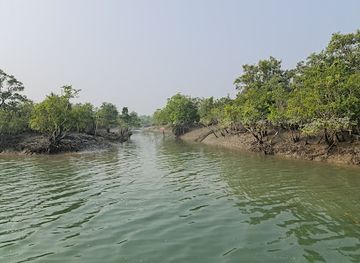
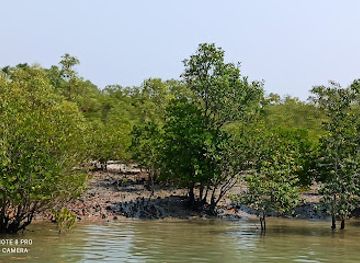
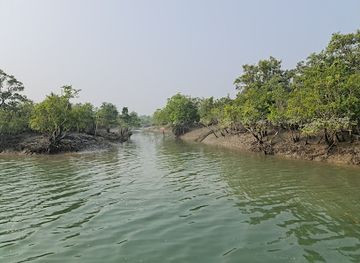
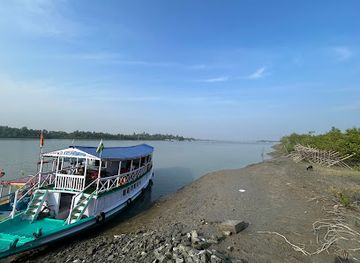
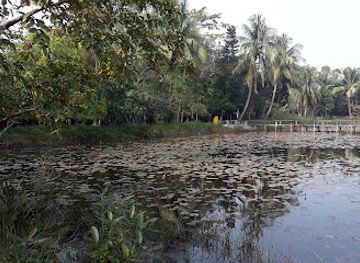
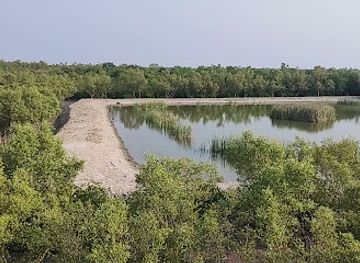
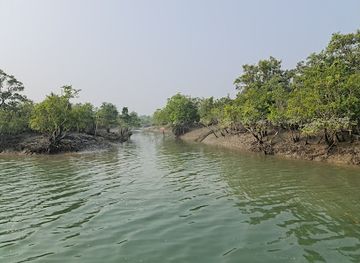
The Indian Sundarbans is primarily a wildlife and landscape destination, with experiences organised around tidal waterways rather than roads and conventional town sightseeing. Boat excursions through creeks and forest channels form the central attraction, revealing mangrove habitats, mudflats, waterbirds, estuarine crocodiles and, with luck, deer or a tiger at a distant bank. Sajnekhali Wildlife Sanctuary and its visitor facilities provide an important introduction to the protected environment, while Sudhanyakhali and Netidhopani are established watchtower areas used on authorised routes. At Dobanki, an elevated canopy walk offers views across mangrove vegetation without requiring visitors to enter the forest on foot. Gosaba and nearby Pakhiralay provide insight into life on inhabited delta islands, including embankments, small farms, ponds and ferry crossings. The region also supports birdwatching, nature photography and quiet observation of tidal change. It is not suited to independent hiking, and the quality of an excursion depends heavily on the boat, guide, season and water conditions. The most rewarding itineraries combine regulated forest access with time to understand the communities and fragile infrastructure beyond the park boundary.
-
Nature preserve
Sundarban National Park (West Bengal)
Discover the breathtaking landscapes and rich wildlife of Sundarban National Park, a UNESCO World Heritage Site in West Bengal, India.
-
Tour operator
Sundarban Eco Tourism
Explore the enchanting Sundarbans, a UNESCO World Heritage Site, rich in biodiversity and cultural heritage through sustainable tourism.
-
National forest
The Sundarbans (Bangladesh)
Explore the Sundarbans, a UNESCO World Heritage site in Bangladesh, home to the majestic Bengal tiger and stunning mangrove landscapes.
-
Tourist attraction
Taki Tourist Spot
Discover Taki Tourist Spot, a tranquil haven in India, where nature’s beauty and rich culture meet for an unforgettable escape.

Best landmarks in Sundarbans
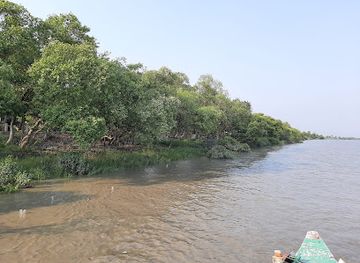
The most recognisable landmarks of the Indian Sundarbans are natural and conservation-related rather than monumental. The mangrove forest itself, with tangled roots, tidal creeks and low islands, defines the region's visual identity and changes subtly with water and sediment. Sajnekhali is a principal access point for the protected landscape and an important orientation centre for visitors. The watchtower at Sudhanyakhali is associated with one of the region's established wildlife-viewing routes, while Dobanki is distinguished by its raised canopy walk across mangrove habitat. Netidhopani is another notable forest watchtower location, reached only through regulated boat itineraries. Gosaba offers a contrasting human landmark: an inhabited island shaped by early twentieth-century reclamation and cooperative development, with embankments and waterways central to daily life. The broad estuarine channels approaching the Bay of Bengal are landmarks in their own right, demonstrating the scale and instability of the delta. None should be treated as guaranteed wildlife-viewing points; their importance lies in how they reveal the relationship between forest, tides, conservation and settlement.
-
Nature preserve
Sundarban National Park (West Bengal)
Discover the enchanting Sundarban National Park in West Bengal, a UNESCO World Heritage site rich in biodiversity and stunning landscapes.
-
Tour operator
Sundarban Eco Tourism
Explore the lush mangroves and diverse wildlife of Sundarban Eco Tourism, a unique destination perfect for nature lovers and adventure seekers.
-
National forest
The Sundarbans (Bangladesh)
Explore the Sundarbans, the world's largest mangrove forest, a UNESCO site teeming with wildlife, stunning landscapes, and vibrant local culture.
-
Wildlife park
Sajnekhali Wildlife Sanctuary
Explore Sajnekhali Wildlife Sanctuary, a UNESCO World Heritage Site, home to the majestic Bengal tiger and a rich ecosystem in the heart of the Sunderbans.

Explore Sundarbans on the map
Plan your trip on one map. See where the top cities, national parks and sights are, and book hotels and experiences in a few clicks.
Best hotels in Sundarbans
Best restaurants in Sundarbans
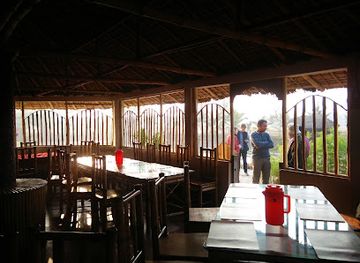
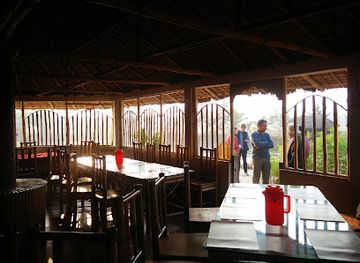
Dining in the Sundarbans is mainly provided by guesthouses, eco-lodges, homestays and small local eateries rather than a large restaurant scene. Meals commonly reflect Bengali home cooking, with rice served alongside freshwater fish, prawns, crab, vegetables, lentils and seasonal preparations. Fish availability varies, and visitors should ask how ingredients have been sourced, particularly where conservation rules affect forest and river resources. Simple breakfasts, tea and packed lunches are useful on boat excursions, as there are few dependable opportunities to buy food once a trip enters the protected waterways. Gosaba, Pakhiralay and the Godhkhali approach have more practical choices than remote islands, though menus remain limited. Some lodges can provide vegetarian food and adjust dishes for advance dietary requests, but this should be arranged before arrival. Bengal's wider culinary traditions, including rice-based sweets, mustard flavours and fish preparations, are often represented, while regional produce may include coconut, local vegetables and honey from regulated collection areas. Visitors should not purchase unverified forest honey or wildlife products.
-
 Hotel
HotelITC Sonar, a Luxury Collection Hotel, Kolkata
Discover unparalleled luxury at ITC Sonar, Kolkata - a perfect blend of tradition and modern elegance in the heart of India.
-
Nature preserve
Sundarban National Park (West Bengal)
Explore Sundarban National Park: A UNESCO World Heritage Site teeming with biodiversity and stunning landscapes in West Bengal.
-
Resort hotel
Sand Castles Beach Camp, Mousuni Island
Experience the serene beauty of Mousuni Island at Sand Castles Beach Camp - your perfect seaside escape with cozy accommodations and delightful seafood.
-
Wildlife park
Sajnekhali Wildlife Sanctuary
Explore Sajnekhali Wildlife Sanctuary: A Biodiversity Haven in India's Sundarbans Offering Unmatched Natural Beauty.
Best bars in Sundarbans
The Sundarbans has no substantial nightclub culture, and evening life centres on guesthouse dining rooms, village tea stalls and quiet time around accommodation. Some lodges may serve beer or other alcohol where permitted, but availability, licensing and refrigeration vary, so visitors should not expect a bar in every settlement. Night-time boat travel into the forest is restricted and unsafe outside authorised arrangements; the dark waterways are part of the protected environment rather than a nightlife setting. Evenings are better suited to listening to local guides, discussing the day's wildlife observations, watching the tide from a safe embankment or resting before an early departure. Kolkata, outside the region, offers the nearest large-city choice of cocktail bars, live music and clubs, while Canning and the island settlements provide only modest practical refreshment options.
-
Nature preserve
Sundarban National Park (West Bengal)
Explore the enchanting Sundarban National Park, a UNESCO World Heritage Site, teeming with diverse wildlife and stunning mangrove landscapes.
-
Pub
MOB (Ministry Of Booze) - Best Pub In Newtown
Discover the energetic nightlife at MOB - Ministry Of Booze, the best pub in Newtown, offering delightful drinks and an unforgettable atmosphere.
-
Bar
One Bottle Down
Discover the vibrant nightlife of Kolkata at One Bottle Down, where exquisite cocktails and a lively ambiance await.
-
Resort hotel
Sundarban Tiger Roar Resort - Resort &Tourism in sundarban
Discover the magic of the Sundarbans at Sundarban Tiger Roar Resort, where luxury meets nature in a breathtaking landscape.



Best nightclubs in Sundarbans
The Sundarbans has no substantial nightclub culture, and evening life centres on guesthouse dining rooms, village tea stalls and quiet time around accommodation. Some lodges may serve beer or other alcohol where permitted, but availability, licensing and refrigeration vary, so visitors should not expect a bar in every settlement. Night-time boat travel into the forest is restricted and unsafe outside authorised arrangements; the dark waterways are part of the protected environment rather than a nightlife setting. Evenings are better suited to listening to local guides, discussing the day's wildlife observations, watching the tide from a safe embankment or resting before an early departure. Kolkata, outside the region, offers the nearest large-city choice of cocktail bars, live music and clubs, while Canning and the island settlements provide only modest practical refreshment options.
-
Disco club
Tantra
Experience the electrifying nightlife of Kolkata at Tantra, a premier disco club known for its stunning ambiance and vibrant atmosphere.
-
Pub
UG Reincarnated, Kolkata
Discover the vibrant nightlife of Kolkata at UG Reincarnated, where Asian cuisine meets an energetic disco atmosphere for an unforgettable experience.
-
Night club
Club Barocks
Dive into the energetic nightlife of Kolkata at Club Barocks, where great food, drinks, and music come together for an unforgettable experience.
-
Jazz
Skinny Mo's Jazz Club
Discover live jazz music and the vibrant atmosphere of Skinny Mo's Jazz Club in Kolkata, a top destination for music lovers and nightlife enthusiasts.




Best shops in Sundarbans
Shopping in the Sundarbans is small-scale and practical rather than centred on malls or specialist retail districts. Gosaba, Canning and market settlements near the approach to Godhkhali offer everyday provisions, simple clothing, household goods and snacks, while guesthouses may sell locally themed handicrafts or small souvenirs. Visitors can look for Bengal textiles, baskets, handmade items and regional food products, but quality and availability vary by island and season. Honey is associated with the Sundarbans, yet only buy it from a reputable, traceable source and never purchase products presented as illegally collected from a protected forest. Local markets may also sell rice, vegetables, fish and seasonal fruit, although these are primarily for residents rather than tourists. Carry essential toiletries, medicines, batteries and cash from Kolkata or Canning, since island shops have limited stock. Avoid souvenirs made from mangrove wood, shells, animal parts or other forest materials, and favour purchases that support local makers without encouraging extraction from the protected environment.
-
Nature preserve
Sundarban National Park (West Bengal)
Explore the enchanting Sundarban National Park, a UNESCO World Heritage Site, where mangrove forests meet the majestic Royal Bengal tiger.
-
Wildlife park
Sajnekhali Wildlife Sanctuary
Explore Sajnekhali Wildlife Sanctuary: A breathtaking haven for wildlife enthusiasts and nature lovers in West Bengal.
-
Resort hotel
Sundarban Tiger Roar Resort - Resort &Tourism in sundarban
Discover the beauty of Sundarbans at the Sundarban Tiger Roar Resort, where luxury meets nature in a serene escape.
-
Tour operator
Sundarban Bengal Tourism
Explore the Sundarbans, a UNESCO World Heritage Site, known for its breathtaking mangrove forests and diverse wildlife, including the majestic Royal Bengal Tiger.


Get your free copy of our complete guide to Sundarbans, delivered straight to you.
Everything on this page, from attractions and restaurants to essentials and local phrases, in one PDF you can read offline, print or share.
Already have an account? Sign in
Your Sundarbans guide is ready.
We'll send it to · Not you? Sign out

Getting your guide ready…
We are putting together a fresh copy of the Sundarbans guide. This can take up to a minute.
This can take a few moments. If your browser asks, choose Allow so the download can start. You'll find the guide in your Downloads folder.
Nothing happened? Download it again
Sorry, the guide is taking longer than usual. Please try again in a minute, or get it by email instead.
Sundarbans essentials
Currency and Payment
Safety
Emergency Situations
Do's and Don'ts
Local Tips
From Eve
Local phrases worth knowing
You don't need to get them perfect. A few words go a long way, and locals appreciate the effort.
Basics
| English | Local | Say it |
|---|---|---|
| Hello | নমস্কার | [Nomoskar] |
| Goodbye | বিদায় | [Bidai] |
| Yes | হ্যাঁ | [Hya] |
| No | না | [Na] |
| Please/You're welcome | দয়া করে | [Doya kore] |
| Thank you | ধন্যবাদ | [Dhonnobad] |
| Excuse me/Sorry | মাফ করবেন | [Maf korben] |
| How are you? | আপনি কেমন আছেন? | [Apni kemon achen?] |
| Fine. And you? | ভালো। আর আপনি? | [Bhalo. Ar apni?] |
| Do you speak English? | আপনি কি ইংরেজি বলতে পারেন? | [Apni ki Ingreji bolte paren?] |
| I don't understand | আমি বুঝতে পারছি না | [Ami bujhte parchi na] |
Eating & Drinking
| English | Local | Say it |
|---|---|---|
| I'd like to see the menu, please | মেনু দেখতে চাই, অনুগ্রহ করে | [Menu dekhte chai, onugroho kore] |
| I don't eat meat | আমি মাংস খাই না | [Ami mangsho khai na] |
| Cheers! | সুস্বাদে! | [Suswade!] |
| I would like to pay, please | আমি বিল দিতে চাই, অনুগ্রহ করে | [Ami bil dite chai, onugroho kore] |
Emergencies
| English | Local | Say it |
|---|---|---|
| Help! | সাহায্য করুন! | [Sahajjo korun!] |
| Go away! | দূরে যান! | [Dure jan!] |
| Call the Police! | পুলিশ ডাকুন! | [Polish dakun!] |
| Call a doctor! | ডাক্তার ডাকুন! | [Doktor dakun!] |
| I'm lost | আমি হারিয়ে গেছি | [Ami hariye gechi] |
| I'm ill | আমি অসুস্থ | [Ami osustho] |
Shopping
| English | Local | Say it |
|---|---|---|
| I'd like to buy... | আমি কিনতে চাই... | [Ami kinte chai...] |
| I'm just looking | আমি শুধু দেখছি | [Ami shudhu dekhchi] |
| How much is it? | এটির দাম কত? | [Etir dam koto?] |
| That's too expensive | এটা খুব ব্যয়বহুল | [Eta khub byoybohul] |
| Can you lower the price? | আপনি দাম কমাতে পারেন? | [Apni dam komate paren?] |
Time & Numbers
| English | Local | Say it |
|---|---|---|
| What time is it? | কী সময়? | [Ki shomoy?] |
| It's one o'clock | এখন একটা বাজে | [Ekhon ekta baje] |
| Half past (10) | সাড়ে (১০) | [Sare (10)] |
| Morning | সকাল | [Shokal] |
| Afternoon | বিকেল | [Bikel] |
| Evening | সন্ধ্যা | [Shondhya] |
| Yesterday | গতকাল | [Gotokal] |
| Today | আজ | [Aaj] |
| Tomorrow | কাল | [Kal] |
| 1 | ১ | [1] |
| 2 | ২ | [2] |
| 3 | ৩ | [3] |
| 4 | ৪ | [4] |
| 5 | ৫ | [5] |
| 6 | ৬ | [6] |
| 7 | ৭ | [7] |
| 8 | ৮ | [8] |
| 9 | ৯ | [9] |
| 10 | ১০ | [10] |
Transport & Directions
| English | Local | Say it |
|---|---|---|
| Where's a/the...? | একটা/এর কোথায়? | [Ekta/er kothay?] |
| What's the address? | ঠিকানা কী? | [Thikana ki?] |
| Can you show me (on the map)? | আপনি আমাকে দেখাতে পারেন (মানচিত্রে)? | [Apni amake dekhate paren (manchitre)?] |
| When's the next (bus)? | পরবর্তী (বাস) কখন? | [Poroborti (bas) kokhon?] |
| A ticket (to ....) | একটি টিকেট (.... এর জন্য) | [Ekti tiket (.... er jonno)] |
History of Sundarbans
A Delta Shaped by Tides and Sediment
The Sundarbans developed within the active Ganges–Brahmaputra delta, one of the world's great sedimentary landscapes. Rivers continually deposit and remove silt, while tides carve channels around low islands. This geography constrained permanent settlement and encouraged communities to adapt buildings, agriculture and transport to flooding and salinity. Mangrove forests expanded across intertidal ground, creating a habitat whose boundaries have always changed with erosion, accretion and storms. The region's history is therefore environmental as well as political: water, sediment and cyclones have repeatedly influenced where people could live and cultivate land.
Early Navigation, Trade and Settlement
The wider delta was connected to riverine commerce long before modern conservation boundaries were drawn. Boats used its waterways to move between inland Bengal and the Bay of Bengal, although dense forest, shifting channels and difficult navigation limited permanent settlement in much of the southern tidal zone. Archaeological and historical evidence from the broader delta points to long-standing interaction between farming communities, river traders and coastal environments. In the Sundarbans, however, the forest remained more important as a protective and productive ecosystem than as a densely populated urban or agricultural centre.
Mughal and Early Colonial Land Reclamation
From the Mughal period onwards, political authorities and landholders encouraged the clearance and reclamation of parts of the northern and eastern delta. Under British rule, zamindars and commercial interests extended embankments and converted selected forest margins into rice fields and settlements. Reclamation was uneven and hazardous: embankment breaches, salinity, disease and storms could undo years of labour. The resulting pattern survives in the contrast between inhabited islands, protected mangrove tracts and embanked farmland that visitors pass on the approach from Canning and Godhkhali.
Gosaba and Cooperative Experiments
In the early twentieth century, parts of Gosaba became associated with the landholder and social reformer Sir Daniel Hamilton, who promoted settlement, education, cooperative activity and agricultural development from the 1900s. The experiment reflected wider colonial-era efforts to make difficult delta land economically productive, but it also left a local institutional and architectural legacy. Today Gosaba is one of the principal inhabited gateways to the Indian Sundarbans, linking visitor services and ferry routes with a landscape still dependent on embankments and tidal water.
Creation of the Tiger Reserve and National Park
Wildlife protection gained formal force in the late twentieth century. The Sundarbans Tiger Reserve was established in 1973 as part of India's Project Tiger, and Sundarbans National Park was created in 1984 from a protected core of the forest. These designations restricted access, regulated forest use and established the framework for conservation patrols, research and controlled tourism. The protected area is part of a larger network of sanctuaries and forest divisions, so the national park should not be treated as identical to the entire Sundarbans region.
International Recognition and Conservation
Sundarbans National Park became a UNESCO World Heritage Site in 1987, recognising its mangrove ecosystem and importance for wildlife, particularly the Bengal tiger. The Sundarbans Biosphere Reserve was designated in 1989, adding a broader conservation framework around protected forest and human settlements. These classifications reflect the international importance of the delta, but they do not remove the practical pressures faced by residents. Conservation must be balanced with livelihoods, safe access to forest resources, cyclone preparedness and protection of embankments.
Cyclones, Climate Pressure and a Changing Delta
Severe cyclones, tidal surges, erosion and rising salinity have repeatedly transformed the inhabited islands. Cyclone Aila in 2009 caused extensive damage across the wider Sundarbans, while later storms again exposed the fragility of embankments and freshwater supplies. Climate change adds to existing pressures by affecting sea levels, storm intensity, agriculture and mangrove stability. The modern history of the region is consequently shaped not only by wildlife conservation but also by adaptation: rebuilding embankments, protecting settlements and maintaining the ecological processes on which both forest and communities depend.
Sundarbans in Photos
Browse through our photo collection highlighting the charm and character of the destination.
Neighbouring regions of Sundarbans
The closest regions to Sundarbans, if you have time for more than one.
-

-

-

-

-


Swipe for more regions
Explore more

Explore more of India
Discover the magic of India, where diverse landscapes, rich heritage, and vibrant culture come together to create an unforgettable travel experience.
Explore India