

Free County Roscommon Travel Guide & Mobile App
Explore County Roscommon with free travel guides. Discover regional history, expert tips, proposed trips, and audio guides on web or mobile app.


County Roscommon pairs ancient royal sites, lake country, woodland walks and market towns with a quieter, deeply historical side of Ireland.
Read more about County Roscommon
When is the best time to visit County Roscommon?
Best: June–August · 19–20°C| Month | High (°C) | Rainfall (mm) |
|---|---|---|
| January | 8 | 70 |
| February | 9 | 60 |
| March | 11 | 70 |
| April | 13 | 60 |
| May | 16 | 60 |
| June (best) | 19 | 70 |
| July (best) | 20 | 80 |
| August (best) | 20 | 80 |
| September | 18 | 70 |
| October | 14 | 80 |
| November | 10 | 80 |
| December | 8 | 70 |
Getting to and around County Roscommon
How to get there
Transportation
Top city travel guides in County Roscommon
The cities of County Roscommon, and the easiest places to base yourself.

Swipe for more cities
Best attractions in County Roscommon
County Roscommon’s attractions combine archaeological landscapes, medieval ruins, estate history and freshwater recreation. Rathcroghan, near Tulsk, is the county’s most distinctive heritage experience: its prehistoric and early medieval monuments are scattered through working farmland and are best approached as a connected cultural landscape rather than a single enclosed site. Roscommon Castle and Roscommon Abbey provide a more concentrated encounter with medieval power and religious life in the county capital. At Strokestown, the house, gardens, estate buildings and National Famine Museum place the Great Famine within the social history of a particular landlord estate. Boyle brings together King House, Boyle Abbey and access to Lough Key Forest Park, where woodland trails, lake scenery and outdoor activities broaden the appeal beyond historic architecture. Other possibilities include riverside walking, angling, boating, birdwatching, cycling on quiet roads and exploring the market towns of Castlerea and Ballaghaderreen. Attractions are generally spread across the county, so a car-based itinerary or carefully planned town-to-town journey is more practical than trying to cover everything from one central base.
-
Castle
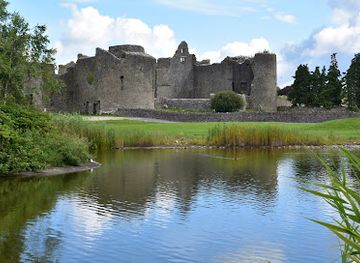
Roscommon Castle
Explore the rich history and stunning architecture of Roscommon Castle, a must-visit tourist attraction in County Roscommon, Ireland.
-
Tourist attraction
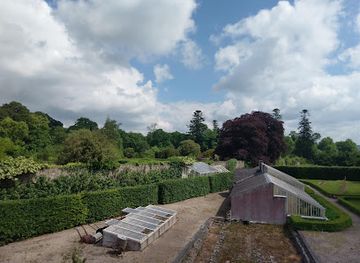
Strokestown Park House & Gardens
Discover the rich history and stunning landscapes at Strokestown Park House & Gardens, an essential Irish tourist attraction showcasing the past and present.
-
Museum
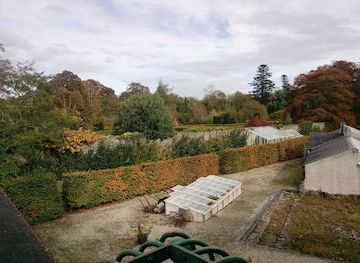
The National Famine Museum, Strokestown Park
Discover the poignant history of Ireland at The National Famine Museum in Strokestown Park, where past and nature beautifully intertwine.
-
Heritage building
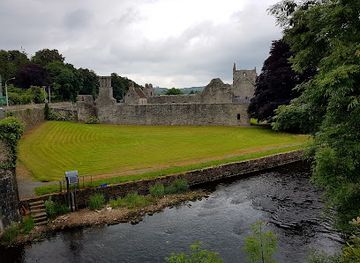
Boyle Abbey
Explore the historic Boyle Abbey, a stunning Cistercian monastery in County Roscommon, rich in architectural beauty and Irish heritage.
Best landmarks in County Roscommon
Roscommon Castle is the county’s most recognisable medieval landmark, a substantial late-thirteenth-century fortress whose ruined towers and curtain walls express the strategic importance of the town in the Anglo-Norman administration of Connacht. Nearby Roscommon Abbey, with its carved medieval remains and later burial monuments, adds a religious dimension to the town’s historic setting. Boyle Abbey is another important architectural survivor, preserving the scale and character of a major Cistercian foundation despite centuries of change. At Rathcroghan, the significance is geographical as much as visual: mounds, ringforts, passage tombs and earthworks form a historic landscape associated with Cruachain and the ancient kingship of Connacht. Strokestown Park’s house, demesne and estate structures represent a later phase of landed power, while King House in Boyle reflects civic and military history in an eighteenth-century urban building. Lough Key and its wooded shores provide a natural landmark, linking the county’s heritage with its characteristic lake country.
-
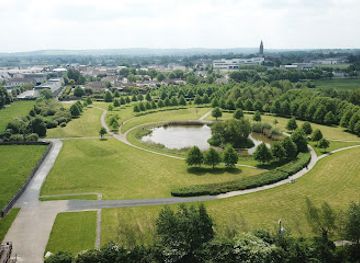
Tourist attraction
Lough Key Forest & Activity Park
Explore Lough Key Forest & Activity Park: A breathtaking blend of adventure, history, and nature in County Roscommon, Ireland.
-
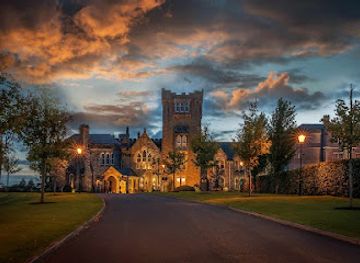
Hotel
Kilronan Castle
Discover the enchanting Kilronan Castle, a luxurious hotel and spa nestled in the scenic beauty of County Roscommon, Ireland.
-
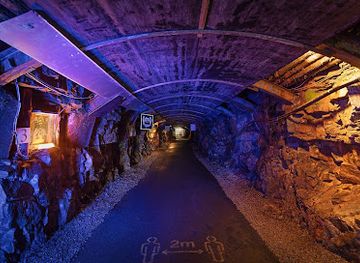
Tourist attraction
Arigna Mining Experience
Explore the depths of Ireland's mining history at the Arigna Mining Experience, a captivating journey through underground tunnels and local heritage.
-
Castle
Roscommon Castle
Discover Roscommon Castle - a striking historical site offering captivating insights into Ireland's medieval heritage amidst breathtaking landscapes.

Explore County Roscommon on the map
Plan your trip on one map. See where the top cities, national parks and sights are, and book hotels and experiences in a few clicks.
Best hotels in County Roscommon
Best restaurants in County Roscommon
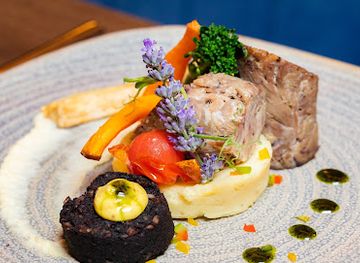
Dining in County Roscommon reflects the county’s rural economy and small-town scale. Traditional pubs, cafés, hotel restaurants and family-run establishments commonly centre menus on familiar Irish cooking, with beef, lamb, poultry, dairy produce, potatoes, soups, breads and seasonal vegetables prominent in different forms. Fresh baking, cakes and straightforward daytime meals are particularly useful in market towns, while farmers’ markets and local shops provide opportunities to buy regional foods for picnics. Around Boyle, Roscommon town, Castlerea and Strokestown, visitors will find a mixture of contemporary Irish cooking and dependable pub fare rather than a dense restaurant district. The county’s freshwater landscape supports angling and boating traditions, but it should not be confused with a coastal seafood destination. Menus and opening patterns can be seasonal, especially outside the larger towns, so advance planning is sensible for evening meals and for dining in rural locations.
-
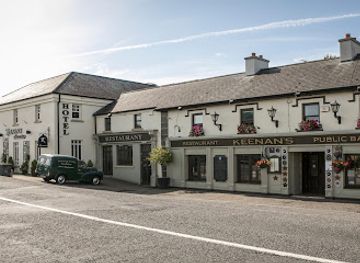
Hotel
Keenan's Hotel Bar & Restaurant
Experience genuine Irish hospitality at Keenan's Hotel Bar & Restaurant - where comfort meets culinary delight in beautiful Co. Roscommon.
-
Restaurant
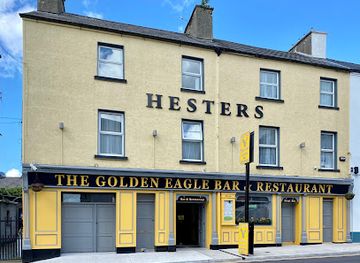
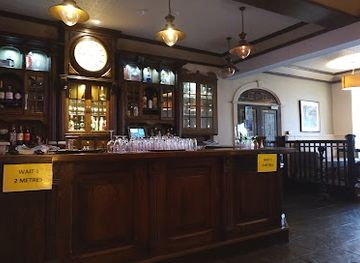
Hester's Golden Eagle Bar and Restaurant
Experience the heart of Irish hospitality at Hester's Golden Eagle Bar and Restaurant in Castlerea—where delicious food meets vibrant culture.
-
Gastropub
Regan's Gastro Pub and Restaurant
Experience authentic Irish cuisine at Regan's Gastro Pub – where local flavors meet warm hospitality in Cloonbrackna.
-
Restaurant
The Fiddlers Elbow Ballaghaderreen Bar&Restaurant
Experience authentic Irish hospitality at The Fiddlers Elbow Bar & Restaurant in Ballaghaderreen with delicious food and live music.
Best bars in County Roscommon
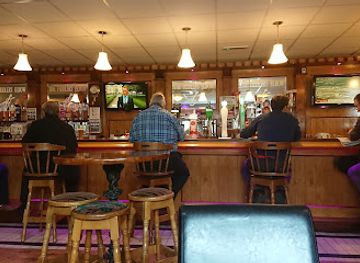
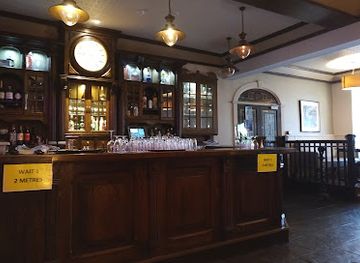
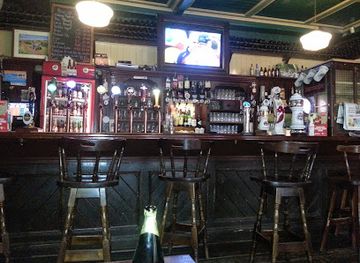
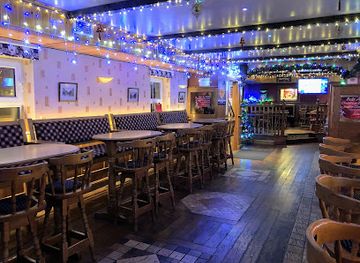
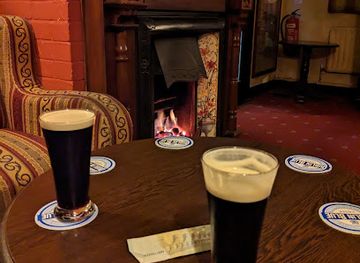
Evening life in County Roscommon is centred on traditional pubs, hotel bars, restaurants and occasional live-music nights rather than a large nightclub scene. Roscommon town and Boyle generally offer the broadest choice of places to meet for a drink, while smaller towns such as Castlerea and Strokestown have a more local, compact evening culture. Pubs may combine conversation, sport on television and music, but entertainment varies by night and season; visitors should not assume that a session or live performance is scheduled every evening. Dining-led evenings and community events are often more characteristic than late-night clubbing. Alcohol is not necessary to participate in local social life: cafés, cultural programmes and walks around historic town centres provide quieter alternatives, though their opening hours may be limited outside daytime and weekends.
-
Hotel
Gleeson's Hotel
Discover comfort and convenience at Gleeson’s Hotel, located in the heart of Roscommon's Market Square with local dining and attractions just steps away.
-
Gastropub
Regan's Gastro Pub and Restaurant
Experience the heart of Irish cuisine at Regan's Gastro Pub and Restaurant in Cloonbrackna, where tradition meets modern flavors.
-
Bar
JJ Harlow's
Discover the vibrant atmosphere of JJ Harlow's, a favorite bar in Ballypheasan, Roscommon, where local culture meets exceptional drinks.
-
Bar
Bear An Raille - The Railway Bar
Discover the charm of Bear An Raille - The Railway Bar, an authentic Irish pub in Ardnanagh, perfect for a cozy evening with local brews and hearty food.
Best nightclubs in County Roscommon
Evening life in County Roscommon is centred on traditional pubs, hotel bars, restaurants and occasional live-music nights rather than a large nightclub scene. Roscommon town and Boyle generally offer the broadest choice of places to meet for a drink, while smaller towns such as Castlerea and Strokestown have a more local, compact evening culture. Pubs may combine conversation, sport on television and music, but entertainment varies by night and season; visitors should not assume that a session or live performance is scheduled every evening. Dining-led evenings and community events are often more characteristic than late-night clubbing. Alcohol is not necessary to participate in local social life: cafés, cultural programmes and walks around historic town centres provide quieter alternatives, though their opening hours may be limited outside daytime and weekends.
-
Bar
JJ Harlow's
Discover the authentic Irish experience at JJ Harlow's Bar in Ballypheasan, where lively music meets warm hospitality.
-
Pub
Down The Hatch
Discover the heart of Ardnanagh at Down The Hatch, a pub that combines traditional Irish cuisine and a welcoming atmosphere for an unforgettable experience.
-
Bar
Foxes Bar
Experience local charm at Foxes Bar in Ballypheasan, Roscommon, where great drinks and lively atmosphere await visitors.
-
Bar
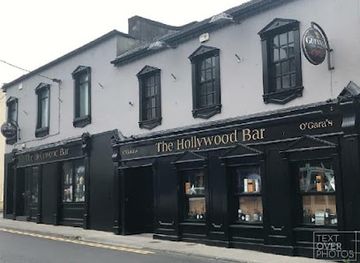
The Hollywood Bar
Experience the vibrant nightlife at The Hollywood Bar in Roscommon, where cocktails, sports, and entertainment come together for an unforgettable evening.

Best shops in County Roscommon
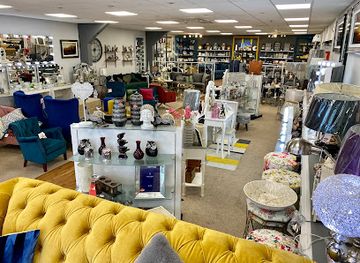
Shopping in County Roscommon is concentrated in market towns rather than large retail districts. Roscommon town and Boyle provide the widest selection of everyday shops, cafés, books, gifts and independent services, while Castlerea, Strokestown and Ballaghaderreen retain smaller high streets with a practical local focus. Farmers’ markets and food outlets are useful for seasonal produce, baking, preserves and other Irish-made goods when operating, although schedules should be checked locally. Craft galleries and heritage attractions may stock ceramics, textiles, artwork, books on archaeology and local history, and gifts connected with the county’s estates or ancient sites. Visitors looking for distinctive purchases should consider regional food products, handmade items and books about Rathcroghan, the Famine or the Shannon basin rather than generic souvenirs. Retail hours can be shorter in villages and outside the main tourist season, and smaller businesses may prefer card payments but do not all guarantee contactless service.
-
Home goods store
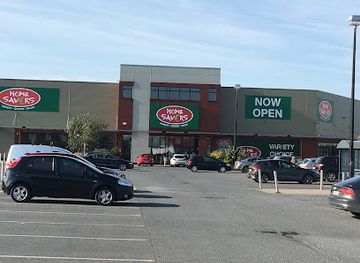
Homesavers
Explore Homesavers in Roscommon for a delightful shopping experience in home goods and garden supplies, perfect for tourists and locals alike.
-
Book store
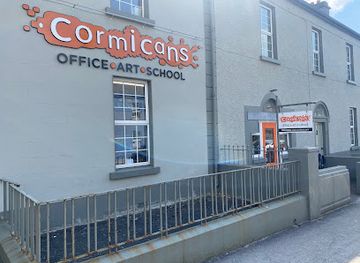
Cormicans Office, Art & School Supplies
Explore the charming Cormicans Office in Roscommon—your one-stop destination for books, art supplies, and a touch of local culture.
-
Clothing store
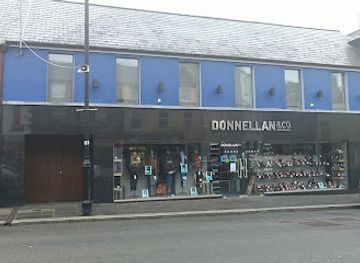
Donnellan & Company
Explore the stylish offerings of Donnellan & Company, a clothing store in Ballypheasan that captures the essence of Irish fashion.
-
Furniture store
McNulty's Furniture, Roscommon
Explore exquisite furniture and home goods at McNulty's in Roscommon, where quality meets style for every room in your home.
Get your free copy of our complete guide to County Roscommon, delivered straight to you.
Everything on this page, from attractions and restaurants to essentials and local phrases, in one PDF you can read offline, print or share.
Already have an account? Sign in
Your County Roscommon guide is ready.
We'll send it to · Not you? Sign out

Getting your guide ready…
We are putting together a fresh copy of the County Roscommon guide. This can take up to a minute.
This can take a few moments. If your browser asks, choose Allow so the download can start. You'll find the guide in your Downloads folder.
Nothing happened? Download it again
Sorry, the guide is taking longer than usual. Please try again in a minute, or get it by email instead.
County Roscommon essentials
Currency and Payment
Safety
Emergency Situations
Do's and Don'ts
Local Tips
From Eve
Local phrases worth knowing
You don't need to get them perfect. A few words go a long way, and locals appreciate the effort.
Basics
| English | Local | Say it |
|---|---|---|
| Hello | Dia dhuit | [dee-ah gwit] |
| Goodbye | Slán | [slawn] |
| Yes | Tá | [taw] |
| No | Níl | [neel] |
| Please/You're welcome | Le do thoil | [leh duh hull] |
| Thank you | Go raibh maith agat | [guh rev mah agat] |
| Excuse me/Sorry | Gabh mo leithscéal | [gaw mo lesh-kayl] |
| How are you? | Conas atá tú? | [kun-us ah-taw too] |
| Fine. And you? | Tá sé go maith. Conas atá tú? | [taw shay guh mah. kun-us ah-taw too] |
| Do you speak English? | An labhraíonn tú Béarla? | [an lar-ee-awn too bay-er-la] |
| I don't understand | Ní thuigim | [nee hig-im] |
Eating & Drinking
| English | Local | Say it |
|---|---|---|
| I'd like to see the menu, please | Ba mhaith liom an mhuirín a fheiceáil, le do thoil | [bah wah lum an whir-een a heh-kil, leh duh hull] |
| I don't eat meat | Ní ithim feoil | [nee ee-im fay-il] |
| Cheers! | Sláinte! | [slawn-chuh] |
| I would like to pay, please | Ba mhaith liom íoc, le do thoil | [bah wah lum eek, leh duh hull] |
Emergencies
| English | Local | Say it |
|---|---|---|
| Help! | Cabhair! | [kaw-ir] |
| Go away! | Imigh uaim! | [im-ee oo-im] |
| Call the Police! | Glaoigh ar na gardaí! | [glaw-ee ar na gar-dee] |
| Call a doctor! | Glaoigh ar dochtúir! | [glaw-ee ar dok-tur] |
| I'm lost | Tá mé caillte | [taw may ky-lta] |
| I'm ill | Tá mé tinn | [taw may tin] |
Shopping
| English | Local | Say it |
|---|---|---|
| I'd like to buy... | Ba mhaith liom a cheannach... | [bah wah lum a khyan-akh] |
| I'm just looking | Tá mé ag féachaint | [taw may egg fay-akh-int] |
| How much is it? | Cad é an praghas? | [kad ay an pra-has] |
| That's too expensive | Tá sé ró-dhaor | [taw shay roh-hair] |
| Can you lower the price? | An féidir leat an praghas a laghdú? | [an fay-dur lat an pra-has a log-doo] |
Time & Numbers
| English | Local | Say it |
|---|---|---|
| What time is it? | Cén t-am é? | [kayn tahm ay] |
| It's one o'clock | Tá sé a haon a chlog | [taw shay a hayn a khlog] |
| Half past (10) | Leath tar éis (10) | [lah tar aysh (10)] |
| Morning | Maidin | [mad-in] |
| Afternoon | Tráthnóna | [traw-no-na] |
| Evening | Tráthnóna | [traw-no-na] |
| Yesterday | Inné | [in-yeh] |
| Today | Inniu | [in-nyoo] |
| Tomorrow | Amárach | [ah-mah-rah] |
| 1 | 1 | [1] |
| 2 | 2 | [2] |
| 3 | 3 | [3] |
| 4 | 4 | [4] |
| 5 | 5 | [5] |
| 6 | 6 | [6] |
| 7 | 7 | [7] |
| 8 | 8 | [8] |
| 9 | 9 | [9] |
| 10 | 10 | [10] |
Transport & Directions
| English | Local | Say it |
|---|---|---|
| Where's a/the...? | Cá bhfuil an...? | [kaw will an...?] |
| What's the address? | Cad é an seoladh? | [kad ay an shol-adh] |
| Can you show me (on the map)? | An féidir leat dom a thaispeáint (ar an mapa)? | [an fay-dur lat dum a hash-paynt (ar an mah-pah)?] |
| When's the next (bus)? | Cathain a bheidh an (bus) eile? | [kah-hin a vay an (bus) el-eh?] |
| A ticket (to ....) | Ticéad (go ....) | [tick-ed (guh ....)] |
History of County Roscommon
Rathcroghan and the prehistoric royal landscape
The Rathcroghan complex near Tulsk is one of Ireland’s most important archaeological landscapes. Traditionally known as Cruachain, it was associated in early Irish literature with the kingship of Connacht and with major seasonal and mythological gatherings. Its monuments include passage tombs, ringforts, linear earthworks and ceremonial enclosures dating from several prehistoric and early medieval periods. Rathcroghan’s significance lies not in one isolated ruin but in the relationship between numerous sites across the surrounding countryside. The complex remains a central reference point for understanding the symbolic geography and political culture of pre-Christian and early medieval Connacht.
Early medieval monastic and Gaelic society
After the spread of Christianity, monasteries, churches and burial grounds became important centres of worship, learning and local authority in the region. Foundations such as Roscommon Abbey, although medieval in its surviving form, belong to a longer tradition of religious settlement across Connacht. The county’s landscape also retained strong Gaelic political identities, with local dynasties, churches and landholding families shaping communities around townlands and river valleys. Much of this history survives in ruined ecclesiastical buildings, holy wells, earthworks and the enduring pattern of dispersed settlement rather than in large urban monuments.
Norman expansion and the medieval town of Roscommon
The Anglo-Norman advance into Connacht transformed the political and military geography of the region during the thirteenth century. Roscommon Castle was built in the late thirteenth century as a major stone fortress and administrative centre, reflecting the English Crown’s efforts to consolidate authority west of the Shannon. Its strategic position also made it part of the long encounter between English power and Gaelic lordships. The Dominican friary founded at Roscommon developed alongside the town and remained an important religious institution until the Reformation. Their ruins together reveal the county’s medieval combination of military control, lordship and religious life.
Plantation, estates and changing landownership
From the seventeenth century onwards, confiscation, plantation and settlement altered patterns of landownership throughout County Roscommon. Large estates controlled extensive agricultural territories, while many Catholic tenants worked land under increasingly unequal conditions. Strokestown Park provides an especially valuable setting for examining this system: the house, demesne and former estate lands show how landlord wealth was organised, while the associated famine museum records the experience of those who depended on the estate. In towns such as Boyle and Roscommon, civic buildings, military associations and market functions also reflected the changing balance of power.
The Great Famine and the Strokestown evictions
The Great Famine of the 1840s brought hunger, disease, workhouse dependence, eviction and mass emigration to County Roscommon, as it did across Ireland. The murder of Major Denis Mahon, landlord of the Strokestown estate, in 1847 followed evictions and became one of the best-known episodes of the period. It illustrates the severe conflict surrounding estate management and assisted emigration during the crisis. The National Famine Museum at Strokestown uses estate records, buildings and personal histories to connect national catastrophe with the lives of tenants and families in a particular Roscommon community.
Independence and the modern rural county
The revolutionary period and the creation of the Irish state brought political change to a county whose communities were largely rural and agriculturally based. The War of Independence and Civil War affected local administration, policing and loyalties, while later decades saw population movement, farm consolidation and the gradual decline of some small railway and market functions. County Roscommon remains shaped by agriculture, but its economy now also includes public services, small business, tourism and commuting. Heritage conservation, outdoor recreation and archaeological interpretation have become increasingly important ways of presenting the county’s long history.
County Roscommon in Photos
Browse through our photo collection highlighting the charm and character of the destination.
Neighbouring regions of County Roscommon
The closest regions to County Roscommon, if you have time for more than one.
-

-

-

-

-


Swipe for more regions
Explore more
Explore more of Ireland
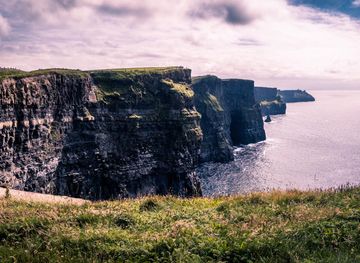
Discover Ireland: A land of enchanting landscapes, rich history, and vibrant culture, where every corner tells a story and every visit feels like coming home.
Explore Ireland