

Croagh Patrick Travel Guide - Free Web & App
Your ultimate guide to Croagh Patrick. Discover top landmarks, proposed trips, and local tips. Free on the web or via the Evendo companion app.


Croagh Patrick in Ireland blends mountain walking, pilgrimage, Clew Bay views, Murrisk heritage and West Mayo’s dramatic coastal scenery nearby.
The Mountain and Its Setting
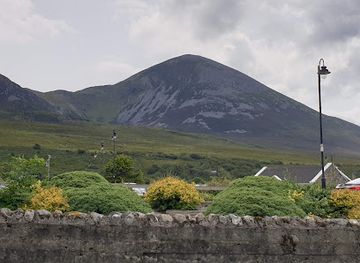
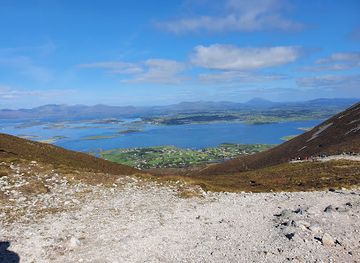
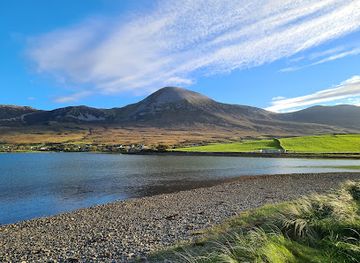
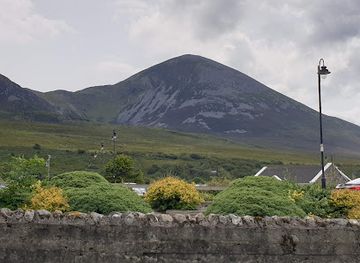
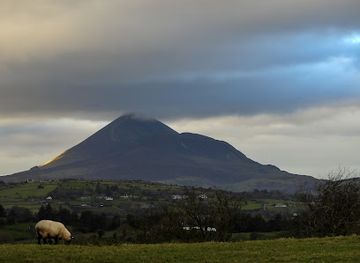
Croagh Patrick rises to 764 metres above the southern shore of Clew Bay in County Mayo, its sharply defined quartzite summit forming one of the most recognisable profiles in the west of Ireland. The mountain stands beside the village of Murrisk, around 8 kilometres from Westport, and belongs to a wider landscape of sea, islands, bogland, pasture and rugged coastal hills. On clear days, the ascent reveals changing views across Clew Bay, Clare Island, the Nephin Beg range and the distant coastline, although cloud and rain can quickly alter the character of the mountain.Read more about Croagh Patrick
A Living Pilgrimage Landscape
Murrisk, Heritage and the Coast
When is the best time to visit Croagh Patrick?
Best: June–August · 19–20°C| Month | High (°C) | Rainfall (mm) |
|---|---|---|
| January | 10 | 89 |
| February | 10 | 72 |
| March | 12 | 72 |
| April | 13 | 66 |
| May | 16 | 67 |
| June (best) | 19 | 74 |
| July (best) | 20 | 83 |
| August (best) | 20 | 83 |
| September | 18 | 80 |
| October | 16 | 97 |
| November | 13 | 100 |
| December | 11 | 91 |
Getting to and around Croagh Patrick
How to get there
Transportation
Best attractions in Croagh Patrick
The principal attraction is the ascent of Croagh Patrick itself, a pilgrimage and walking route rising from Murrisk to the summit chapel and broad views over Clew Bay. Below the mountain, Murrisk Abbey is a major medieval survivor, its remains standing between the pasture and the Atlantic-facing slopes. The National Famine Memorial, shaped as a coffin ship, commemorates those who died or emigrated during the Great Famine and gives the lower landscape a solemn historical dimension. Westport offers further heritage, shops and food, while the wider Clew Bay area includes coastal roads, beaches, harbours and views towards Clare Island and other offshore islands. Visitors interested in landscape can continue towards the wild scenery of the Sheeffry Hills or the coast beyond Louisburgh, but these are wider regional excursions rather than attractions on Croagh Patrick itself.
-
Tourist attraction
National Famine Memorial
Explore the National Famine Memorial in Murrisk, Co. Mayo, a haunting tribute to resilience and a reflection on Ireland's poignant history during the Great Famine.
-
Hiking area
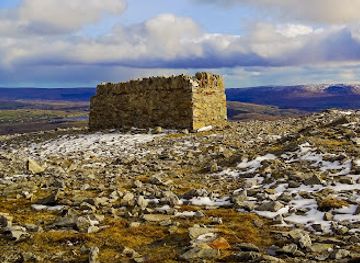
Croagh Patrick Halfway Point
Discover the breathtaking views and rich heritage of Croagh Patrick Halfway Point, a must-see hiking destination in County Mayo, Ireland.
-
Historical landmark
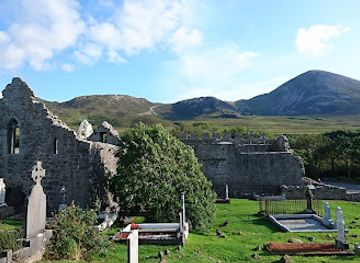
Murrisk Abbey
Discover the serene beauty and rich history of Murrisk Abbey in Co. Mayo, a captivating landmark near Croagh Patrick.
-
Historical landmark
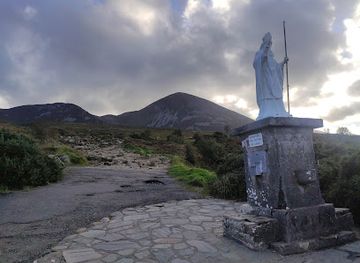
Statue of Saint Patrick
Explore the Statue of Saint Patrick in Co. Mayo, a historical landmark symbolizing Ireland's rich spiritual heritage and offering breathtaking views.
Best landmarks in Croagh Patrick
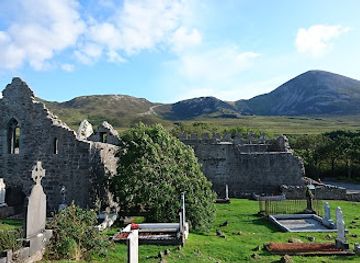
Croagh Patrick is the defining natural landmark, its quartzite summit rising prominently above Clew Bay and carrying the small white Saint Patrick’s Oratory near the top. The mountain’s religious importance is inseparable from its physical setting, where the open summit, Atlantic weather and views towards Clare Island create a powerful pilgrimage landscape. At the foot of the slopes, Murrisk Abbey is the principal historic monument, preserving the remains of a medieval Augustinian foundation linked with the O’Malley family. The National Famine Memorial provides a contrasting modern landmark beside the bay, commemorating the suffering and mass emigration associated with the Great Famine. Together, mountain, abbey and memorial express the area’s spiritual, political and social history without requiring a dense collection of buildings.
-
Monument
National Famine Memorial
Explore the National Famine Memorial in Murrisk, Co. Mayo, a powerful tribute to Irish resilience and a poignant reminder of the Great Famine's impact.
-
Hiking area
Croagh Patrick Halfway Point
Discover Croagh Patrick Halfway Point: A breathtaking hiking destination in County Mayo, rich in spirituality and stunning landscapes.
-
Historical landmark
Murrisk Abbey
Explore Murrisk Abbey, a historical gem in County Mayo, nestled at the foot of Croagh Patrick, offering rich history and breathtaking landscapes.
-
Equestrian facility
Croagh Patrick Stables
Experience the breathtaking beauty of Murrisk, Westport at Croagh Patrick Stables, where horseback riding adventures await amidst stunning Irish landscapes.
Explore Croagh Patrick on the map
Plan your trip on one map. See where the top attractions, landmarks, restaurants and hotels are, and book hotels and experiences in a few clicks.
Best hotels in Croagh Patrick
Best restaurants in Croagh Patrick
Croagh Patrick has no substantial dining scene on the mountain, so walkers normally eat before or after the ascent in Murrisk, Westport or another nearby settlement. Westport has the broadest range of cafés, pubs, restaurants and food shops, while rural establishments around Clew Bay offer a more limited choice and may be separated by considerable distances. The region’s food culture reflects western Ireland’s farming and maritime setting, with seafood, dairy products, meat, baking and locally produced ingredients commonly appearing on menus, although individual offerings vary. A packed lunch is sensible for the climb, since there are no mountain restaurants or reliable refreshment facilities on the upper route. Visitors should also carry water and avoid leaving food packaging or other waste on the slopes.
-
Gastropub
The Tavern Bar & Restaurant
Discover authentic Irish cuisine at The Tavern Bar & Restaurant in Murrisk, where tradition meets modernity amidst stunning natural beauty.
-
Bar
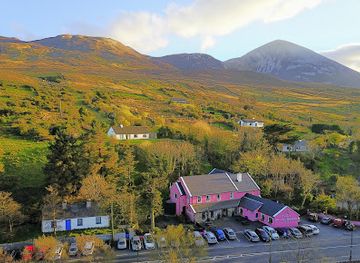
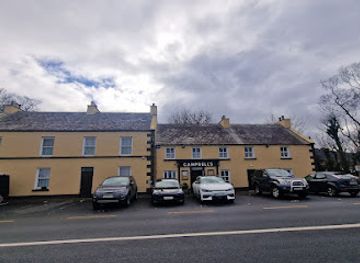
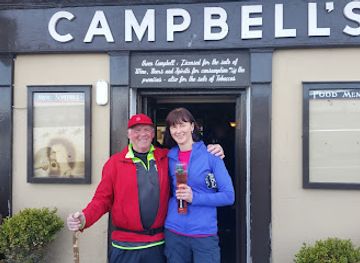
Campbells at the Reek
Experience authentic Irish hospitality at Campbells at the Reek in Murrisk—where great food meets stunning views.
Best bars in Croagh Patrick
Evening entertainment is concentrated in Westport rather than at Croagh Patrick or in Murrisk. Westport is known for traditional pubs, live Irish music and a sociable evening atmosphere, with venues ranging from small local bars to larger establishments serving visitors and residents. Murrisk and nearby rural areas are considerably quieter, with evening options generally limited to hospitality venues attached to accommodation or village pubs where available. The mountain itself has no nightlife infrastructure, and the exposed summit is a place for pilgrimage, walking and landscape rather than after-dark recreation. Seasonal festivals and music events may add variety, but visitors should check current local listings instead of assuming that a performance or venue will be operating on a particular night.
-
Gastropub
The Tavern Bar & Restaurant
Experience the culinary delights of The Tavern Bar & Restaurant in Murrisk, where traditional Irish cuisine meets modern gastropub vibes amidst breathtaking scenery.
-
Bar
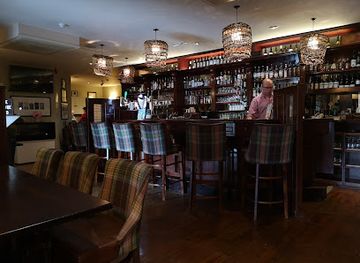
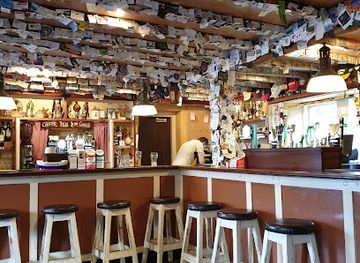
Campbells at the Reek
Experience the best of traditional Irish hospitality at Campbells at the Reek, where delicious cuisine meets breathtaking views in County Mayo.
Best nightclubs in Croagh Patrick
Evening entertainment is concentrated in Westport rather than at Croagh Patrick or in Murrisk. Westport is known for traditional pubs, live Irish music and a sociable evening atmosphere, with venues ranging from small local bars to larger establishments serving visitors and residents. Murrisk and nearby rural areas are considerably quieter, with evening options generally limited to hospitality venues attached to accommodation or village pubs where available. The mountain itself has no nightlife infrastructure, and the exposed summit is a place for pilgrimage, walking and landscape rather than after-dark recreation. Seasonal festivals and music events may add variety, but visitors should check current local listings instead of assuming that a performance or venue will be operating on a particular night.
-
Bar
Campbells at the Reek
Discover Campbells at the Reek, where local flavors meet stunning views in the heart of Murrisk, County Mayo.
Best shops in Croagh Patrick
Shopping around Croagh Patrick is modest and practical, with the main concentration of shops, galleries, outdoor equipment and food retailers in Westport. Murrisk is primarily a gateway village and heritage stop rather than a shopping destination, so walkers should obtain clothing, provisions and other essentials before arriving at the mountain. In Westport and across the wider Mayo region, visitors may find Irish craftwork, paintings, knitwear, pottery, locally produced foods and gifts connected with western landscapes and maritime culture, although the selection differs between businesses and seasons. Farm shops and village stores can be useful for regional food, but they are not evenly distributed around Clew Bay. The mountain itself should be treated as a natural and pilgrimage site, not as a retail area.
-
Mountain peak
Croagh Patrick
Experience the breathtaking beauty and spiritual allure of Croagh Patrick, a sacred mountain peak in County Mayo, Ireland, perfect for adventure seekers.
-
 Lodge
LodgeCroagh Patrick Lodge & Cottages
Discover the serene beauty of Croagh Patrick Lodge & Cottages, your ideal base for exploring Co. Mayo's stunning landscapes and outdoor adventures.
-
Equestrian facility
Croagh Patrick Stables
Discover the beauty of County Mayo from the saddle at Croagh Patrick Stables, where breathtaking views and equestrian adventures await.
-
Bed & breakfast
Croagh Patrick Lodge Self Catering
Discover the serene escape of Croagh Patrick Lodge in Co. Mayo, Ireland, where stunning views and comfort meet adventure and relaxation.
Get your free copy of our complete guide to Croagh Patrick, delivered straight to you.
Everything on this page, from attractions and restaurants to essentials and local phrases, in one PDF you can read offline, print or share.
Already have an account? Sign in
Your Croagh Patrick guide is ready.
We'll send it to · Not you? Sign out

Getting your guide ready…
We are putting together a fresh copy of the Croagh Patrick guide. This can take up to a minute.
This can take a few moments. If your browser asks, choose Allow so the download can start. You'll find the guide in your Downloads folder.
Nothing happened? Download it again
Sorry, the guide is taking longer than usual. Please try again in a minute, or get it by email instead.
Croagh Patrick essentials
Currency and Payment
Safety
Emergency Situations
Do's and Don'ts
Local Tips
From Eve
Local phrases worth knowing
You don't need to get them perfect. A few words go a long way, and locals appreciate the effort.
Basics
| English | Local | Say it |
|---|---|---|
| Hello | Dia dhuit | [dee-ah gwit] |
| Goodbye | Slán | [slawn] |
| Yes | Tá | [taw] |
| No | Níl | [neel] |
| Please/You're welcome | Le do thoil | [leh duh hull] |
| Thank you | Go raibh maith agat | [guh rev mah agut] |
| Excuse me/Sorry | Tá brón orm | [taw brohn urm] |
| How are you? | Conas atá tú? | [kun-us ah-taw too] |
| Fine. And you? | Tá mé go maith. Agus tú? | [taw may guh mah. ah-gus too] |
| Do you speak English? | An bhfuil Béarla agat? | [ahn wil bayr-lah ah-gut] |
| I don't understand | Ní thuigim | [nee hug-im] |
Eating & Drinking
| English | Local | Say it |
|---|---|---|
| I'd like to see the menu, please | Ba mhaith liom an billeog a fheiceáil, le do thoil | [ba wah lum on bil-ohg ah eck-ah-il, leh duh hull] |
| I don't eat meat | Ní ithim feoil | [nee ih-him foh-il] |
| Cheers! | Sláinte! | [slawn-cheh] |
| I would like to pay, please | Ba mhaith liom íoc, le do thoil | [ba wah lum ee-uck, leh duh hull] |
Emergencies
| English | Local | Say it |
|---|---|---|
| Help! | Cabhair! | [cow-er] |
| Go away! | Imigh uathu! | [ee-mee oo-ah-hoo] |
| Call the Police! | Glan an Gharda! | [glawn ahn gahr-dah] |
| Call a doctor! | Glan dochtúir! | [glawn duck-too-ir] |
| I'm lost | Táim caillte | [taw-im kah-il-cheh] |
| I'm ill | Táim tinn | [taw-im chin] |
Shopping
| English | Local | Say it |
|---|---|---|
| I'd like to buy... | Ba mhaith liom ceannach... | [ba wah lum can-uck] |
| I'm just looking | Níl mé ach ag féachaint | [neel may ahk egg fay-kincht] |
| How much is it? | Cé mhéad atá air? | [kay vayd ah-taw air] |
| That's too expensive | Tá sé ródhaor | [taw shay row-heer] |
| Can you lower the price? | An féidir leat an praghas a ísliú? | [ahn fay-dir lat on prah-gus ah eesh-loo] |
Time & Numbers
| English | Local | Say it |
|---|---|---|
| What time is it? | Cén t-am é? | [cane tahm ay] |
| It's one o'clock | Tá sé a haon | [taw shay ah hayn] |
| Half past (10) | Leathuair tar éis a deich | [lah-hoo-ir tar ash ah deh] |
| Morning | Maidin | [mah-din] |
| Afternoon | Tráthnóna | [traw-noh-nah] |
| Evening | Tráthnóna | [traw-noh-nah] |
| Yesterday | Inné | [in-nyeh] |
| Today | Inniu | [in-yoo] |
| Tomorrow | Amárach | [ah-ma-rahk] |
| 1 | A haon | [ah hayn] |
| 2 | A dó | [ah doh] |
| 3 | A trí | [ah tree] |
| 4 | A ceathair | [ah kah-her] |
| 5 | A cúig | [ah koo-ig] |
| 6 | A sé | [ah shay] |
| 7 | A seacht | [ah shakht] |
| 8 | A hocht | [ah hukht] |
| 9 | A naoi | [ah nee] |
| 10 | A deich | [ah deh] |
Transport & Directions
| English | Local | Say it |
|---|---|---|
| Where's a/the...? | Cá bhfuil an...? | [kah wil ahn] |
| What's the address? | Cad é an seoladh? | [kahd ay ahn shol-ah] |
| Can you show me (on the map)? | An bhfuil tú in ann é a thaispeáint (ar an léarscáil)? | [ahn wil too in on ay ah hawsh-paint (er on lare-skawl)] |
| When's the next (bus)? | Cathain atá an chéad... | [kaw-hin ah-taw ahn khade] |
| A ticket (to ....) | Ticead (go dtí ....) | [tick-ad (guh jee ....)] |
History of Croagh Patrick
A Mountain Shaped by Ice and Sea
Croagh Patrick is a distinctive quartzite mountain on the southern edge of Clew Bay, a landscape whose present form reflects long geological processes and later glacial erosion. Its steep upper slopes contrast with the lower pasture and bogland around Murrisk, while the mountain’s position beside the Atlantic gives it an exposed climate and far-reaching views over the bay. This physical setting has shaped both its religious importance and its modern appeal to walkers. The relationship between summit, coast and surrounding islands is central to understanding Croagh Patrick as a landscape rather than simply an isolated peak.
Pre-Christian Tradition and Saint Patrick
The mountain’s religious significance probably predates Christianity. Croagh Patrick is widely associated with the pre-Christian festival of Lughnasa, held at the beginning of August, and later Christian tradition connected the summit with Saint Patrick. According to tradition, Patrick fasted there for forty days during the fifth century and confronted demonic forces before blessing the surrounding region. The historical details of the story belong partly to devotional tradition, but the association became deeply embedded in Mayo’s religious culture. The summit pilgrimage developed through this continuing relationship between an older sacred landscape and Christian observance.
Murrisk Abbey and Medieval Mayo
At the foot of Croagh Patrick, Murrisk Abbey preserves a substantial reminder of the area’s medieval religious life. The Augustinian abbey was founded in the twelfth century and was associated with the powerful local O’Malley family, whose influence extended across parts of western Mayo. Its surviving church and thematically stark setting beside the mountain connect monastic history with the wider political and maritime world of Clew Bay. Although the abbey is now a ruin, its position makes clear how religious buildings, local lordship and the symbolic authority of Croagh Patrick were closely linked in the medieval landscape.
Pilgrimage, Famine and Modern Conservation
Croagh Patrick has remained an active pilgrimage destination into the modern era, with large numbers traditionally climbing on Reek Sunday, the final Sunday in July. A small chapel was built near the summit in 1905, reinforcing the mountain’s Christian identity while leaving the wider slopes largely open and undeveloped. The lower landscape also carries the memory of the Great Famine, commemorated by the National Famine Memorial at Murrisk, unveiled in 1997. Today, management concerns include erosion on the heavily used route and the need to balance pilgrimage, hillwalking, local access and care for the mountain environment.
Croagh Patrick in Photos
Browse through our photo collection highlighting the charm and character of the destination.
Neighbouring destination travel guides
The closest destinations to Croagh Patrick, if you have time for more than one.
-

-
-

-

-


Swipe for more destinations
Explore more

Explore more of County Mayo
Discover County Mayo, where rugged landscapes meet rich heritage, offering a perfect blend of adventure and relaxation in the heart of Ireland's Wild Atlantic Way.
Explore County Mayo
Explore more of Ireland
Discover Ireland: A land of enchanting landscapes, rich history, and vibrant culture, where every corner tells a story and every visit feels like coming home.
Explore Ireland