

Murat (Bari) Travel Guide - Free
Explore Murat in Bari with Evendo's free guide. Find the best shops, historic streets, restaurants, and gems on web or mobile.


Murat in Bari pairs 19th-century boulevards, Teatro Petruzzelli, polished shopping streets, Adriatic walks, cafés and authentic Puglian dining near the old city.
A Planned Quarter Beyond the Old Walls
Murat, often called Borgo Murattiano, is Bari’s ordered nineteenth-century centre: a broad, rectilinear district laid out beyond the medieval walls of Bari Vecchia. Its name recalls Joachim Murat, the Napoleonic king of Naples whose 1813 plan encouraged Bari’s expansion towards the landward plain. Today, the neighbourhood occupies the city’s commercial and civic core, with long avenues, formal squares and a sequence of streets that make it unusually easy to explore on foot.Read more about Murat
Streets, Squares and Theatres
Everyday Bari by the Water
Best attractions in Murat
Murat’s attractions are concentrated within an easily walkable urban grid. Teatro Petruzzelli is the neighbourhood’s major cultural draw, known for its grand auditorium and continuing programme of opera, concerts and theatre, while Teatro Margherita occupies a remarkable position over the waterfront near the district’s eastern edge. Piazza Umberto provides a broad, tree-filled public space beside the University of Bari, and Via Sparano turns sightseeing into an urban walk through the commercial centre. Corso Cavour leads towards the sea and a group of substantial civic and commercial buildings, while the Lungomare Nazario Sauro offers open Adriatic views and a changing perspective on the city. Smaller pleasures include pastry shops, bookshops, architecture from the nineteenth and early twentieth centuries, and the transition from Murat’s orderly avenues into the narrow lanes of adjacent Bari Vecchia.
-
Tourist attraction
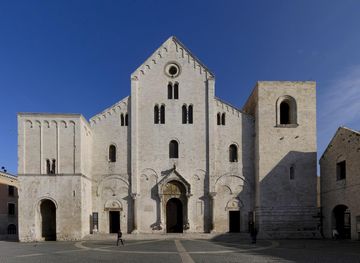
Basilica San Nicola
Explore the Basilica San Nicola, a stunning Romanesque church in Bari, Italy, famed for its rich history and spiritual significance.
11 min walk · 0.9 km from neighbourhood centre
-
Tourist attraction
Lungomare Araldo di Crollalanza
Explore the breathtaking Lungomare Araldo di Crollalanza, a scenic promenade in Bari, Italy, where coastal beauty and local culture come alive.
9 min walk · 0.7 km from neighbourhood centre
-
Tourist attraction
Palazzo Simi
Explore Palazzo Simi in Bari, Italy – a captivating museum showcasing the region's rich archaeological heritage and history.
7 min walk · 0.6 km from neighbourhood centre
-
Tourist attraction
Palazzo del Sedile
Explore the stunning Palazzo del Sedile in Bari, a historical gem showcasing exquisite architecture and rich cultural heritage in Italy's charming city.
9 min walk · 0.7 km from neighbourhood centre


Best landmarks in Murat
Murat’s landmarks express Bari’s transformation from a walled medieval town into a modern nineteenth-century city. Teatro Petruzzelli dominates the cultural landscape with its large historic theatre building, while Teatro Margherita is distinctive for standing above the water on supporting structures at the edge of the waterfront. Piazza Umberto is an important civic open space, framed by central institutions and the University of Bari, and its trees soften the geometry of the surrounding avenues. Via Sparano and Corso Cavour are landmarks in urban rather than monumental terms: their long perspectives, substantial façades and commercial activity reveal the planned character of the Borgo Murattiano. The seafront, especially along Lungomare Nazario Sauro, marks the neighbourhood’s relationship with the Adriatic and provides a strong contrast with the enclosed lanes of nearby Bari Vecchia.
-
Tourist attraction
Palazzo Mincuzzi
Explore Palazzo Mincuzzi, a stunning architectural marvel in Bari, showcasing neo-Renaissance and Art Nouveau styles, rich history, and vibrant surroundings.
2 min walk · 0.2 km from neighbourhood centre
-
Tourist attraction
Largo Albicocca - Piazza degli Innamorati
Explore the enchanting Largo Albicocca - Piazza degli Innamorati, a romantic square in Bari full of charm, culture, and delightful local cuisine.
7 min walk · 0.6 km from neighbourhood centre
-
Cultural center
SPAZIO MURAT
Experience the vibrant cultural scene of Bari at Spazio Murat, where art, history, and community intersect in a stunning architectural space.
7 min walk · 0.6 km from neighbourhood centre
-
Historical place museum
Palazzo Fizzarotti
Explore the historic charm of Palazzo Fizzarotti, a captivating museum and event venue in Bari, showcasing rich cultural heritage and stunning architecture.
6 min walk · 0.5 km from neighbourhood centre


Explore Murat on the map
A handpicked selection of must-see spots in Murat, mapped for you.
Best hotels in Murat
Best restaurants in Murat
Murat offers Bari’s most convenient concentration of everyday central dining, from coffee bars and bakeries to trattorias, pizzerias and contemporary restaurants. Around Via Sparano, Via Argiro and Corso Cavour, visitors can find quick breakfasts, aperitivo stops and sit-down meals within the nineteenth-century street grid, while the lanes nearer the old city lead towards a broader selection of traditional Puglian cooking. Expect regional ingredients such as orecchiette, vegetables, seafood, focaccia and burrata, alongside menus shaped by the port’s wider Mediterranean connections. Restaurants near the waterfront often make the most of the open setting, whereas smaller establishments on the interior streets feel more integrated into local daily life. Murat is also useful for sampling Bari’s informal food culture between museum, shopping and theatre visits, though the most characterful old-town food addresses may lie just outside the neighbourhood’s commonly understood boundaries.
-
Restaurant
Antò - Cucina Tipica Pugliese [RISTORANTE&TRATTORIA]
Discover authentic Southern Italian flavors at Antò - Cucina Tipica Pugliese in Bari, where tradition meets taste in every dish.
10 min walk · 0.8 km from neighbourhood centre
-
Restaurant
La Cecchina - Ristorante di cucina italiana, gourmet, pugliese, miglior pesce e carne locale. Ristoranti a Bari Vecchia
Discover La Cecchina in Bari Vecchia: A culinary delight featuring gourmet Italian dishes with fresh seafood and local meats in an inviting atmosphere.
9 min walk · 0.7 km from neighbourhood centre
-
Seafood
La Muraya Ristorante
Discover the best seafood and Italian cuisine at La Muraya Ristorante in Bari – where every meal is a celebration of flavor.
5 min walk · 0.4 km from neighbourhood centre
-
Italian
El Pedro
Experience the heart of Italy at El Pedro in Bari – where authentic flavors meet warm hospitality in an inviting atmosphere.
4 min walk · 0.3 km from neighbourhood centre


Best bars in Murat
Murat’s evening life is varied but more closely tied to aperitivo, dining and performance than to a concentrated nightclub scene. Corso Cavour and the streets around Via Argiro attract bars and cafés where residents, students and office workers meet after work, while the central grid remains active around restaurants and cultural venues. Teatro Petruzzelli and Teatro Margherita bring a more formal evening rhythm, with audiences moving through the neighbourhood before and after performances. The waterfront provides another popular setting for an evening walk or drink, particularly when the weather is mild. Nightlife is generally dispersed rather than confined to one club strip, and the atmosphere changes from commercial bustle to quieter residential streets over a relatively short distance. Visitors should check current programmes and venue arrangements rather than assuming that a particular performance or late-night event is taking place.
-
Pub
Taverna del Maltese
Experience the heart of Bari at Taverna del Maltese, where vibrant atmosphere meets authentic Italian cuisine and local brews in a charming setting.
2 min walk · 0.2 km from neighbourhood centre
-
Pub
Birreria La Farmacia dei sani
Discover the vibrant atmosphere and exquisite flavors at Birreria La Farmacia dei Sani, a must-visit pub and restaurant in Bari.
1 min walk · 0.1 km from neighbourhood centre
-
Wine bar
Enoteca Bar a Vin - Mostofiore
Discover the exquisite flavors of Italy at Enoteca Bar a Vin - Mostofiore, a premier wine bar and seafood restaurant in Bari.
1 min walk · 0.1 km from neighbourhood centre
-
Bar
Baretto
Discover the charm of Baretto in Bari, a cozy bar serving exquisite cocktails and authentic Italian coffee in the heart of the city.
1 min walk · 0.1 km from neighbourhood centre


Best nightclubs in Murat
Murat’s evening life is varied but more closely tied to aperitivo, dining and performance than to a concentrated nightclub scene. Corso Cavour and the streets around Via Argiro attract bars and cafés where residents, students and office workers meet after work, while the central grid remains active around restaurants and cultural venues. Teatro Petruzzelli and Teatro Margherita bring a more formal evening rhythm, with audiences moving through the neighbourhood before and after performances. The waterfront provides another popular setting for an evening walk or drink, particularly when the weather is mild. Nightlife is generally dispersed rather than confined to one club strip, and the atmosphere changes from commercial bustle to quieter residential streets over a relatively short distance. Visitors should check current programmes and venue arrangements rather than assuming that a particular performance or late-night event is taking place.
-
Night club
Kabuki
Discover the pulsating nightlife at Kabuki, Bari's premier night club, known for its vibrant atmosphere, diverse music, and stylish ambiance.
4 min walk · 0.3 km from neighbourhood centre
-
Night club
Cabaret Voltaire 1916
Discover the vibrant nightlife at Cabaret Voltaire 1916, a premier night club in Bari, offering live music and exquisite cocktails in a captivating atmosphere.
15 min walk · 1.2 km from neighbourhood centre
-
Night club
Riva Club
Discover the electrifying nightlife at Riva Club, Bari's premier night club, where vibrant music and exhilarating dance await.
7 min walk · 0.6 km from neighbourhood centre
-
Night club
Checkpoint Charlie
Discover the pulse of Bari's nightlife at Checkpoint Charlie, where music, dance, and vibrant energy come together to create unforgettable nights.
7 min walk · 0.6 km from neighbourhood centre


Best shops in Murat
Shopping is one of Murat’s defining activities. Via Sparano forms the principal retail spine, combining well-known fashion names with cafés and the steady foot traffic of Bari’s commercial centre, while Via Argiro offers a more varied sequence of independent shops, food businesses and smaller retailers. Corso Cavour adds further commercial activity and makes a useful route between the central grid and the waterfront. Visitors looking for traditional produce and informal food shopping will find a stronger market atmosphere in nearby parts of central Bari than in the polished sections of Via Sparano, so it is worth exploring beyond the main branded frontage. Bookshops, bakeries, specialist food shops and jewellery businesses reflect Murat’s role as a working city centre, while side streets provide a less uniform view of local retail life than the principal shopping avenue.
-
Cannabis store
Sweedy Store - CBD Cannabis Dispensary - Delivery - Self H24
Experience the vibrant cannabis culture at Sweedy Store, Bari's eclectic hub for cannabis, collectibles, and local souvenirs.
5 min walk · 0.4 km from neighbourhood centre
-
Gift shop
Macedonia Bari (A)
Macedonia Bari: Your destination for unique gifts and vintage treasures in the heart of Bari, Italy.
5 min walk · 0.4 km from neighbourhood centre
-
Vintage clothing store
Scenario - Vintage Store Bari
Discover unique vintage finds at Scenario Vintage Store in Bari - a fashion treasure trove for retro enthusiasts and style seekers.
7 min walk · 0.5 km from neighbourhood centre
-
Clothing store
Mennone - Shop since 1938
Explore Mennone, Bari's iconic clothing store since 1938, offering timeless fashion and a unique shopping experience in the heart of the city.
5 min walk · 0.4 km from neighbourhood centre


Murat essentials
Getting There
Getting Around
Safety
Emergency Situations
Do's and Don'ts
Local Tips

From Eve
Local phrases worth knowing
You don't need to get them perfect. A few words go a long way, and locals appreciate the effort.
Basics
| English | Local | Say it |
|---|---|---|
| Hello | Ciao | [chow] |
| Goodbye | Arrivederci | [ah-ree-veh-dehr-chee] |
| Yes | Sì | [see] |
| No | No | [noh] |
| Please/You're welcome | Per favore/Prego | [pehr fah-voh-reh/preh-goh] |
| Thank you | Grazie | [grah-tsyeh] |
| Excuse me/Sorry | Scusa/Mi dispiace | [skoo-sah/mee dee-spyah-cheh] |
| How are you? | Come stai? | [koh-meh stah-ee] |
| Fine. And you? | Bene. E tu? | [beh-neh. eh too] |
| Do you speak English? | Parli inglese? | [pahr-lee een-gleh-zeh] |
| I don't understand | Non capisco | [nohn kah-pee-skoh] |
Eating & Drinking
| English | Local | Say it |
|---|---|---|
| I'd like to see the menu, please | Vorrei vedere il menu, per favore | [vohr-reh-ee veh-deh-reh eel meh-noo, pehr fah-voh-reh] |
| I don't eat meat | Non mangio carne | [nohn mahn-joh kahr-neh] |
| Cheers! | Salute! | [sah-loo-teh] |
| I would like to pay, please | Vorrei pagare, per favore | [vohr-reh-ee pah-gah-reh, pehr fah-voh-reh] |
Emergencies
| English | Local | Say it |
|---|---|---|
| Help! | Aiuto! | [ah-yoo-toh] |
| Go away! | Vai via! | [vah-ee vee-ah] |
| Call the Police! | Chiama la polizia! | [kee-ah-mah lah poh-lee-tsya] |
| Call a doctor! | Chiama un dottore! | [kee-ah-mah oon doh-toh-reh] |
| I'm lost | Mi sono perso | [mee soh-noh pehr-soh] |
| I'm ill | Sto male | [stoh mah-leh] |
Shopping
| English | Local | Say it |
|---|---|---|
| I'd like to buy... | Vorrei comprare... | [vohr-reh-ee kohm-prah-reh] |
| I'm just looking | Sto solo guardando | [stoh soh-loh gwar-dahn-doh] |
| How much is it? | Quanto costa? | [kwahn-toh koh-stah] |
| That's too expensive | È troppo caro | [eh troh-poh kah-roh] |
| Can you lower the price? | Puoi abbassare il prezzo? | [pwah-ee ahb-bahs-sah-reh eel preh-tsoh] |
Time & Numbers
| English | Local | Say it |
|---|---|---|
| What time is it? | Che ora è? | [keh oh-rah eh] |
| It's one o'clock | È l'una | [eh loo-nah] |
| Half past (10) | È mezzogiorno | [eh meh-tsoh-johr-noh] |
| Morning | Mattina | [maht-tee-nah] |
| Afternoon | Pomeriggio | [poh-meh-ree-joh] |
| Evening | Sera | [seh-rah] |
| Yesterday | Ieri | [yeh-ree] |
| Today | Oggi | [oh-jee] |
| Tomorrow | Domani | [doh-mah-nee] |
| 1 | Uno | [oo-noh] |
| 2 | Due | [doo-eh] |
| 3 | Tre | [treh] |
| 4 | Quattro | [kwaht-troh] |
| 5 | Cinque | [cheen-kweh] |
| 6 | Sei | [seh-ee] |
| 7 | Sette | [seht-teh] |
| 8 | Otto | [oht-toh] |
| 9 | Nove | [noh-veh] |
| 10 | Dieci | [dee-eh-chee] |
Transport & Directions
| English | Local | Say it |
|---|---|---|
| Where's a/the...? | Dov'è un/il...? | [doh-veh oon/eel] |
| What's the address? | Qual è l'indirizzo? | [kwahl eh leen-dee-ree-tsoh] |
| Can you show me (on the map)? | Puoi mostrarmi (sulla mappa)? | [pwah-ee mohs-trahr-mee (sool-lah mahp-pah)] |
| When's the next (bus)? | Quando passa il prossimo (autobus)? | [kwahn-doh pahs-sah eel prohs-see-moh (ow-toh-boos)] |
| A ticket (to ....) | Un biglietto (per ....) | [oon beel-lyet-toh (pehr)] |
History of Murat
Murat’s Expansion Plan
Murat developed beyond Bari’s medieval walls after Joachim Murat’s 1813 decree established the direction of the city’s modern expansion. The new district was conceived as a more regular urban extension, contrasting with the compact, irregular fabric of Bari Vecchia. Its straight streets and larger building plots allowed the growing port city to accommodate new homes, businesses and civic functions. Although the plan belonged to the Napoleonic period, much of Murat’s built character took shape during the nineteenth century, as Bari’s economic and administrative importance increased under the Kingdom of the Two Sicilies and later unified Italy.
The Nineteenth-Century Borgo
During the nineteenth century, the quarter developed as Bari’s bourgeois and commercial extension, with multi-storey residential buildings, shops and representative streets organised around the new grid. Public life increasingly shifted beyond the old walls, while the connection between the city centre, port and railway encouraged movement through the district. Piazza Umberto became an important open space, and the neighbourhood’s broad roads provided a setting for institutions and businesses that required more room than the medieval core could offer. Murat consequently became associated with modern urban life in Bari rather than with the older city’s defensive and domestic traditions.
Theatres and Civic Culture
The opening of Teatro Petruzzelli in 1903 strengthened Murat’s role as Bari’s principal cultural quarter. Built for the Petruzzelli family, the theatre hosted opera, concerts and major public performances, while the nearby commercial streets supported hotels, cafés and evening entertainment. Teatro Margherita, inaugurated in the early twentieth century on the waterfront, added another prominent cultural venue and reflected Bari’s relationship with the sea. These theatres helped turn the district’s formal avenues into a stage for civic life, linking commerce and leisure with the expanding port city.
War, Reconstruction and Renewal
Murat experienced the urban pressures that affected Bari during the twentieth century, including wartime disruption, post-war reconstruction and the growth of road traffic. The Petruzzelli was devastated by fire in 1991 and later rebuilt, reopening in 2009, restoring a major cultural landmark to the neighbourhood. In recent decades, the central streets and waterfront have seen renewed attention, with pedestrian improvements, renovated public spaces, new hospitality businesses and changing retail patterns. Murat remains a working central district rather than a preserved historic quarter, and its contemporary identity continues to balance residents, students, offices, visitors and long-established businesses.
Murat in Photos
Browse through our photo collection highlighting the charm and character of the destination.
Neighbourhoods near Murat
The closest neighbourhoods to Murat, if you have time for more than one stop.
-

-

-


Swipe for more neighbourhoods
Explore more
Explore more of Bari
Bari blends a sea-facing old town, Romanesque churches, Puglian cuisine and lively streets, offering historic sights, Adriatic views and local culture.
Explore Bari