

Gran Paradiso National Park Travel Guide - Free Web & App
Your ultimate guide to Gran Paradiso National Park. Discover top landmarks, proposed trips, and local tips. Free on the web or via the Evendo companion app.


Gran Paradiso National Park in Italy offers alpine valleys, glaciers, ibex, historic villages, hiking trails and high-mountain scenery across the Western Alps.
Mountain Landscapes and Wildlife
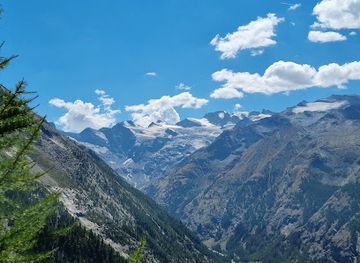
Gran Paradiso National Park occupies a broad section of the Graian Alps between Italy’s Aosta Valley and Piedmont. Its valleys rise from wooded lower slopes and meadowlands towards glacial peaks, rocky ridges and the 4,061-metre Gran Paradiso, the only summit higher than 4,000 metres entirely within Italy. The park is crossed by contrasting valleys, including Cogne, Valsavarenche and the Rhêmes Valley on the Aosta side, and the Orco and Soana valleys in Piedmont. Their scenery changes with altitude, from larch and Norway spruce forests to alpine pastures, scree, glaciers and high mountain plateaux.Read more about Gran Paradiso National Park
A Protected Alpine Heritage
Valleys, Villages and Outdoor Exploration
When is the best time to visit Gran Paradiso National Park?
Best: June–August · 23–25°C| Month | High (°C) | Rainfall (mm) |
|---|---|---|
| January | 2 | 54 |
| February | 3 | 46 |
| March | 5 | 44 |
| April | 11 | 40 |
| May | 17 | 32 |
| June (best) | 23 | 30 |
| July (best) | 25 | 28 |
| August (best) | 24 | 30 |
| September | 20 | 38 |
| October | 14 | 46 |
| November | 8 | 52 |
| December | 4 | 54 |
Getting to and around Gran Paradiso National Park
How to get there
Transportation
Best attractions in Gran Paradiso National Park
Gran Paradiso National Park’s attractions are distributed through several valleys rather than concentrated in one visitor centre. Cogne provides access to meadows, larch forests and routes towards the high mountains, as well as the former mining landscape around the town. Valsavarenche reaches deep into the massif and is one of the principal approaches to Gran Paradiso, while the Rhêmes valleys combine pastoral settlements with extensive walking terrain. On the Piedmont side, the Orco valley leads to Noasca and Ceresole Reale, where mountain scenery surrounds the artificial lake and high road corridors. The Soana valley offers a quieter landscape of villages, woodland and alpine routes. Across the park, marked paths reveal waterfalls, glacial valleys, rocky viewpoints and pastureland, while visitor centres and small local museums explain ibex conservation, geology, traditional life and the history of the royal reserve.
-
Tourist attraction
Castello di Fénis
Explore the enchanting Castello di Fénis in Aosta Valley, a medieval masterpiece showcasing Italy's rich history and stunning architecture.
-
Tourist attraction
Arco di Augusto
Visit the Arco di Augusto in Aosta, Italy, and step back in time to explore this monumental Roman triumphal arch surrounded by the beauty of the Alps.
-
Tourist attraction
Porta Pretoria
Explore Porta Pretoria, Aosta's iconic gateway, rich in Roman history and surrounded by vibrant culture and stunning mountain views.
-
Tourist attraction
Cascate di Lillaz
Discover the enchanting Cascate di Lillaz in Aosta Valley, where majestic waterfalls and scenic hiking trails await nature enthusiasts and adventure seekers.


Best landmarks in Gran Paradiso National Park
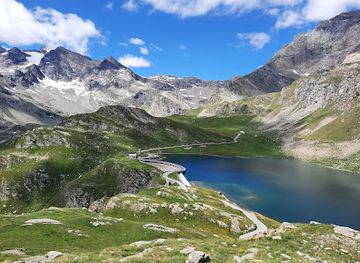
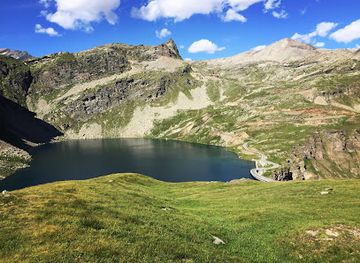
The park’s defining natural landmark is Gran Paradiso, rising to 4,061 metres and forming the highest summit located wholly within Italy. Around it are glacial valleys, rocky ridges and high passes that give the protected area its alpine character. The Nivolet plateau and the Ceresole Reale reservoir are prominent features on the Piedmont side, while the Cogne, Valsavarenche and Rhêmes valleys provide contrasting approaches to the massif. Human landmarks include historic village churches, stone settlements, alpine pasture buildings and remnants of the Cogne mining landscape. Royal hunting paths and mountain routes also recall the area’s nineteenth-century royal reserve. Their significance lies not only in appearance but in the way they express the relationship between ibex conservation, pastoral life, mining, royal history and the later creation of Italy’s first national park.
-
National park
Parco Nazionale Gran Paradiso
Discover the breathtaking beauty and adventure of Gran Paradiso National Park, Italy's first national park nestled in the heart of the Alps.
-
Botanical garden
Giardino botanico alpino Paradisia
Explore the breathtaking Giardino Botanico Alpino Paradisia, a botanical garden in Aosta Valley showcasing over 1,200 alpine plant species amidst stunning mountain scenery.
-
Mountain peak
Gran Paradiso
Discover the breathtaking beauty of Gran Paradiso, Italy's first national park, where adventure and nature unite in stunning alpine landscapes.
-
Park
Fondation Grand Paradis
Discover the enchanting landscapes and diverse wildlife of Fondation Grand Paradis, a captivating park in the Aosta Valley, perfect for nature lovers and outdoor enthusiasts.


Explore Gran Paradiso National Park on the map
Plan your trip on one map. See where the top attractions, landmarks, restaurants and hotels are, and book hotels and experiences in a few clicks.
Best hotels in Gran Paradiso National Park
Best restaurants in Gran Paradiso National Park
Dining in and around Gran Paradiso National Park reflects the food traditions of the Aosta Valley and Piedmont rather than a single park cuisine. In Cogne, Valsavarenche, Ceresole Reale and other valley settlements, visitors can find restaurants, inns and cafés serving mountain cooking based on soups, polenta, potatoes, local cheeses and preserved meats. Fontina is especially associated with the Aosta Valley, while Piedmont-side menus may include toma cheeses, seasonal mushrooms and regional antipasti. Traditional products such as lardo from Arnad, rye bread and alpine dairy goods appear in the wider regional food culture, although availability varies by establishment and season. Visitors staying in villages or mountain accommodation should plan meals around the limited spread of services, especially outside the main summer and winter periods, and carry provisions for remote walking days.
-
Restaurant
La Locanda dei Sognatori
Discover authentic Italian cuisine at La Locanda dei Sognatori in Saint-Pierre; where tradition meets taste amidst breathtaking mountain views.
-
Restaurant
Ristorante La Genzianella
Discover authentic Italian cuisine at Ristorante La Genzianella in Ceresole Reale, where tradition meets breathtaking alpine views.
-
Italian
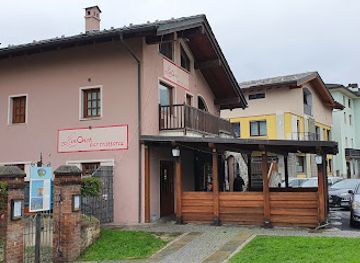
Osteria Dei Viaggiatori
Discover authentic Italian flavors at Osteria Dei Viaggiatori in Frera Superiore - where every meal is a celebration of local tradition.
-
Restaurant
Rifugio Massimo Mila
Experience authentic alpine cuisine at Rifugio Massimo Mila, nestled in the breathtaking Italian Alps – a perfect blend of nature and tradition.


Best bars in Gran Paradiso National Park
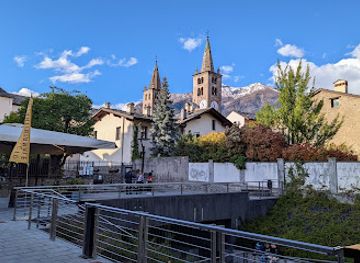
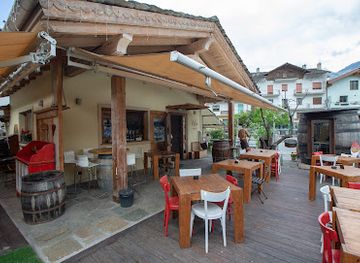
Evenings in Gran Paradiso National Park are generally quiet and centred on the hospitality of valley villages rather than nightlife districts. Cogne, Valsavarenche, Rhêmes-Saint-Pierre, Ceresole Reale and other gateway communities have bars, cafés or hotel lounges where visitors may meet for an aperitivo or a drink after walking, although the scale and opening patterns vary seasonally. Traditional inns and restaurants often provide the main evening atmosphere, with local conversation and mountain views replacing late-night entertainment. Occasional village festivals, cultural events or seasonal gatherings may add a social dimension, but these should be checked locally rather than assumed. Dedicated nightclubs are not characteristic of the park; visitors seeking a broader urban evening scene would need to travel outside the protected valleys to larger towns such as Aosta or Turin.
-
Brasserie
Birrificio '63
Experience Aosta's finest craft brews and authentic Italian cuisine at Birrificio '63, the ultimate brewpub destination.
-
Eatery
Vinosteria Antirouille
Discover the authentic taste of Aosta Valley at Vinosteria Antirouille, a charming eatery and wine bar offering exquisite local cuisine and wines.
-
Restaurant
La Brasserie du Bon Bec
Indulge in the authentic flavors of the Aosta Valley at La Brasserie du Bon Bec, where local ingredients meet culinary artistry.
-
Bar
limonet
Discover Limonet, a charming bar in Aosta Valley, offering local wines, cocktails, and a cozy atmosphere perfect for relaxation.

Best nightclubs in Gran Paradiso National Park
Evenings in Gran Paradiso National Park are generally quiet and centred on the hospitality of valley villages rather than nightlife districts. Cogne, Valsavarenche, Rhêmes-Saint-Pierre, Ceresole Reale and other gateway communities have bars, cafés or hotel lounges where visitors may meet for an aperitivo or a drink after walking, although the scale and opening patterns vary seasonally. Traditional inns and restaurants often provide the main evening atmosphere, with local conversation and mountain views replacing late-night entertainment. Occasional village festivals, cultural events or seasonal gatherings may add a social dimension, but these should be checked locally rather than assumed. Dedicated nightclubs are not characteristic of the park; visitors seeking a broader urban evening scene would need to travel outside the protected valleys to larger towns such as Aosta or Turin.
-
Tourist attraction
Gran Paradiso 4061m
Explore the breathtaking Gran Paradiso, the first national park in Italy, where stunning alpine scenery and wildlife await adventurers and nature lovers alike.
Best shops in Gran Paradiso National Park
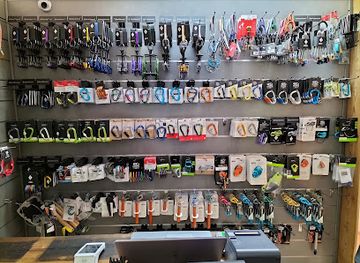
Shopping within Gran Paradiso National Park is concentrated in valley settlements rather than in a unified commercial centre. Cogne and other larger visitor bases offer opportunities to buy regional foods, cheeses, cured meats, preserves, bread, wine and craft products, while village shops provide practical supplies for walking and everyday travel. On the Aosta Valley side, visitors may encounter locally made textiles, woodwork and other alpine handicrafts, although the range differs between businesses and seasons. Piedmont-side communities around Locana and Ceresole Reale are useful for regional provisions and outdoor essentials, but remote trailheads have little retail infrastructure. Farm products and small-scale artisan goods are often the most meaningful purchases, reflecting pastoral traditions, mountain materials and the food culture of the surrounding valleys rather than mass-produced souvenirs.
-
Hypermarket
Gros Cidac Store
Experience the best of local flavors and Italian delicacies at Gros Cidac Store, Aosta Valley's premier hypermarket for tourists and locals.
-
Gift shop
Gamestop
Explore Gamestop in Aosta for an unforgettable shopping experience filled with video games, collectibles, and toys in a vibrant atmosphere.
-
Sporting goods store
Alpine World Shop and Guides
Explore the Aosta Valley at Alpine World Shop and Guides: Your premier destination for sporting goods and guided alpine adventures.
-
Sporting goods store
Vertical No Limits Aosta
Explore the Aosta Valley with top-notch gear from Vertical No Limits, your go-to sporting goods store in the heart of adventure.



Get your free copy of our complete guide to Gran Paradiso National Park, delivered straight to you.
Everything on this page, from attractions and restaurants to essentials and local phrases, in one PDF you can read offline, print or share.
Already have an account? Sign in
Your Gran Paradiso National Park guide is ready.
We'll send it to · Not you? Sign out

Getting your guide ready…
We are putting together a fresh copy of the Gran Paradiso National Park guide. This can take up to a minute.
This can take a few moments. If your browser asks, choose Allow so the download can start. You'll find the guide in your Downloads folder.
Nothing happened? Download it again
Sorry, the guide is taking longer than usual. Please try again in a minute, or get it by email instead.
Gran Paradiso National Park essentials
Currency and Payment
Safety
Emergency Situations
Do's and Don'ts
Local Tips
From Eve
Local phrases worth knowing
You don't need to get them perfect. A few words go a long way, and locals appreciate the effort.
Basics
| English | Local | Say it |
|---|---|---|
| Hello | Ciao | [chow] |
| Goodbye | Arrivederci | [ah-ree-veh-dehr-chee] |
| Yes | Sì | [see] |
| No | No | [noh] |
| Please/You're welcome | Per favore/Prego | [pair fah-voh-reh/preh-goh] |
| Thank you | Grazie | [grah-tsyeh] |
| Excuse me/Sorry | Scusi/Mi dispiace | [skoo-zee/mee dee-spyah-che] |
| How are you? | Come stai? | [koh-meh stai] |
| Fine. And you? | Bene. E tu? | [beh-neh. eh too] |
| Do you speak English? | Parli inglese? | [pahr-lee een-gleh-zeh] |
| I don't understand | Non capisco | [non kah-pee-skoh] |
Eating & Drinking
| English | Local | Say it |
|---|---|---|
| I'd like to see the menu, please | Vorrei vedere il menu, per favore | [vohr-reh-ee veh-deh-reh eel meh-noo, pair fah-voh-reh] |
| I don't eat meat | Non mangio carne | [non man-joh kahr-neh] |
| Cheers! | Salute! | [sah-loo-teh] |
| I would like to pay, please | Vorrei pagare, per favore | [vohr-reh-ee pah-gah-reh, pair fah-voh-reh] |
Emergencies
| English | Local | Say it |
|---|---|---|
| Help! | Aiuto! | [ah-yoo-toh] |
| Go away! | Vai via! | [vah-ee vyah] |
| Call the Police! | Chiama la polizia! | [kyah-mah lah poh-lee-tsyah] |
| Call a doctor! | Chiama un dottore! | [kyah-mah oon doh-toh-reh] |
| I'm lost | Sono perso | [soh-noh pehr-soh] |
| I'm ill | Sono malato | [soh-noh mah-lah-toh] |
Shopping
| English | Local | Say it |
|---|---|---|
| I'd like to buy... | Vorrei comprare... | [vohr-reh-ee kohm-prah-reh] |
| I'm just looking | Sto solo guardando | [stoh soh-loh gwar-dahn-doh] |
| How much is it? | Quanto costa? | [kwahn-toh koh-stah] |
| That's too expensive | È troppo caro | [eh troh-poh kah-roh] |
| Can you lower the price? | Puoi abbassare il prezzo? | [pwah-ee ahb-bah-sah-reh eel preh-tsoh] |
Time & Numbers
| English | Local | Say it |
|---|---|---|
| What time is it? | Che ora è? | [keh oh-rah eh] |
| It's one o'clock | È l'una | [eh loo-nah] |
| Half past (10) | Le dieci e mezza | [leh dee-eh-chee eh meht-sah] |
| Morning | Mattina | [mah-tee-nah] |
| Afternoon | Pomeriggio | [poh-meh-ree-joh] |
| Evening | Sera | [seh-rah] |
| Yesterday | Ieri | [yeh-ree] |
| Today | Oggi | [oh-jee] |
| Tomorrow | Domani | [doh-mah-nee] |
| 1 | Uno | [oo-noh] |
| 2 | Due | [dweh] |
| 3 | Tre | [treh] |
| 4 | Quattro | [kwah-troh] |
| 5 | Cinque | [cheen-kweh] |
| 6 | Sei | [seh-ee] |
| 7 | Sette | [seht-teh] |
| 8 | Otto | [oht-toh] |
| 9 | Nove | [noh-veh] |
| 10 | Dieci | [dee-eh-chee] |
Transport & Directions
| English | Local | Say it |
|---|---|---|
| Where's a/the...? | Dov'è...? | [doh-veh] |
| What's the address? | Qual è l'indirizzo? | [kwahl eh leen-dee-ree-tsoh] |
| Can you show me (on the map)? | Puoi mostrarmi (sulla mappa)? | [pwah-ee mohs-trahr-mee soo-lah mahp-pah] |
| When's the next (bus)? | Quando è il prossimo (autobus)? | [kwahn-doh eh eel prohs-see-moh ow-toh-boo] |
| A ticket (to ....) | Un biglietto (per ...) | [oon beel-yet-toh pair] |
History of Gran Paradiso National Park
A Landscape Shaped by Ice and Uplift
The Gran Paradiso region is part of the Graian Alps, a mountain system formed through the collision of the African and European tectonic plates. Glacial erosion later carved the deep U-shaped valleys, cirques and hanging valleys that define much of the park. Ice continues to influence the landscape through the surviving glaciers around the Gran Paradiso massif, although their extent has changed over time. These geological processes explain the sharp contrast between forested valley floors, broad alpine pastures and high rocky terrain, giving the park its distinctive vertical geography.
Early Communities and Mountain Land Use
Human settlement developed along the valleys and lower mountain slopes, where communities combined small-scale agriculture, pastoralism and the seasonal movement of livestock to alpine pastures. Paths connected villages with summer grazing grounds and neighbouring valleys, while local architecture adapted to steep terrain and long winters. The mountains were not an empty wilderness: forests supplied fuel and timber, pastures supported dairying, and routes across the Alps linked communities. Remnants of this pastoral landscape remain visible in hamlets, stone buildings, field systems and high-altitude pasture structures.
The Royal Hunting Reserve
In 1856 King Victor Emmanuel II established a royal hunting reserve in the Gran Paradiso area. The reserve helped protect the Alpine ibex, then under severe pressure from hunting, while also creating a controlled royal landscape across the mountain valleys. Hunting rights and royal use affected local communities, but the reserve’s protection of ibex became an important foundation for later conservation. Royal hunting paths and associated routes contributed to the early mapping and practical exploration of the high valleys, even though access remained demanding and seasonal.
Creation of Italy’s First National Park
Victor Emmanuel III transferred the former hunting reserve to the Italian state in 1919, and Gran Paradiso National Park was formally established in 1922 as Italy’s first national park. Its central purpose was the protection of the ibex and the wider alpine environment. Early management focused on limiting illegal hunting and safeguarding wildlife, while gradually developing scientific observation and visitor access. The park’s creation marked a transition from a private royal reserve to a public conservation landscape intended to protect natural heritage for the country as a whole.
Conservation, Tourism and Changing Valleys
During the twentieth century, roads, improved mountain paths, refuges and valley accommodation made the park more accessible to walkers, climbers and nature enthusiasts. Tourism grew alongside the decline of some traditional agricultural and industrial activities, including historic mineral extraction in the Cogne area. The park authority now combines habitat and wildlife protection with environmental education, monitoring and carefully managed recreation. Contemporary visitors encounter both a protected alpine ecosystem and a living cultural landscape, where villages, pasture traditions and mountain infrastructure remain part of the park’s identity.
Gran Paradiso National Park in Photos
Browse through our photo collection highlighting the charm and character of the destination.
Cities in Gran Paradiso National Park
The towns and cities of Gran Paradiso National Park, and the easiest places to base yourself.
-
-

-

-

-
-


Swipe for more cities
Neighbouring destination travel guides
The closest destinations to Gran Paradiso National Park, if you have time for more than one.
-
-

-

-

-


Swipe for more destinations
Explore more

Explore more of Aosta Valley
Experience the Aosta Valley: Italy's Hidden Alpine Gem with Rich History, Stunning Landscapes, and Culinary Delights.
Explore Aosta Valley
Explore more of Italy
Discover Italy: A land of ancient history, artistic marvels, and culinary delights; where every corner reveals a new story and every meal is a celebration.
Explore Italy