

Free Piedmont Travel Guide & Mobile App
Explore Piedmont with free travel guides. Discover regional history, expert tips, proposed trips, and audio guides on web or mobile app.


Explore Piedmont’s Turin palaces, Alpine valleys, UNESCO vineyard hills, celebrated wines and distinctive northern Italian cuisine.
Read more about Piedmont
When is the best time to visit Piedmont?
Best: June, August–September · 24–28°C| Month | High (°C) | Rainfall (mm) |
|---|---|---|
| January | 6 | 45 |
| February | 8 | 40 |
| March | 13 | 50 |
| April | 17 | 60 |
| May | 21 | 75 |
| June (best) | 25 | 65 |
| July | 28 | 55 |
| August (best) | 28 | 60 |
| September (best) | 24 | 75 |
| October | 17 | 85 |
| November | 11 | 65 |
| December | 6 | 55 |
Getting to and around Piedmont
How to get there
Transportation
Top city travel guides in Piedmont
The cities of Piedmont, and the easiest places to base yourself.
-
-

-

-
-


Swipe for more cities
Destinations in Piedmont
Resorts, valleys and scenic spots worth a trip of their own.
-

-
-

-

-

-


Swipe for more destinations
Best attractions in Piedmont
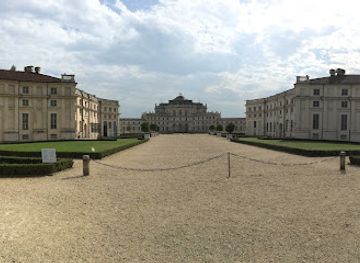
Piedmont’s attractions range from Turin’s royal and cultural institutions to working agricultural landscapes and high mountain environments. In the capital, the Royal Museums, the National Cinema Museum in the Mole Antonelliana and the Egyptian Museum provide different ways into the city’s political, artistic and industrial history. The surrounding Savoy residences, including Venaria Reale and the hunting lodge at Stupinigi, reveal the scale of eighteenth-century court culture. South of Turin, the Langhe and Roero offer vineyard walks, wine estates, food museums and hilltop villages, while Alba is a centre for gastronomy and seasonal truffle culture. Monferrato combines wine country with historic towns and castle landscapes. The Susa Valley and other Alpine districts support hiking, skiing and visits to mountain communities, and Gran Paradiso National Park provides opportunities for wildlife observation and well-marked walks. Lake Maggiore and its Piedmont shore add lakeside scenery and gardens, while the rice fields near Vercelli show the region’s agricultural diversity. Activities and opening arrangements vary by season, particularly in the mountains and at rural estates.
-
Archaeological museum
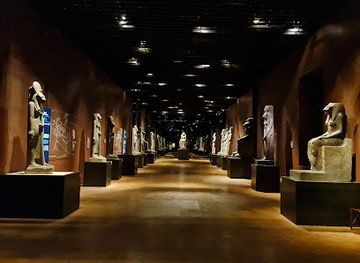
Museo Egizio
Explore the treasures of ancient Egypt at Museo Egizio, one of the world's foremost archaeological museums, located in the heart of Turin.
-
Park
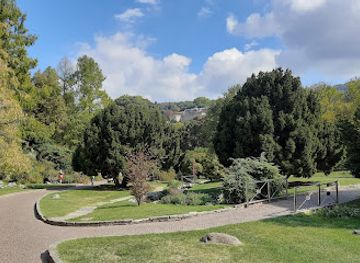
Parco del Valentino
Explore Parco del Valentino, Turin's lush urban park featuring gardens, a medieval village, and stunning views along the Po River.
-
Tourist attraction
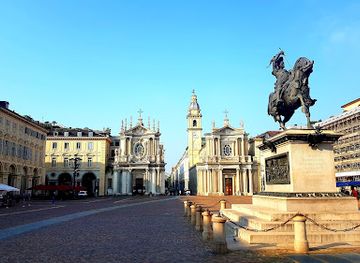
Piazza San Carlo
Experience the elegance and charm of Turin at Piazza San Carlo, a vibrant square filled with history, culture, and delightful cafés.
-
Museum
Museo Nazionale dell'Automobile
Discover the evolution of automobiles at the Museo Nazionale dell'Automobile in Turin, where history and innovation meet in a spectacular exhibition.
Best landmarks in Piedmont
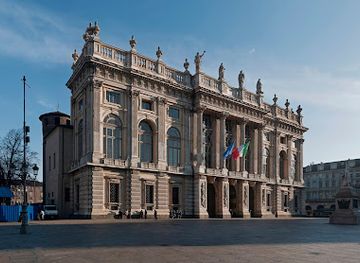
Piedmont’s most recognisable landmarks express the region’s royal, urban, religious and agricultural histories. Turin’s Mole Antonelliana dominates the city skyline, while the Palazzo Madama, Turin Cathedral and the long arcades of the historic centre reflect different stages of civic and courtly development. The Basilica of Superga, set on a hill above the city, is both a major architectural work and a Savoy memorial church. Outside Turin, the Sacra di San Michele occupies a dramatic mountain position above the Susa Valley and has become a defining symbol of Piedmont’s medieval heritage. Venaria Reale and Stupinigi represent the ceremonial architecture of the Savoy court, while the castle and village silhouettes of the Langhe and Monferrato give the vineyard landscape its distinctive form. In the north, the Borromean Islands are outside Piedmont in Lombardy, so visitors should distinguish them from the Piedmontese shore of Lake Maggiore. The hills themselves, especially around Barolo and Monferrato, are significant cultural landmarks shaped by centuries of cultivation.
-
Tourist attraction
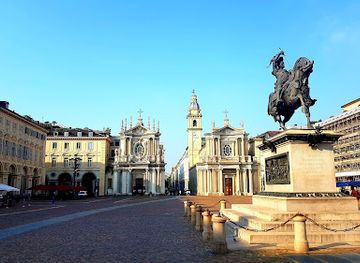
Piazza San Carlo
Discover the charm of Turin at Piazza San Carlo, a stunning square filled with history, elegance, and vibrant local culture.
-
Castle
La Venaria Reale
Discover the grandeur of La Venaria Reale, a Baroque jewel filled with art and history near Turin, Italy.
-
History museum
Palazzina di Caccia di Stupinigi
Explore the magnificent Palazzina di Caccia di Stupinigi, a historical museum and heritage site showcasing the opulence of the Savoy family's royal lifestyle.
-
Castle
Palazzo Madama
Explore the stunning Palazzo Madama in Turin, a historical castle turned museum showcasing Italy's rich heritage and breathtaking views.

Explore Piedmont on the map
Plan your trip on one map. See where the top cities, national parks and sights are, and book hotels and experiences in a few clicks.
Best hotels in Piedmont
Best restaurants in Piedmont
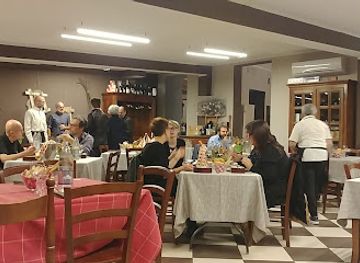
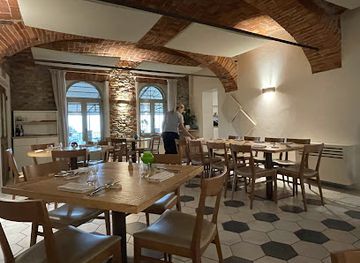
Piedmontese cooking is grounded in rich sauces, handmade pasta, seasonal produce and the produce of both mountains and plains. Turin is known for its historic cafés, chocolate traditions and aperitivo culture, while trattorias across the region serve agnolotti del plin, tajarin and vitello tonnato. Bagna cauda, a warm anchovy, garlic and oil dip, is associated with communal autumn and winter meals, often accompanied by vegetables from the surrounding countryside. The Langhe and Monferrato bring hazelnuts, mushrooms, truffles and celebrated wines to the table, while rice from the Vercelli plain supports dishes such as risotto. Mountain districts contribute cheeses, cured meats and hearty polenta-based cooking. Menus often reflect the agricultural calendar, so autumn is particularly important for truffles, mushrooms and new wines. Restaurants range from informal osterie and village inns to contemporary dining rooms, with local Barbera, Nebbiolo, Dolcetto, Roero Arneis, Asti and Alta Langa among the wines commonly encountered.
-
Fine Dining
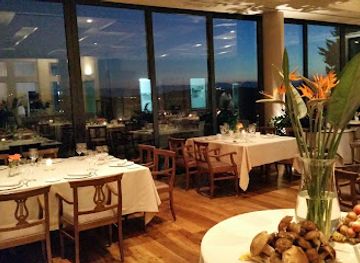
La Ciau del Tornavento
Experience exquisite Piedmontese cuisine at La Ciau del Tornavento, where every dish tells a story amidst stunning views.
-
Italian
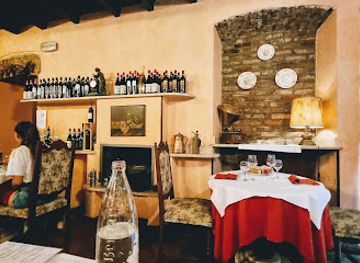
La Taverna Dei Mercanti
Experience authentic Piedmontese cuisine at La Taverna Dei Mercanti in Turin—where tradition meets flavor in a charming atmosphere.
-
Restaurant
Ristorante La Piola
Experience authentic Italian cuisine at Ristorante La Piola in Virle Piemonte - a must-visit destination for food lovers.
-
Italian
Osteria Veglio
Experience authentic Italian cuisine at Osteria Veglio in La Morra – where every dish tells a story of Piedmont's rich culinary heritage.
Best bars in Piedmont
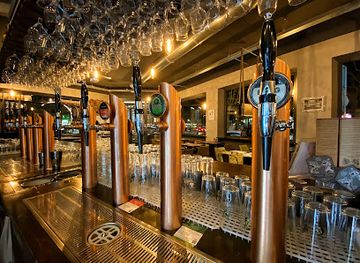
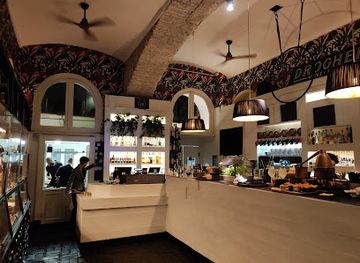
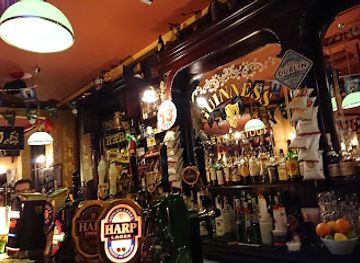
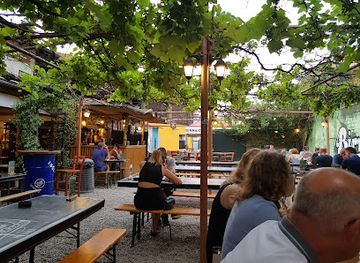
Piedmont’s evening life is varied but rarely dominated by large-scale clubbing outside Turin. The regional capital has a long café and aperitivo tradition, with wine bars, cocktail venues, breweries, live-music rooms and late-opening restaurants concentrated in central districts and around student areas. Historic cafés remain part of Turin’s identity, while former industrial spaces and contemporary cultural venues add a more modern dimension. In Alba, Asti and the principal towns of Monferrato, evenings usually centre on wine bars, osterie and seasonal public events rather than a dense nightclub scene. The Langhe and Roero are well suited to vineyard tastings followed by a relaxed dinner, and many rural communities become quieter after the evening meal. Mountain resorts may offer more seasonal bars and live music during winter or summer holidays, but opening patterns vary. Booking transport after rural tastings is important, since taxis and public services may be limited outside larger towns.
-
Beer hall
Cheers Birreria Gourmet
Discover Cheers Birreria Gourmet in Turin – a vibrant beer hall offering local craft brews and gourmet food in a lively atmosphere.
-
Cocktail bar
La Drogheria - Cocktail Bar
Discover La Drogheria, Turin's premier cocktail bar offering a blend of exquisite drinks, delectable tapas, and an inviting atmosphere for unforgettable nights.
-
Pub
The Eagle House Pub
Experience the vibrant atmosphere and culinary delights at The Eagle House Pub in Turin, where local culture meets delightful cuisine.
-
Pub
Birra Ceca Pub82
Discover Birra Ceca Pub82 in Rivoli, Italy—where live music and a lively atmosphere meet an extensive beer selection for an unforgettable night out.
Best nightclubs in Piedmont
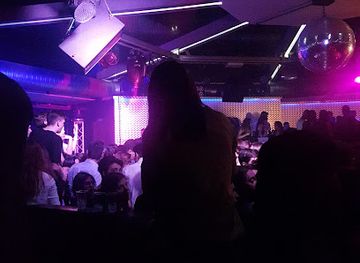
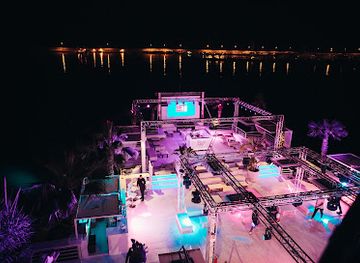
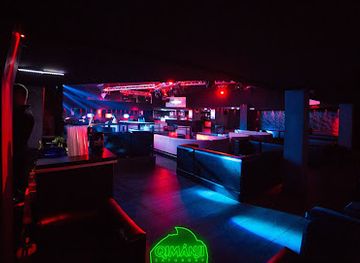
Piedmont’s evening life is varied but rarely dominated by large-scale clubbing outside Turin. The regional capital has a long café and aperitivo tradition, with wine bars, cocktail venues, breweries, live-music rooms and late-opening restaurants concentrated in central districts and around student areas. Historic cafés remain part of Turin’s identity, while former industrial spaces and contemporary cultural venues add a more modern dimension. In Alba, Asti and the principal towns of Monferrato, evenings usually centre on wine bars, osterie and seasonal public events rather than a dense nightclub scene. The Langhe and Roero are well suited to vineyard tastings followed by a relaxed dinner, and many rural communities become quieter after the evening meal. Mountain resorts may offer more seasonal bars and live music during winter or summer holidays, but opening patterns vary. Booking transport after rural tastings is important, since taxis and public services may be limited outside larger towns.
-
Disco club
Caveau CLUB discoteca
Experience the electrifying nightlife at Caveau CLUB Discoteca in Alba, where music and dance come alive in a vibrant atmosphere.
-
Disco club
Bay Beach Club
Discover the heartbeat of Sanremo's nightlife at Bay Beach Club, where electrifying music and vibrant crowds await.
-
Disco club
Global Disco Club
Dive into Turin's nightlife at Global Disco Club, where vibrant beats and dancing await in a dynamic atmosphere.
-
Night club
Samara Torino Night Club
Unleash your nightlife spirit at Samara Torino Night Club, where vibrant beats and stylish ambiance create unforgettable nights in the heart of Turin.

Best shops in Piedmont
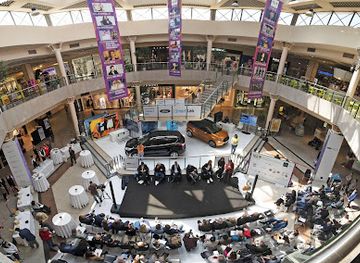
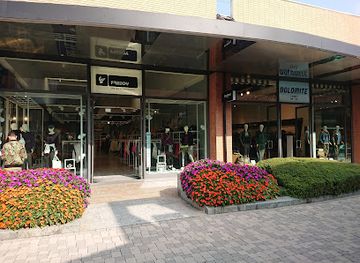
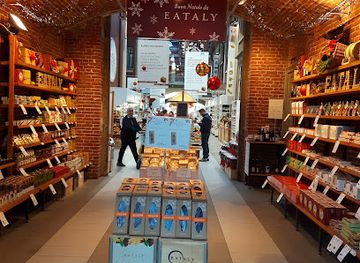
Shopping in Piedmont combines Turin’s established urban streets with the markets and specialist producers of smaller towns. Turin offers historic food halls, bookshops, contemporary design, chocolate makers and independent boutiques, alongside regular markets whose character varies by district and day. Alba and Asti are useful places to look for wine, hazelnut products, preserves, regional cheeses and seasonal food, while villages in the Langhe and Monferrato have cellar shops attached to local producers. Vercelli and the eastern plain provide opportunities to buy rice and other agricultural products, and Alpine towns stock cheeses, woollen goods and practical outdoor equipment. Look for gianduja and other Piedmontese chocolate specialities, locally bottled wines, ceramics and small-scale crafts, checking labels for producer and origin. Markets are often more rewarding for regional food than for generic souvenirs, but opening days and seasonal availability differ, particularly in smaller communities.
-
 Outlet mall
Designer Outlet Serravalle
Explore Designer Outlet Serravalle: A premier shopping destination in Italy with designer brands at unbeatable outlet prices.
-
Shopping mall
Shopville Le Gru
Explore Shopville Le Gru: Your Ultimate Shopping and Dining Destination in Grugliasco, Near Turin.
-
Outlet mall
Vicolungo The Style Outlets
Discover incredible deals and a family-friendly atmosphere at Vicolungo The Style Outlets, your go-to shopping destination in Italy.
-
Shopping mall
Centro Commerciale Lingotto
Experience the ultimate shopping adventure at Centro Commerciale Lingotto, where luxury meets accessibility in the heart of Turin.
Get your free copy of our complete guide to Piedmont, delivered straight to you.
Everything on this page, from attractions and restaurants to essentials and local phrases, in one PDF you can read offline, print or share.
Already have an account? Sign in
Your Piedmont guide is ready.
We'll send it to · Not you? Sign out

Getting your guide ready…
We are putting together a fresh copy of the Piedmont guide. This can take up to a minute.
This can take a few moments. If your browser asks, choose Allow so the download can start. You'll find the guide in your Downloads folder.
Nothing happened? Download it again
Sorry, the guide is taking longer than usual. Please try again in a minute, or get it by email instead.
Piedmont essentials
Currency and Payment
Safety
Emergency Situations
Do's and Don'ts
Local Tips
From Eve
Local phrases worth knowing
You don't need to get them perfect. A few words go a long way, and locals appreciate the effort.
Basics
| English | Local | Say it |
|---|---|---|
| Hello | Ciao | [chow] |
| Goodbye | Addio | [ah-dee-oh] |
| Yes | Sì | [see] |
| No | No | [noh] |
| Please/You're welcome | Per favore | [pehr fah-voh-reh] |
| Thank you | Grazie | [graht-see-eh] |
| Excuse me/Sorry | Mi scusi | [mee skoo-zee] |
| How are you? | Come stai? | [koh-meh stah-ee] |
| Fine. And you? | Bene. E tu? | [beh-neh. eh too] |
| Do you speak English? | Parli inglese? | [par-lee een-gleh-seh] |
| I don't understand | Non capisco | [non kah-pees-koh] |
Eating & Drinking
| English | Local | Say it |
|---|---|---|
| I'd like to see the menu, please | Vorrei vedere il menu, per favore | [vohr-ray veh-deh-reh eel meh-noo, pehr fah-voh-reh] |
| I don't eat meat | Non mangio carne | [non mahn-joh kar-neh] |
| Cheers! | Salute! | [sah-loo-teh] |
| I would like to pay, please | Vorrei pagare, per favore | [vohr-ray pah-gah-reh, pehr fah-voh-reh] |
Emergencies
| English | Local | Say it |
|---|---|---|
| Help! | Aiuto! | [ah-yoo-toh] |
| Go away! | Vai via! | [vai vee-ah] |
| Call the Police! | Chiama la polizia! | [kee-ah-mah lah poh-lee-tsee-ah] |
| Call a doctor! | Chiama un dottore! | [kee-ah-mah oon doht-toh-reh] |
| I'm lost | Mi sono perso | [mee soh-noh pehr-soh] |
| I'm ill | Sono malato | [soh-noh mah-lah-toh] |
Shopping
| English | Local | Say it |
|---|---|---|
| I'd like to buy... | Vorrei comprare... | [vohr-ray kohm-prah-reh] |
| I'm just looking | Sto solo guardando | [sto soh-loh gwahr-dahn-doh] |
| How much is it? | Quanto costa? | [kwahn-toh koh-stah] |
| That's too expensive | È troppo caro | [eh troh-poh kah-roh] |
| Can you lower the price? | Puoi abbassare il prezzo? | [pwoh-ee ahb-bah-sah-reh eel pret-soh] |
Time & Numbers
| English | Local | Say it |
|---|---|---|
| What time is it? | Che ore sono? | [keh oh-reh soh-noh] |
| It's one o'clock | È l'una | [eh loo-nah] |
| Half past (10) | Dieci e mezzo | [dee-eh-chee eh meh-tsoh] |
| Morning | Mattina | [maht-tee-nah] |
| Afternoon | Pomeriggio | [poh-meh-reed-joh] |
| Evening | Sera | [seh-rah] |
| Yesterday | Ieri | [yeh-ree] |
| Today | Oggi | [oh-jjee] |
| Tomorrow | Domani | [doh-mah-nee] |
| 1 | Uno | [oo-noh] |
| 2 | Due | [doo-eh] |
| 3 | Tre | [treh] |
| 4 | Quattro | [kwah-troh] |
| 5 | Cinque | [cheen-kweh] |
| 6 | Sei | [say] |
| 7 | Sette | [seht-teh] |
| 8 | Otto | [oht-toh] |
| 9 | Nove | [noh-veh] |
| 10 | Dieci | [dee-eh-chee] |
Transport & Directions
| English | Local | Say it |
|---|---|---|
| Where's a/the...? | Dove c'è...? | [doh-veh cheh] |
| What's the address? | Qual è l'indirizzo? | [kwal eh leen-dee-reet-soh] |
| Can you show me (on the map)? | Puoi mostrarmi (sulla mappa)? | [pwoh-ee moh-strahr-mee (soo-lah mahp-pah)] |
| When's the next (bus)? | Quando passa il prossimo (autobus)? | [kwahn-doh pah-sah eel proh-see-moh (ow-toh-boos)] |
| A ticket (to ....) | Un biglietto (per ....) | [oon bee-lyeh-toh (pehr ....)] |
History of Piedmont
Prehistoric settlements and Roman Piedmont
Piedmont’s valleys and plains were occupied by pre-Roman peoples, including Celtic and Ligurian communities, before the area was incorporated into the Roman world. Augusta Taurinorum, founded in the late first century BC on the site of modern Turin, became an important settlement with a regular street plan. Roman roads linked the Po Valley with Alpine passes and helped connect agricultural communities and military routes. Remains of Roman urban planning, gates and archaeological finds survive in Turin and other towns, although much of the region’s later appearance was shaped by medieval and early modern development.
Medieval communes, monasteries and Alpine routes
After the Roman period, Piedmont became a mosaic of bishoprics, local lordships, communes and monastic territories. Towns such as Asti, Alba and Vercelli prospered through agriculture, trade and control of routes across the western Alps. Monasteries and religious foundations helped manage land and travel, while castles and fortified settlements reflected competition among regional powers. The Sacra di San Michele, dramatically positioned above the Susa Valley, belongs to this wider medieval landscape of pilgrimage, defence and cross-Alpine movement.
Savoy and the rise of Turin
The House of Savoy gradually consolidated its authority in western Alpine territories and made Turin its capital in 1563, shifting the political centre of the dynasty from Chambéry. Turin was remodelled with planned streets, arcades, squares and palaces, especially under the architects Guarino Guarini and Filippo Juvarra. The Savoy court also developed a network of residences around the city, including Venaria Reale, Rivoli and Stupinigi. These buildings express the dynasty’s ambition and later form part of the UNESCO-listed Residences of the Royal House of Savoy.
The Risorgimento and Italian unification
Piedmont played a decisive role in the nineteenth-century movement for Italian unification. The Kingdom of Sardinia, ruled by the Savoy dynasty from Turin, became the political base for diplomacy, military campaigns and constitutional reform. Count Camillo Benso di Cavour, a leading statesman and prime minister, helped guide alliances and negotiations that culminated in the proclamation of the Kingdom of Italy in 1861. Turin served as Italy’s first capital until 1865, leaving important civic and political associations in the city and throughout the region.
Industrialisation and the making of modern Turin
From the late nineteenth century, Piedmont’s economy changed through engineering, textiles, food processing and transport. Turin became particularly associated with automobile production after the foundation of Fiat in 1899, drawing workers and encouraging rapid urban expansion during the twentieth century. The city’s industrial history influenced architecture, migration and working-class culture, while other parts of Piedmont retained agricultural economies based on vineyards, rice and livestock. This contrast between metropolitan industry and rural production remains an important part of the region’s identity.
Resistance and post-war transformation
During the Second World War and the German occupation, Piedmont’s mountains and foothills became important areas of partisan resistance. The region also experienced repression, deportation and wartime destruction, and its valleys preserve memorials and museums connected with these events. After 1945, industrial growth and internal migration reshaped Turin and other towns, while rural districts faced depopulation before later developing new forms of wine, food and heritage tourism. Piedmont’s contemporary image therefore combines industrial modernity with renewed appreciation for agricultural landscapes and local traditions.
Wine landscapes and cultural recognition
The vineyard areas of Langhe, Roero and Monferrato reflect centuries of cultivation, settlement and changing wine-making practices. Their hills are not simply scenic countryside: villages, castles, churches, farmsteads and cellar traditions form a cultural landscape created by agricultural communities. UNESCO inscribed the Vineyard Landscape of Piedmont in 2014, recognising the historical relationship between people and vineyards. The designation has strengthened international attention towards local wine, food and heritage while keeping the working nature of the landscape visible.
Piedmont in Photos
Browse through our photo collection highlighting the charm and character of the destination.
Neighbouring regions of Piedmont
The closest regions to Piedmont, if you have time for more than one.
-

-

-

-

-


Swipe for more regions
Explore more

Explore more of Italy
Discover Italy: A land of ancient history, artistic marvels, and culinary delights; where every corner reveals a new story and every meal is a celebration.
Explore Italy